Lee Myung-Shin, Jones Tiffany, Song Dae-Yong, Jang Jae-Hyuk, Jung Jae U, Gao Shou-Jiang
Department of Molecular Microbiology and Immunology, Keck School of Medicine, University of Southern California, Los Angeles, California, United States of America; Department of Microbiology and Immunology, Eulji University School of Medicine, Daejeon, Republic of Korea.
Department of Molecular Microbiology and Immunology, Keck School of Medicine, University of Southern California, Los Angeles, California, United States of America.
PLoS Pathog. 2014 Sep 25;10(9):e1004412. doi: 10.1371/journal.ppat.1004412. eCollection 2014 Sep.
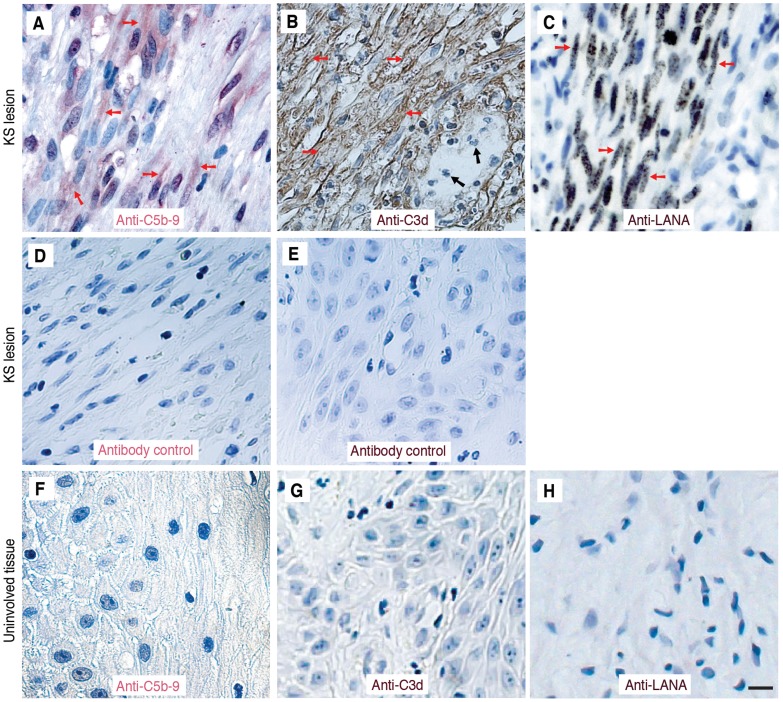
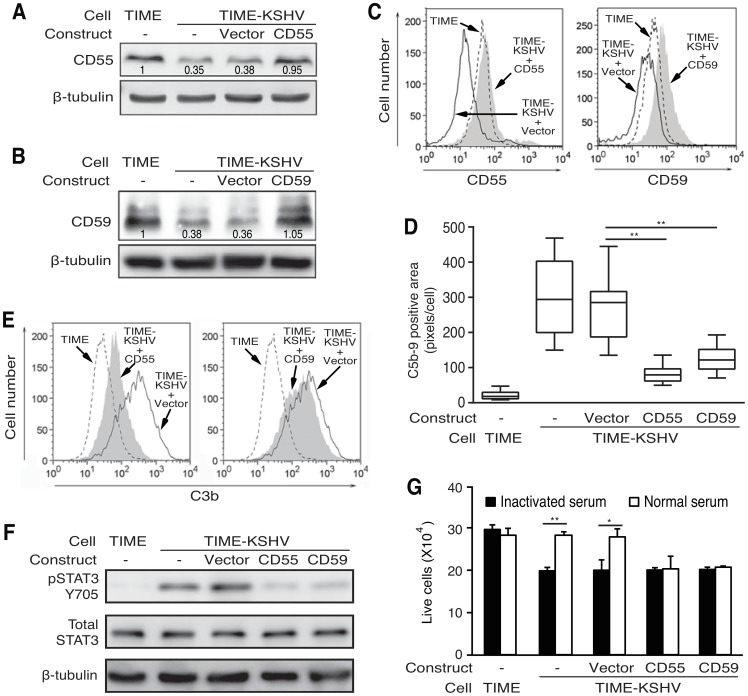
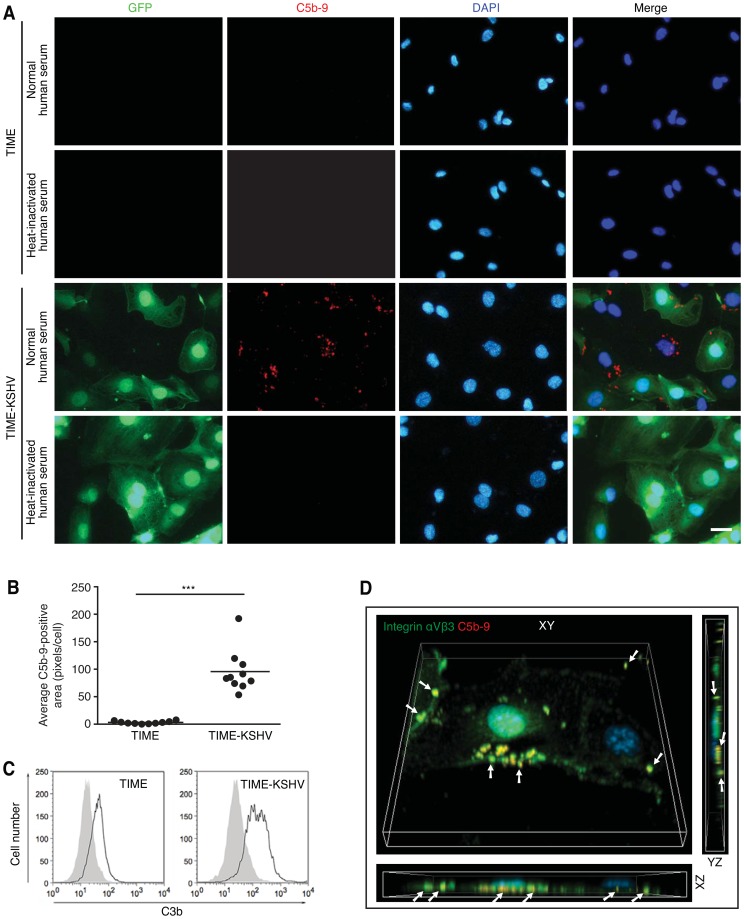
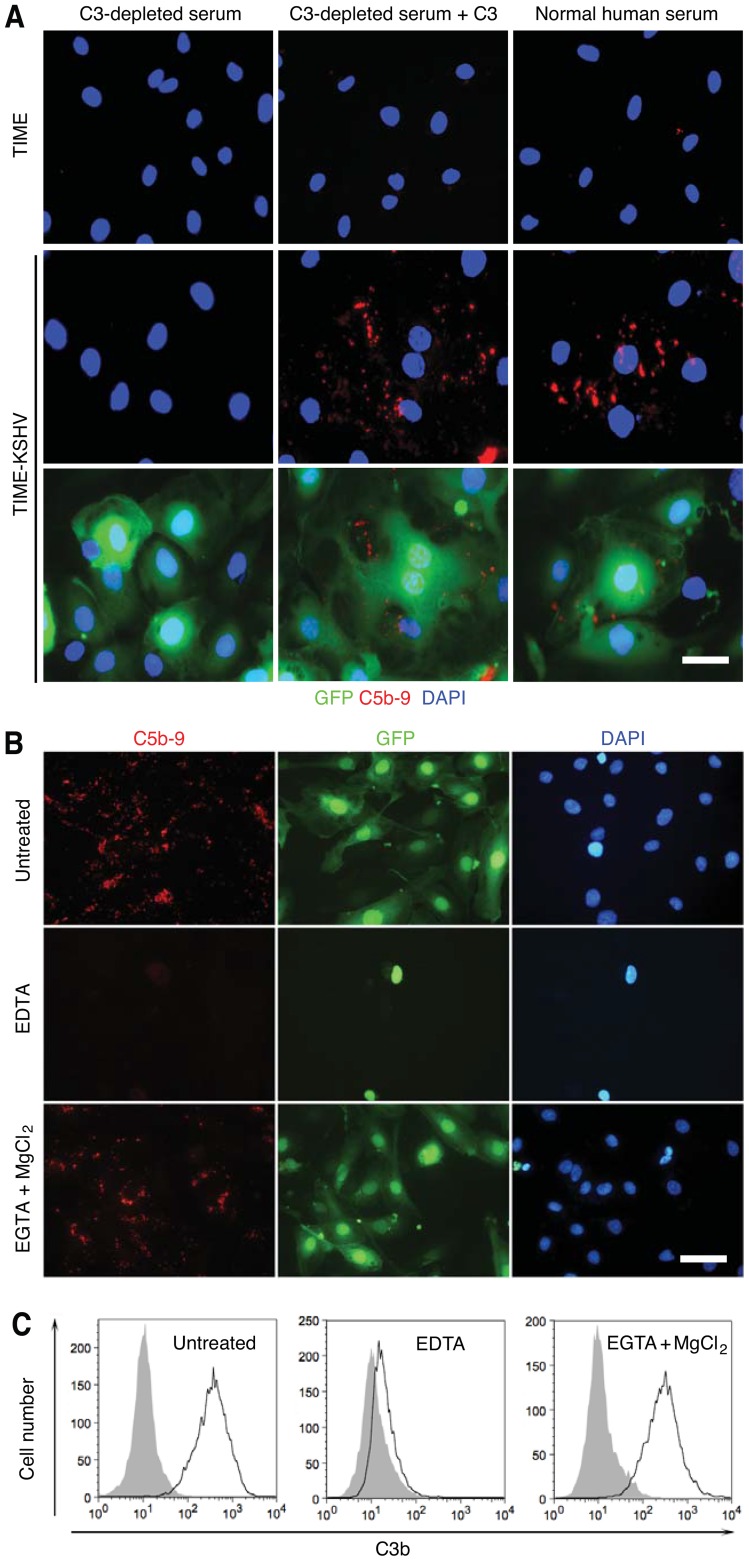
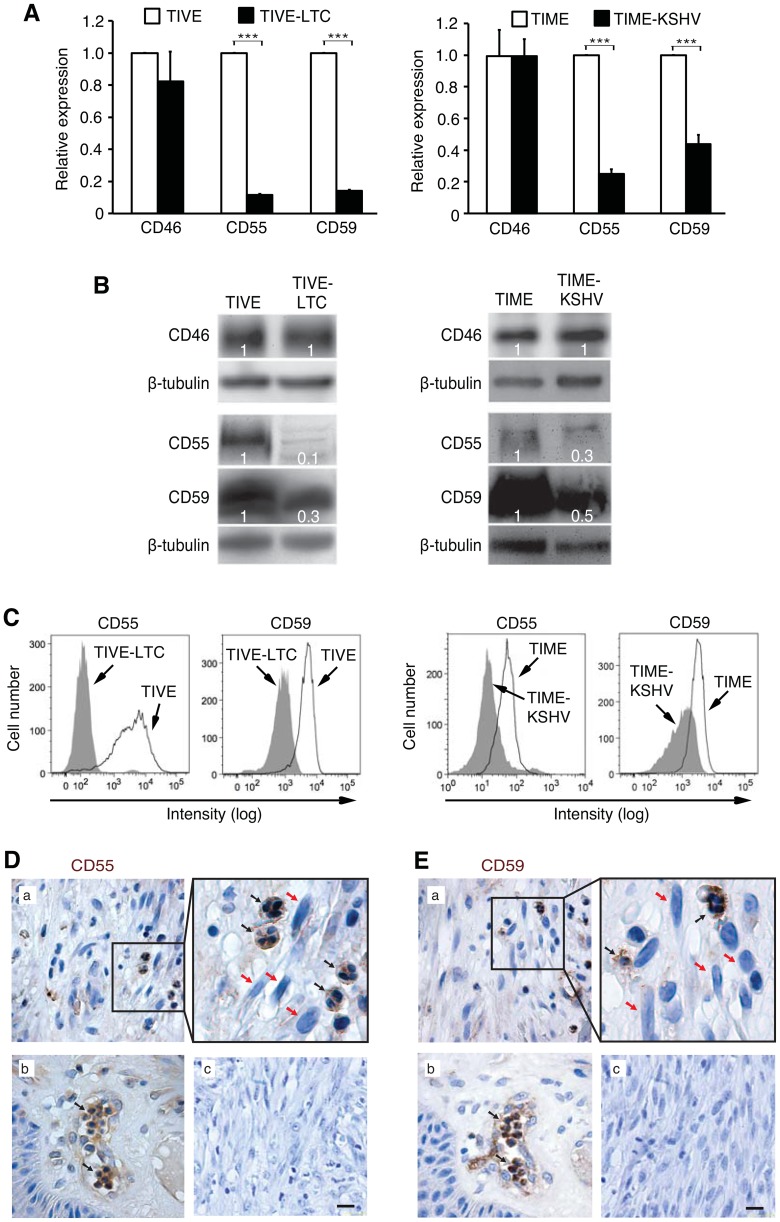
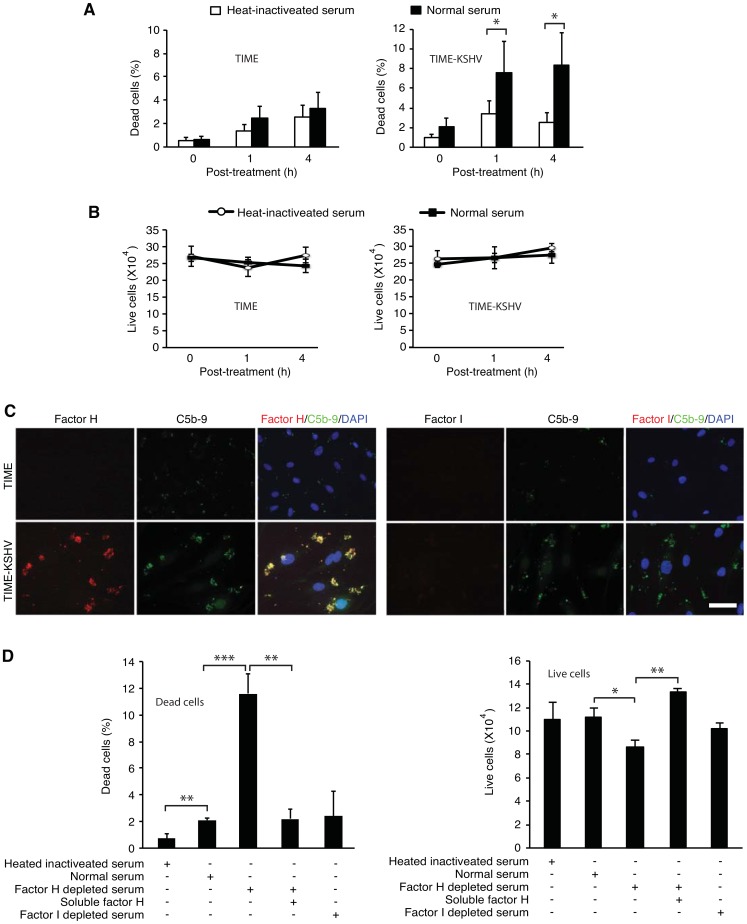
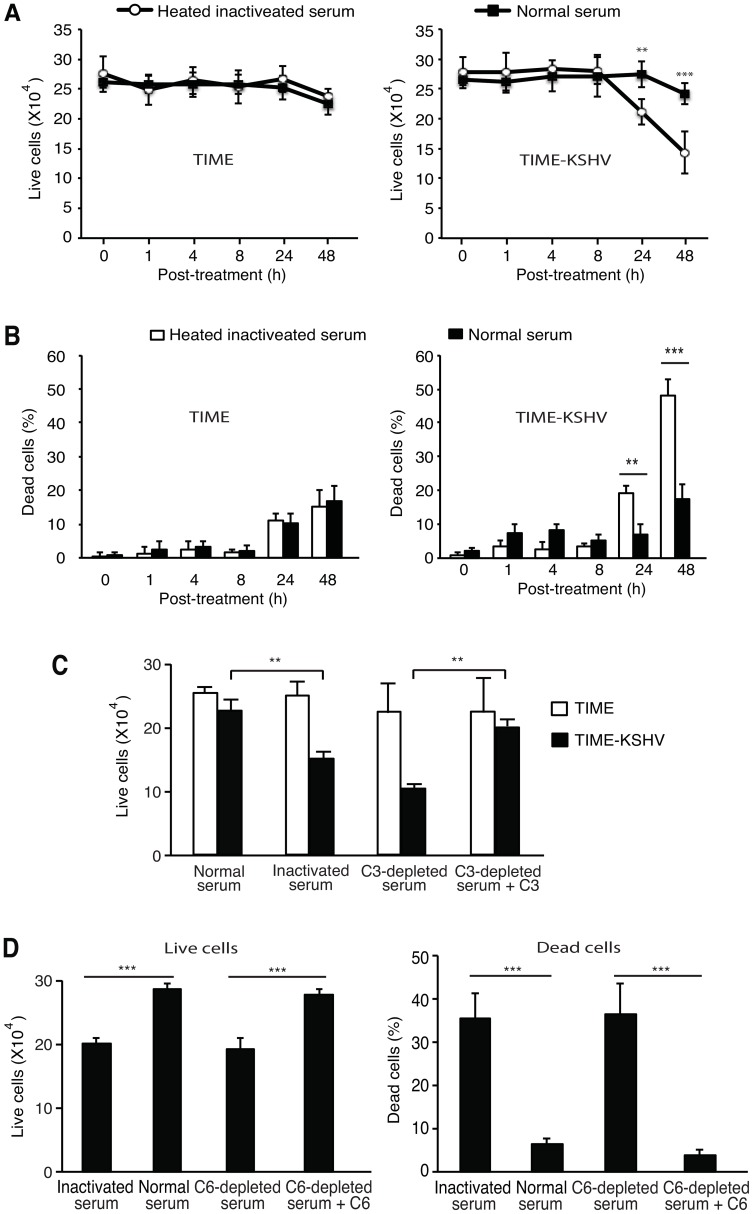
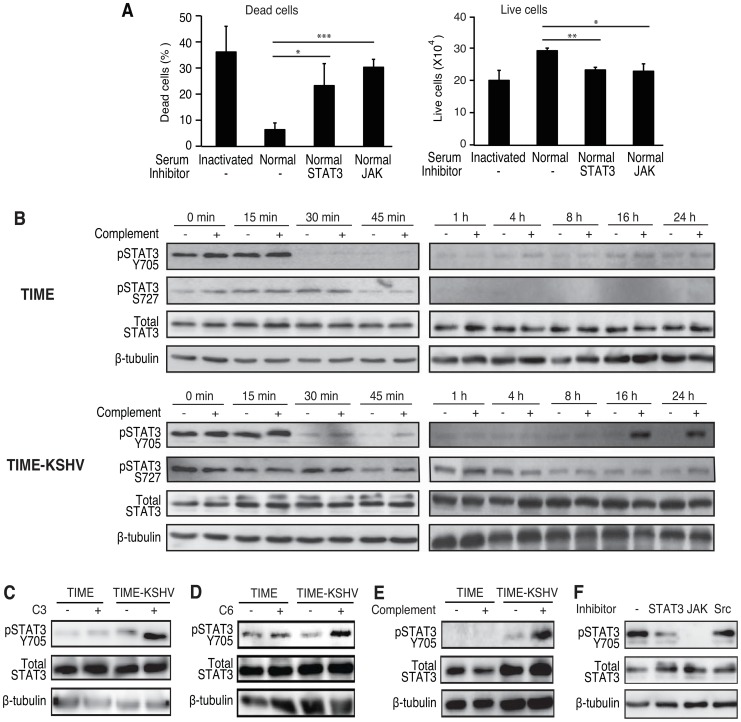
During evolution, herpesviruses have developed numerous, and often very ingenious, strategies to counteract efficient host immunity. Specifically, Kaposi's sarcoma-associated herpesvirus (KSHV) eludes host immunity by undergoing a dormant stage, called latency wherein it expresses a minimal number of viral proteins to evade host immune activation. Here, we show that during latency, KSHV hijacks the complement pathway to promote cell survival. We detected strong deposition of complement membrane attack complex C5b-9 and the complement component C3 activated product C3b on Kaposi's sarcoma spindle tumor cells, and on human endothelial cells latently infected by KSHV, TIME-KSHV and TIVE-LTC, but not on their respective uninfected control cells, TIME and TIVE. We further showed that complement activation in latently KSHV-infected cells was mediated by the alternative complement pathway through down-regulation of cell surface complement regulatory proteins CD55 and CD59. Interestingly, complement activation caused minimal cell death but promoted the survival of latently KSHV-infected cells grown in medium depleted of growth factors. We found that complement activation increased STAT3 tyrosine phosphorylation (Y705) of KSHV-infected cells, which was required for the enhanced cell survival. Furthermore, overexpression of either CD55 or CD59 in latently KSHV-infected cells was sufficient to inhibit complement activation, prevent STAT3 Y705 phosphorylation and abolish the enhanced survival of cells cultured in growth factor-depleted condition. Together, these results demonstrate a novel mechanism by which an oncogenic virus subverts and exploits the host innate immune system to promote viral persistent infection.
在进化过程中,疱疹病毒已发展出众多且往往非常巧妙的策略来对抗有效的宿主免疫。具体而言,卡波西肉瘤相关疱疹病毒(KSHV)通过进入一个称为潜伏期的休眠阶段来躲避宿主免疫,在潜伏期它仅表达极少量病毒蛋白以逃避宿主免疫激活。在此,我们表明在潜伏期,KSHV劫持补体途径以促进细胞存活。我们检测到补体膜攻击复合物C5b - 9以及补体成分C3激活产物C3b在卡波西肉瘤梭形肿瘤细胞以及被KSHV潜伏感染的人内皮细胞(TIME - KSHV和TIVE - LTC)上有强烈沉积,但在它们各自未感染的对照细胞(TIME和TIVE)上没有。我们进一步表明,潜伏感染KSHV的细胞中的补体激活是由替代补体途径介导的,通过下调细胞表面补体调节蛋白CD55和CD59来实现。有趣的是,补体激活导致极少的细胞死亡,但促进了在缺乏生长因子的培养基中生长的潜伏感染KSHV的细胞的存活。我们发现补体激活增加了KSHV感染细胞中STAT3酪氨酸磷酸化(Y705),这是增强细胞存活所必需的。此外,在潜伏感染KSHV的细胞中过表达CD55或CD59足以抑制补体激活,阻止STAT3 Y705磷酸化,并消除在生长因子缺乏条件下培养的细胞的增强存活。总之,这些结果证明了一种致癌病毒颠覆并利用宿主先天免疫系统以促进病毒持续感染的新机制。