Muppidi Jagan R, Schmitz Roland, Green Jesse A, Xiao Wenming, Larsen Adrien B, Braun Sterling E, An Jinping, Xu Ying, Rosenwald Andreas, Ott German, Gascoyne Randy D, Rimsza Lisa M, Campo Elias, Jaffe Elaine S, Delabie Jan, Smeland Erlend B, Braziel Rita M, Tubbs Raymond R, Cook J R, Weisenburger Dennis D, Chan Wing C, Vaidehi Nagarajan, Staudt Louis M, Cyster Jason G
1] Department of Microbiology and Immunology, University of California, San Francisco, California, 94143, USA [2] Department of Medicine, University of California, San Francisco, California 94143, USA [3] Howard Hughes Medical Institute, University of California, San Francisco, California 94143, USA.
Lymphoid Malignancies Branch, Center for Cancer Research, National Cancer Institute, National Institutes of Health, Bethesda, Maryland 20892, USA.
Nature. 2014 Dec 11;516(7530):254-8. doi: 10.1038/nature13765. Epub 2014 Sep 28.
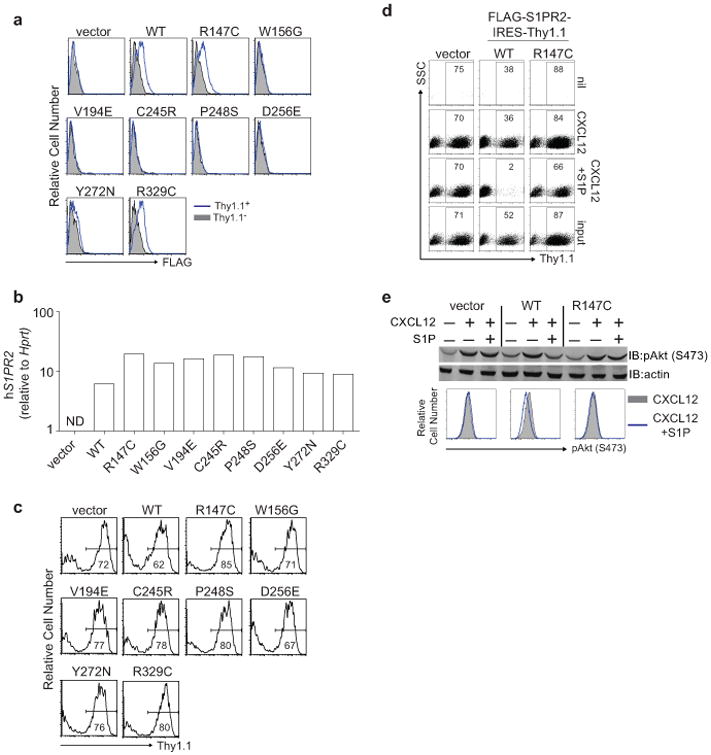
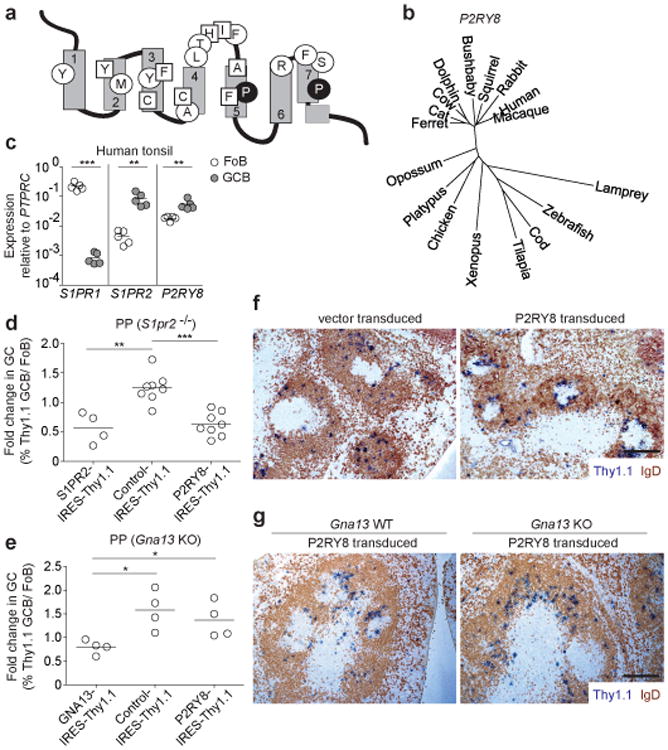
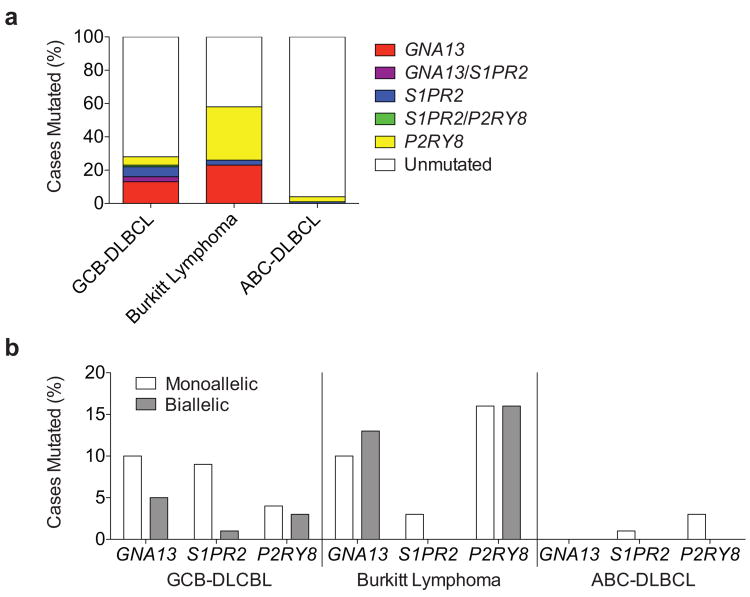
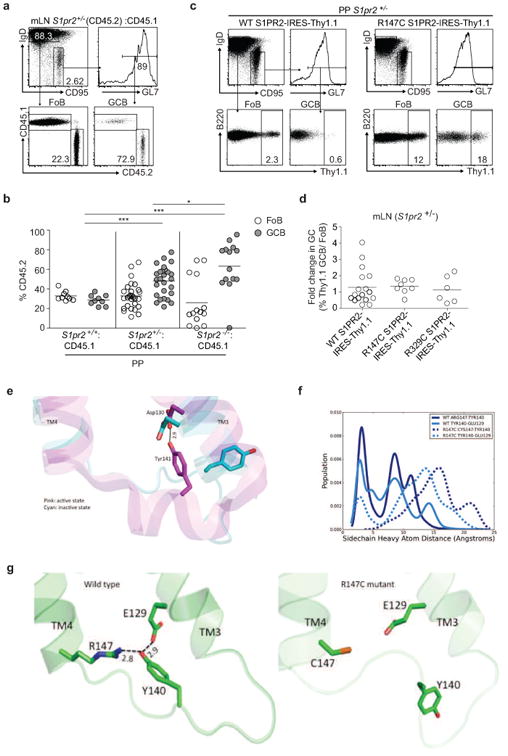
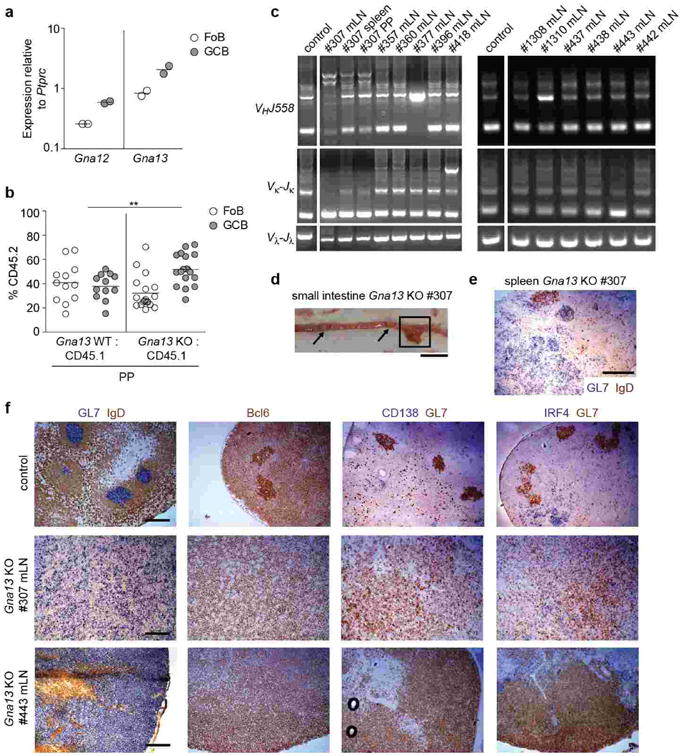
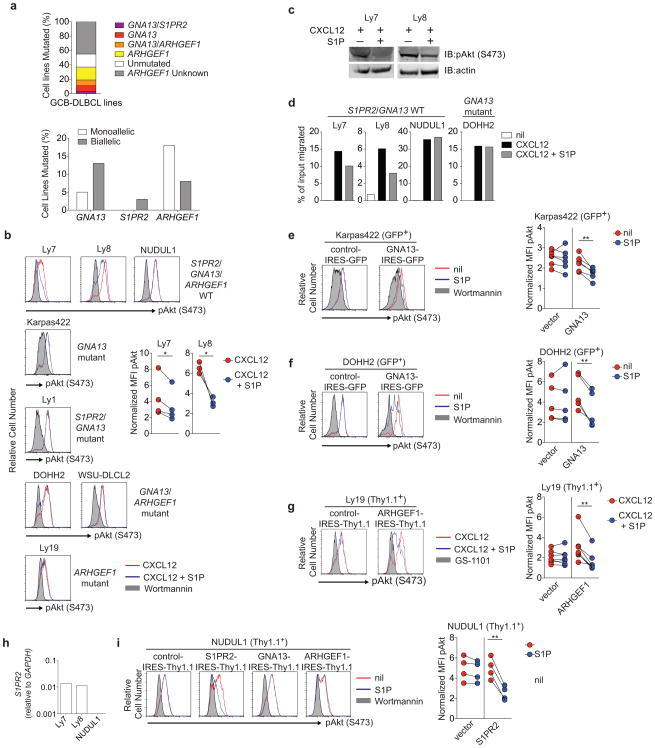
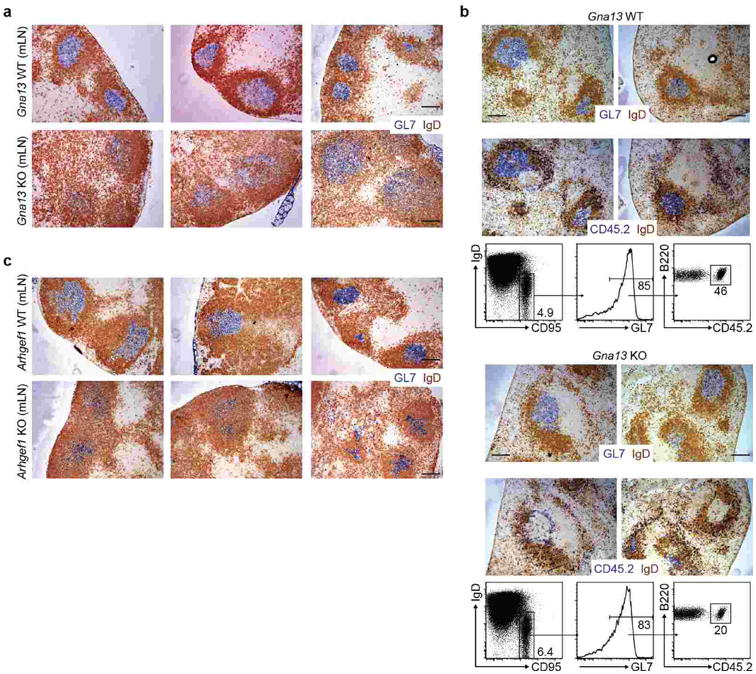
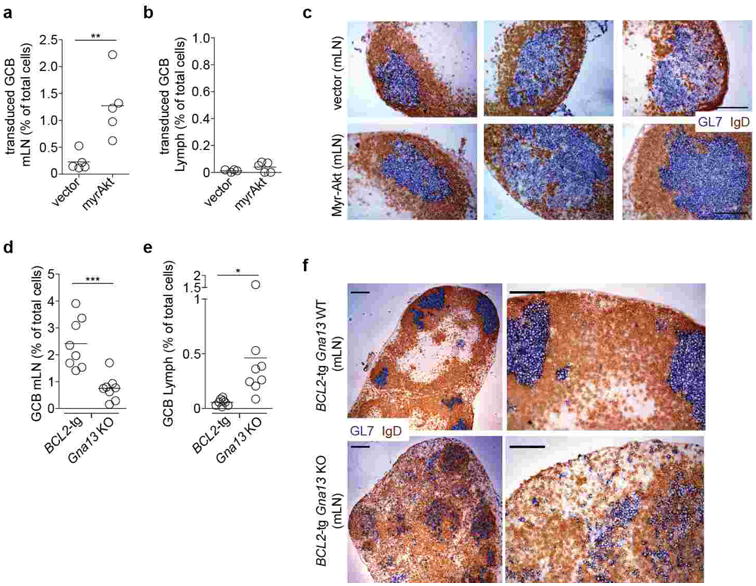
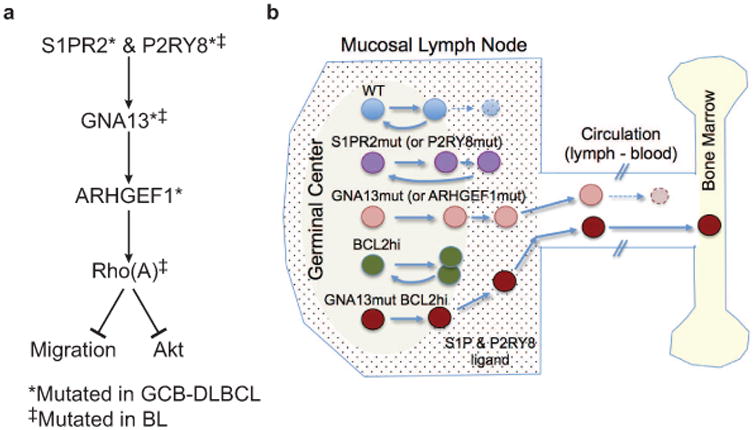
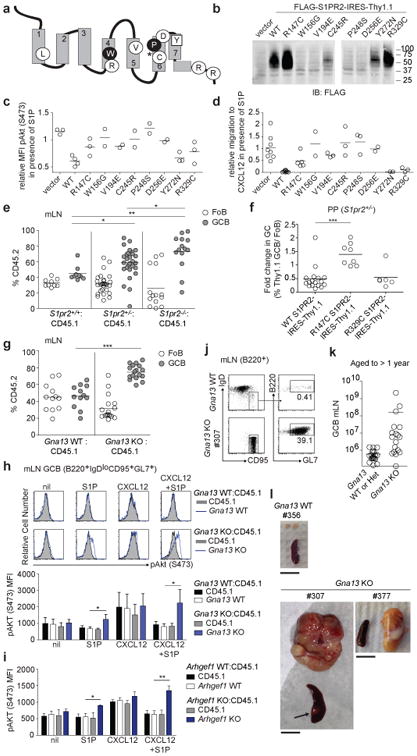
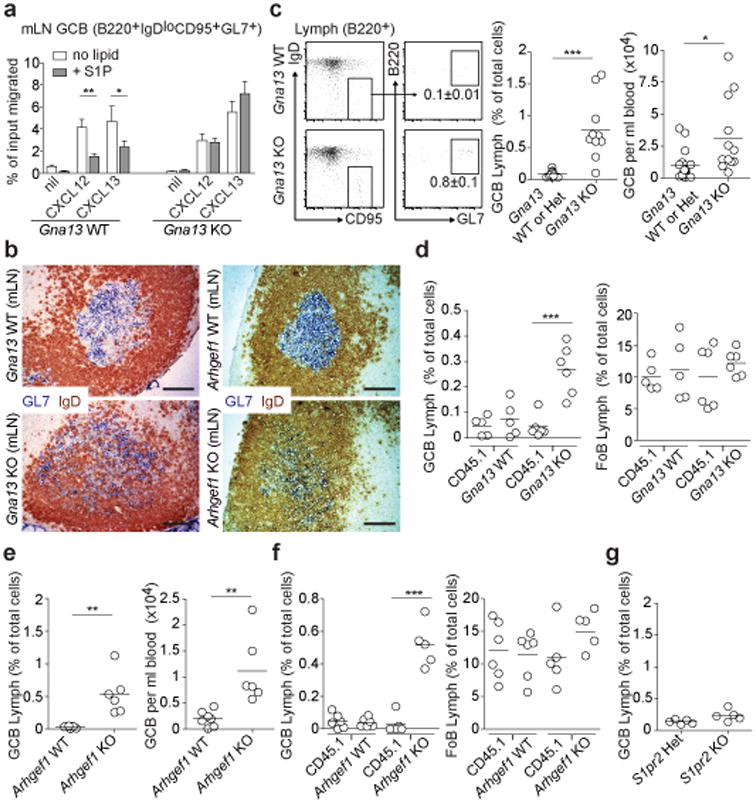
Germinal centre B-cell-like diffuse large B-cell lymphoma (GCB-DLBCL) is a common malignancy, yet the signalling pathways that are deregulated and the factors leading to its systemic dissemination are poorly defined. Work in mice showed that sphingosine-1-phosphate receptor-2 (S1PR2), a Gα12 and Gα13 coupled receptor, promotes growth regulation and local confinement of germinal centre B cells. Recent deep sequencing studies of GCB-DLBCL have revealed mutations in many genes in this cancer, including in GNA13 (encoding Gα13) and S1PR2 (refs 5,6, 7). Here we show, using in vitro and in vivo assays, that GCB-DLBCL-associated mutations occurring in S1PR2 frequently disrupt the receptor's Akt and migration inhibitory functions. Gα13-deficient mouse germinal centre B cells and human GCB-DLBCL cells were unable to suppress pAkt and migration in response to S1P, and Gα13-deficient mice developed germinal centre B-cell-derived lymphoma. Germinal centre B cells, unlike most lymphocytes, are tightly confined in lymphoid organs and do not recirculate. Remarkably, deficiency in Gα13, but not S1PR2, led to germinal centre B-cell dissemination into lymph and blood. GCB-DLBCL cell lines frequently carried mutations in the Gα13 effector ARHGEF1, and Arhgef1 deficiency also led to germinal centre B-cell dissemination. The incomplete phenocopy of Gα13- and S1PR2 deficiency led us to discover that P2RY8, an orphan receptor that is mutated in GCB-DLBCL and another germinal centre B-cell-derived malignancy, Burkitt's lymphoma, also represses germinal centre B-cell growth and promotes confinement via Gα13. These findings identify a Gα13-dependent pathway that exerts dual actions in suppressing growth and blocking dissemination of germinal centre B cells that is frequently disrupted in germinal centre B-cell-derived lymphoma.
生发中心B细胞样弥漫性大B细胞淋巴瘤(GCB-DLBCL)是一种常见的恶性肿瘤,然而,失调的信号通路以及导致其全身扩散的因素仍不清楚。小鼠实验表明,1-磷酸鞘氨醇受体2(S1PR2),一种与Gα12和Gα13偶联的受体,可促进生发中心B细胞的生长调节和局部限制。最近对GCB-DLBCL的深度测序研究揭示了该癌症中许多基因的突变,包括GNA13(编码Gα13)和S1PR2(参考文献5、6、7)。在此,我们通过体外和体内试验表明,S1PR2中发生的GCB-DLBCL相关突变经常破坏受体的Akt和迁移抑制功能。Gα13缺陷的小鼠生发中心B细胞和人GCB-DLBCL细胞无法响应S1P抑制pAkt和迁移,并且Gα13缺陷的小鼠发生了生发中心B细胞来源的淋巴瘤。与大多数淋巴细胞不同,生发中心B细胞紧密局限于淋巴器官且不进行再循环。值得注意的是,Gα13缺陷而非S1PR2缺陷导致生发中心B细胞扩散到淋巴和血液中。GCB-DLBCL细胞系经常携带Gα13效应器ARHGEF1的突变,并且Arhgef1缺陷也导致生发中心B细胞扩散。Gα13和S1PR2缺陷的不完全表型模拟使我们发现,P2RY8,一种在GCB-DLBCL和另一种生发中心B细胞来源的恶性肿瘤——伯基特淋巴瘤中发生突变的孤儿受体,也通过Gα13抑制生发中心B细胞生长并促进其局限。这些发现确定了一条Gα13依赖性途径,该途径在抑制生发中心B细胞生长和阻止其扩散方面发挥双重作用,而这一途径在生发中心B细胞来源的淋巴瘤中经常被破坏。