Wang Denong
Tumor Glycomics Laboratory, Center for Cancer Research, Biosciences Division, SRI International, 333 Ravenswood Avenue, Menlo Park, CA 94025, USA.
J Proteomics Bioinform. 2012 Apr 30;5(4):090-95. doi: 10.4172/jpb.1000218.
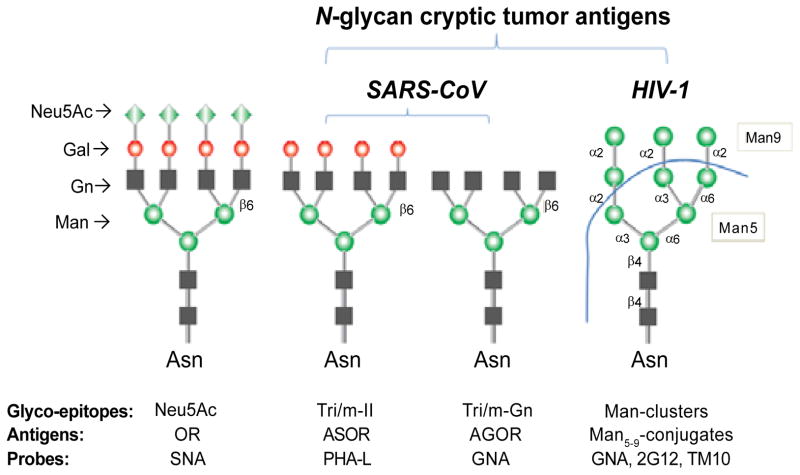
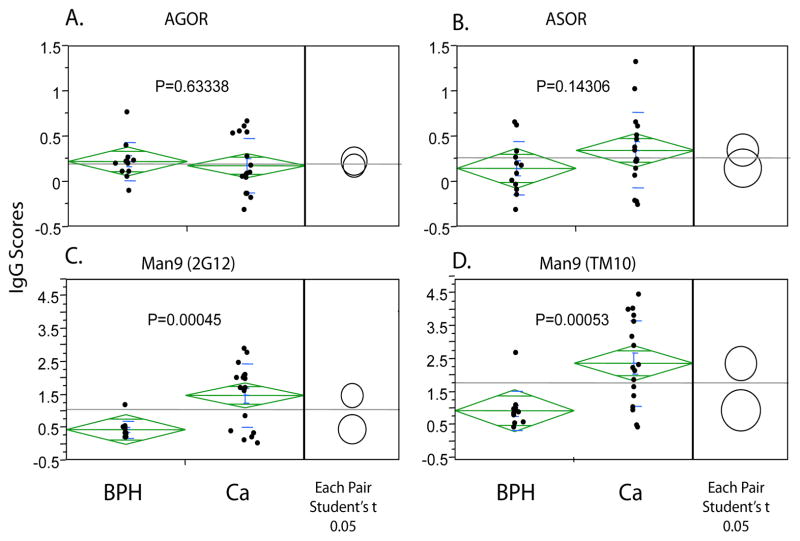
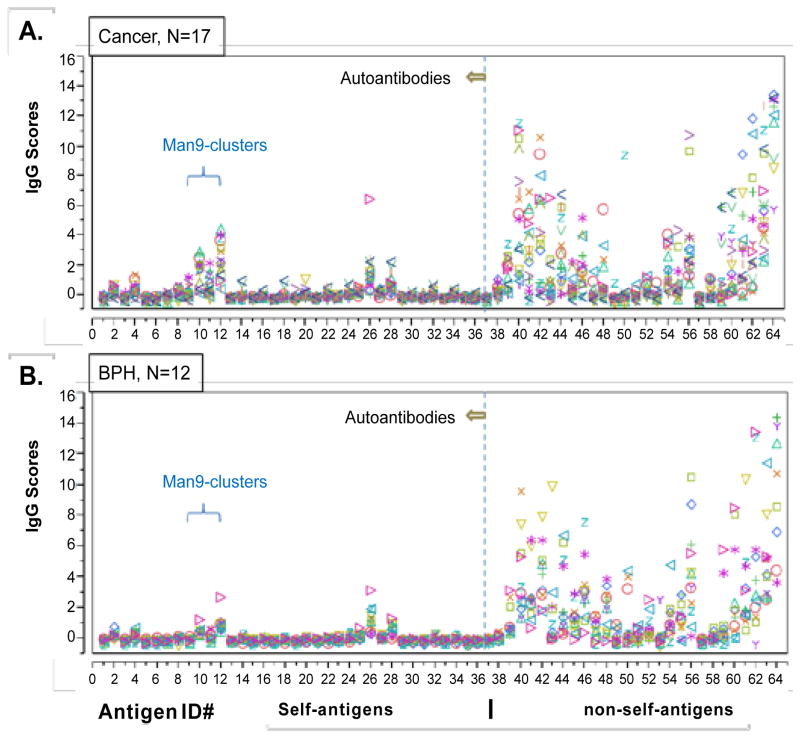
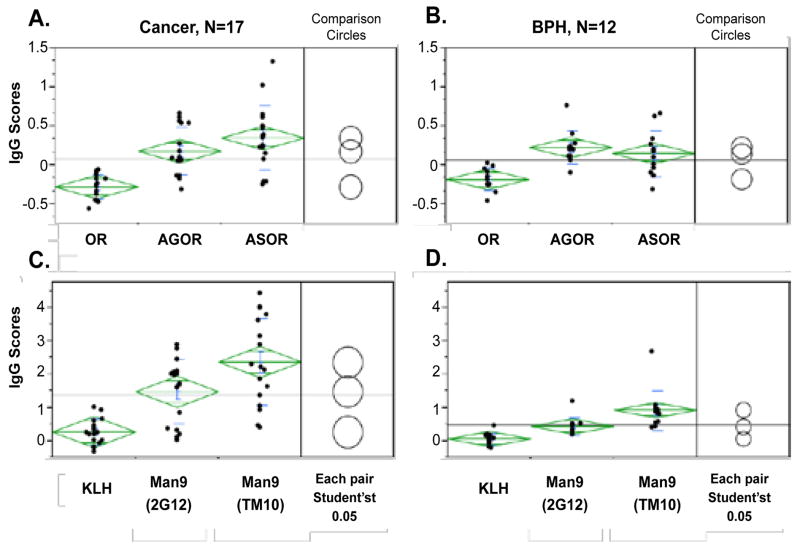
Although tumor-associated abnormal glycosylation has been recognized for decades, information regarding host recognition of the evolving tumor glycome remains elusive. We report here a carbohydrate microarray analysis of a number of tumor-associated carbohydrates for their serum antibody reactivities and potential immunogenicity in humans. These are the precursors, cores and internal sequences of -glycans. They are usually masked by other sugar moieties and belong to a class of glyco-antigens that are normally "cryptic". However, viral expression of these carbohydrates may trigger host immune responses. For examples, HIV-1 and SARS-CoV display Man9 clusters and tri- or multi-antennary type II (Galβ1→4GlcNAc) chains (Tri/m-II), respectively; viral neutralizing antibodies often target these sugar moieties. We asked, therefore, whether prostate tumor expression of corresponding carbohydrates triggers antibody responses . Using carbohydrate microarrays, we analyzed a panel of human sera, including 17 samples from prostate cancer patients and 12 from men with Benign Prostatic Hyperplasia (BPH). We observed that IgG antibodies targeting the Man9- or Tri-/m-II-autoantigens are readily detectable in the sera of men with BPH, as well as those with cancer. Importantly, these antibody activities were selectively increased in prostate cancer patients. Thus, human immune systems actively recognize these -glycan cryptic carbohydrates and produce targeting antibodies. This finding shads a light on a class of previously less studied immunological targets of human cancers. Identifying the diagnostic, prognostic and therapeutic values of these targets will require further investigation.
尽管肿瘤相关的异常糖基化现象已被认识数十年,但关于宿主对不断演变的肿瘤糖组的识别信息仍不清楚。我们在此报告了一项碳水化合物微阵列分析,研究了多种肿瘤相关碳水化合物在人血清中的抗体反应性及其潜在免疫原性。这些是N-聚糖的前体、核心和内部序列。它们通常被其他糖部分掩盖,属于一类通常“隐蔽”的糖抗原。然而,这些碳水化合物的病毒表达可能会触发宿主免疫反应。例如,HIV-1和SARS-CoV分别展示Man9簇和三分支或多分支II型(Galβ1→4GlcNAc)链(Tri/m-II);病毒中和抗体通常靶向这些糖部分。因此,我们询问前列腺肿瘤中相应碳水化合物的表达是否会引发抗体反应。使用碳水化合物微阵列,我们分析了一组人血清,包括17份前列腺癌患者的样本和12份良性前列腺增生(BPH)男性的样本。我们观察到,在BPH男性以及癌症患者的血清中,很容易检测到靶向Man9或Tri-/m-II自身抗原的IgG抗体。重要的是,这些抗体活性在前列腺癌患者中选择性增加。因此,人类免疫系统会积极识别这些N-聚糖隐蔽碳水化合物并产生靶向抗体。这一发现为一类以前研究较少的人类癌症免疫靶点提供了线索。确定这些靶点的诊断、预后和治疗价值需要进一步研究。