Cheng Huanhuan, Ding Yong, Yu Rongjie, Chen Jiansu, Wu Chunyun
Department of Ophthalmology, The Third Affiliated Hospital of Sun Yat-sen University, Guangzhou, China.
Department of Ophthalmology, The First Affiliated Hospital of Jinan University, Guangzhou, China.
PLoS One. 2014 Oct 6;9(10):e108090. doi: 10.1371/journal.pone.0108090. eCollection 2014.
To investigate the protective effects of a novel cyclopeptide CHSDGIC (CHC) from the cyclization of Pituitary adenylate cyclase-activating polypeptide (PACAP) (1-5) in cellular and rodent models of retinal ganglion cell apoptosis.
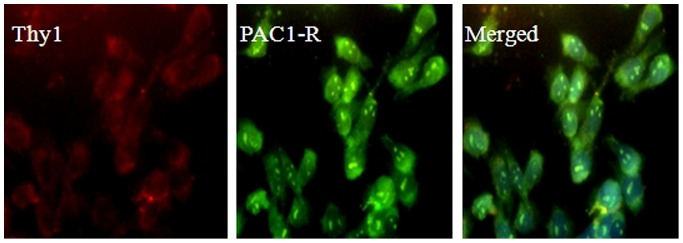
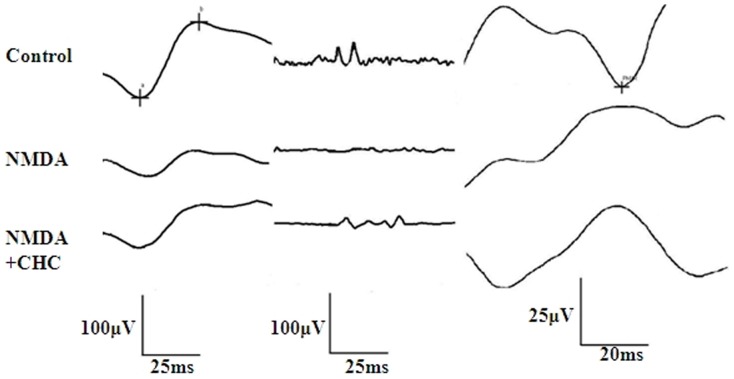
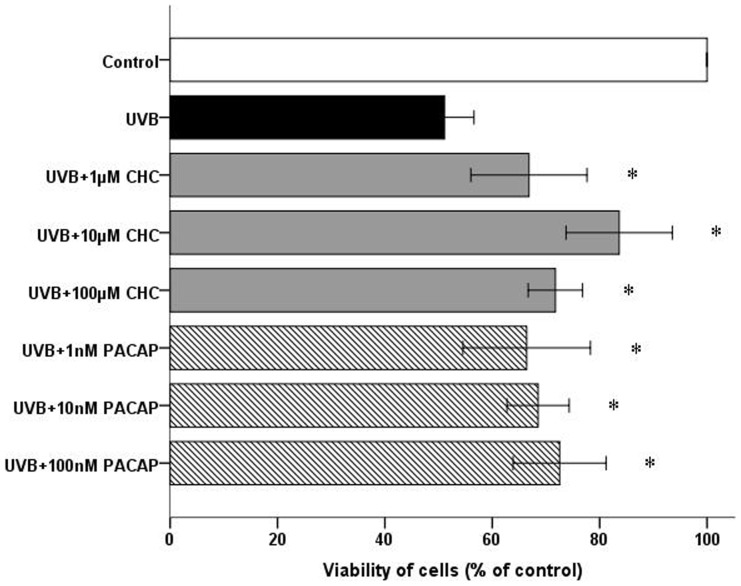
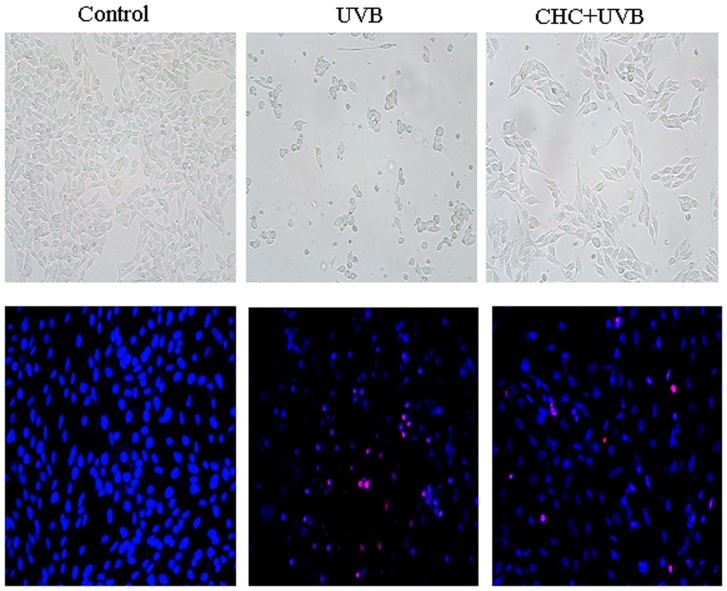
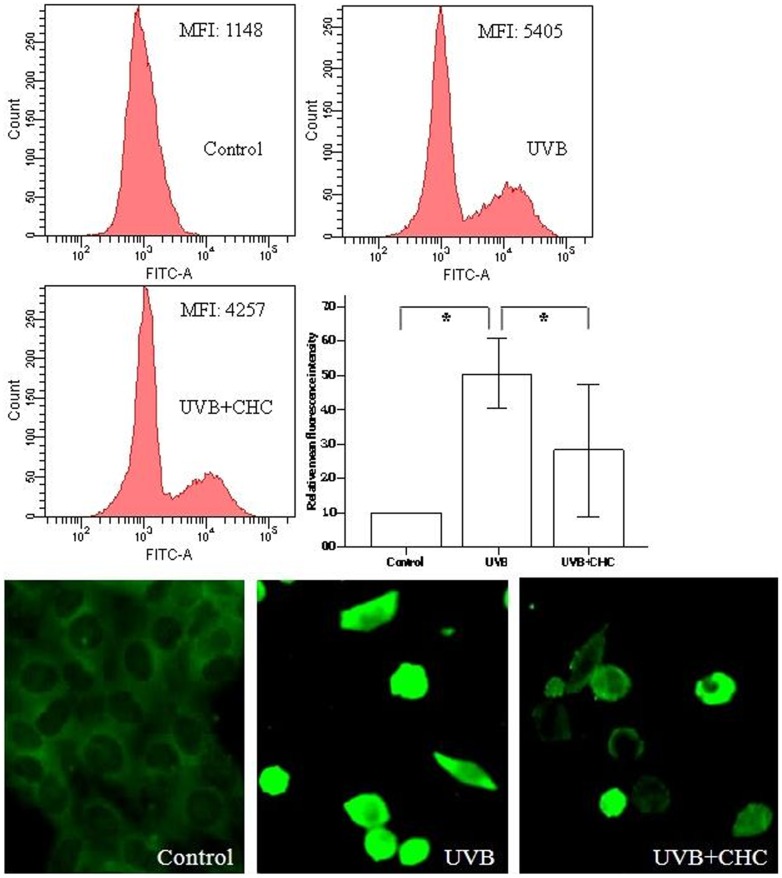
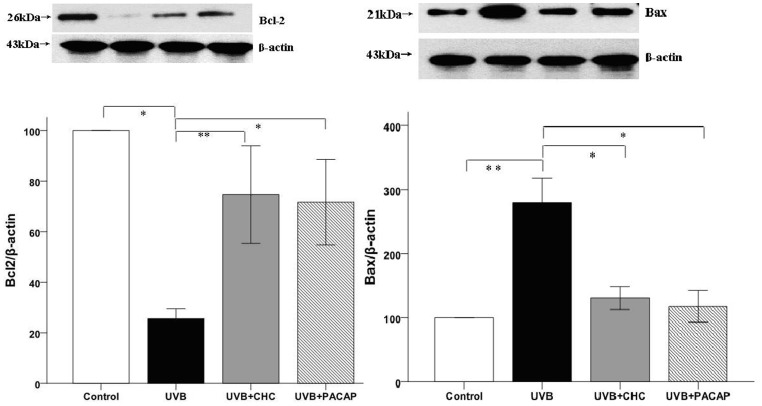
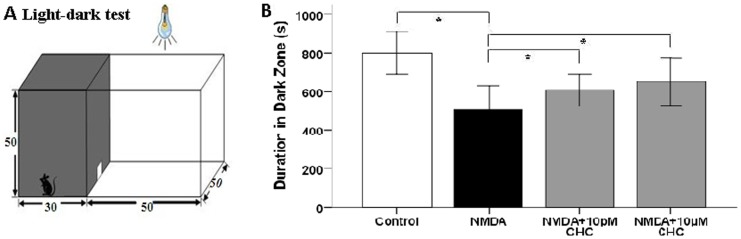
METHODOLOGY/PRINCIPAL FINDINGS: Double-labeling immunohistochemistry was used to detect the expression of Thy-1 and PACAP receptor type 1 in a retinal ganglion cell line RGC-5. The apoptosis of RGC-5 cells was induced by 0.02 J/cm(2) Ultraviolet B irradiation. MTT assay, flow cytometry, fluorescence microscopy were used to investigate the viability, the level of reactive oxygen species (ROS) and apoptosis of RGC-5 cells respectively. CHC attenuated apoptotic cell death induced by Ultraviolet B irradiation and inhibited the excessive generation of ROS. Moreover, CHC treatment resulted in decreased expression of Bax and concomitant increase of Bcl-2, as was revealed by western-blot analysis. The in vivo apoptosis of retinal ganglion cells was induced by injecting 50 mM N-methyl-D-aspartate (NMDA) (100 nmol in a 2 µL saline solution) intravitreally, and different dosages of CHC were administered. At day 7, rats in CHC+ NMDA-treated groups showed obvious aversion to light when compared to NMDA rats. Electroretinogram recordings revealed a marked decrease in the amplitudes of a-wave, b-wave, and photopic negative response due to NMDA damage. In retina receiving intravitreal NMDA and CHC co-treatment, these values were significantly increased. CHC treatment also resulted in less NMDA-induced cell loss and a decrease in the proportion of dUTP end-labeling-positive cells in ganglion cell line.
CHSDGIC, a novel cyclopeptide from PACAP (1-5) attenuates apoptosis in RGC-5 cells and inhibits NMDA-induced retinal neuronal death. The beneficial effects may occur via the mitochondria pathway. PACAP derivatives like CHC may serve as a promising candidate for neuroprotection in glaucoma.
研究垂体腺苷酸环化酶激活多肽(PACAP)(1 - 5)环化产生的新型环肽CHSDGIC(CHC)在视网膜神经节细胞凋亡的细胞和啮齿动物模型中的保护作用。
方法/主要发现:采用双标免疫组织化学法检测视网膜神经节细胞系RGC - 5中Thy - 1和1型PACAP受体的表达。用0.02 J/cm(2) 的紫外线B照射诱导RGC - 5细胞凋亡。分别采用MTT法、流式细胞术和荧光显微镜观察RGC - 5细胞的活力、活性氧(ROS)水平和凋亡情况。CHC减轻了紫外线B照射诱导的凋亡细胞死亡,并抑制了ROS的过度产生。此外,蛋白质免疫印迹分析显示,CHC处理导致Bax表达降低,同时Bcl - 2表达增加。通过玻璃体内注射50 mM N - 甲基 - D - 天冬氨酸(NMDA)(100 nmol溶于2 μL盐溶液)诱导视网膜神经节细胞的体内凋亡,并给予不同剂量的CHC。在第7天,与NMDA组大鼠相比,CHC + NMDA处理组的大鼠表现出明显的畏光。视网膜电图记录显示,由于NMDA损伤,a波、b波和明视负反应的振幅显著降低。在接受玻璃体内NMDA和CHC联合治疗的视网膜中,这些值显著增加。CHC治疗还减少了NMDA诱导的细胞损失,并降低了神经节细胞系中dUTP末端标记阳性细胞的比例。
PACAP(1 - 5)衍生的新型环肽CHSDGIC减轻RGC - 5细胞凋亡,并抑制NMDA诱导的视网膜神经元死亡。其有益作用可能通过线粒体途径实现。像CHC这样的PACAP衍生物可能是青光眼神经保护的有希望的候选物。