Cell Commun Signal. 2014 Oct 5;12:54. doi: 10.1186/s12964-014-0054-x.
The myotonic dystrophy kinase-related CDC42-binding kinases MRCKα and MRCKβ regulate actin-myosin contractility and have been implicated in cancer metastasis. Along with the related ROCK1 and ROCK2 kinases, the MRCK proteins initiate signalling events that lead to contractile force generation which powers cancer cell motility and invasion. A potential strategy for cancer therapy is to reduce metastasis by blocking MRCK activity, either alone or in combination with ROCK inhibition. However, to date no potent small molecule inhibitors have been developed with selectivity towards MRCK.
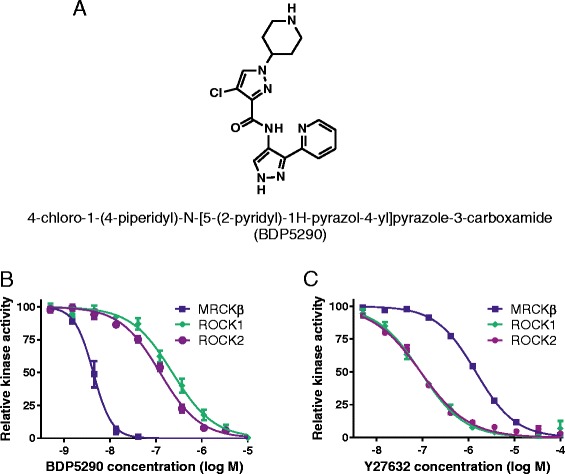
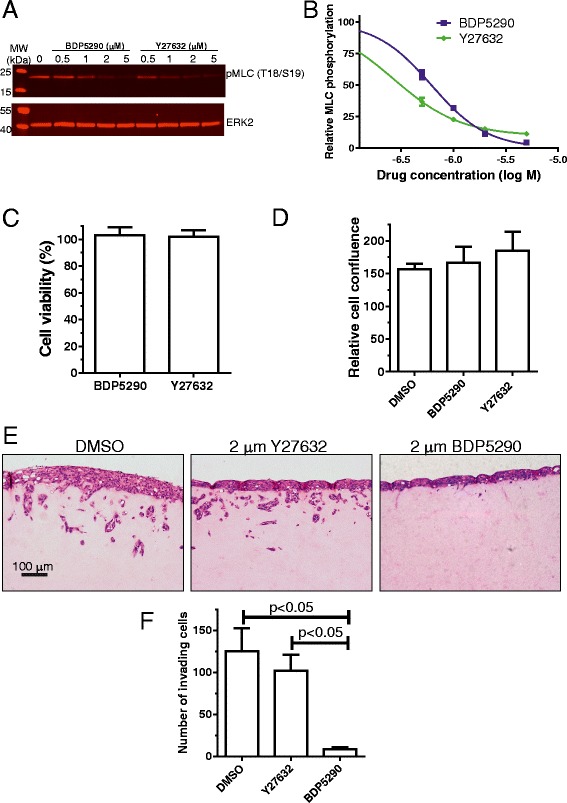
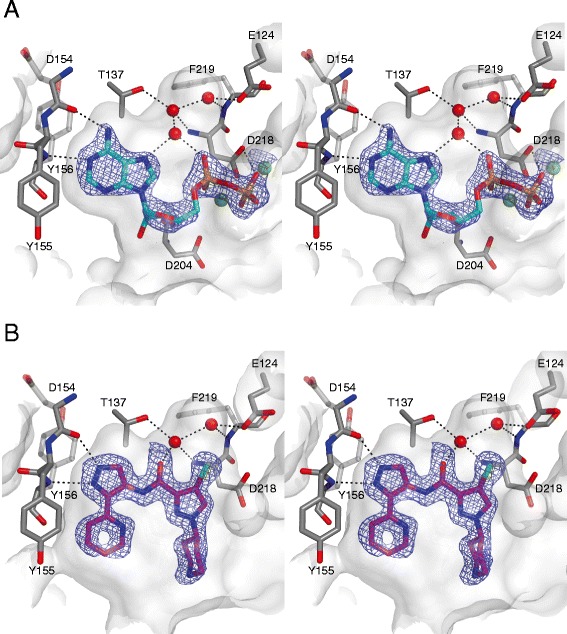
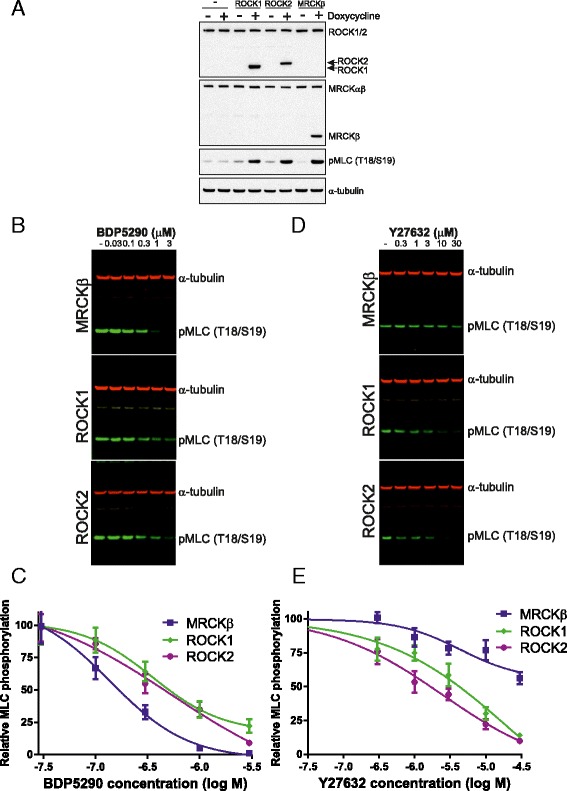
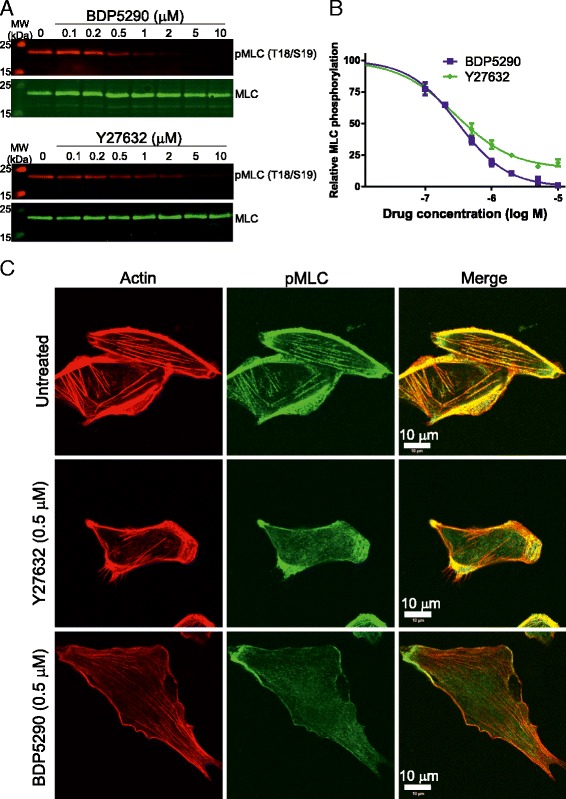
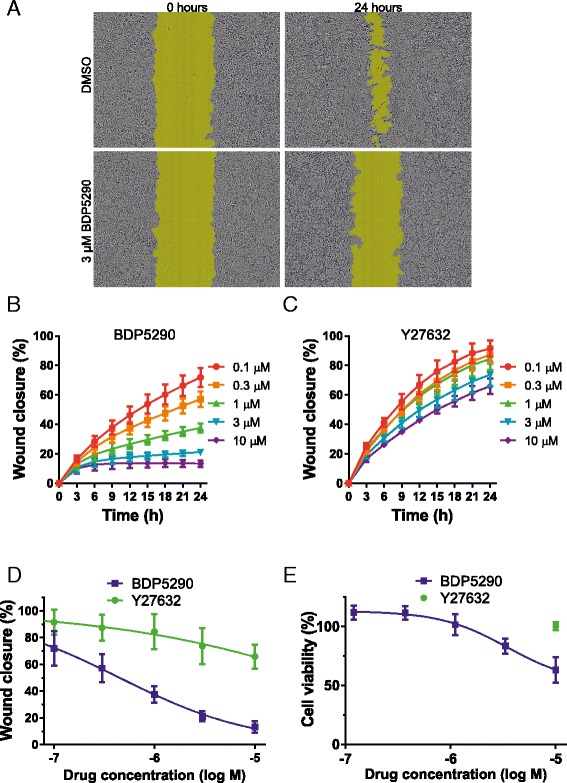
Screening a kinase-focused small molecule chemical library resulted in the identification of compounds with inhibitory activity towards MRCK. Medicinal chemistry combined with in vitro enzyme profiling led to the discovery of 4-chloro-1-(4-piperidyl)-N-[5-(2-pyridyl)-1H-pyrazol-4-yl]pyrazole-3-carboxamide (BDP00005290; abbreviated as BDP5290) as a potent MRCK inhibitor. X-ray crystallography of the MRCKβ kinase domain in complex with BDP5290 revealed how this ligand interacts with the nucleotide binding pocket. BDP5290 demonstrated marked selectivity for MRCKβ over ROCK1 or ROCK2 for inhibition of myosin II light chain (MLC) phosphorylation in cells. While BDP5290 was able to block MLC phosphorylation at both cytoplasmic actin stress fibres and peripheral cortical actin bundles, the ROCK selective inhibitor Y27632 primarily reduced MLC phosphorylation on stress fibres. BDP5290 was also more effective at reducing MDA-MB-231 breast cancer cell invasion through Matrigel than Y27632. Finally, the ability of human SCC12 squamous cell carcinoma cells to invade a three-dimensional collagen matrix was strongly inhibited by 2 μM BDP5290 but not the identical concentration of Y27632, despite equivalent inhibition of MLC phosphorylation.
BDP5290 is a potent MRCK inhibitor with activity in cells, resulting in reduced MLC phosphorylation, cell motility and tumour cell invasion. The discovery of this compound will enable further investigations into the biological activities of MRCK proteins and their contributions to cancer progression.
与肌球蛋白相关的细胞分裂周期 42 结合激酶(MRCK)α和 MRCKβ调节肌动球蛋白收缩,并且与癌症转移有关。与相关的 ROCK1 和 ROCK2 激酶一起,MRCK 蛋白启动信号事件,导致产生收缩力,为癌细胞的运动和侵袭提供动力。癌症治疗的一种潜在策略是通过阻断 MRCK 活性来减少转移,无论是单独使用还是与 ROCK 抑制联合使用。然而,迄今为止,还没有开发出针对 MRCK 具有选择性的有效小分子抑制剂。
筛选激酶靶向小分子化学文库导致发现了对 MRCK 具有抑制活性的化合物。通过组合体外酶谱分析,发现了 4-氯-1-(4-哌啶基)-N-[5-(2-吡啶基)-1H-吡唑-4-基]吡唑-3-甲酰胺(BDP00005290;简称 BDP5290)是一种有效的 MRCK 抑制剂。MRCKβ激酶结构域与 BDP5290 复合物的 X 射线晶体学揭示了该配体如何与核苷酸结合口袋相互作用。BDP5290 对 MRCKβ的选择性明显高于 ROCK1 或 ROCK2,可抑制细胞中肌球蛋白 II 轻链(MLC)磷酸化。虽然 BDP5290 能够阻断细胞质肌动蛋白应力纤维和周围皮质肌动蛋白束上的 MLC 磷酸化,但 ROCK 选择性抑制剂 Y27632 主要减少了应力纤维上的 MLC 磷酸化。BDP5290 还能更有效地减少 MDA-MB-231 乳腺癌细胞穿过 Matrigel 的侵袭,而 Y27632 的效果则较差。最后,2 μM 的 BDP5290 强烈抑制人类 SCC12 鳞状细胞癌细胞侵袭三维胶原基质,而相同浓度的 Y27632 则没有,尽管 MLC 磷酸化受到同等抑制。
BDP5290 是一种有效的 MRCK 抑制剂,在细胞中具有活性,可降低 MLC 磷酸化、细胞运动和肿瘤细胞侵袭。该化合物的发现将使进一步研究 MRCK 蛋白的生物学活性及其对癌症进展的贡献成为可能。