López-Arbarello Adriana, Stockar Rudolf, Bürgin Toni
SNSB- Bavarian State Collection for Palaeontology and Geology, and GeoBio-Center Ludwig Maximilian University, Munich, Germany.
Museo Cantonale di Storia Naturale, Lugano, Switzerland.
PLoS One. 2014 Oct 8;9(10):e108665. doi: 10.1371/journal.pone.0108665. eCollection 2014.
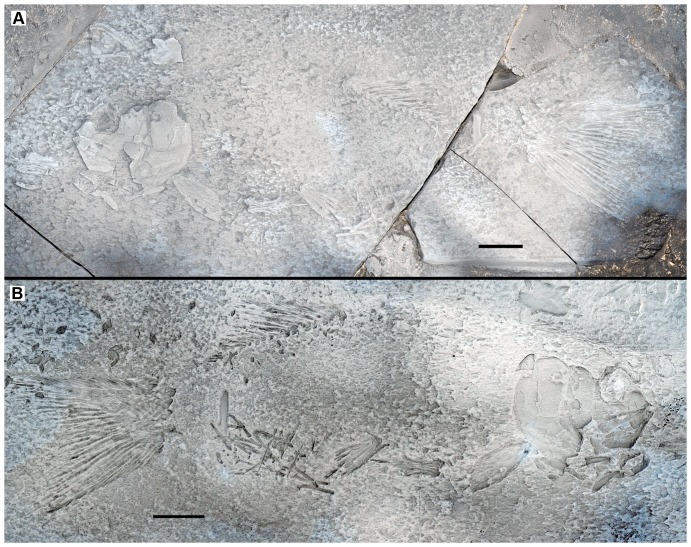
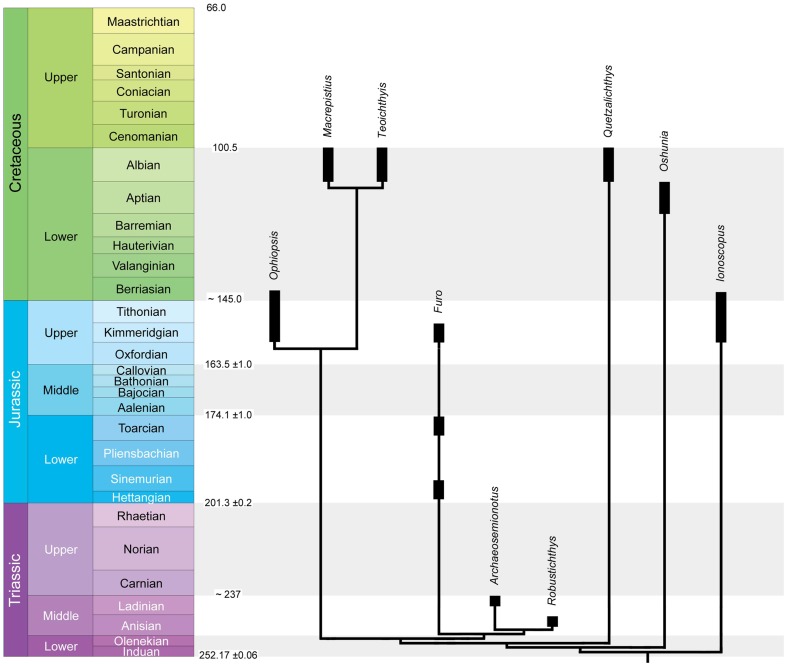
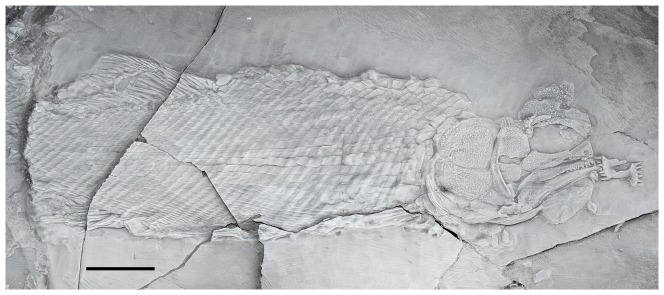
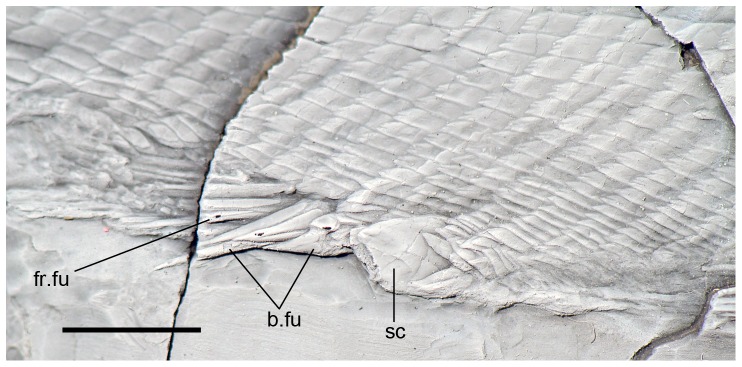
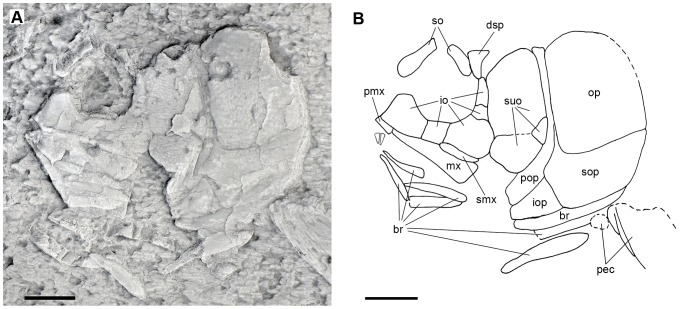
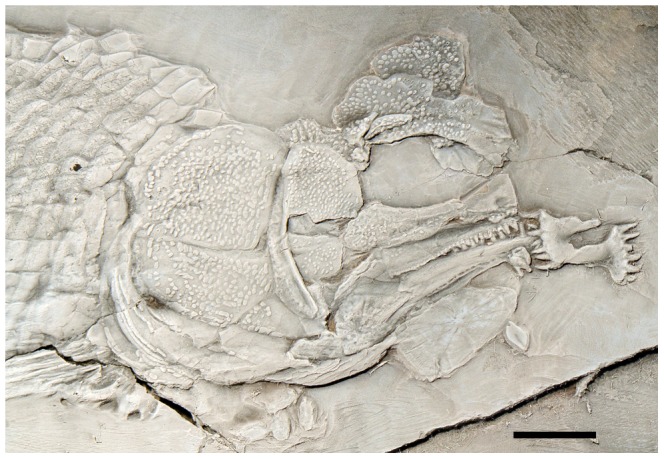
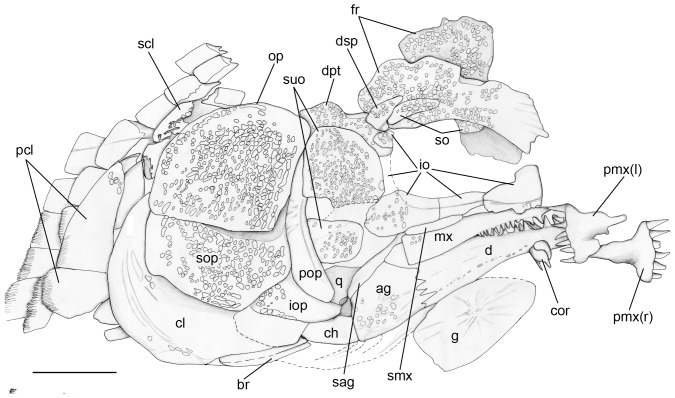
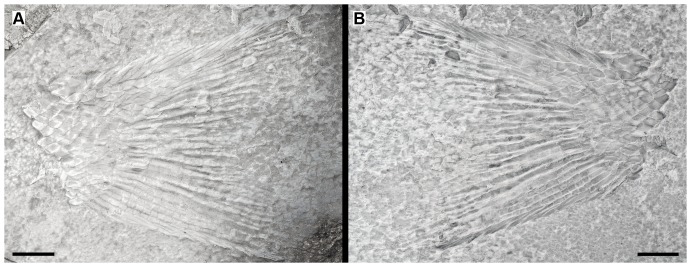
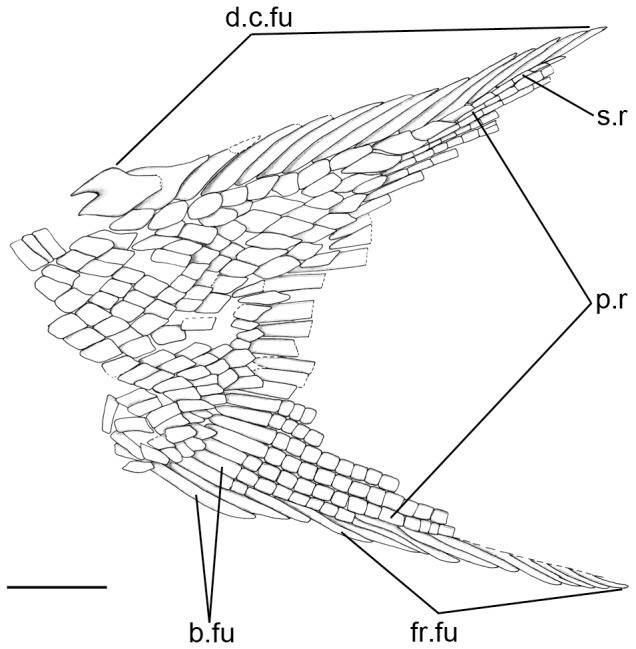
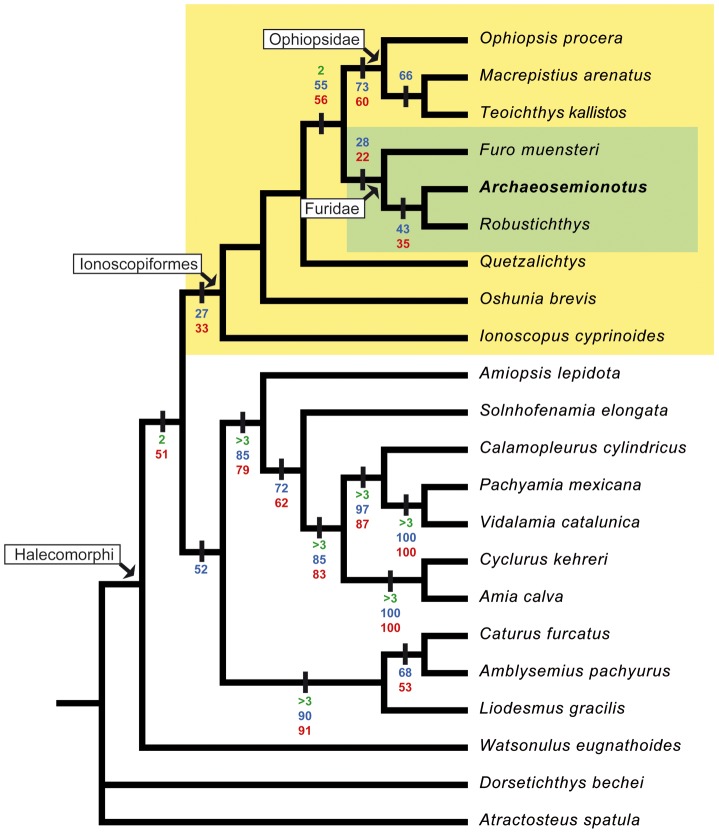
The lagerstätten in the Monte San Giorgio have provided excellent fossils representing one of the most important windows to the marine life during the Triassic. Among these fossils, fishes are abundant and extraordinarily well preserved. Most of these fishes represent extinct lineages and were difficult to understand and classify during the early years after discovery. These difficulties usually led to a mixture of species under the same taxonomic name. This is the case of fishes referred to the genus Archaeosemionotus. The name bearing type of A. connectens, the type species of this genus, represents a basal halecomorph, but most other fishes referred to this genus represent basal ginglymodians. Therefore, we conducted this study to clarify the taxonomic status and phylogenetic relationships of A. connectens, which is a member of the family Furidae (Halecomorphi, Ionoscopiformes) representing the second cladistically supported evidence of ionoscopiforms in the Triassic and it is thus one of the two oldest reliable records of this group. Ionoscopiforms have a long stratigraphic range, though their fossil record is rather patchy. In our analysis, the sister taxon of Archaeosemionotus is Robustichthys from the Anisian of China, and they together form a clade with Furo, which is known from several localities ranging from the Early to the Late Jurassic. Other ionoscopiforms are so far known from the Kimmeridgian to the Albian and it is thus evident that recent efforts have concentrated on the later history of the group (Late Jurassic to Cretaceous). The phylogenetic relationships obtained for the Ionoscopiformes do not show a clear palaeobiogeographic pattern, but give important new insights into the origin, divergence date and early history of this clade.
圣乔治山的化石层提供了丰富的化石,展现了三叠纪海洋生物最重要的窗口之一。在这些化石中,鱼类数量众多且保存异常完好。这些鱼类大多代表已灭绝的谱系,在发现后的最初几年里难以理解和分类。这些困难通常导致同一分类名称下物种的混杂。这就是被归入 Archaeosemionotus 属的鱼类的情况。该属的模式种 A. connectens 的命名模式标本代表一种基干全骨鱼类,但归入该属的大多数其他鱼类代表基干全骨舌齿鱼类。因此,我们开展这项研究以阐明 A. connectens 的分类地位和系统发育关系,它是 Furidae 科(全骨鱼类,电鳐目)的成员,代表了三叠纪电鳐目第二个分支支持的证据,因此是该类群两个最古老的可靠记录之一。电鳐目的地层范围很长,尽管它们的化石记录相当零散。在我们的分析中,Archaeosemionotus 的姐妹分类单元是来自中国安尼期的 Robustichthys,它们共同与 Furo 形成一个分支,Furo 从早侏罗世到晚侏罗世的几个地点都有发现。到目前为止,其他电鳐目已知存在于基默里季阶到阿尔比阶,因此很明显,最近的研究集中在该类群的后期历史(晚侏罗世到白垩纪)。电鳐目的系统发育关系并未显示出明确的古生物地理模式,但为该分支的起源、分歧时间和早期历史提供了重要的新见解。