Biel Nikolett M, Siemann Dietmar W
Department of Pathology, University of Florida College of Medicine, 1395 Center Drive, Gainesville, FL 32610, USA.
Department of Radiation Oncology, University of Florida College of Medicine, 2000 SW, Archer Road, Gainesville, FL 32610, USA.
Cancer Lett. 2016 Oct 1;380(2):525-533. doi: 10.1016/j.canlet.2014.09.035. Epub 2014 Oct 12.
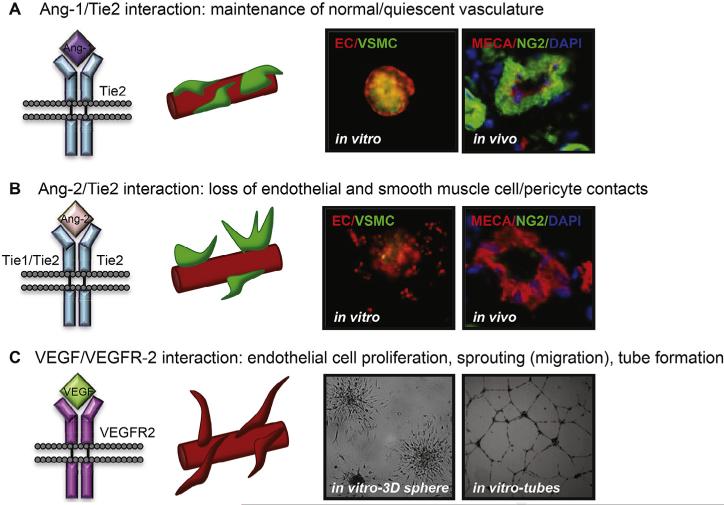
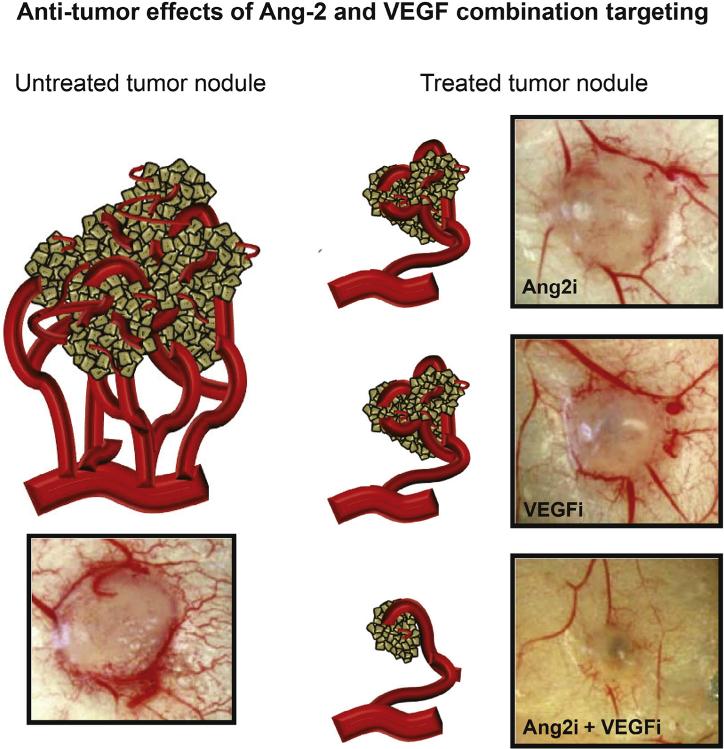
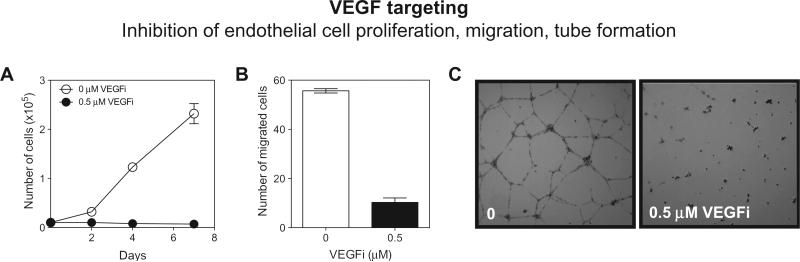
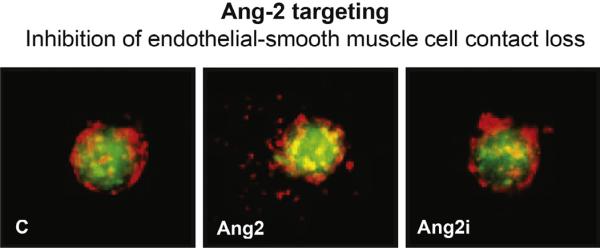
Anti-angiogenic therapies target the tumor vasculature, impairing its development and growth. It was hypothesized over 40 years ago by the late Judah Folkman and Julie Denekamp that depriving a tumor of oxygen and nutrients, by targeting the tumor vasculature, could have therapeutic benefits. Identification of growth factors and signaling pathways important in angiogenesis subsequently led to the development of a series of anti-angiogenic agents that over the past decade have become part of the standard of care in several disease settings. Unfortunately not all patients respond to the currently available anti-angiogenic therapies while others become resistant to these agents following prolonged exposure. Identification of new pathways that may drive angiogenesis led to the development of second-generation anti-angiogenic agents such as those targeting the Ang-2/Tie2 axis. Recently, it has become clear that combination of first and second generation agents targeting the blood vessel network can lead to outcomes superior to those using either agent alone. The present review focuses on the current status of VEGF and Ang-2 targeted agents and the potential utility of using them in combination to impair tumor angiogenesis.
抗血管生成疗法作用于肿瘤脉管系统,抑制其发育和生长。40多年前,已故的朱达·福克曼(Judah Folkman)和朱莉·德内坎普(Julie Denekamp)曾提出假说,即通过作用于肿瘤脉管系统来剥夺肿瘤的氧气和营养物质可能具有治疗益处。随后,对血管生成中重要的生长因子和信号通路的鉴定促使一系列抗血管生成药物得以研发,在过去十年中,这些药物已成为多种疾病治疗标准的一部分。不幸的是,并非所有患者都对目前可用的抗血管生成疗法有反应,而其他患者在长期接触这些药物后会产生耐药性。对可能驱动血管生成的新通路的鉴定促使了第二代抗血管生成药物的研发,例如那些作用于血管生成素-2(Ang-2)/酪氨酸激酶受体2(Tie2)轴的药物。最近,有一点已经很明确,即联合使用第一代和第二代作用于血管网络的药物所产生的疗效优于单独使用任何一种药物。本综述重点关注靶向血管内皮生长因子(VEGF)和Ang-2的药物的现状,以及联合使用它们来抑制肿瘤血管生成的潜在效用。