Ng Siewsee, Lasekan Ola, Muhammad Kharidah, Sulaiman Rabiha, Hussain Norhayati
Department of Food Technology, Faculty of Food Science and Technology, University Putra Malaysia, UPM, 43400 Serdang, Malaysia.
Department of Food Science, Faculty of Food Science and Technology, University Putra Malaysia, UPM, 43400 Serdang, Malaysia.
Chem Cent J. 2014 Sep 7;8(1):55. doi: 10.1186/s13065-014-0055-2. eCollection 2014.
Proper roasting is crucial to flavor, color, and texture development in the final product. In recent years, several research studies have been carried out to establish the best optimum roasting conditions for some common edible nuts such as; hazelnut, peanut, and pistachio nut. Although roasting is an important process for nuts and oilseeds, there is little or no information on the development of color, aroma, and textural changes in Terminalia catappa nuts during roasting.
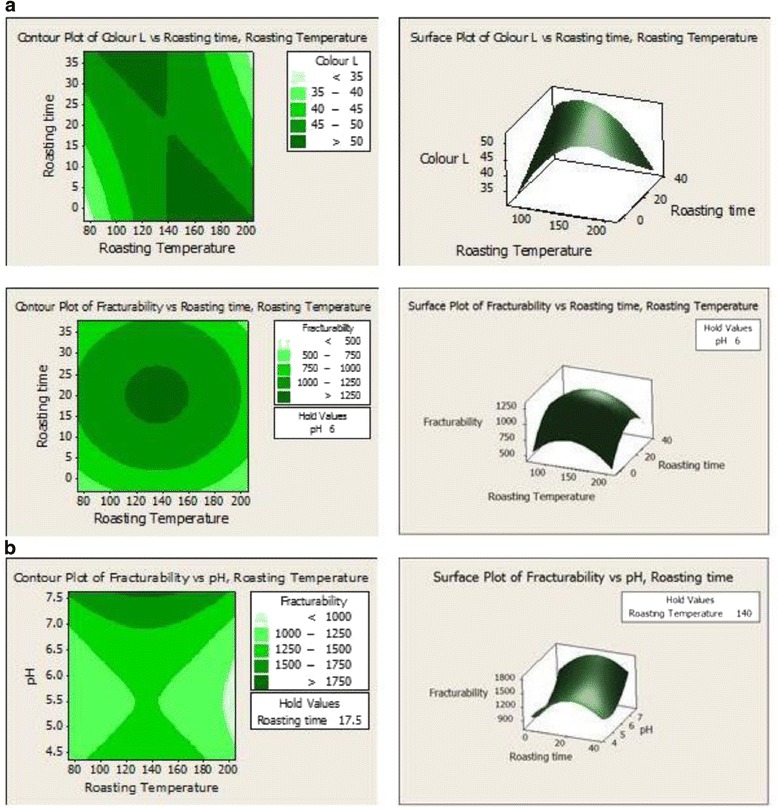
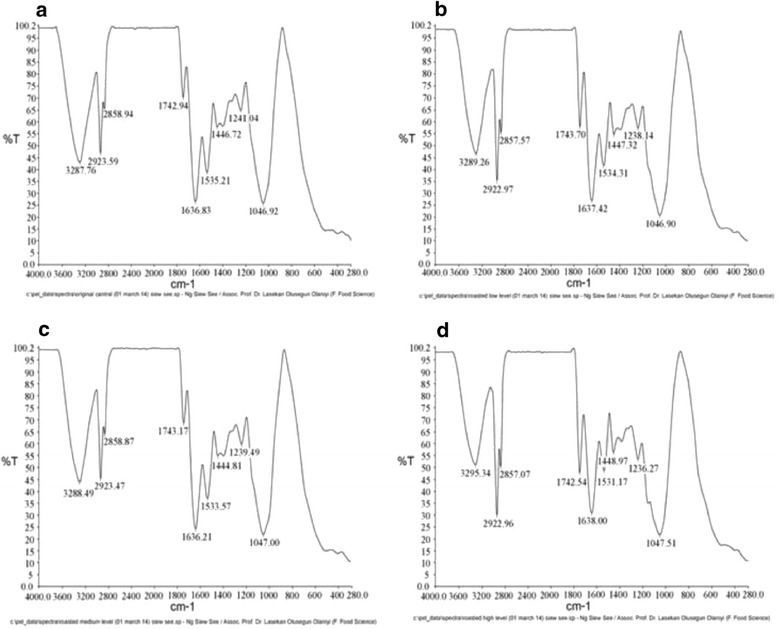
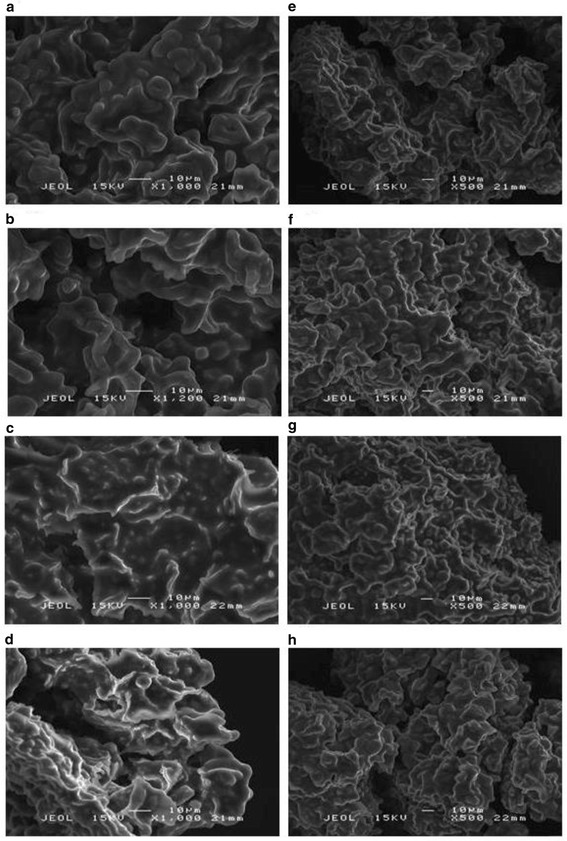
Results showed that color formation and browning index were significantly (P < 0.05) influenced by the roasting temperature and time of roasting. However, the fracturability of nuts was significantly (P < 0.05) affected by both temperature of roasting and time as well as pH. The optimized results showed that the best response was reached when the roasting time was 29.9 min, roasting temperature 174.5°C, and pH 6.08, respectively. Moreover, the 3400-1560 cm(-1) carbonyl region for carboxylic acid, alkenes, esters, and amines was found to provide a flavor-print of the roasted tropical almond nut. While, increase in temperature did not produce new carbonyl compounds, it however led to higher concentration of compounds. Scanning electron microscopy of the almond nuts showed that the starch granules were embedded in tissues.
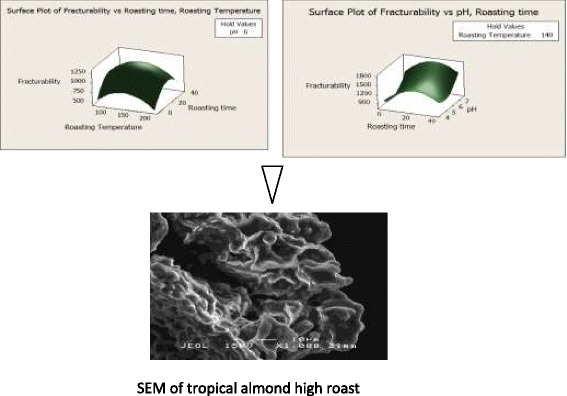
These results showed that roasting temperature and time of roasting were the main variables that significantly affected the physicochemical properties of roasted tropical almond nuts. Moreover the flavor-prints for the roasted nut were produced in the 3400-1560 cm(-1) carbonyl region. Graphical AbstractEffect of roasting conditions on fracturability and structural morphology of tropical almond nuts (T. catappa).
恰当的烘焙对于最终产品的风味、色泽和质地形成至关重要。近年来,已经开展了多项研究以确定一些常见食用坚果(如榛子、花生和开心果)的最佳烘焙条件。尽管烘焙是坚果和油籽的重要加工过程,但关于榄仁树坚果在烘焙过程中颜色、香气和质地变化的研究却很少或几乎没有。
结果表明,烘焙温度和时间对颜色形成和褐变指数有显著影响(P < 0.05)。然而,坚果的易碎性受到烘焙温度、时间以及pH值的显著影响(P < 0.05)。优化结果显示,当烘焙时间为29.9分钟、烘焙温度为174.5°C、pH值为6.08时,可达到最佳效果。此外,发现3400 - 1560 cm(-1)的羧酸、烯烃、酯和胺的羰基区域能够提供烘焙热带杏仁坚果的风味指纹图谱。虽然温度升高不会产生新的羰基化合物,但会导致化合物浓度升高。杏仁坚果的扫描电子显微镜图像显示淀粉颗粒嵌入组织中。
这些结果表明,烘焙温度和时间是显著影响烘焙热带杏仁坚果理化性质的主要变量。此外,烘焙坚果的风味指纹图谱出现在3400 - 1560 cm(-1)的羰基区域。图形摘要烘焙条件对热带杏仁坚果(榄仁树坚果)易碎性和结构形态的影响