Foot Riaan, Dalci Oyku, Gonzales Carmen, Tarraf Nour Eldin, Darendeliler M Ali
Discipline of Orthodontics, Faculty of Dentistry, University of Sydney, Sydney 2006, New South Wales, Australia.
Prog Orthod. 2014 Sep 25;15(1):56. doi: 10.1186/s40510-014-0056-7.
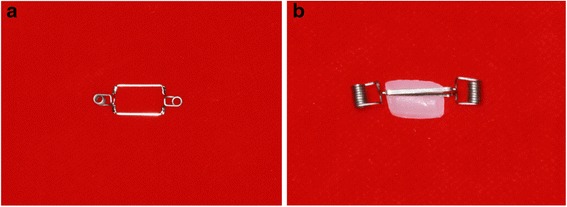
The technology surrounding temporary skeletal anchorage devices has improved in leaps and bounds. However, no specific auxiliary exists for the intrusion of molars in conjunction with these devices and currently clinicians are forced to make do with available force delivery materials. A new intrusion auxiliary, the Sydney Intrusion Spring (SIS), was designed to facilitate intrusion without frequent need for reactivation or tissue irritation.
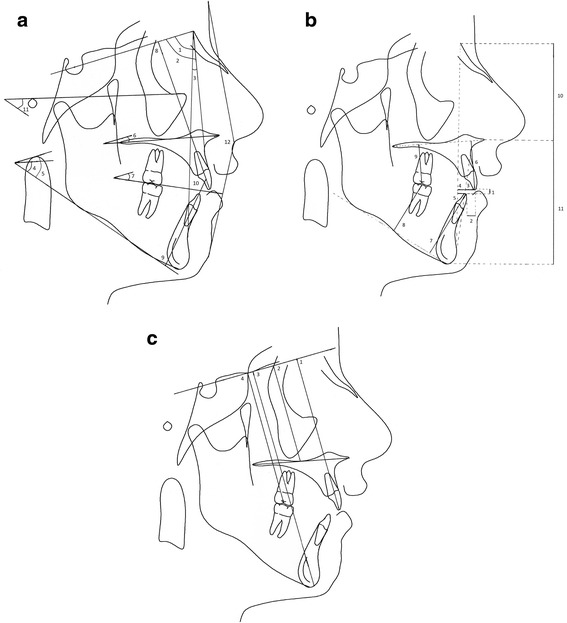
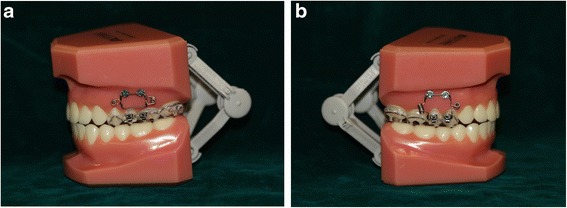
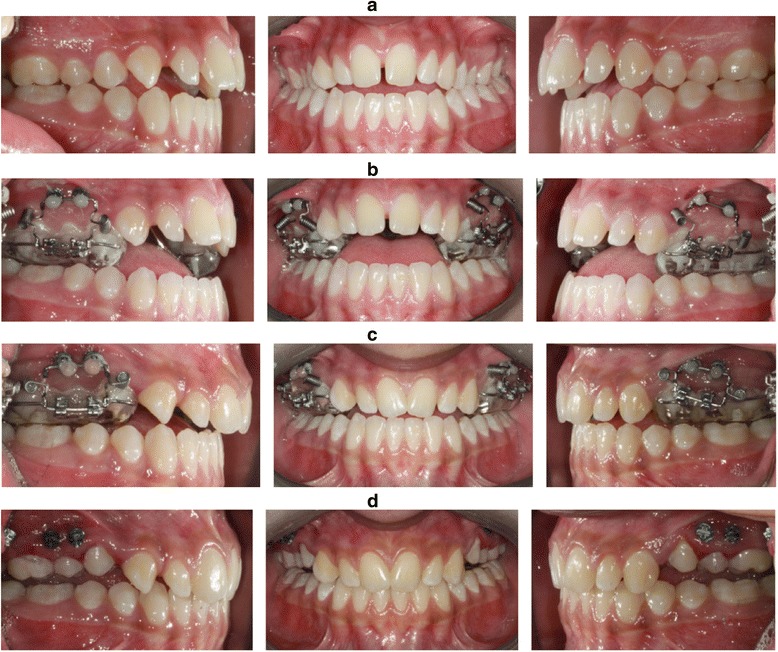
The subjects consisted of 16 adolescent patients (12 females and 4 males) with an average age of 13.1 years (range 12.2 to 14.3 years). All patients were in the permanent dentition with an anterior open bite of ≥2 mm. Four self-drilling miniscrews were placed into the posterior maxillary buccal alveolar bone. The intrusion appliance consisted of a bonded acrylic appliance and the SIS, activated to produce an initial intrusive force of 500 g. Cone beam computed tomograms were taken after miniscrew placement and at the end of active intrusion. Rendered lateral cephalograms were produced and measurements were taken and compared.
All study objectives were achieved in 4.91 months (range 2.5 to 7.75 months). The mean molar intrusion was 2.9±0.8 mm (P<.001), resulting in over bite increase of 3.0±1.5 mm (P<.001). The intrusion led to a 2.6°±1.3° (P<.001) clockwise occlusal plane rotation and a 1.2°±1.3° (P<.01) counter-clockwise rotation of the mandible. Dental measurements showed a significant uprighting and elongation of the incisors. There was no significant extrusion of the lower molars.
The SIS is an effective appliance for the intrusion of maxillary posterior teeth, in conjunction with miniscrews.
围绕临时骨骼锚固装置的技术有了飞跃性的进步。然而,目前尚无专门用于配合这些装置压低磨牙的辅助器具,临床医生目前只能凑合使用现有的力传递材料。一种新的压低辅助器具——悉尼压低弹簧(SIS)被设计出来,以利于压低磨牙,且无需频繁重新激活或引起组织刺激。
研究对象为16名青少年患者(12名女性,4名男性),平均年龄13.1岁(范围12.2至14.3岁)。所有患者均为恒牙列,前牙开咬≥2mm。在上颌后牙颊侧牙槽骨植入4枚自攻微型螺钉。压低矫治器由粘结式丙烯酸矫治器和SIS组成,激活后产生500g的初始压低力。在植入微型螺钉后以及主动压低结束时拍摄锥形束计算机断层扫描图像。生成数字化侧位头影测量片并进行测量和比较。
所有研究目标在4.91个月(范围2.5至7.75个月)内实现。磨牙平均压低2.9±0.8mm(P<0.001),导致覆合增加3.0±1.5mm(P<0.001)。压低导致咬合平面顺时针旋转2.6°±1.3°(P<0.001),下颌逆时针旋转1.2°±1.3°(P<0.01)。牙齿测量显示切牙显著直立和伸长。下颌磨牙无明显伸长。
SIS是一种与微型螺钉配合使用压低上颌后牙的有效矫治器。