Suarez-Ramirez Jenny E, Tarrio Margarite L, Kim Kwangsin, Demers Delia A, Biron Christine A
Department of Molecular Microbiology and Immunology, Division of Biology and Medicine, Warren Alpert Medical School, Brown University, Providence, Rhode Island, USA.
Department of Molecular Microbiology and Immunology, Division of Biology and Medicine, Warren Alpert Medical School, Brown University, Providence, Rhode Island, USA
mBio. 2014 Oct 21;5(5):e01978-14. doi: 10.1128/mBio.01978-14.
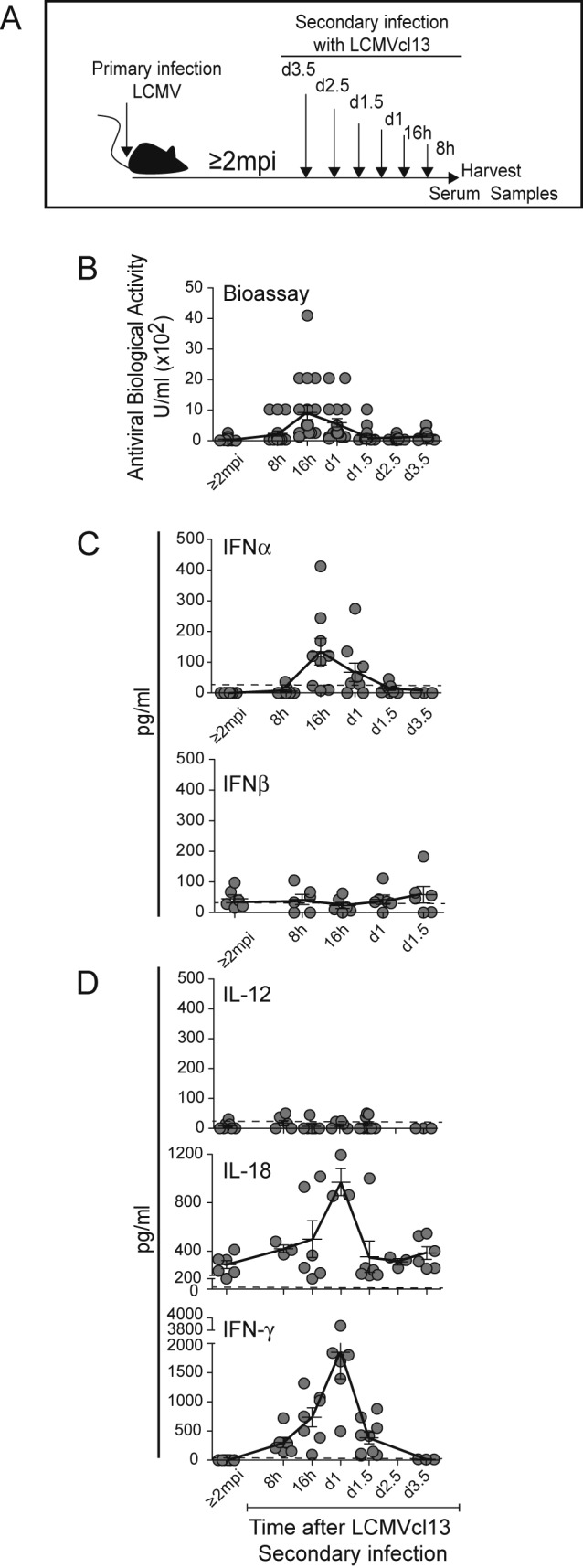
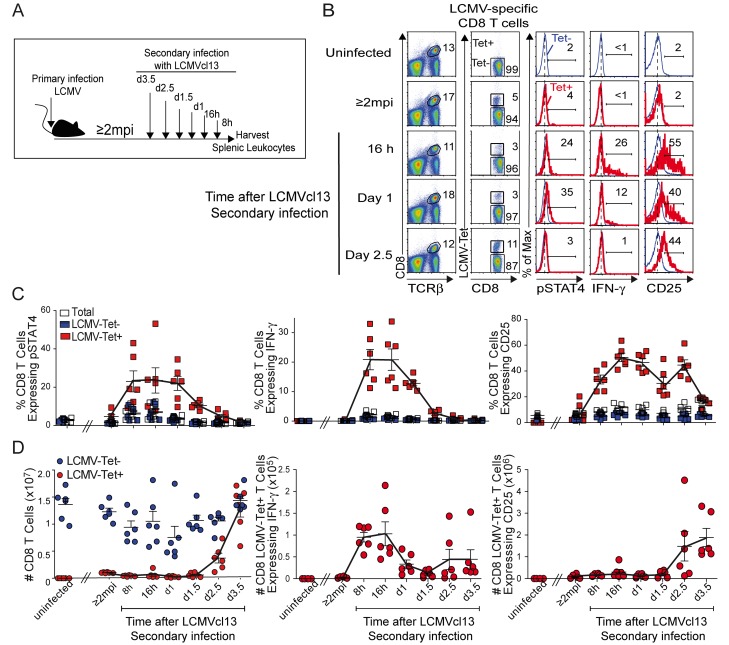
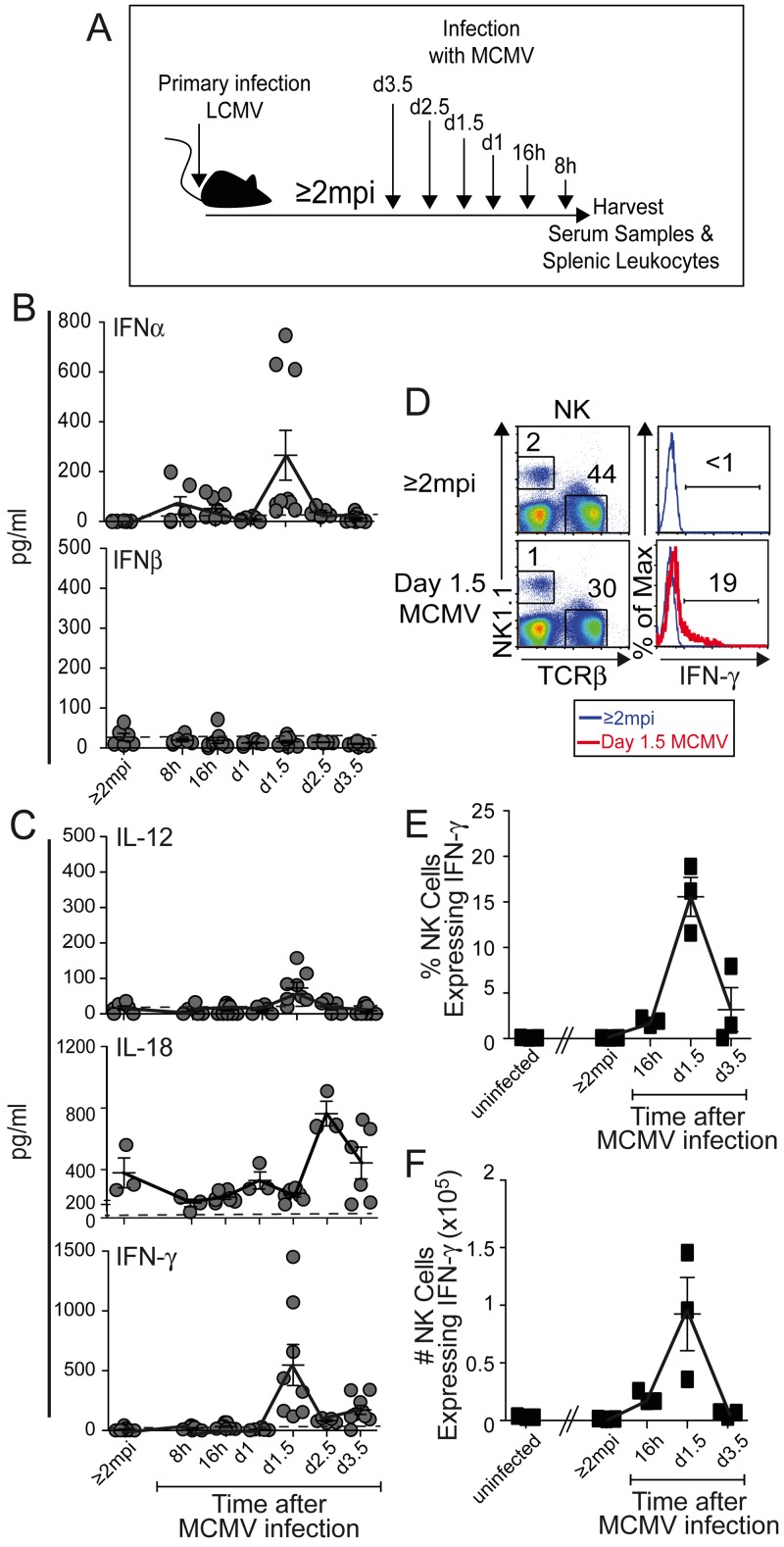
The cytokine gamma interferon (IFN-γ), with antimicrobial and immunoregulatory functions, can be produced by T cells following stimulation through their T cell receptors (TCRs) for antigen. The innate cytokines type 1 IFNs and interleukin-12 (IL-12) can also stimulate IFN-γ production by natural killer (NK) but not naive T cells. High basal expression of signal transducer and activator of transcription 4 (STAT4), used by type 1 IFN and IL-12 to induce IFN-γ as well as CD25, contributes to the NK cell responses. During acute viral infections, antigen-specific CD8 T cells are stimulated to express elevated STAT4 and respond to the innate factors with IFN-γ production. Little is known about the requirements for cytokine compared to TCR stimulation. Primary infections of mice with lymphocytic choriomeningitis virus (LCMV) demonstrated that although the elicited antigen-specific CD8 T cells acquired STAT4-dependent innate cytokine responsiveness for IFN-γ and CD25 induction ex vivo, TCR stimulation induced these through STAT4-independent pathways. During secondary infections, LCMV-immune CD8 T cells had STAT4-dependent IFN-γ expression at times of innate cytokine induction but subsequently expanded through STAT4-independent pathways. At times of innate cytokine responses during infection with the antigen-distinct murine cytomegalovirus virus (MCMV), NK and LCMV-immune CD8 T cells both had activation of pSTAT4 and IFN-γ. The T cell IFN-γ response was STAT4 and IL-12 dependent, but antigen-dependent expansion was absent. By dissecting requirements for STAT4 and antigen, this work provides novel insights into the endogenous regulation of cytokine and proliferative responses and demonstrates conditioning of innate immunity by experience. Importance: Understanding the regulation and function of adaptive immunity is key to the development of new and improved vaccines. Its CD8 T cells are activated through antigen-specific receptors to contribute to long-lasting immunity after natural infections or purposeful immunization. The antigen-receptor pathway of stimulation can lead to production of gamma interferon (IFN-γ), a cytokine having both direct antimicrobial and immunoregulatory functions. Natural killer cells can also produce IFN-γ in response to the innate cytokines type 1 IFNs and/or interleukin-12. This work demonstrates that CD8 T cells acquire parallel responsiveness to innate cytokine signaling for IFN-γ expression during their selection and development and maintain this capability to participate in innate immune responses as long-lived memory cells. Thus, CD8 T cells are conditioned to play a role in innate immunity, and their presence under immune conditions has the potential to regulate resistance to either secondary challenges or primary infections with unrelated agents.
细胞因子γ干扰素(IFN-γ)具有抗菌和免疫调节功能,T细胞在通过其T细胞受体(TCR)识别抗原受到刺激后可产生该细胞因子。固有细胞因子1型干扰素和白细胞介素-12(IL-12)也可刺激自然杀伤(NK)细胞产生IFN-γ,但不能刺激初始T细胞。1型干扰素和IL-12用于诱导IFN-γ的信号转导和转录激活因子4(STAT4)以及CD25的高基础表达有助于NK细胞反应。在急性病毒感染期间,抗原特异性CD8 T细胞受到刺激,表达升高的STAT4,并对固有因子产生IFN-γ反应。与TCR刺激相比,关于细胞因子的需求了解甚少。用淋巴细胞脉络丛脑膜炎病毒(LCMV)对小鼠进行初次感染表明,虽然诱导产生的抗原特异性CD8 T细胞在体外获得了对IFN-γ和CD25诱导的STAT4依赖性固有细胞因子反应性,但TCR刺激通过STAT4非依赖性途径诱导这些反应。在二次感染期间,LCMV免疫的CD8 T细胞在固有细胞因子诱导时具有STAT4依赖性IFN-γ表达,但随后通过STAT4非依赖性途径扩增。在用抗原不同的鼠巨细胞病毒(MCMV)感染期间,在固有细胞因子反应时,NK细胞和LCMV免疫的CD8 T细胞均有pSTAT4和IFN-γ的激活。T细胞的IFN-γ反应依赖于STAT4和IL-12,但不存在抗原依赖性扩增。通过剖析对STAT4和抗原的需求,这项工作为细胞因子和增殖反应的内源性调节提供了新的见解,并证明了经验对固有免疫的调节作用。重要性:了解适应性免疫的调节和功能是开发新型和改进疫苗的关键。其CD8 T细胞通过抗原特异性受体被激活,有助于在自然感染或有目的免疫后产生持久免疫力。刺激的抗原受体途径可导致产生γ干扰素(IFN-γ),这是一种具有直接抗菌和免疫调节功能的细胞因子。自然杀伤细胞也可响应1型干扰素和/或白细胞介素-12等固有细胞因子产生IFN-γ。这项工作表明,CD8 T细胞在其选择和发育过程中获得了对固有细胞因子信号传导产生IFN-γ表达的平行反应性,并作为长寿记忆细胞维持这种参与固有免疫反应的能力。因此,CD8 T细胞被调节以在固有免疫中发挥作用,并且它们在免疫条件下的存在有可能调节对二次挑战或用无关病原体进行的初次感染的抵抗力。