Hormann Annette M, Vom Saal Frederick S, Nagel Susan C, Stahlhut Richard W, Moyer Carol L, Ellersieck Mark R, Welshons Wade V, Toutain Pierre-Louis, Taylor Julia A
Division of Biological Sciences, University of Missouri, Columbia, Missouri, United States of America.
Department of Obstetrics, Gynecology and Women's Health, University of Missouri, Columbia, Missouri, United States of America.
PLoS One. 2014 Oct 22;9(10):e110509. doi: 10.1371/journal.pone.0110509. eCollection 2014.
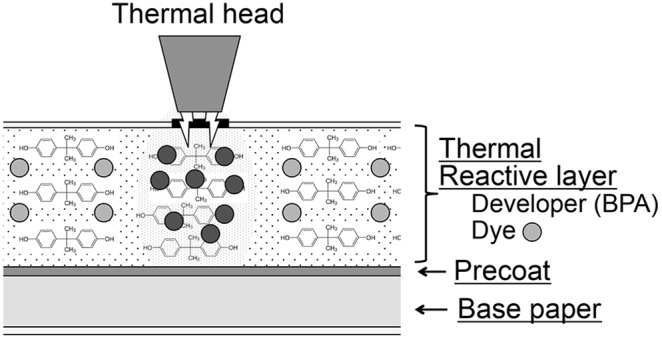
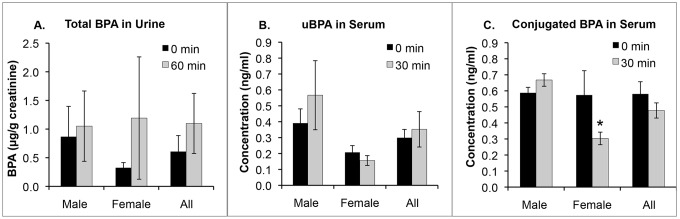
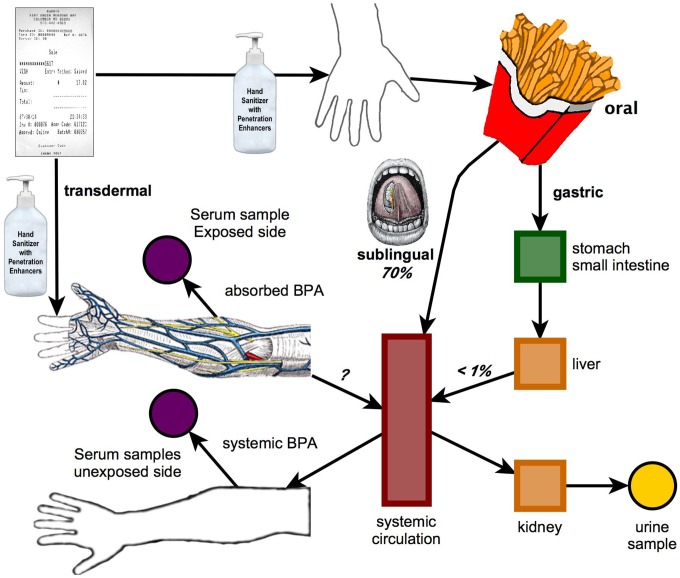
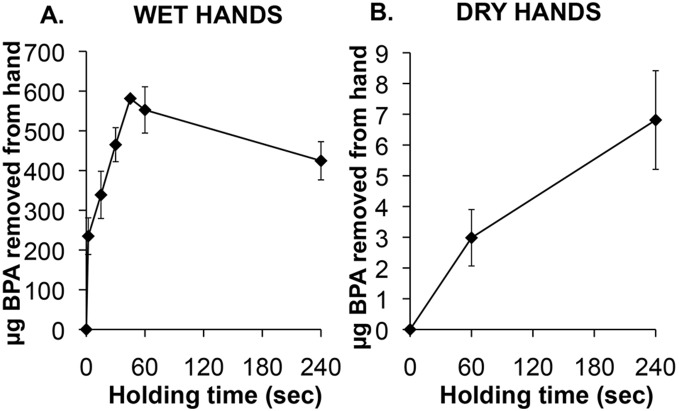
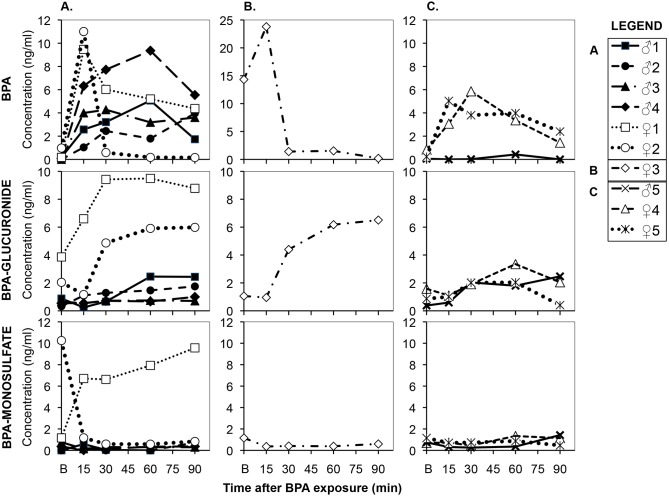
Bisphenol A (BPA) is an endocrine disrupting environmental contaminant used in a wide variety of products, and BPA metabolites are found in almost everyone's urine, suggesting widespread exposure from multiple sources. Regulatory agencies estimate that virtually all BPA exposure is from food and beverage packaging. However, free BPA is applied to the outer layer of thermal receipt paper present in very high (∼20 mg BPA/g paper) quantities as a print developer. Not taken into account when considering thermal paper as a source of BPA exposure is that some commonly used hand sanitizers, as well as other skin care products, contain mixtures of dermal penetration enhancing chemicals that can increase by up to 100 fold the dermal absorption of lipophilic compounds such as BPA. We found that when men and women held thermal receipt paper immediately after using a hand sanitizer with penetration enhancing chemicals, significant free BPA was transferred to their hands and then to French fries that were eaten, and the combination of dermal and oral BPA absorption led to a rapid and dramatic average maximum increase (Cmax) in unconjugated (bioactive) BPA of ∼7 ng/mL in serum and ∼20 µg total BPA/g creatinine in urine within 90 min. The default method used by regulatory agencies to test for hazards posed by chemicals is intra-gastric gavage. For BPA this approach results in less than 1% of the administered dose being bioavailable in blood. It also ignores dermal absorption as well as sublingual absorption in the mouth that both bypass first-pass liver metabolism. The elevated levels of BPA that we observed due to holding thermal paper after using a product containing dermal penetration enhancing chemicals have been related to an increased risk for a wide range of developmental abnormalities as well as diseases in adults.
双酚A(BPA)是一种具有内分泌干扰作用的环境污染物,广泛应用于各类产品中,几乎每个人的尿液中都能检测到BPA代谢物,这表明其通过多种来源广泛存在于人体中。监管机构估计,几乎所有的BPA暴露都来自食品和饮料包装。然而,游离的BPA作为打印显影剂,以非常高的量(约20毫克BPA/克纸)被应用于热敏收银纸的外层。在将热敏纸视为BPA暴露源时未被考虑到的是,一些常用的洗手液以及其他护肤品含有能增强皮肤渗透的化学物质混合物,这些物质可使亲脂性化合物如BPA的皮肤吸收增加多达100倍。我们发现,当男性和女性在使用含有增强渗透化学物质的洗手液后立即手持热敏收银纸时,大量游离的BPA会转移到他们手上,然后再转移到食用的薯条上,皮肤和口服吸收BPA的综合作用导致血清中未结合(生物活性)BPA在90分钟内迅速且显著地平均最大增加(Cmax)约7纳克/毫升,尿液中总BPA/肌酐约为20微克/克。监管机构用于测试化学品危害的默认方法是胃内灌胃。对于BPA,这种方法导致给药剂量中不到1%的药物在血液中具有生物利用度。它还忽略了皮肤吸收以及口腔舌下吸收,而这两种吸收方式都绕过了肝脏的首过代谢。我们观察到,在使用含有增强皮肤渗透化学物质的产品后手持热敏纸导致BPA水平升高,这与一系列发育异常以及成人疾病风险增加有关。