Demuro Martina, Arnold Lee J, Parés Josep M, Pérez-González Alfredo, Ortega Ana I, Arsuaga Juan L, Bermúdez de Castro José M, Carbonell Eudald
Institute for Photonics and Advanced Sensing, School of Chemistry and Physics, The University of Adelaide, Adelaide, Australia; Centro Nacional de Investigación sobre la Evolución Humana, Burgos, Spain.
Institute for Photonics and Advanced Sensing, School of Chemistry and Physics, The University of Adelaide, Adelaide, Australia; Centro Nacional de Investigación sobre la Evolución Humana, Burgos, Spain; The Environment Institute and School of Earth and Environmental Sciences, The University of Adelaide, Adelaide, Australia.
PLoS One. 2014 Oct 22;9(10):e110169. doi: 10.1371/journal.pone.0110169. eCollection 2014.
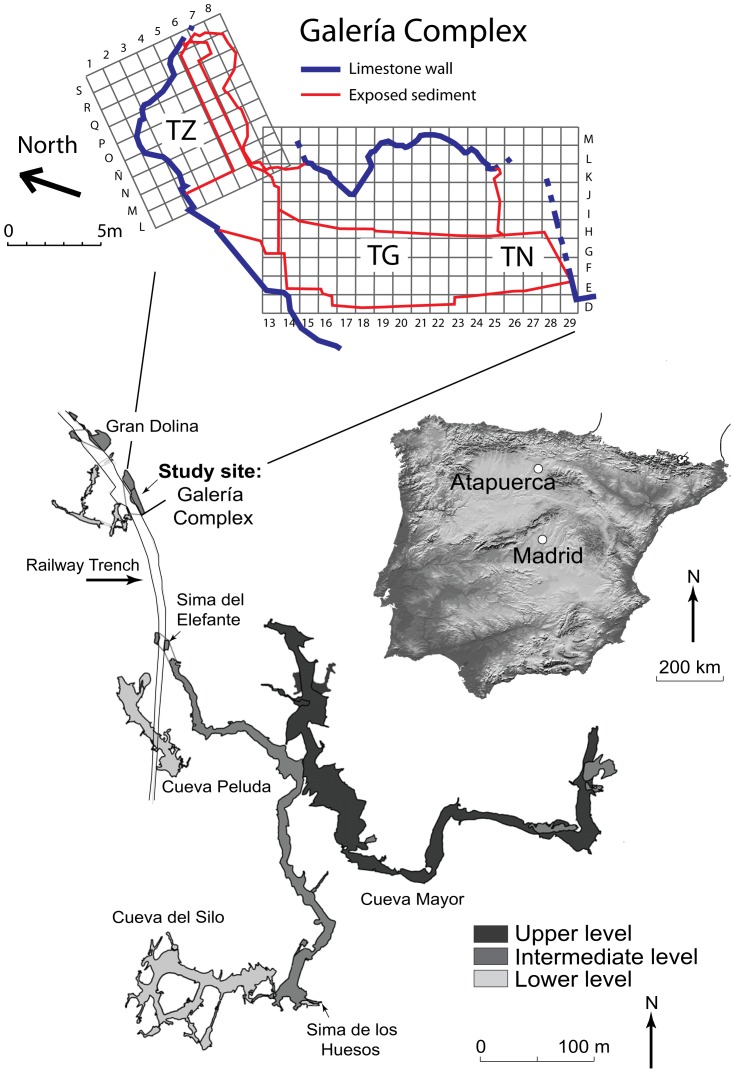
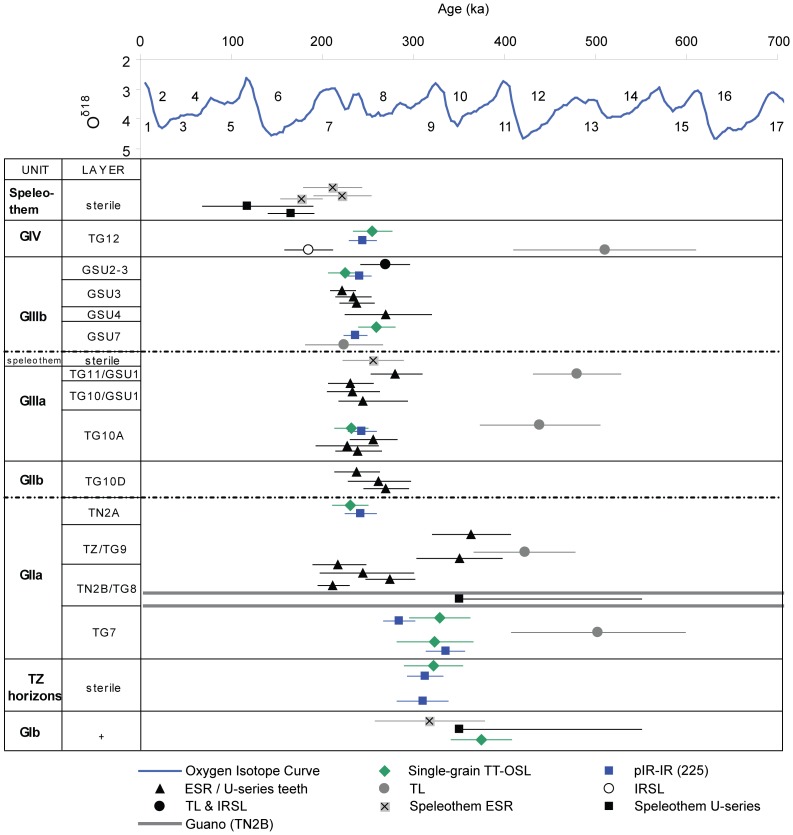
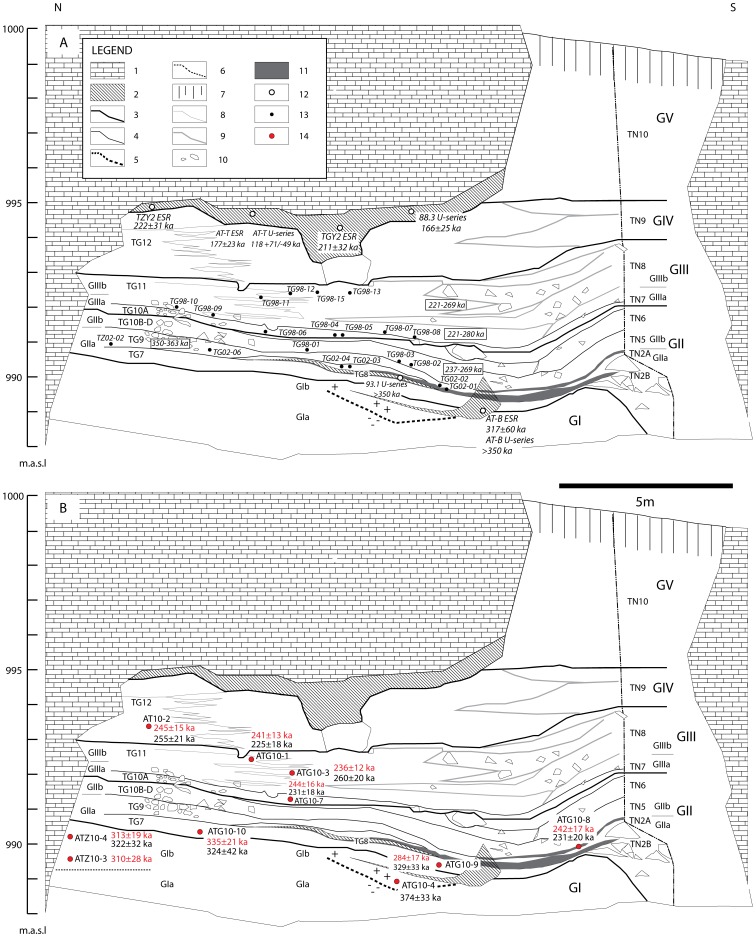
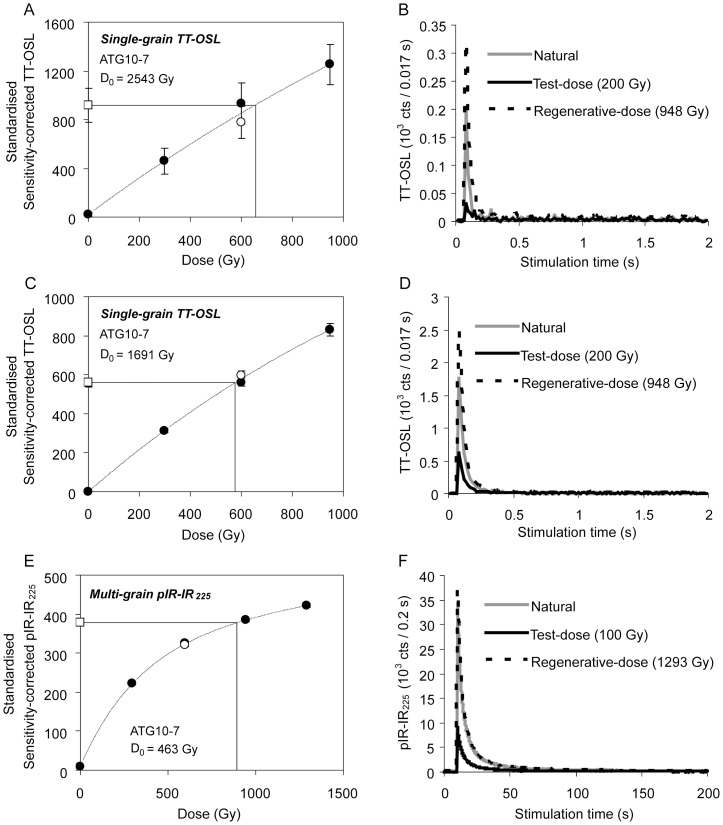
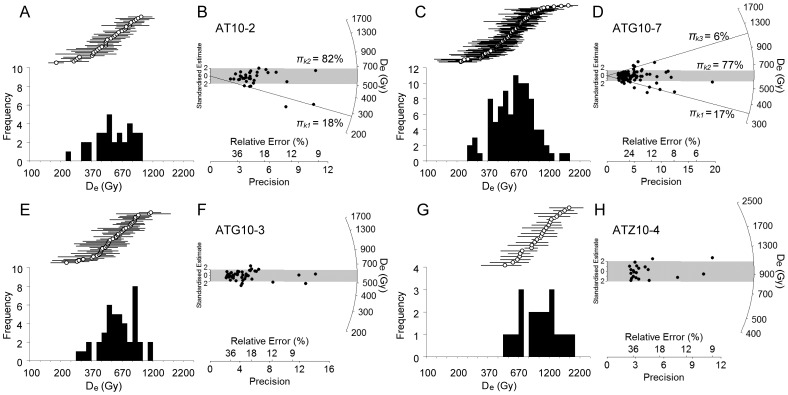
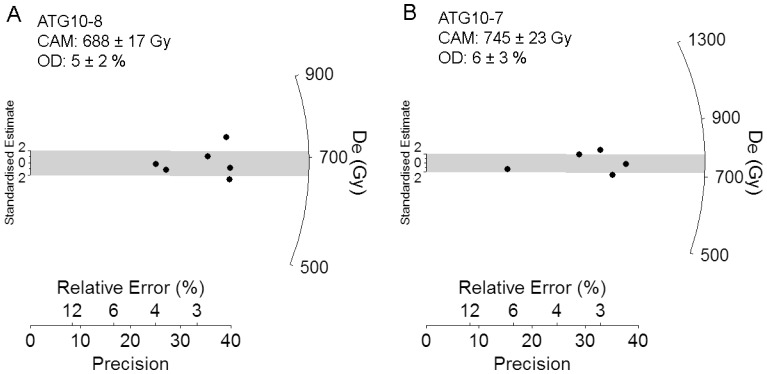
The archaeological karstic infill site of Galería Complex, located within the Atapuerca system (Spain), has produced a large faunal and archaeological record (Homo sp. aff. heidelbergensis fossils and Mode II lithic artefacts) belonging to the Middle Pleistocene. Extended-range luminescence dating techniques, namely post-infrared infrared stimulated luminescence (pIR-IR) dating of K-feldspars and thermally transferred optically stimulated luminescence (TT-OSL) dating of individual quartz grains, were applied to fossil-bearing sediments at Galería. The luminescence dating results are in good agreement with published chronologies derived using alternative radiometric dating methods (i.e., ESR and U-series dating of bracketing speleothems and combined ESR/U-series dating of herbivore teeth), as well as biochronology and palaeoenvironmental reconstructions inferred from proxy records (e.g., pollen data). For the majority of samples dated, however, the new luminescence ages are significantly (∼50%) younger than previously published polymineral thermoluminescence (TL) chronologies, suggesting that the latter may have overestimated the true burial age of the Galería deposits. The luminescence ages obtained indicate that the top of the basal sterile sands (GIb) at Galería have an age of up to ∼370 thousand years (ka), while the lowermost sub-unit containing Mode II Acheulean lithics (base of unit GIIa) was deposited during MIS 9 (mean age = 313±14 ka; n = 4). The overlying units GIIb-GIV, which contain the richest archaeopalaeontological remains, were deposited during late MIS 8 or early MIS 7 (∼240 ka). Galería Complex may be correlative with other Middle Pleistocene sites from Atapuerca, such as Gran Dolina level TD10 and unit TE19 from Sima del Elefante, but the lowermost archaeological horizons are ∼100 ka younger than the hominin-bearing clay breccias at the Sima de los Huesos site. Our results suggest that both pIR-IR and single-grain TT-OSL dating are suitable for resolving Middle Pleistocene chronologies for the Sierra de Atapuerca karstic infill sequences.
位于阿塔普埃尔卡系统(西班牙)内的加莱里亚综合体考古岩溶填充遗址,出土了大量属于中更新世的动物群和考古记录(海德堡人化石和莫斯特II型石器)。扩展范围的发光测年技术,即钾长石的后红外红外激发发光(pIR-IR)测年和单个石英颗粒的热传递光激发发光(TT-OSL)测年,被应用于加莱里亚含化石沉积物。发光测年结果与使用其他放射性测年方法(即对包围洞穴沉积物的电子自旋共振和铀系测年以及食草动物牙齿的电子自旋共振/铀系联合测年)得出的已发表年代序列,以及从替代记录(如花粉数据)推断出的生物年代学和古环境重建结果高度一致。然而,对于大多数测年样本,新的发光年代比先前发表的多矿物热释光(TL)年代序列明显年轻(约50%),这表明后者可能高估了加莱里亚沉积物的真实埋藏年龄。获得的发光年代表明,加莱里亚底部无菌砂层(GIb)顶部的年龄高达约37万年(ka),而包含莫斯特II阿舍利石器的最下部亚单元(GIIa单元底部)是在海洋同位素阶段9(平均年龄 = 313±14 ka;n = 4)期间沉积的。包含最丰富古生物遗迹的上覆单元GIIb - GIV是在海洋同位素阶段8晚期或海洋同位素阶段7早期(约24万年)沉积的。加莱里亚综合体可能与阿塔普埃尔卡的其他中更新世遗址相关,如格兰多利纳层TD10和西马德埃莱凡特的TE19单元,但最下部的考古层位比休索斯洞穴含人科动物的粘土角砾岩年轻约10万年。我们的结果表明,pIR-IR和单颗粒TT-OSL测年都适用于解决阿塔普埃尔卡山脉岩溶填充序列的中更新世年代学问题。