Tanida Isei, Ueno Takashi, Uchiyama Yasuo
Department of Biochemistry and Cell Biology, National Institute of Infectious Diseases, Shinjuku, Tokyo, Japan; Laboratory of Proteomics and Biomolecular Science, Research Support Center, Juntendo University Graduate School of Medicine, Bunkyo, Tokyo, Japan.
Laboratory of Proteomics and Biomolecular Science, Research Support Center, Juntendo University Graduate School of Medicine, Bunkyo, Tokyo, Japan.
PLoS One. 2014 Oct 23;9(10):e110600. doi: 10.1371/journal.pone.0110600. eCollection 2014.
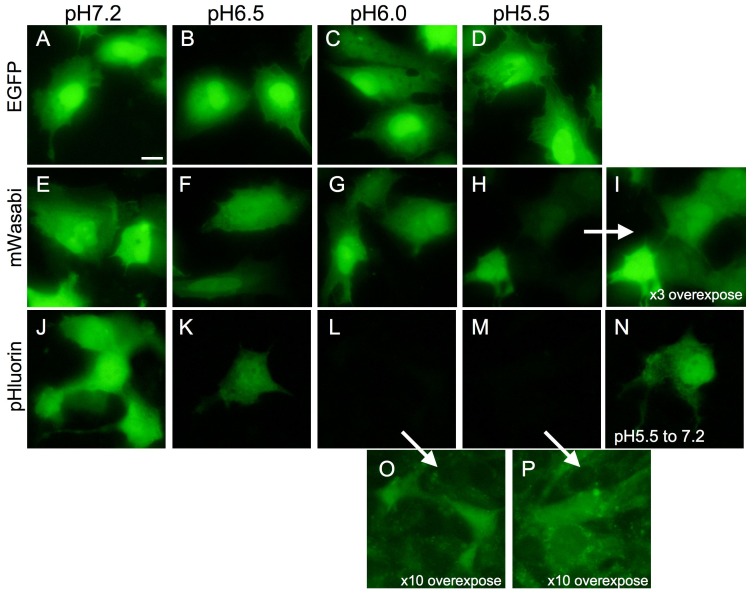
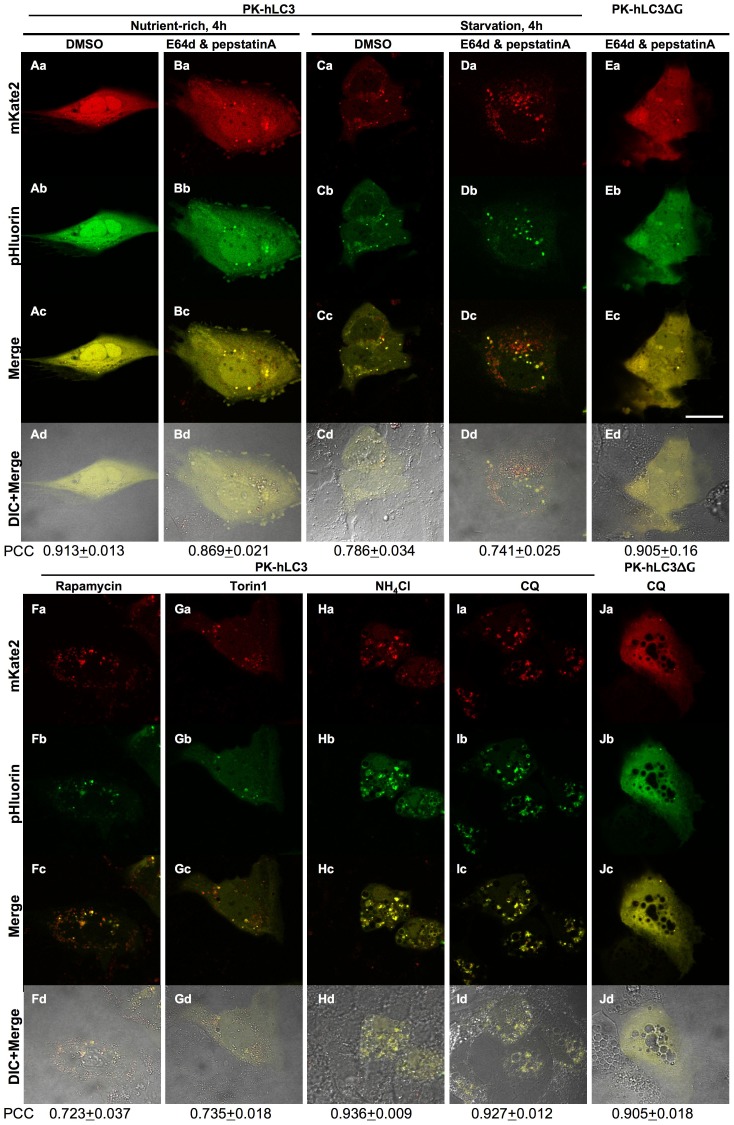
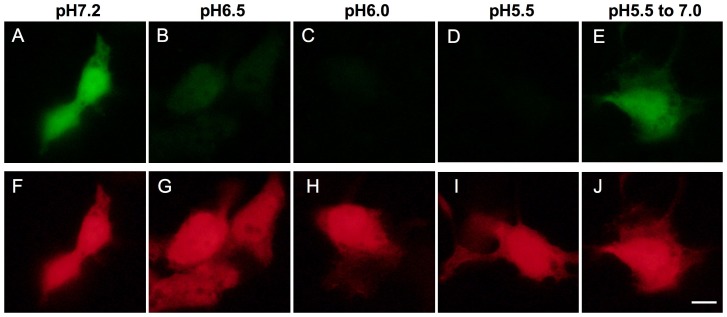
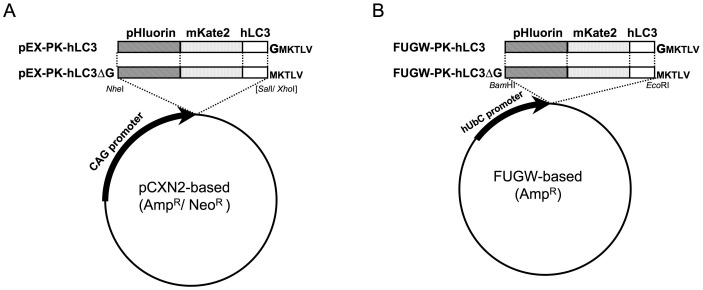
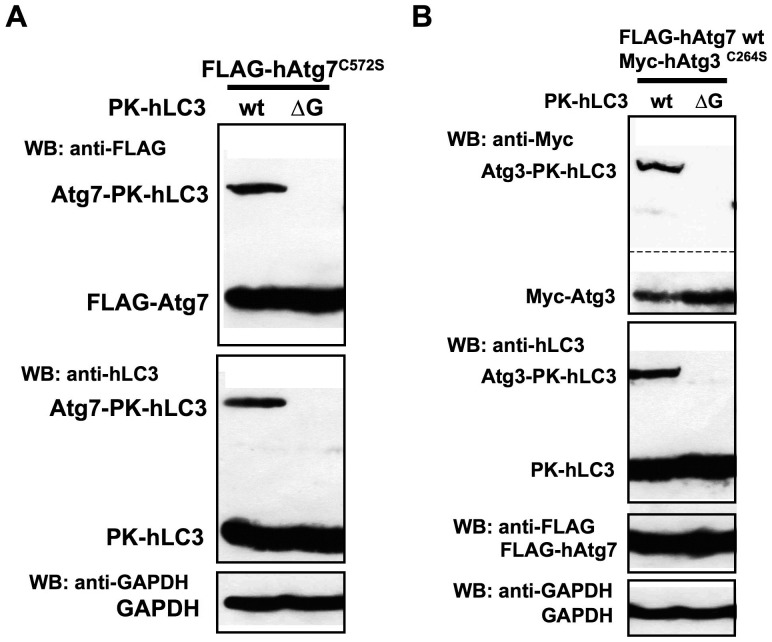
Tandem fluorescent protein-tagged LC3s that were comprised of a protein tag that emits green fluorescence (e.g., EGFP or mWasabi) fused with another tag that emits red fluorescence (e.g. mCherry or TagRFP) were used for monitoring the maturation step of mammalian autophagosomes. A critical point for this tandem fluorescent-tagged LC3 was the sensitivity of green fluorescence at an acidic pH. EGFP and mWasabi continue to emit a weak, but significant, fluorescence at a pH of approximately 6. To overcome this issue, we focused on super-ecliptic pHluorin, which is a more pH-sensitive GFP variation. The green fluorescence of EGFP and mWasabi in the cells was still observed at weakly acidic levels (pH 6.0-6.5). In contrast, the fluorescence of pHluorin was more significantly quenched at pH 6.5, and was almost completely abolished at pH 5.5-6.0, indicating that pHluorin is more suitable for use in a tandem fluorescent protein-tag for monitoring autophagy. A pHluorin-mKate2 tandem fluorescence protein showed pH-sensitive green fluorescence and pH-resistant far-red fluorescence. We therefore generated expression plasmids for pHluorin-mKate2-tagged human LC3 (PK-hLC3), which could be used as a modifier for LC3-lipidation. The green and far-red fluorescent puncta of PK-hLC3 were increased under starvation conditions. Puncta that were green-negative, but far-red positive, were increased when autolysosomes accumulated, but few puncta of the mutant PK-hLC3ΔG that lacked the carboxyl terminal Gly essential for autophagy were observed in the cells under the same conditions. These results indicated that the PK-hLC3 were more appropriate for the pH-sensitive monitoring of the maturation step of autophagosomes.
串联荧光蛋白标记的LC3由一个发出绿色荧光的蛋白标签(如EGFP或mWasabi)与另一个发出红色荧光的标签(如mCherry或TagRFP)融合而成,用于监测哺乳动物自噬体的成熟步骤。这种串联荧光标记的LC3的一个关键点是酸性pH下绿色荧光的敏感性。EGFP和mWasabi在pH约为6时仍会发出微弱但显著的荧光。为了克服这个问题,我们聚焦于超嗜酸性pHluorin,它是一种对pH更敏感的GFP变体。在细胞中,EGFP和mWasabi的绿色荧光在弱酸性水平(pH 6.0 - 6.5)下仍可观察到。相比之下,pHluorin的荧光在pH 6.5时更显著地淬灭,并在pH 5.5 - 6.0时几乎完全消失,这表明pHluorin更适合用于监测自噬的串联荧光蛋白标签。pHluorin - mKate2串联荧光蛋白显示出pH敏感的绿色荧光和pH抗性的远红色荧光。因此,我们构建了用于pHluorin - mKate2标记的人LC3的表达质粒(PK - hLC3),其可作为LC3脂化的修饰物。在饥饿条件下,PK - hLC3的绿色和远红色荧光斑点增加。当自溶酶体积累时,绿色阴性但远红色阳性的斑点增加,但在相同条件下,细胞中几乎未观察到缺乏自噬必需的羧基末端Gly的突变体PK - hLC3ΔG的斑点。这些结果表明,PK - hLC3更适合对自噬体成熟步骤进行pH敏感监测。