Wang Wei, Cheng Jianwen, Qin Jiang-Jiang, Voruganti Sukesh, Nag Subhasree, Fan Jia, Gao Qiang, Zhang Ruiwen
Department of Pharmaceutical Sciences, School of pharmacy, Texas Tech University Health Sciences Center, Amarillo, TX, USA. Cancer Biology Center, School of Pharmacy, Texas Tech University Health Sciences Center, Amarillo, TX, USA.
Liver Cancer Institute, Zhongshan Hospital, and Key Laboratory of Carcinogenesis and Cancer Invasion, Ministry of Education, Fudan University, Shanghai, China. Institute of Biomedical Sciences, Fudan University, Shanghai, China.
Oncotarget. 2014 Nov 30;5(22):11604-19. doi: 10.18632/oncotarget.2598.
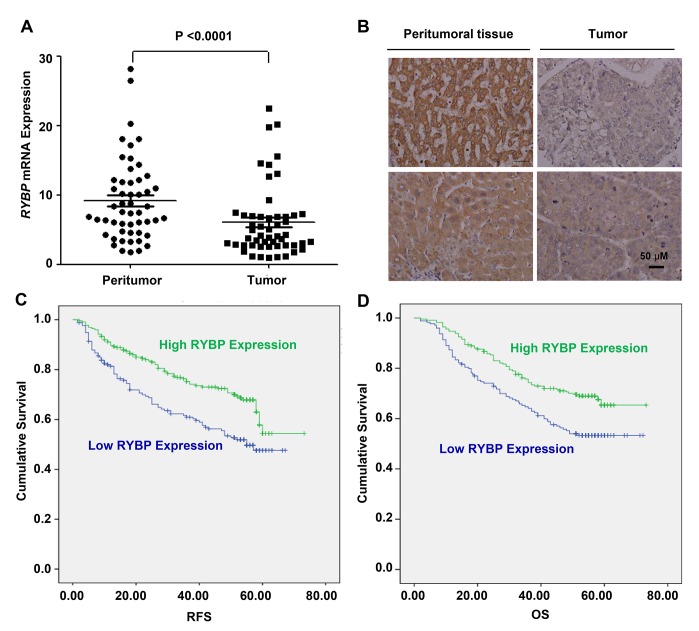
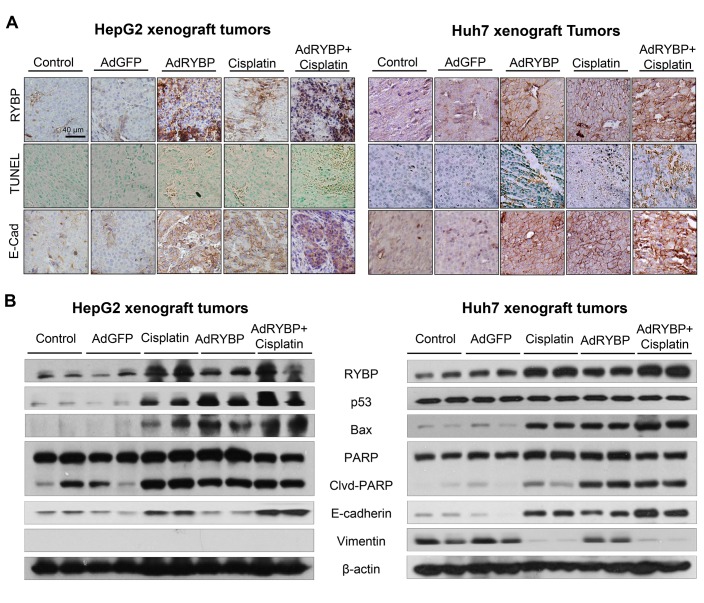
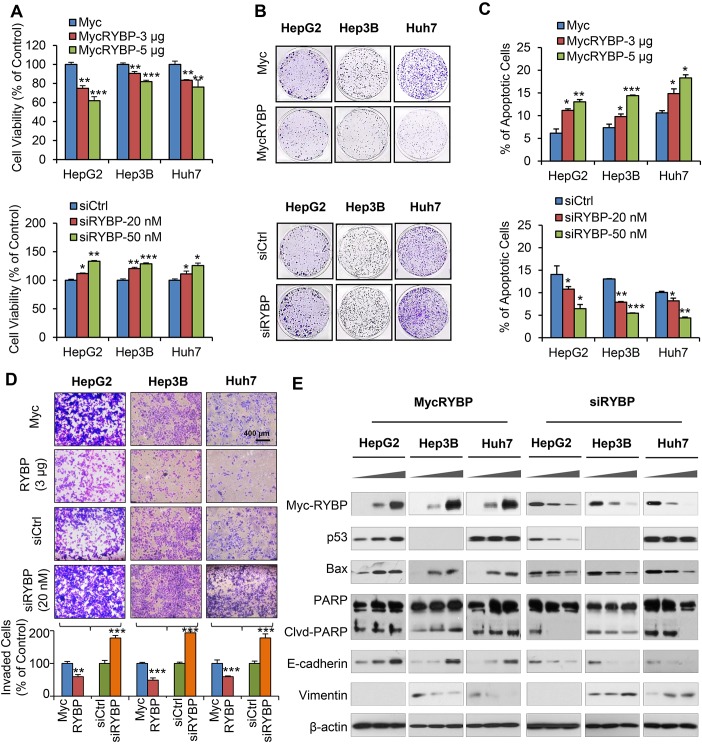
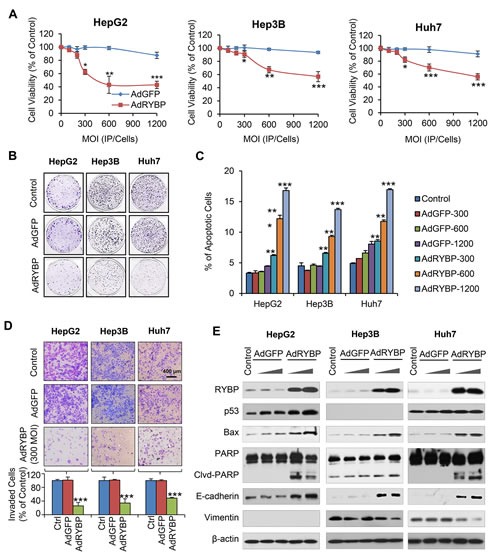
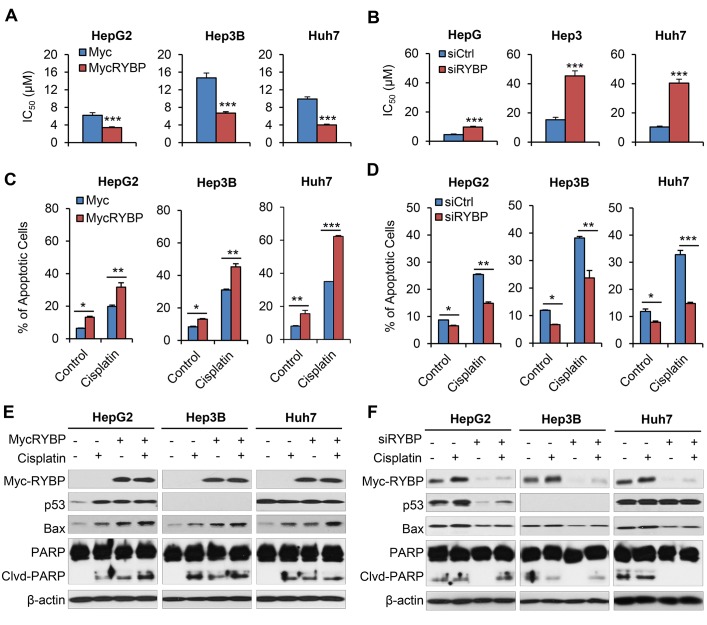
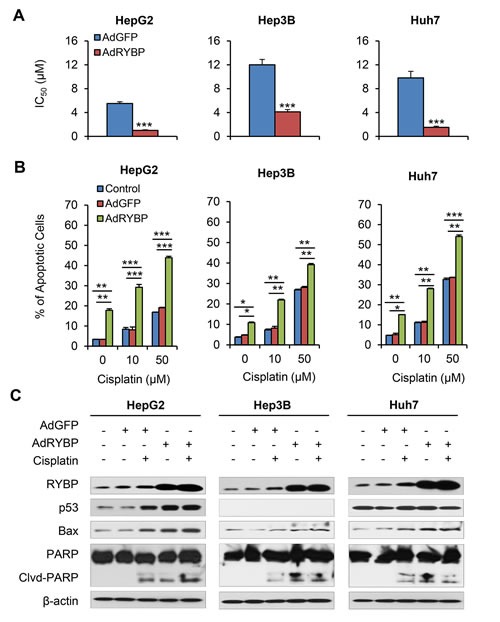
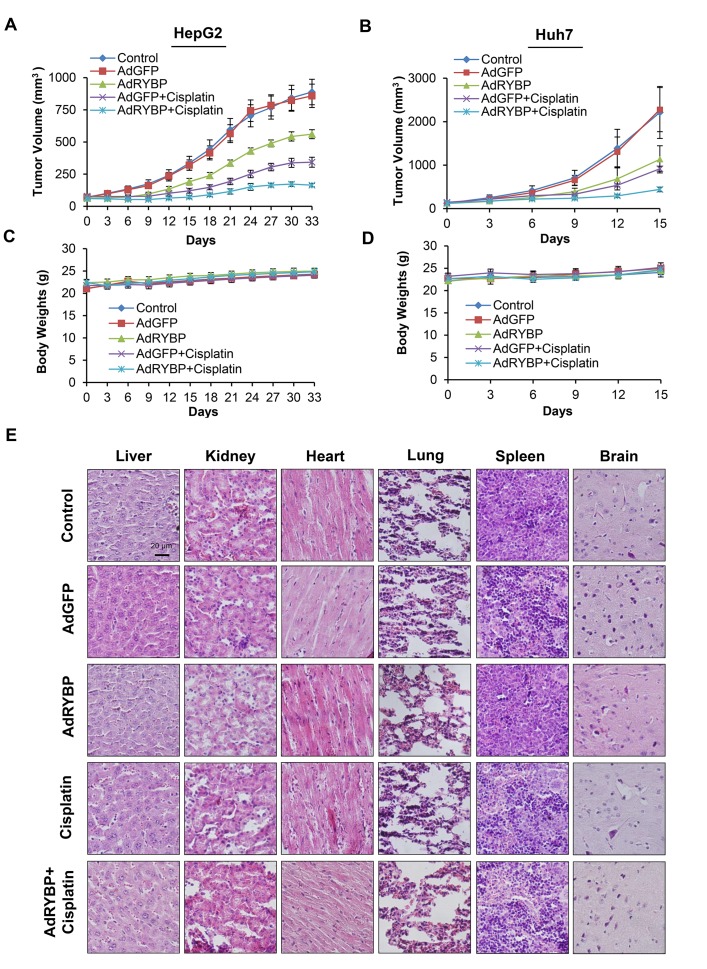
RYBP is a member of the polycomb group (PcG) proteins that typically act as transcriptional repressors via epigenetic modification of chromatin. The present study was designed to investigate the role of RYBP in HCC progression, chemosensitivity, and patient survival, and to explore the underlying molecular mechanism(s). In this study we investigated the expression of RYBP in 400 pairs of human HCC tissues and matched noncancerous samples. The effects of RYBP on HCC tumor growth and metastasis and chemosensitivity were determined both in vitro and in vivo. We herein demonstrate that the RYBP expression in HCC tissue samples was signiï¬cantly lower than that in matched noncancerous liver tissues. Clinically, the low expression of RYBP was an independent predictor of a poor prognosis in patients with HCC. In in vitro HCC models, enforced RYBP expression inhibited cell growth and invasion, induced apoptosis, and increased the chemosensitivity of the cells, while RYBP knockdown led to the opposite effects. Furthermore, RYBP expression was induced by cisplatin, and adenovirus-mediated RYBP expression inhibited HCC tumor growth and sensitized HCC to conventional chemotherapy in vivo. Our results demonstrate that reactivating RYBP in cancer cells may provide an effective and safe therapeutic approach to HCC therapy.
RYBP是多梳蛋白家族(PcG)的成员,通常通过对染色质进行表观遗传修饰来发挥转录抑制作用。本研究旨在探讨RYBP在肝癌进展、化疗敏感性及患者生存中的作用,并探索其潜在的分子机制。在本研究中,我们检测了400对人肝癌组织及其配对的癌旁组织中RYBP的表达。在体外和体内分别确定了RYBP对肝癌肿瘤生长、转移及化疗敏感性的影响。我们在此证明,肝癌组织样本中RYBP的表达明显低于配对的癌旁肝组织。临床上,RYBP低表达是肝癌患者预后不良的独立预测因素。在体外肝癌模型中,过表达RYBP可抑制细胞生长和侵袭,诱导细胞凋亡,并增加细胞的化疗敏感性,而敲低RYBP则产生相反的效果。此外,顺铂可诱导RYBP表达,腺病毒介导的RYBP表达在体内可抑制肝癌肿瘤生长并使肝癌对传统化疗敏感。我们的结果表明,在癌细胞中重新激活RYBP可能为肝癌治疗提供一种有效且安全的治疗方法。