Department of Cognitive Biology, Faculty of Life Sciences, University of Vienna, Vienna Austria.
Front Psychol. 2014 Oct 10;5:1118. doi: 10.3389/fpsyg.2014.01118. eCollection 2014.
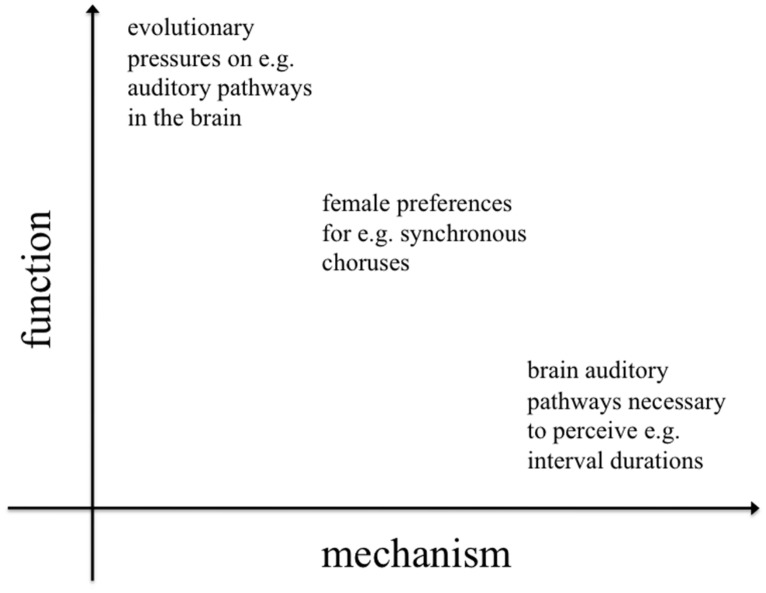
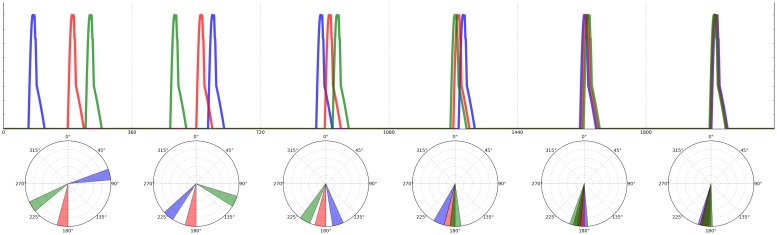
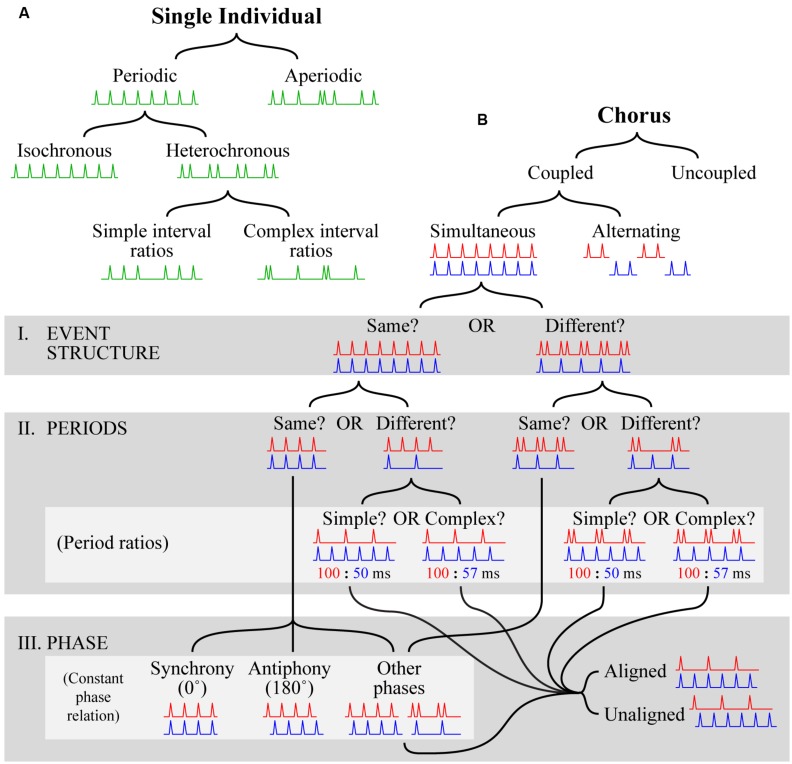
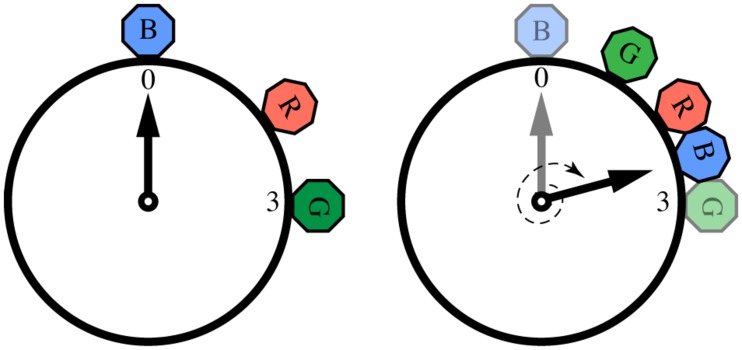
A central goal of biomusicology is to understand the biological basis of human musicality. One approach to this problem has been to compare core components of human musicality (relative pitch perception, entrainment, etc.) with similar capacities in other animal species. Here we extend and clarify this comparative approach with respect to rhythm. First, whereas most comparisons between human music and animal acoustic behavior have focused on spectral properties (melody and harmony), we argue for the central importance of temporal properties, and propose that this domain is ripe for further comparative research. Second, whereas most rhythm research in non-human animals has examined animal timing in isolation, we consider how chorusing dynamics can shape individual timing, as in human music and dance, arguing that group behavior is key to understanding the adaptive functions of rhythm. To illustrate the interdependence between individual and chorusing dynamics, we present a computational model of chorusing agents relating individual call timing with synchronous group behavior. Third, we distinguish and clarify mechanistic and functional explanations of rhythmic phenomena, often conflated in the literature, arguing that this distinction is key for understanding the evolution of musicality. Fourth, we expand biomusicological discussions beyond the species typically considered, providing an overview of chorusing and rhythmic behavior across a broad range of taxa (orthopterans, fireflies, frogs, birds, and primates). Finally, we propose an "Evolving Signal Timing" hypothesis, suggesting that similarities between timing abilities in biological species will be based on comparable chorusing behaviors. We conclude that the comparative study of chorusing species can provide important insights into the adaptive function(s) of rhythmic behavior in our "proto-musical" primate ancestors, and thus inform our understanding of the biology and evolution of rhythm in human music and language.
生物音乐学的一个核心目标是理解人类音乐性的生物学基础。解决这个问题的一种方法是将人类音乐性的核心组成部分(相对音高感知、协调等)与其他动物物种的类似能力进行比较。在这里,我们将这种比较方法扩展和澄清到节奏方面。首先,虽然人类音乐与动物声行为之间的大多数比较都集中在光谱特性(旋律和和声)上,但我们认为时间特性至关重要,并提出这个领域非常适合进一步进行比较研究。其次,虽然大多数非人类动物的节奏研究都单独研究了动物的定时,但我们考虑了合唱动态如何塑造个体定时,就像人类音乐和舞蹈一样,认为群体行为是理解节奏的适应功能的关键。为了说明个体和合唱动态之间的相互依存关系,我们提出了一个合唱代理的计算模型,该模型将个体叫声定时与同步的群体行为联系起来。第三,我们区分并澄清了节奏现象的机制和功能解释,这些解释在文献中经常混淆在一起,我们认为这种区分对于理解音乐性的进化至关重要。第四,我们将生物音乐学的讨论扩展到通常被考虑的物种之外,提供了广泛的分类群(直翅目、萤火虫、青蛙、鸟类和灵长类动物)的合唱和节奏行为概述。最后,我们提出了一个“进化信号定时”假说,表明生物物种之间的定时能力相似性将基于类似的合唱行为。我们得出结论,对合唱物种的比较研究可以为我们“原始音乐”灵长类祖先的节奏行为的适应功能提供重要的见解,并为我们理解人类音乐和语言中节奏的生物学和进化提供信息。