Chen Ru, Dawson David W, Pan Sheng, Ottenhof Niki A, de Wilde Roeland F, Wolfgang Christopher L, May Damon H, Crispin David A, Lai Lisa A, Lay Anna R, Waghray Meghna, Wang Shouli, McIntosh Martin W, Simeone Diane M, Maitra Anirban, Brentnall Teresa A
Department of Medicine, University of Washington, Seattle, WA, USA.
1] Department of Pathology and Laboratory Medicine, UCLA, Los Angeles, CA, USA [2] Jonsson Comprehensive Cancer Center, David Geffen School of Medicine, UCLA, Los Angeles, CA, USA.
Lab Invest. 2015 Jan;95(1):43-55. doi: 10.1038/labinvest.2014.128. Epub 2014 Oct 27.
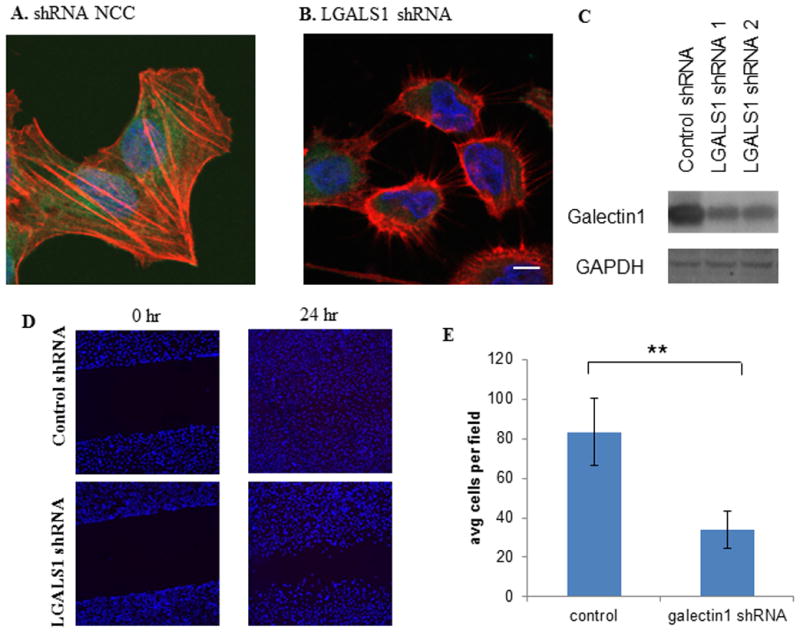
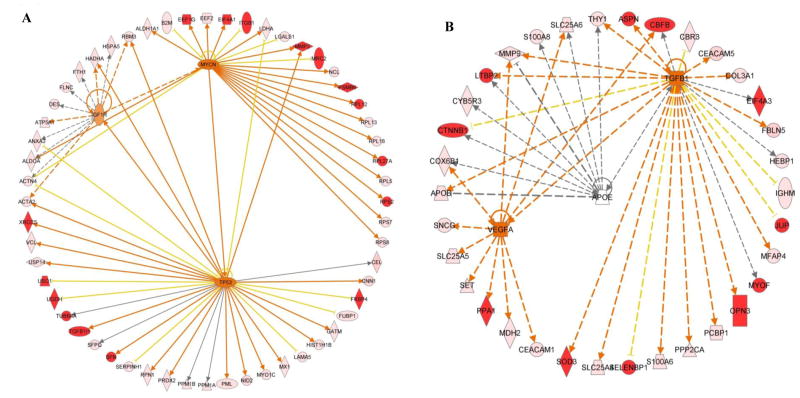
Pancreatic ductal adenocarcinoma (PDAC) is a highly lethal disease with a dismal prognosis. However, while most patients die within the first year of diagnosis, very rarely, a few patients can survive for >10 years. Better understanding the molecular characteristics of the pancreatic adenocarcinomas from these very-long-term survivors (VLTS) may provide clues for personalized medicine and improve current pancreatic cancer treatment. To extend our previous investigation, we examined the proteomes of individual pancreas tumor tissues from a group of VLTS patients (survival ≥10 years) and short-term survival patients (STS, survival <14 months). With a given analytical sensitivity, the protein profile of each pancreatic tumor tissue was compared to reveal the proteome alterations that may be associated with pancreatic cancer survival. Pathway analysis of the differential proteins identified suggested that MYC, IGF1R and p53 were the top three upstream regulators for the STS-associated proteins, and VEGFA, APOE and TGFβ-1 were the top three upstream regulators for the VLTS-associated proteins. Immunohistochemistry analysis using an independent cohort of 145 PDAC confirmed that the higher abundance of ribosomal protein S8 (RPS8) and prolargin (PRELP) were correlated with STS and VLTS, respectively. Multivariate Cox analysis indicated that 'High-RPS8 and Low-PRELP' was significantly associated with shorter survival time (HR=2.69, 95% CI 1.46-4.92, P=0.001). In addition, galectin-1, a previously identified protein with its abundance aversely associated with pancreatic cancer survival, was further evaluated for its significance in cancer-associated fibroblasts. Knockdown of galectin-1 in pancreatic cancer-associated fibroblasts dramatically reduced cell migration and invasion. The results from our study suggested that PRELP, LGALS1 and RPS8 might be significant prognostic factors, and RPS8 and LGALS1 could be potential therapeutic targets to improve pancreatic cancer survival if further validated.
胰腺导管腺癌(PDAC)是一种致死率很高、预后很差的疾病。然而,虽然大多数患者在诊断后的第一年内死亡,但极少数患者能够存活超过10年。更好地了解这些长期存活者(VLTS)的胰腺腺癌的分子特征,可能为个性化医疗提供线索,并改善当前的胰腺癌治疗。为了扩展我们之前的研究,我们检测了一组VLTS患者(存活≥10年)和短期存活患者(STS,存活<14个月)的单个胰腺肿瘤组织的蛋白质组。在给定的分析灵敏度下,比较每个胰腺肿瘤组织的蛋白质谱,以揭示可能与胰腺癌存活相关的蛋白质组改变。对鉴定出的差异蛋白进行通路分析表明,MYC、IGF1R和p53是与STS相关蛋白的前三大上游调节因子,而VEGFA、APOE和TGFβ-1是与VLTS相关蛋白的前三大上游调节因子。使用145例PDAC的独立队列进行免疫组织化学分析证实,核糖体蛋白S8(RPS8)和脯氨酸蛋白(PRELP)的丰度较高分别与STS和VLTS相关。多变量Cox分析表明,“高RPS8和低PRELP”与较短的生存时间显著相关(HR=2.69,95%CI 1.46-4.92,P=0.001)。此外,半乳糖凝集素-1是一种先前鉴定出的蛋白质,其丰度与胰腺癌存活呈负相关,我们进一步评估了其在癌相关成纤维细胞中的意义。在胰腺癌相关成纤维细胞中敲低半乳糖凝集素-1可显著降低细胞迁移和侵袭。我们的研究结果表明,PRELP、LGALS1和RPS8可能是重要的预后因素,如果进一步验证,RPS8和LGALS1可能是改善胰腺癌存活的潜在治疗靶点。