Imbrosci Barbara, Neitz Angela, Mittmann Thomas
Institute of Physiology, University Medical Center of the Johannes-Gutenberg University Mainz, Mainz, Germany.
PLoS One. 2014 Oct 27;9(10):e111105. doi: 10.1371/journal.pone.0111105. eCollection 2014.
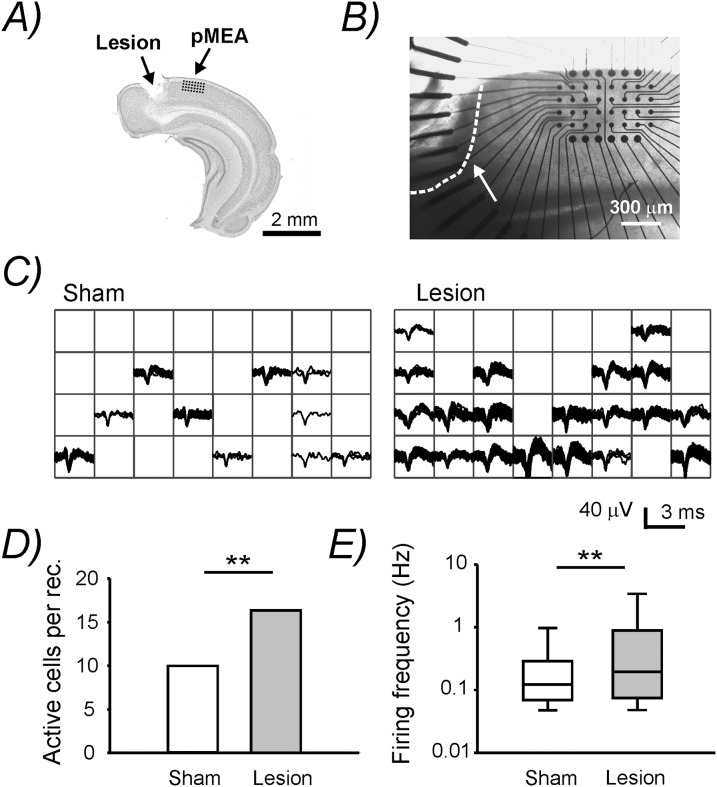
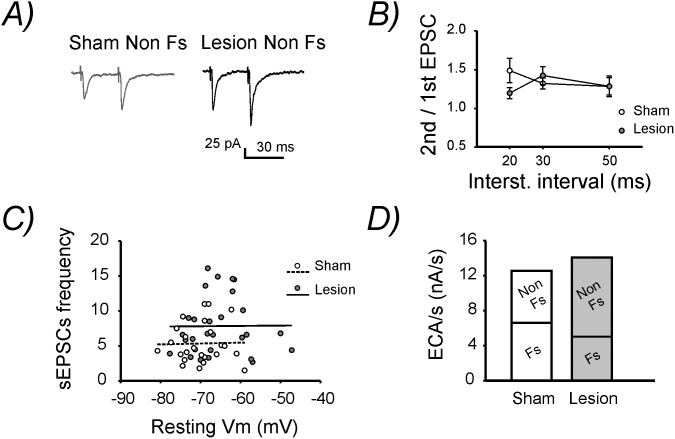
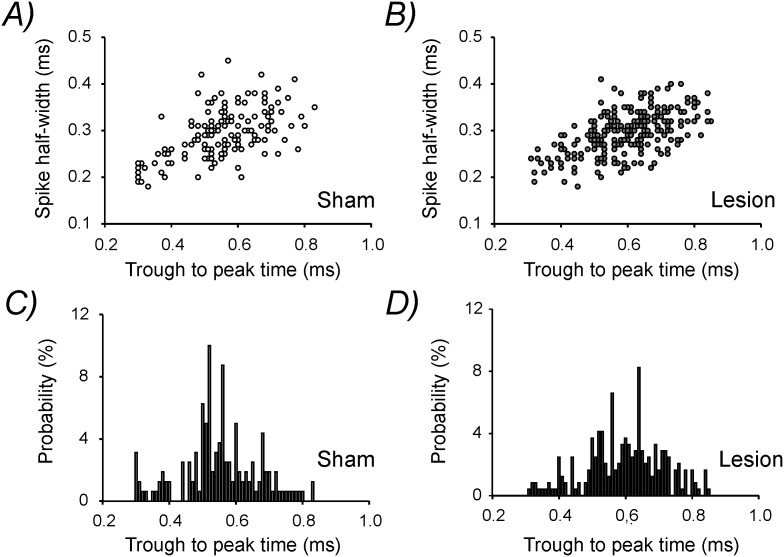
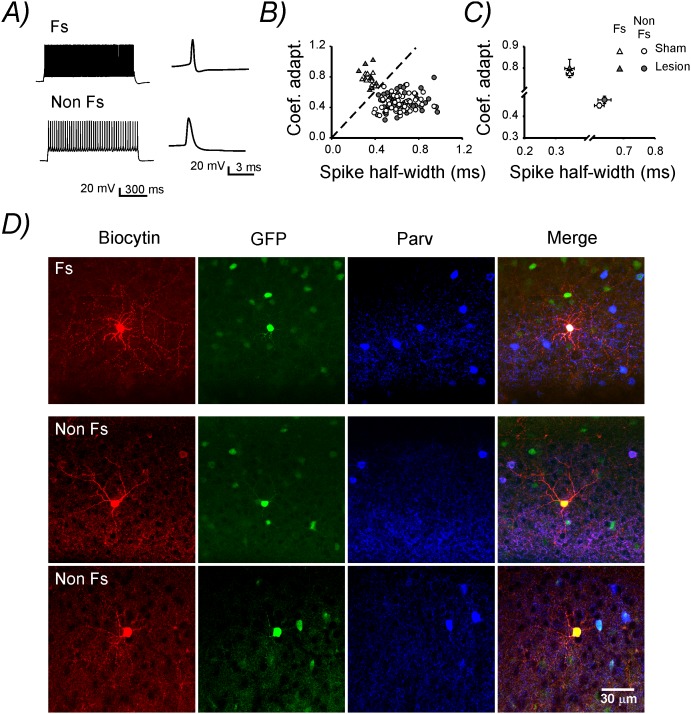
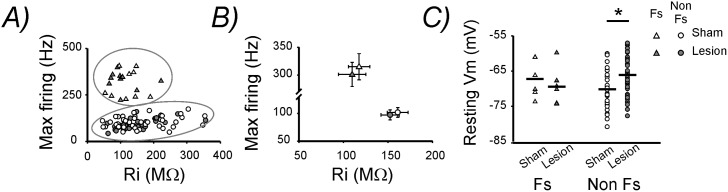
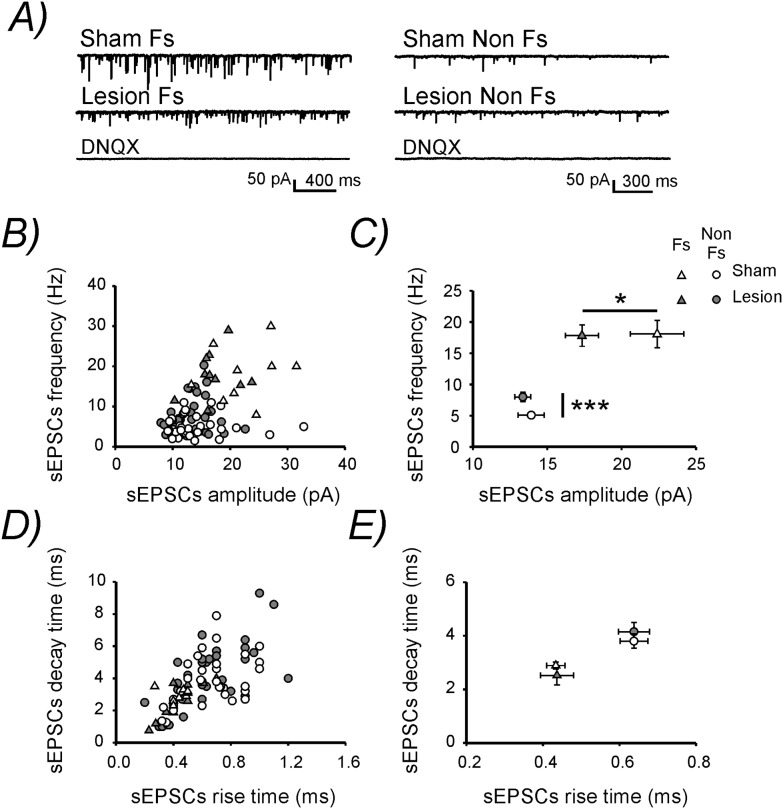
A physiological brain function requires neuronal networks to operate within a well-defined range of activity. Indeed, alterations in neuronal excitability have been associated with several pathological conditions, ranging from epilepsy to neuropsychiatric disorders. Changes in inhibitory transmission are known to play a key role in the development of hyperexcitability. However it is largely unknown whether specific interneuronal subpopulations contribute differentially to such pathological condition. In the present study we investigated functional alterations of inhibitory interneurons embedded in a hyperexcitable cortical circuit at the border of chronically induced focal lesions in mouse visual cortex. Interestingly, we found opposite alterations in the excitability of non fast-spiking (Non Fs) and fast-spiking (Fs) interneurons in acute cortical slices from injured animals. Non Fs interneurons displayed a depolarized membrane potential and a higher frequency of spontaneous excitatory postsynaptic currents (sEPSCs). In contrast, Fs interneurons showed a reduced sEPSCs amplitude. The observed downscaling of excitatory synapses targeting Fs interneurons may prevent the recruitment of this specific population of interneurons to the hyperexcitable network. This mechanism is likely to seriously affect neuronal network function and to exacerbate hyperexcitability but it may be important to protect this particular vulnerable population of GABAegic neurons from excitotoxicity.
生理性脑功能要求神经网络在明确界定的活动范围内运作。事实上,神经元兴奋性的改变与多种病理状况相关,从癫痫到神经精神疾病不等。已知抑制性传递的变化在兴奋性过高的发展中起关键作用。然而,特定的中间神经元亚群是否对此类病理状况有不同贡献在很大程度上尚不清楚。在本研究中,我们调查了嵌入小鼠视觉皮层慢性诱导局灶性病变边界处兴奋性过高皮质回路中的抑制性中间神经元的功能改变。有趣的是,我们在受伤动物的急性皮质切片中发现非快突触发放(Non Fs)和快突触发放(Fs)中间神经元的兴奋性有相反的改变。Non Fs中间神经元表现出膜电位去极化和更高频率的自发性兴奋性突触后电流(sEPSCs)。相比之下,Fs中间神经元的sEPSCs幅度降低。观察到的靶向Fs中间神经元的兴奋性突触的缩小可能会阻止该特定中间神经元群体被招募到兴奋性过高的网络中。这种机制可能会严重影响神经元网络功能并加剧兴奋性过高,但保护这一特别易损的GABA能神经元群体免受兴奋毒性可能很重要。