Mahajan K, Mahajan N P
1] Moffitt Cancer Center, Drug Discovery Department, Tampa, FL, USA [2] Department of Oncologic Sciences, University of South Florida, Tampa, FL, USA.
Oncogene. 2015 Aug 6;34(32):4162-7. doi: 10.1038/onc.2014.350. Epub 2014 Oct 27.
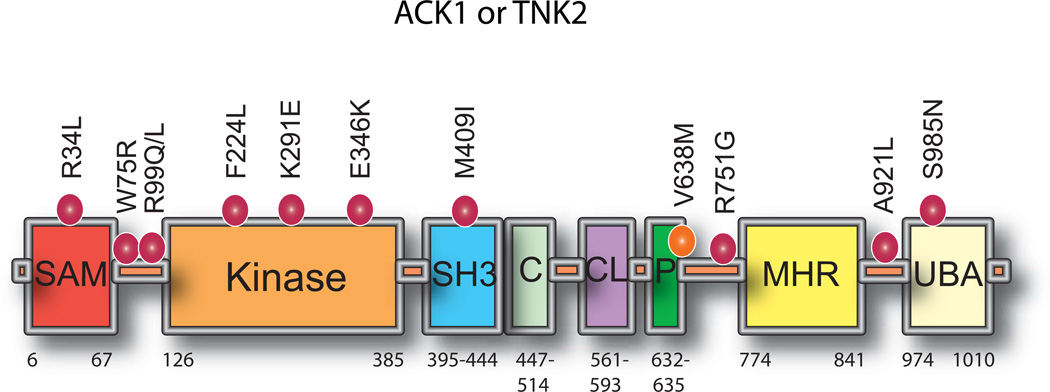
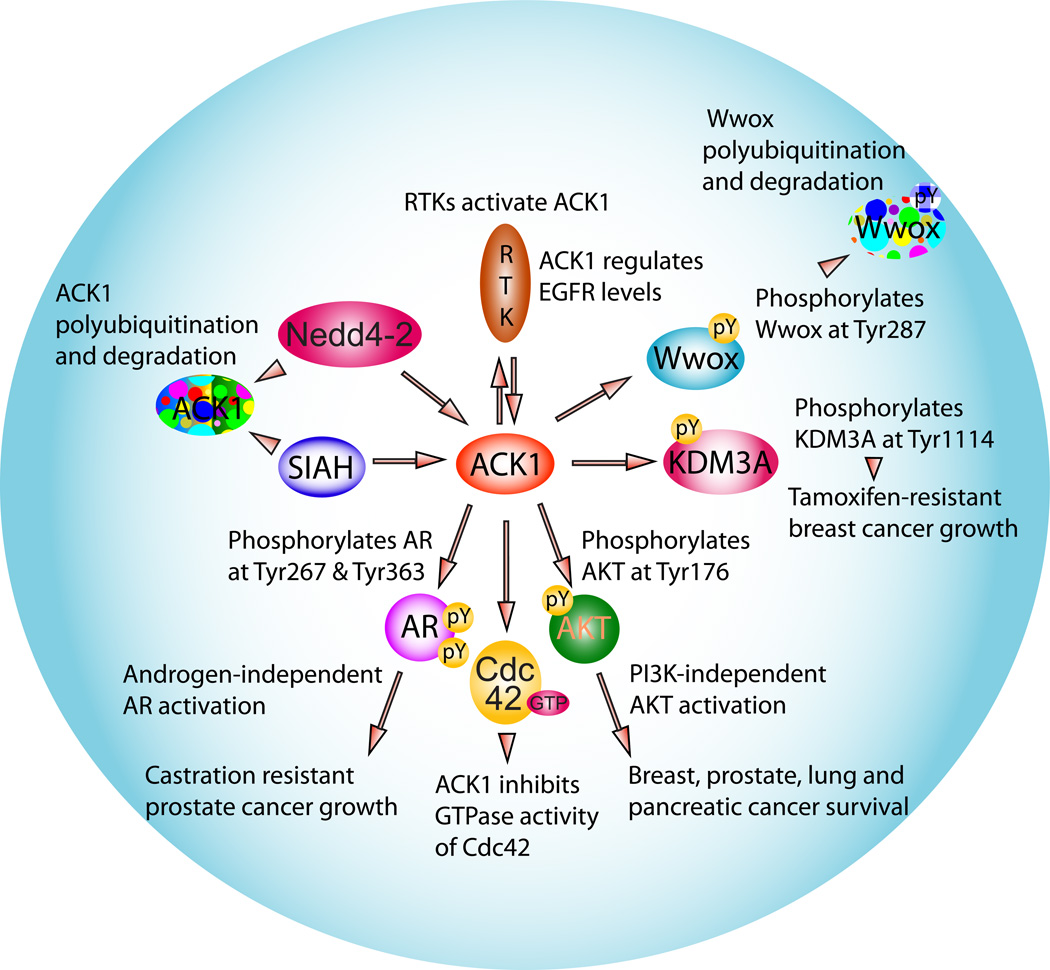
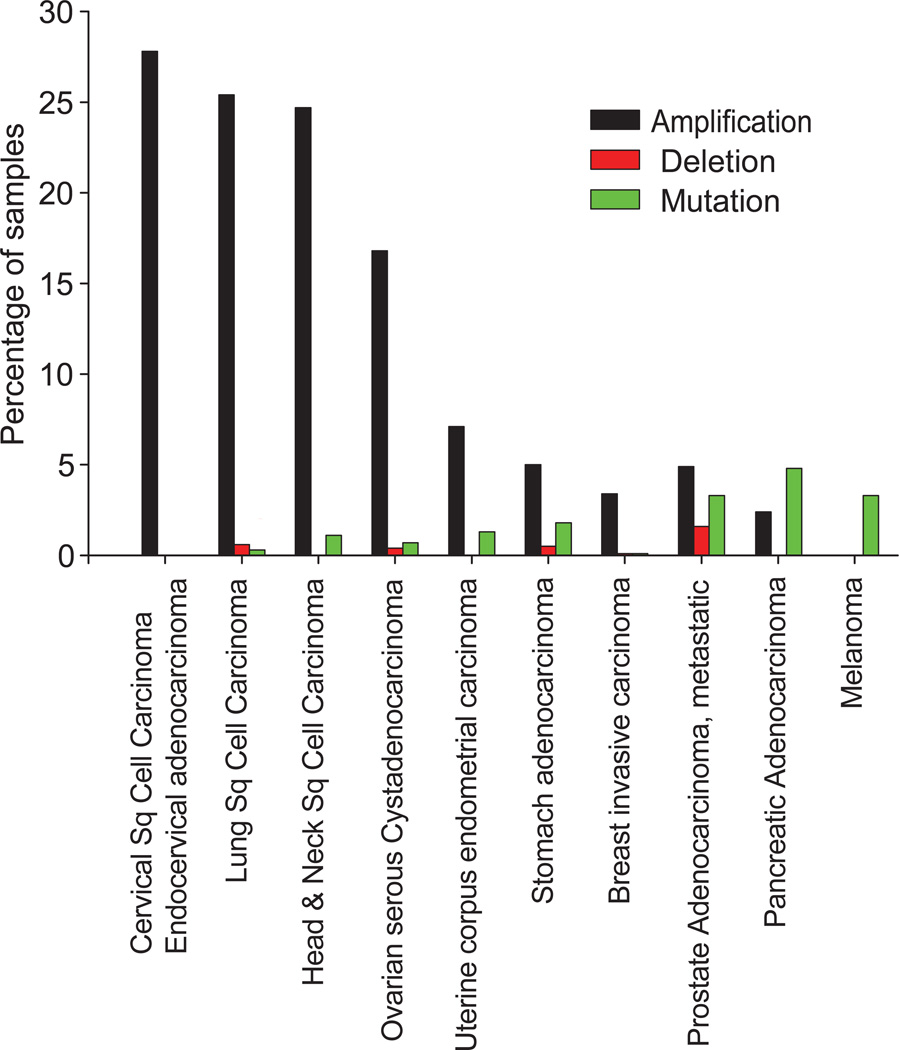
Deregulated tyrosine kinase signaling alters cellular homeostasis to drive cancer progression. The emergence of a non-receptor tyrosine kinase (non-RTK), ACK1 (also known as activated Cdc42-associated kinase 1 or TNK2) as an oncogenic kinase, has uncovered novel mechanisms by which tyrosine kinase signaling promotes cancer progression. Although early studies focused on ACK1 as a cytosolic effector of activated transmembrane RTKs, wherein it shuttles between the cytosol and the nucleus to rapidly transduce extracellular signals from the RTKs to the intracellular effectors, recent data unfold a new aspect of its functionality as an epigenetic regulator. ACK1 interacts with the estrogen receptor (ER)/histone demethylase KDM3A (JHDM2a) complex, which modifies KDM3A by tyrosine phosphorylation to regulate the transcriptional outcome at HOXA1 locus to promote the growth of tamoxifen-resistant breast cancer. It is also well established that ACK1 regulates the activity of androgen receptor (AR) by tyrosine phosphorylation to fuel the growth of hormone-refractory prostate cancers. Further, recent explosion in genomic sequencing has revealed recurrent ACK1 gene amplification and somatic mutations in a variety of human malignancies, providing a molecular basis for its role in neoplastic transformation. In this review, we will discuss the various facets of ACK1 signaling, including its newly uncovered epigenetic regulator function, which enables cells to bypass the blockade to major survival pathways to promote resistance to standard cancer treatments. Not surprisingly, cancer cells appear to acquire an 'addiction' to ACK1-mediated survival, particularly under stress conditions, such as growth factor deprivation or genotoxic insults or hormone deprivation. With the accelerated development of potent and selective ACK1 inhibitors, targeted treatment for cancers harboring aberrant ACK1 activity may soon become a clinical reality.
酪氨酸激酶信号传导失调会改变细胞内稳态,从而推动癌症进展。非受体酪氨酸激酶(non-RTK)ACK1(也称为活化的Cdc42相关激酶1或TNK2)作为一种致癌激酶的出现,揭示了酪氨酸激酶信号传导促进癌症进展的新机制。尽管早期研究将ACK1视为活化跨膜RTK的胞质效应器,它在胞质溶胶和细胞核之间穿梭,以快速将RTK的细胞外信号转导至细胞内效应器,但最近的数据揭示了其作为表观遗传调节剂的功能的新方面。ACK1与雌激素受体(ER)/组蛋白去甲基化酶KDM3A(JHDM2a)复合物相互作用,通过酪氨酸磷酸化修饰KDM3A,以调节HOXA1基因座的转录结果,从而促进对他莫昔芬耐药的乳腺癌的生长。此外,ACK1通过酪氨酸磷酸化调节雄激素受体(AR)的活性,以促进激素难治性前列腺癌的生长,这一点也已得到充分证实。此外,最近基因组测序的爆发揭示了ACK1基因在多种人类恶性肿瘤中反复扩增和体细胞突变,为其在肿瘤转化中的作用提供了分子基础。在本综述中,我们将讨论ACK1信号传导的各个方面,包括其新发现的表观遗传调节功能,该功能使细胞能够绕过对主要生存途径的阻断,从而促进对标准癌症治疗的耐药性。不出所料,癌细胞似乎对ACK1介导的生存产生了“依赖”,尤其是在应激条件下,如生长因子剥夺、基因毒性损伤或激素剥夺。随着强效和选择性ACK1抑制剂的加速开发,针对具有异常ACK1活性的癌症的靶向治疗可能很快成为临床现实。