Aoki Taku, Kokudo Norihiro, Komoto Izumi, Takaori Kyoichi, Kimura Wataru, Sano Keiji, Takamoto Takeshi, Hashimoto Takuya, Okusaka Takuji, Morizane Chigusa, Ito Tetsuhide, Imamura Masayuki
Hepato-Biliary-Pancreatic Surgery Division, Department of Surgery, Graduate School of Medicine, The University of Tokyo, 7-3-1 Hongo, Bunkyo-ku, Tokyo, Japan, 113-8655,
J Gastroenterol. 2015 Jul;50(7):769-75. doi: 10.1007/s00535-014-1006-3. Epub 2014 Oct 28.
Neuroendocrine tumors (NETs) are believed to be relatively rare and to follow a generally indolent course. However, liver metastases are common in NET patients and the outcome of NET liver metastasis is poor. In Western countries, streptozocin (STZ) has been established as a first-line anticancer drug for unresectable NET; however, STZ cannot be used in daily practice in Japan. The aim of the present study was to determine the status of STZ usage in Japan and to evaluate the effectiveness and safety of STZ chemotherapy in Japanese NET patients.
A retrospective multi-center survey was conducted. Five institutions with experience performing STZ chemotherapy participated in the study. The patient demographics, tumor characteristics, context of STZ chemotherapy, and patient outcome were collected and assessed.
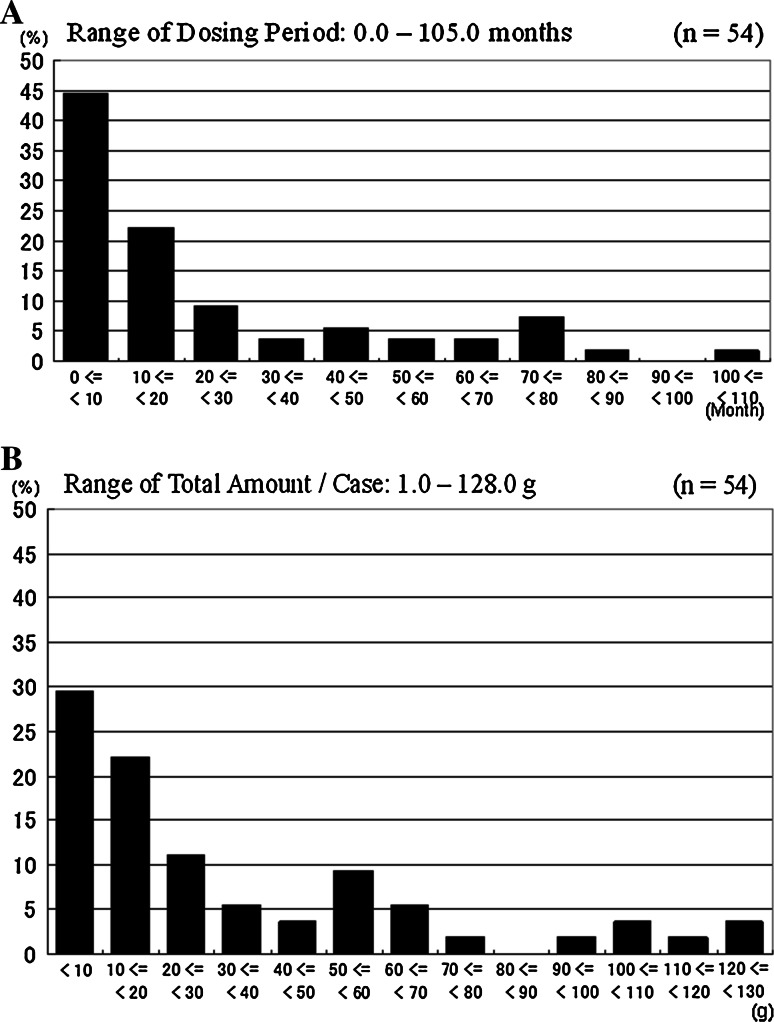
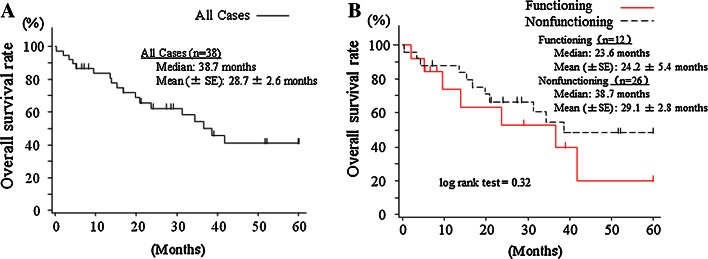
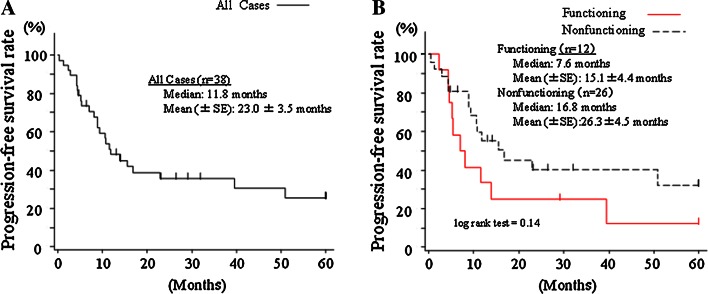
Fifty-four patients were enrolled. The main recipients of STZ chemotherapy were middle-aged patients with pancreatic NET and unresectable liver metastases. The predominant regimen was the weekly/bi-weekly intravenous administration of STZ combined with other oral anticancer agents. STZ monotherapy was used in one-fourth of the patients. The median progression-free and overall survival periods were 11.8 and 38.7 months, respectively, and sustained stable disease was obtained in some selected patients. The adverse events profile was mild and tolerable.
Our survey showed the clinical benefit and safety of STZ therapy for Japanese patients with unresectable NET. Therefore, we recommend that STZ, which is the only cytotoxic agent available against NET, should be used in daily practice in Japan.
神经内分泌肿瘤(NETs)被认为相对罕见,且通常病程进展缓慢。然而,肝转移在NET患者中很常见,且NET肝转移的预后较差。在西方国家,链脲佐菌素(STZ)已被确立为不可切除NET的一线抗癌药物;然而,STZ在日本的日常临床实践中无法使用。本研究的目的是确定STZ在日本的使用情况,并评估STZ化疗对日本NET患者的有效性和安全性。
进行了一项回顾性多中心调查。五家有STZ化疗经验的机构参与了该研究。收集并评估了患者的人口统计学资料、肿瘤特征、STZ化疗情况以及患者的预后。
共纳入54例患者。接受STZ化疗的主要是患有胰腺NET且有不可切除肝转移的中年患者。主要治疗方案是每周/每两周静脉注射STZ联合其他口服抗癌药物。四分之一的患者使用了STZ单药治疗。无进展生存期和总生存期的中位数分别为11.8个月和38.7个月,部分选定患者获得了疾病持续稳定。不良事件较轻且可耐受。
我们的调查显示了STZ治疗对日本不可切除NET患者的临床益处和安全性。因此,我们建议,作为唯一可用于NET的细胞毒性药物,STZ应在日本的日常临床实践中使用。