• 文献检索
  • 文档翻译
  • 深度研究
  • 学术资讯
  • Suppr Zotero 插件Zotero 插件
  • 邀请有礼
  • 套餐&价格
  • 历史记录
应用&插件
Suppr Zotero 插件Zotero 插件浏览器插件Mac 客户端Windows 客户端微信小程序
定价
高级版会员购买积分包购买API积分包
服务
文献检索文档翻译深度研究API 文档MCP 服务
关于我们
关于 Suppr公司介绍联系我们用户协议隐私条款
关注我们

Suppr 超能文献

核心技术专利:CN118964589B侵权必究
粤ICP备2023148730 号-1Suppr @ 2026

文献检索

告别复杂PubMed语法,用中文像聊天一样搜索,搜遍4000万医学文献。AI智能推荐,让科研检索更轻松。

立即免费搜索

文件翻译

保留排版,准确专业,支持PDF/Word/PPT等文件格式,支持 12+语言互译。

免费翻译文档

深度研究

AI帮你快速写综述,25分钟生成高质量综述,智能提取关键信息,辅助科研写作。

立即免费体验

肾小球疾病中可溶性尿激酶型纤溶酶原激活物受体的重新评估

A reassessment of soluble urokinase-type plasminogen activator receptor in glomerular disease.

作者信息

Spinale Joann M, Mariani Laura H, Kapoor Shiv, Zhang Jidong, Weyant Robert, Song Peter X, Wong Hetty N, Troost Jonathan P, Gadegbeku Crystal A, Gipson Debbie S, Kretzler Matthias, Nihalani Deepak, Holzman Lawrence B

机构信息

Division of Nephrology, The Children's Hospital of Philadelphia, Philadelphia, Pennsylvania, USA.

1] Arbor Research for Collaborative for Health, Ann Arbor, Michigan, USA [2] Division of Nephrology, University of Michigan School of Medicine, Ann Arbor, Michigan, USA.

出版信息

Kidney Int. 2015 Mar;87(3):564-74. doi: 10.1038/ki.2014.346. Epub 2014 Oct 29.

DOI:10.1038/ki.2014.346
PMID:25354239
原文链接:https://pmc.ncbi.nlm.nih.gov/articles/PMC4344842/
Abstract

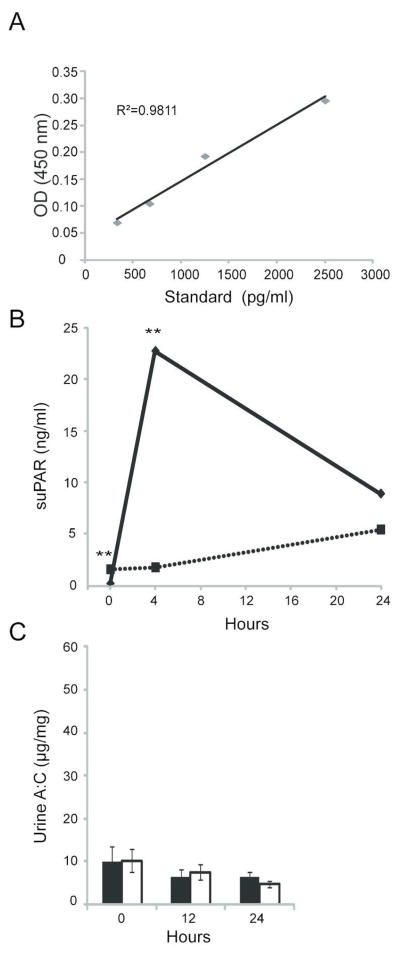
It has been suggested that soluble urokinase receptor (suPAR) is a causative circulating factor for and a biomarker of focal and segmental glomerulosclerosis (FSGS). Here we undertook validation of these assumptions in both mouse and human models. Injection of recombinant suPAR in wild-type mice did not induce proteinuria within 24 h. Moreover, a disease phenotype was not seen in an inducible transgenic mouse model that maintained elevated suPAR concentrations for 6 weeks. Plasma and urine suPAR concentrations were evaluated as clinical biomarkers in 241 patients with glomerular disease from the prospective, longitudinal multicenter observational NEPTUNE cohort. The serum suPAR concentration at baseline inversely correlated with estimated glomerular filtration rate (eGFR) and the urine suPAR/creatinine ratio positively correlated with the urine protein/creatinine ratio. After adjusting for eGFR and urine protein, neither the serum nor urine suPAR level was an independent predictor of FSGS histopathology. A multivariable mixed-effects model of longitudinal data evaluated the association between the change in serum suPAR concentration from baseline with eGFR. After adjusting for baseline suPAR concentration, age, gender, proteinuria, and time, the change in suPAR from baseline was associated with eGFR, but this association was not different for patients with FSGS as compared with other diagnoses. Thus these results do not support a pathological role for suPAR in FSGS.

摘要

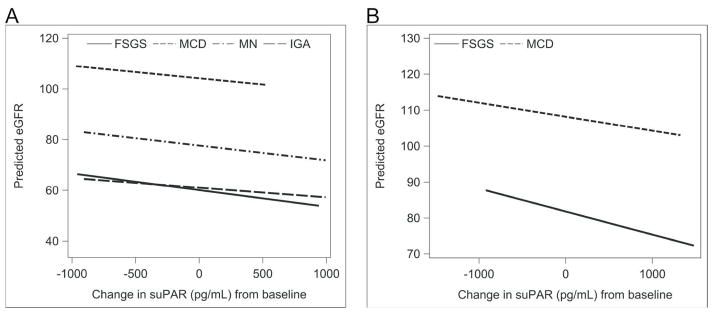
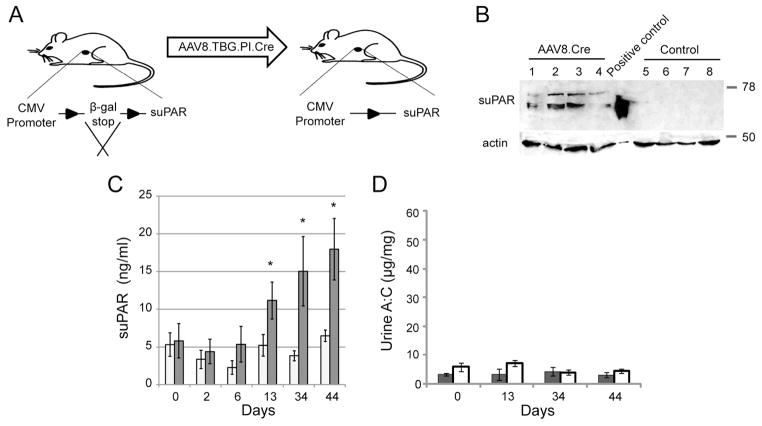
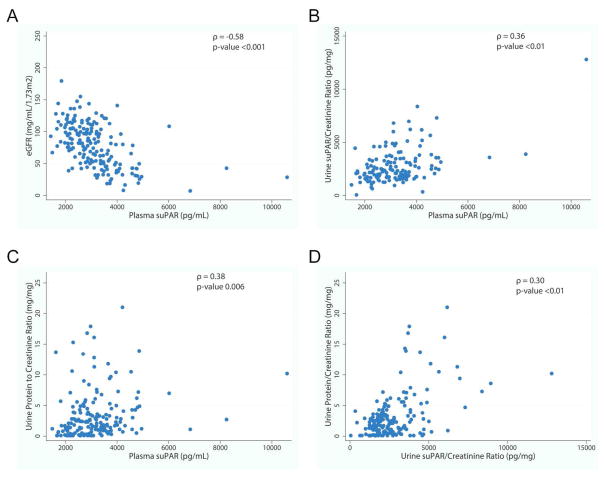
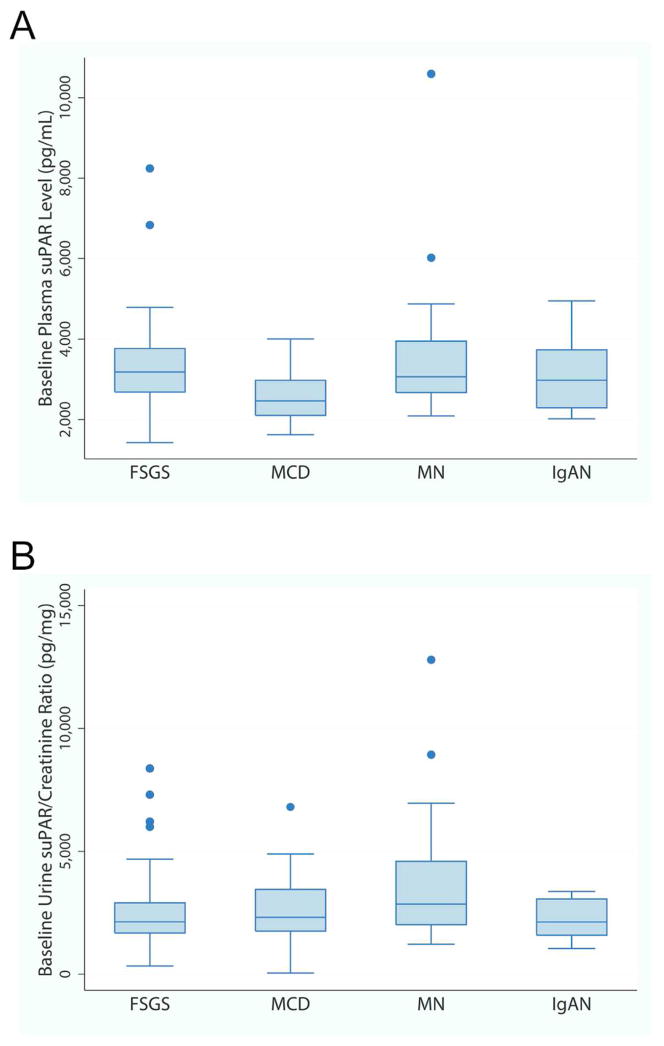
有人提出可溶性尿激酶受体(suPAR)是局灶节段性肾小球硬化(FSGS)的致病循环因子和生物标志物。在此,我们在小鼠和人类模型中对这些假设进行了验证。在野生型小鼠中注射重组suPAR在24小时内未诱导蛋白尿。此外,在一个可诱导的转基因小鼠模型中,该模型维持suPAR浓度升高6周,未观察到疾病表型。在来自前瞻性、纵向多中心观察性NEPTUNE队列的241例肾小球疾病患者中,评估血浆和尿液suPAR浓度作为临床生物标志物。基线时血清suPAR浓度与估计肾小球滤过率(eGFR)呈负相关,尿液suPAR/肌酐比值与尿蛋白/肌酐比值呈正相关。在调整eGFR和尿蛋白后,血清和尿液suPAR水平均不是FSGS组织病理学的独立预测指标。纵向数据的多变量混合效应模型评估了血清suPAR浓度相对于基线的变化与eGFR之间的关联。在调整基线suPAR浓度、年龄、性别、蛋白尿和时间后,相对于基线的suPAR变化与eGFR相关,但与其他诊断的患者相比,FSGS患者的这种关联并无差异。因此,这些结果不支持suPAR在FSGS中的病理作用。
https://cdn.ncbi.nlm.nih.gov/pmc/blobs/22ae/4344842/105182bf164f/nihms630784f5.jpg
https://cdn.ncbi.nlm.nih.gov/pmc/blobs/22ae/4344842/af5c33bf6854/nihms630784f1.jpg
https://cdn.ncbi.nlm.nih.gov/pmc/blobs/22ae/4344842/b0b973ca695d/nihms630784f2.jpg
https://cdn.ncbi.nlm.nih.gov/pmc/blobs/22ae/4344842/cb9fbf6c3cdd/nihms630784f3.jpg
https://cdn.ncbi.nlm.nih.gov/pmc/blobs/22ae/4344842/13f222628809/nihms630784f4.jpg
https://cdn.ncbi.nlm.nih.gov/pmc/blobs/22ae/4344842/105182bf164f/nihms630784f5.jpg
https://cdn.ncbi.nlm.nih.gov/pmc/blobs/22ae/4344842/af5c33bf6854/nihms630784f1.jpg
https://cdn.ncbi.nlm.nih.gov/pmc/blobs/22ae/4344842/b0b973ca695d/nihms630784f2.jpg
https://cdn.ncbi.nlm.nih.gov/pmc/blobs/22ae/4344842/cb9fbf6c3cdd/nihms630784f3.jpg
https://cdn.ncbi.nlm.nih.gov/pmc/blobs/22ae/4344842/13f222628809/nihms630784f4.jpg
https://cdn.ncbi.nlm.nih.gov/pmc/blobs/22ae/4344842/105182bf164f/nihms630784f5.jpg

相似文献

1
A reassessment of soluble urokinase-type plasminogen activator receptor in glomerular disease.肾小球疾病中可溶性尿激酶型纤溶酶原激活物受体的重新评估
Kidney Int. 2015 Mar;87(3):564-74. doi: 10.1038/ki.2014.346. Epub 2014 Oct 29.
2
Circulating suPAR as a biomarker of disease severity in children with proteinuric glomerulonephritis.循环中的可溶性尿激酶型纤溶酶原激活物受体作为蛋白尿性肾小球肾炎患儿疾病严重程度的生物标志物。
Minerva Pediatr. 2019 Feb;71(1):4-11. doi: 10.23736/S0026-4946.16.04461-3. Epub 2016 Apr 12.
3
Urinary soluble urokinase receptor levels are elevated and pathogenic in patients with primary focal segmental glomerulosclerosis.原发性局灶节段性肾小球硬化症患者的尿可溶性尿激酶受体水平升高且具有致病性。
BMC Med. 2014 May 20;12:81. doi: 10.1186/1741-7015-12-81.
4
Soluble Urokinase Receptor Levels Are Correlated with Focal Segmental Glomerulosclerosis Lesions in IgA Nephropathy: A Cohort Study from China.可溶性尿激酶受体水平与IgA肾病中的局灶节段性肾小球硬化病变相关:一项来自中国的队列研究
PLoS One. 2015 Sep 18;10(9):e0138718. doi: 10.1371/journal.pone.0138718. eCollection 2015.
5
Relationship between serum soluble urokinase plasminogen activator receptor level and steroid responsiveness in FSGS.局灶节段性肾小球硬化症中血清可溶性尿激酶型纤溶酶原激活物受体水平与类固醇反应性的关系
Clin J Am Soc Nephrol. 2014 Nov 7;9(11):1903-11. doi: 10.2215/CJN.02370314. Epub 2014 Oct 15.
6
A multicenter cross-sectional study of circulating soluble urokinase receptor in Japanese patients with glomerular disease.日本肾小球疾病患者循环可溶性尿激酶受体的多中心横断面研究。
Kidney Int. 2014 Mar;85(3):641-8. doi: 10.1038/ki.2013.544. Epub 2014 Jan 15.
7
Urine but not serum soluble urokinase receptor (suPAR) may identify cases of recurrent FSGS in kidney transplant candidates.尿而非血清可溶性尿激酶受体(suPAR)可识别肾移植候选者复发性 FSGS 病例。
Transplantation. 2013 Aug 27;96(4):394-9. doi: 10.1097/TP.0b013e3182977ab1.
8
Diagnostic and Prognostic Value of Soluble Urokinase-type Plasminogen Activator Receptor (suPAR) in Focal Segmental Glomerulosclerosis and Impact of Detection Method.可溶性尿激酶型纤溶酶原激活物受体(suPAR)在局灶节段性肾小球硬化症中的诊断和预后价值及其检测方法的影响。
Sci Rep. 2019 Sep 24;9(1):13783. doi: 10.1038/s41598-019-50405-8.
9
The soluble urokinase receptor is not a clinical marker for focal segmental glomerulosclerosis.可溶性尿激酶型纤溶酶原激活物受体不是局灶节段性肾小球硬化的临床标志物。
Kidney Int. 2014 Mar;85(3):636-40. doi: 10.1038/ki.2013.505. Epub 2014 Jan 8.
10
Primary and Recurrent Focal Segmental Glomerulosclerosis Closely Link to Serum Soluble Urokinase-type Plasminogen Activator Receptor Levels.原发性及复发性局灶节段性肾小球硬化与血清可溶性尿激酶型纤溶酶原激活物受体水平密切相关。
Transplant Proc. 2015 Jul-Aug;47(6):1760-5. doi: 10.1016/j.transproceed.2015.03.048.

引用本文的文献

1
Association of soluble urokinase plasminogen activator receptor and epidermal growth factor with histopathological findings of kidney biopsy: a single-center study.可溶性尿激酶型纤溶酶原激活物受体与表皮生长因子与肾活检组织病理学结果的相关性:一项单中心研究
BMC Nephrol. 2025 Jul 25;26(1):416. doi: 10.1186/s12882-025-04351-5.
2
Pathogenesis of Focal Segmental Glomerulosclerosis and Related Disorders.局灶节段性肾小球硬化及相关疾病的发病机制
Annu Rev Pathol. 2025 Jan;20(1):329-353. doi: 10.1146/annurev-pathol-051220-092001.
3
Non-Invasive Biomarkers for Diagnosis, Risk Prediction, and Therapy Guidance of Glomerular Kidney Diseases: A Comprehensive Review.

本文引用的文献

1
Administration of recombinant soluble urokinase receptor per se is not sufficient to induce podocyte alterations and proteinuria in mice.单独给予重组可溶性尿激酶受体不足以在小鼠中诱导足细胞改变和蛋白尿。
J Am Soc Nephrol. 2014 Aug;25(8):1662-8. doi: 10.1681/ASN.2013040425. Epub 2014 May 1.
2
Decreased glomerular filtration as the primary factor of elevated circulating suPAR levels in focal segmental glomerulosclerosis.肾小球滤过率降低是局灶节段性肾小球硬化症患者循环中可溶性尿激酶型纤溶酶原激活物受体(suPAR)水平升高的主要因素。
Pediatr Nephrol. 2014 Sep;29(9):1553-60. doi: 10.1007/s00467-014-2808-5. Epub 2014 Apr 6.
3
[Value of soluble urokinase receptor serum levels in the differential diagnosis between idiopathic and secondary focal segmental glomerulosclerosis].
用于肾小球肾脏疾病的诊断、风险预测和治疗指导的非侵入性生物标志物:全面综述。
Int J Mol Sci. 2024 Mar 20;25(6):3519. doi: 10.3390/ijms25063519.
4
Precision medicine for focal segmental glomerulosclerosis.局灶节段性肾小球硬化的精准医学
Kidney Res Clin Pract. 2024 Nov;43(6):709-723. doi: 10.23876/j.krcp.23.227. Epub 2024 Feb 6.
5
Clinicopathological differences in focal segmental glomerulosclerosis depending on the accompanying pathophysiological conditions in renal allografts.根据肾移植中伴随的病理生理条件,局灶节段性肾小球硬化的临床病理差异。
Virchows Arch. 2023 Dec;483(6):809-819. doi: 10.1007/s00428-023-03703-6. Epub 2023 Nov 18.
6
suPAR and WT1 modify the adhesion of podocytes and are related to proteinuria in class IV lupus nephritis.可溶性尿激酶型纤溶酶原激活物受体(suPAR)和威尔姆斯瘤基因1(WT1)调节足细胞黏附,且与IV型狼疮性肾炎的蛋白尿相关。
J Transl Autoimmun. 2023 Oct 13;7:100216. doi: 10.1016/j.jtauto.2023.100216. eCollection 2023 Dec.
7
Current understanding of the molecular mechanisms of circulating permeability factor in focal segmental glomerulosclerosis.目前对局灶节段性肾小球硬化症中循环通透因子的分子机制的认识。
Front Immunol. 2023 Sep 19;14:1247606. doi: 10.3389/fimmu.2023.1247606. eCollection 2023.
8
Rituximab in the treatment of primary FSGS: time for its use in routine clinical practice?利妥昔单抗治疗原发性局灶节段性肾小球硬化:是时候将其应用于常规临床实践了吗?
Clin Kidney J. 2023 May 24;16(8):1199-1205. doi: 10.1093/ckj/sfad122. eCollection 2023 Aug.
9
suPAR: An Inflammatory Mediator for Kidneys.可溶性尿激酶型纤溶酶原激活物受体:肾脏的一种炎症介质。
Kidney Dis (Basel). 2022 Jun 8;8(4):265-274. doi: 10.1159/000524965. eCollection 2022 Jul.
10
Biomarkers in Primary Focal Segmental Glomerulosclerosis in Optimal Diagnostic-Therapeutic Strategy.原发性局灶节段性肾小球硬化症的生物标志物在最佳诊疗策略中的应用
J Clin Med. 2022 Jun 8;11(12):3292. doi: 10.3390/jcm11123292.
[可溶性尿激酶受体血清水平在特发性与继发性局灶节段性肾小球硬化鉴别诊断中的价值]
Nefrologia. 2014;34(1):53-61. doi: 10.3265/Nefrologia.pre2013.Oct.12272.
4
Serum-soluble urokinase receptor levels do not distinguish focal segmental glomerulosclerosis from other causes of nephrotic syndrome in children.血清可溶性尿激酶受体水平不能区分局灶节段性肾小球硬化与儿童肾病综合征的其他病因。
Kidney Int. 2014 Mar;85(3):649-58. doi: 10.1038/ki.2013.546. Epub 2014 Jan 15.
5
A multicenter cross-sectional study of circulating soluble urokinase receptor in Japanese patients with glomerular disease.日本肾小球疾病患者循环可溶性尿激酶受体的多中心横断面研究。
Kidney Int. 2014 Mar;85(3):641-8. doi: 10.1038/ki.2013.544. Epub 2014 Jan 15.
6
The soluble urokinase receptor is not a clinical marker for focal segmental glomerulosclerosis.可溶性尿激酶型纤溶酶原激活物受体不是局灶节段性肾小球硬化的临床标志物。
Kidney Int. 2014 Mar;85(3):636-40. doi: 10.1038/ki.2013.505. Epub 2014 Jan 8.
7
Primary focal and segmental glomerulosclerosis and soluble factor urokinase-type plasminogen activator receptor.原发性局灶节段性肾小球硬化与可溶性因子尿激酶型纤溶酶原激活物受体
World J Nephrol. 2013 Nov 6;2(4):103-10. doi: 10.5527/wjn.v2.i4.103.
8
Urine but not serum soluble urokinase receptor (suPAR) may identify cases of recurrent FSGS in kidney transplant candidates.尿而非血清可溶性尿激酶受体(suPAR)可识别肾移植候选者复发性 FSGS 病例。
Transplantation. 2013 Aug 27;96(4):394-9. doi: 10.1097/TP.0b013e3182977ab1.
9
Serum soluble urokinase-type plasminogen activator receptor levels and idiopathic FSGS in children: a single-center report.血清可溶性尿激酶型纤溶酶原激活物受体水平与儿童特发性 FSGS:一项单中心报告。
Clin J Am Soc Nephrol. 2013 Aug;8(8):1304-11. doi: 10.2215/CJN.07680712. Epub 2013 Apr 25.
10
Plasma soluble urokinase receptor levels are increased but do not distinguish primary from secondary focal segmental glomerulosclerosis.血浆可溶性尿激酶受体水平升高,但不能区分原发性和继发性局灶节段性肾小球硬化症。
Kidney Int. 2013 Aug;84(2):366-72. doi: 10.1038/ki.2013.55. Epub 2013 Feb 27.