Patterson Larissa B, Bain Emily J, Parichy David M
Department of Biology, University of Washington, Seattle, Washington 98195, USA.
Nat Commun. 2014 Nov 6;5:5299. doi: 10.1038/ncomms6299.
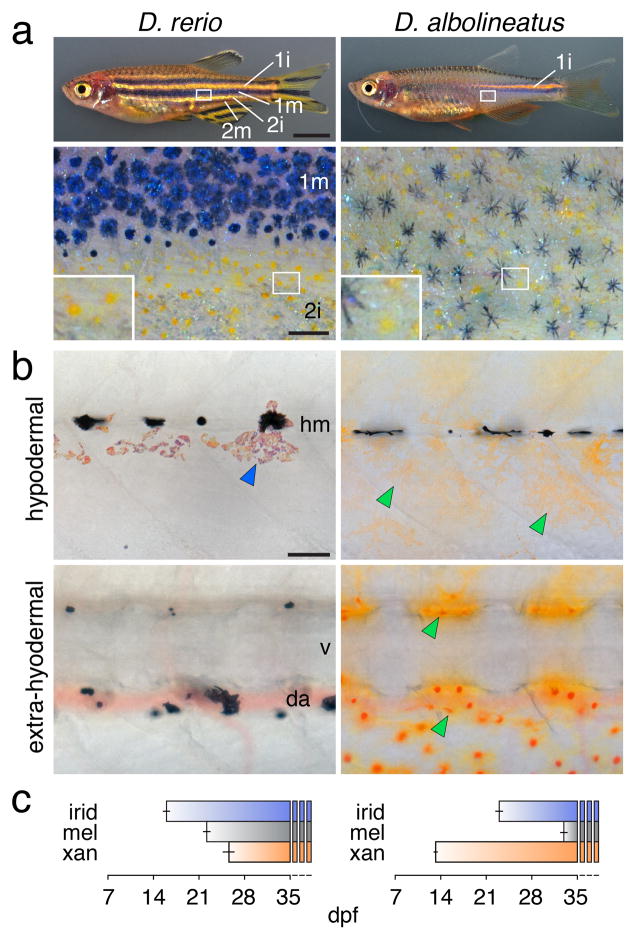
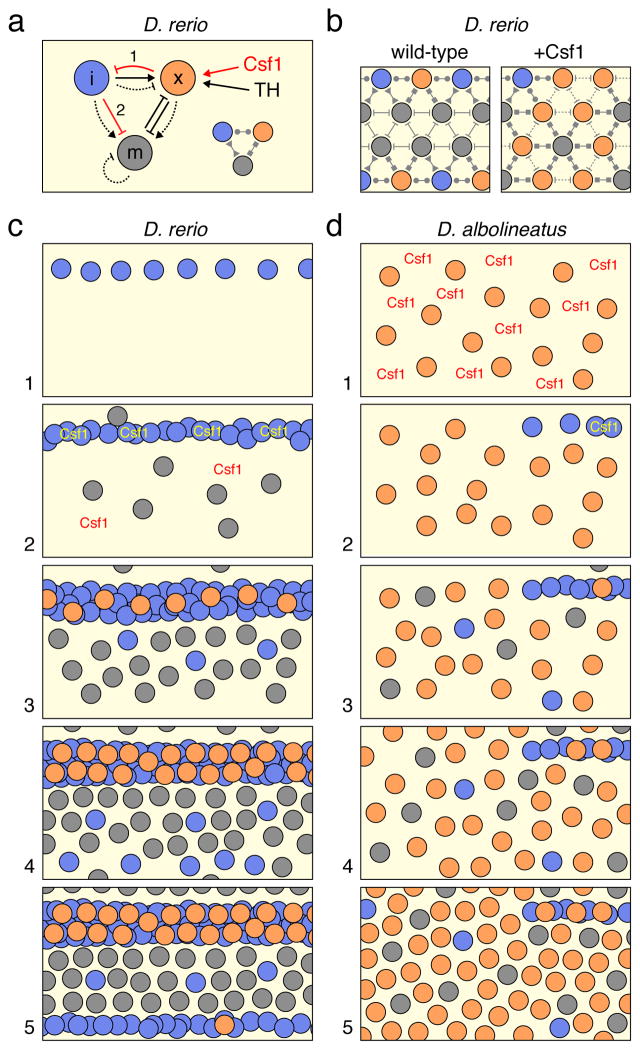
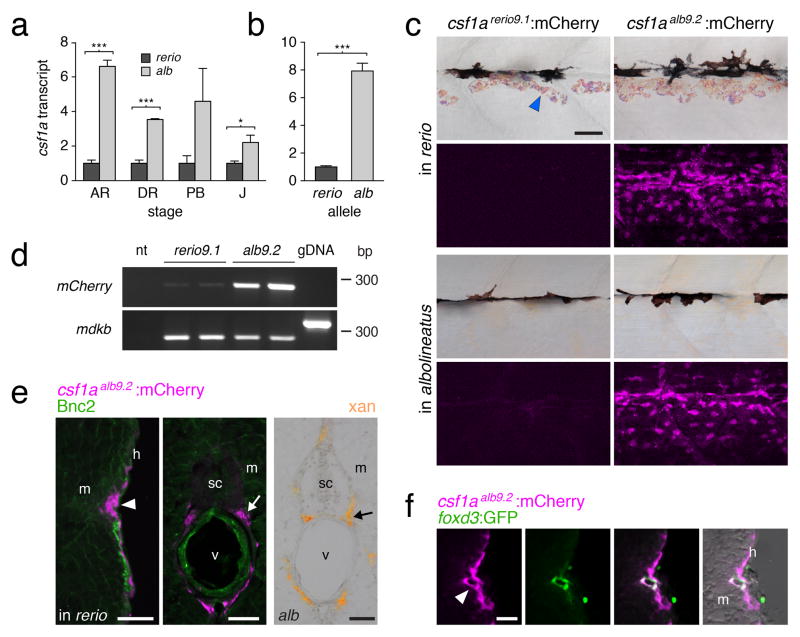
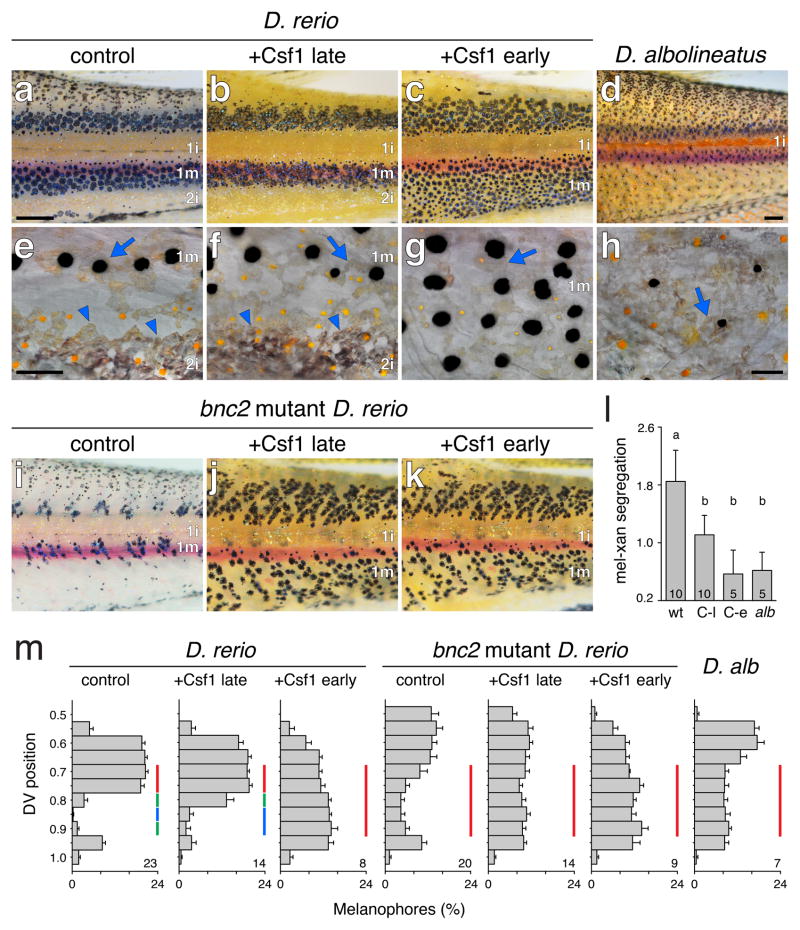
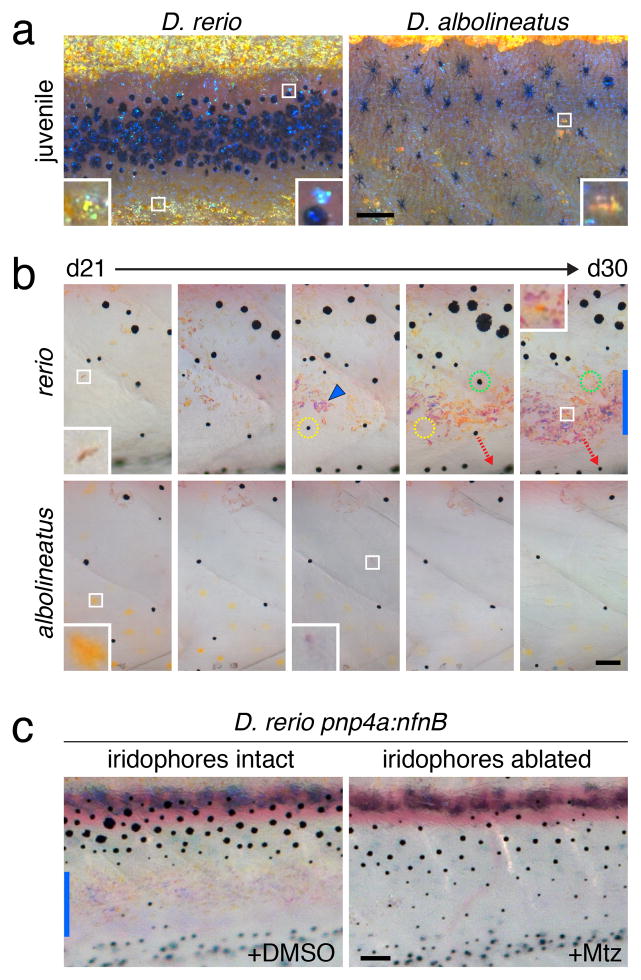
Fishes have diverse pigment patterns, yet mechanisms of pattern evolution remain poorly understood. In zebrafish, Danio rerio, pigment-cell autonomous interactions generate dark stripes of melanophores that alternate with light interstripes of xanthophores and iridophores. Here, we identify mechanisms underlying the evolution of a uniform pattern in D. albolineatus in which all three pigment cell classes are intermingled. We show that in this species xanthophores differentiate precociously over a wider area, and that cis regulatory evolution has increased expression of xanthogenic Colony Stimulating Factor-1 (Csf1). Expressing Csf1 similarly in D. rerio has cascading effects, driving the intermingling of all three pigment cell classes and resulting in the loss of stripes, as in D. albolineatus. Our results identify novel mechanisms of pattern development and illustrate how pattern diversity can be generated when a core network of pigment-cell autonomous interactions is coupled with changes in pigment cell differentiation.
鱼类具有多样的色素模式,但模式进化的机制仍知之甚少。在斑马鱼(Danio rerio)中,色素细胞自主相互作用产生了黑色素细胞的深色条纹,这些条纹与黄色素细胞和虹彩细胞的浅色条纹相间排列。在这里,我们确定了白线丹(D. albolineatus)中均匀模式进化的潜在机制,在这种模式中,所有三种色素细胞类型相互混合。我们发现,在这个物种中,黄色素细胞在更广泛的区域早熟分化,并且顺式调控进化增加了促黄生成集落刺激因子-1(Csf1)的表达。在斑马鱼中类似地表达Csf1会产生级联效应,促使所有三种色素细胞类型相互混合,从而导致条纹消失,就像在白线丹中一样。我们的结果确定了模式发育的新机制,并说明了当色素细胞自主相互作用的核心网络与色素细胞分化的变化相结合时,如何产生模式多样性。