Okazaki Shunichiro, Nagoya Satoshi, Matsumoto Hiroshi, Mizuo Keisuke, Sasaki Mikito, Watanabe Satoshi, Yamashita Toshihiko, Inoue Hiromasa
1] Department of Musculoskeletal Biomechanics and Surgical Development, Sapporo Medical University School of Medicine, Sapporo, Japan [2] Department of Legal Medicine, Sapporo Medical University School of Medicine, Sapporo, Japan.
Department of Musculoskeletal Biomechanics and Surgical Development, Sapporo Medical University School of Medicine, Sapporo, Japan.
Lab Invest. 2015 Jan;95(1):92-9. doi: 10.1038/labinvest.2014.134. Epub 2014 Nov 10.
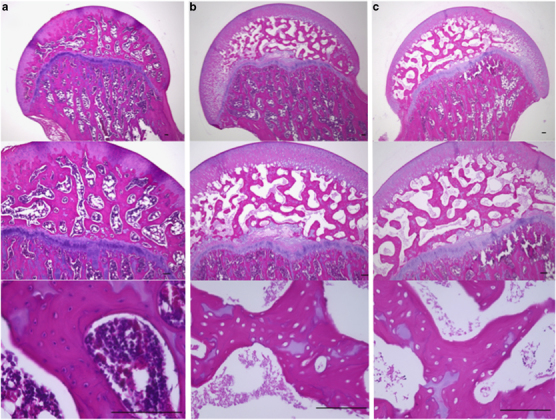
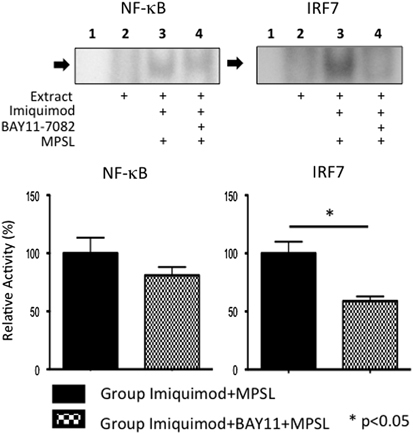
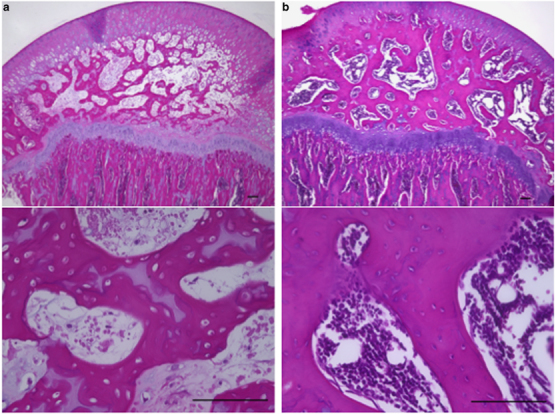
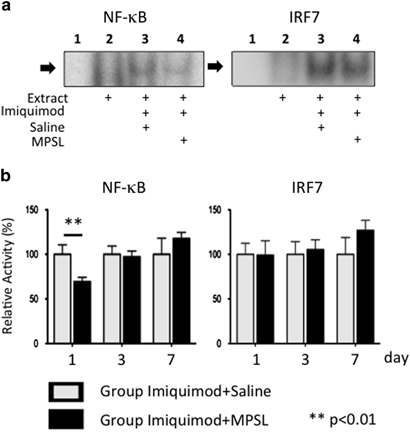
Non-traumatic osteonecrosis of the femoral head (ONFH) often occurs after corticosteroid therapy in patients with inflammatory diseases. Recent studies suggest that toll-like receptor (TLR) signaling may contribute to the pathogenesis of inflammatory diseases, and that the reason for corticosteroid therapy for inflammatory diseases is related to the anti-inflammatory activities of corticosteroids through the reduction of NF-κB. We hypothesized that the administration of TLR ligands in combination with corticosteroid causes ONFH and that transcription factors may contribute to the pathogenesis of ONFH. The aim of the study was to evaluate (1) the incidence of ONFH in rats after the administration of TLR7 or TLR9 ligands together with methylprednisolone (MPSL) and (2) whether transcription factors contribute to the development of ONFH. Male Wistar rats (n=148) were divided into five groups as follows: Group 1: Saline+MPSL, Group 2: Imiquimod+Saline, Group 3: Imiquimod+MPSL, Group 4: CpG-C+MPSL, Group 5: Imiquimod+BAY11-7082+MPSL. As a result, ONFH was observed in 0 of 12 rats in Group 1, in 1 of 10 in Group 2, in 6 of 12 in Group 3, in 4 of 12 in Group 4, in 0 of 9 in Group 5. MPSL treatment did not significantly affect IRF7 activity, whereas NF-κB activity was significantly repressed in Group 2 and Group 3. Furthermore, the repression in interferon regulatory factor 7 (IRF7) activity by BAY11-7082 interfered with the development of ONFH simultaneously with the MPSL treatment-induced repression in NF-κB activity. In conclusion, in the present study, corticosteroid treatment after the administration of TLR7 or TLR9 ligands caused ONFH. Repression in NF-κB activity by corticosteroid treatment boosted the development of ONFH.
非创伤性股骨头坏死(ONFH)常发生于炎症性疾病患者接受糖皮质激素治疗之后。近期研究表明,Toll样受体(TLR)信号传导可能参与炎症性疾病的发病机制,而糖皮质激素用于治疗炎症性疾病的原因与其通过降低核因子κB(NF-κB)发挥的抗炎活性有关。我们推测,联合使用TLR配体和糖皮质激素会导致ONFH,且转录因子可能参与ONFH的发病机制。本研究的目的是评估:(1)给予TLR7或TLR9配体联合甲泼尼龙(MPSL)后大鼠ONFH的发生率;(2)转录因子是否参与ONFH的发生发展。将148只雄性Wistar大鼠分为以下五组:第1组:生理盐水+MPSL;第2组:咪喹莫特+生理盐水;第3组:咪喹莫特+MPSL;第4组:CpG-C+MPSL;第5组:咪喹莫特+BAY11-7082+MPSL。结果显示,第1组12只大鼠中0只发生ONFH,第2组10只中1只发生,第3组12只中6只发生,第4组12只中4只发生,第5组9只中0只发生。MPSL治疗对干扰素调节因子7(IRF7)活性无显著影响,而第2组和第3组中NF-κB活性显著受到抑制。此外,BAY11-7082对IRF7活性的抑制在MPSL治疗诱导的NF-κB活性抑制的同时,干扰了ONFH的发展。总之,在本研究中,给予TLR7或TLR9配体后进行糖皮质激素治疗会导致ONFH。糖皮质激素治疗导致的NF-κB活性抑制促进了ONFH的发展。