Division of Internal Medicine, University of Zurich Zurich, Switzerland.
Department of Molecular Biotechnology and Health Sciences, University of Torino Torino, Italy.
Front Physiol. 2014 Oct 28;5:415. doi: 10.3389/fphys.2014.00415. eCollection 2014.
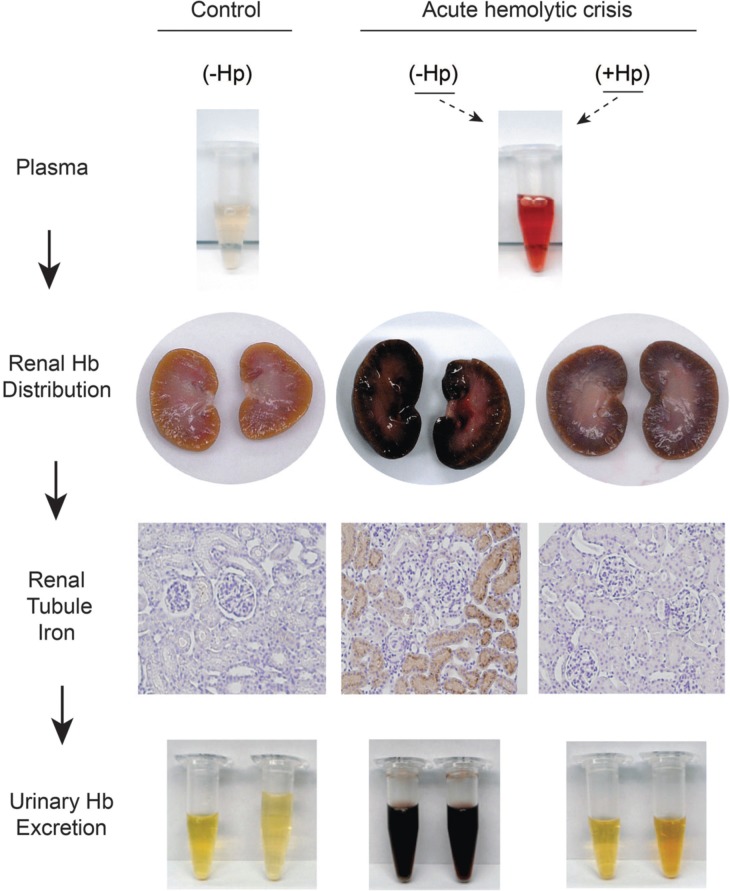
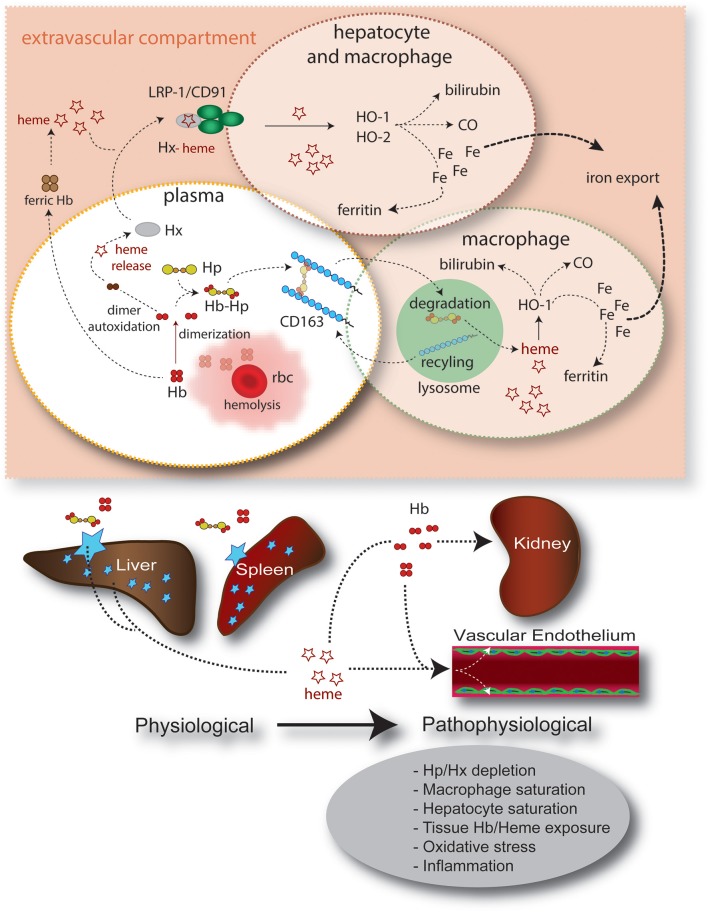
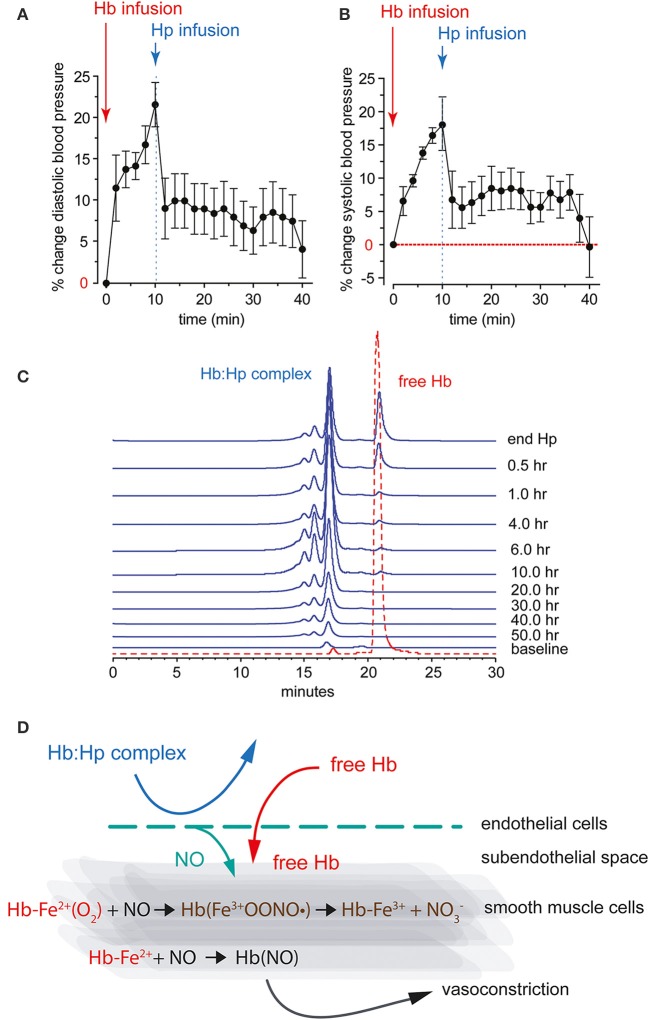
Hemolysis, which occurs in many disease states, can trigger a diverse pathophysiologic cascade that is related to the specific biochemical activities of free Hb and its porphyrin component heme. Normal erythropoiesis and concomitant removal of senescent red blood cells (RBC) from the circulation occurs at rates of approximately 2 × 10(6) RBCs/second. Within this physiologic range of RBC turnover, a small fraction of hemoglobin (Hb) is released into plasma as free extracellular Hb. In humans, there is an efficient multicomponent system of Hb sequestration, oxidative neutralization and clearance. Haptoglobin (Hp) is the primary Hb-binding protein in human plasma, which attenuates the adverse biochemical and physiologic effects of extracellular Hb. The cellular receptor target of Hp is the monocyte/macrophage scavenger receptor, CD163. Following Hb-Hp binding to CD163, cellular internalization of the complex leads to globin and heme metabolism, which is followed by adaptive changes in antioxidant and iron metabolism pathways and macrophage phenotype polarization. When Hb is released from RBCs within the physiologic range of Hp, the potential deleterious effects of Hb are prevented. However, during hyper-hemolytic conditions or with chronic hemolysis, Hp is depleted and Hb readily distributes to tissues where it might be exposed to oxidative conditions. In such conditions, heme can be released from ferric Hb. The free heme can then accelerate tissue damage by promoting peroxidative reactions and activation of inflammatory cascades. Hemopexin (Hx) is another plasma glycoprotein able to bind heme with high affinity. Hx sequesters heme in an inert, non-toxic form and transports it to the liver for catabolism and excretion. In the present review we discuss the components of physiologic Hb/heme detoxification and their potential therapeutic application in a wide range of hemolytic conditions.
溶血发生在许多疾病状态下,可引发与游离 Hb 的特定生化活性及其卟啉成分血红素有关的多种病理生理级联反应。正常的红细胞生成和衰老的红细胞 (RBC) 从循环中同时被清除的速度约为每秒 2×10(6) RBC。在这个 RBC 周转率的生理范围内,一小部分血红蛋白 (Hb) 作为游离细胞外 Hb 释放到血浆中。在人类中,存在一个有效的 Hb 捕获、氧化中和清除的多组分系统。触珠蛋白 (Hp) 是人类血浆中主要的 Hb 结合蛋白,可减弱细胞外 Hb 的不良生化和生理作用。Hp 的细胞受体靶标是单核细胞/巨噬细胞清道夫受体,CD163。在 Hb-Hp 与 CD163 结合后,复合物的细胞内化导致球蛋白和血红素代谢,随后是抗氧化和铁代谢途径的适应性变化以及巨噬细胞表型极化。当 Hb 在 Hp 的生理范围内从 RBC 中释放时,可防止 Hb 的潜在有害作用。然而,在高溶血性条件下或慢性溶血时,Hp 被耗尽,Hb 很容易分布到可能暴露于氧化条件的组织中。在这种情况下,铁从高铁 Hb 中释放出来。游离血红素可通过促进过氧化反应和激活炎症级联反应来加速组织损伤。血红素结合蛋白 (Hx) 是另一种能够与血红素高亲和力结合的血浆糖蛋白。Hx 以惰性、无毒的形式将血红素隔离,并将其运送到肝脏进行分解和排泄。在本综述中,我们讨论了生理 Hb/血红素解毒的组成部分及其在广泛的溶血性疾病中的潜在治疗应用。