Asada Miki, Kato Yasuhiko, Matsuura Tomoaki, Watanabe Hajime
Department of Biotechnology, Graduate School of Engineering, Osaka University, Osaka 565-0871, Japan.
Department of Biotechnology, Graduate School of Engineering, Osaka University, Osaka 565-0871, Japan
J Insect Sci. 2014 Jan 1;14:181. doi: 10.1093/jisesa/ieu043. Print 2014.
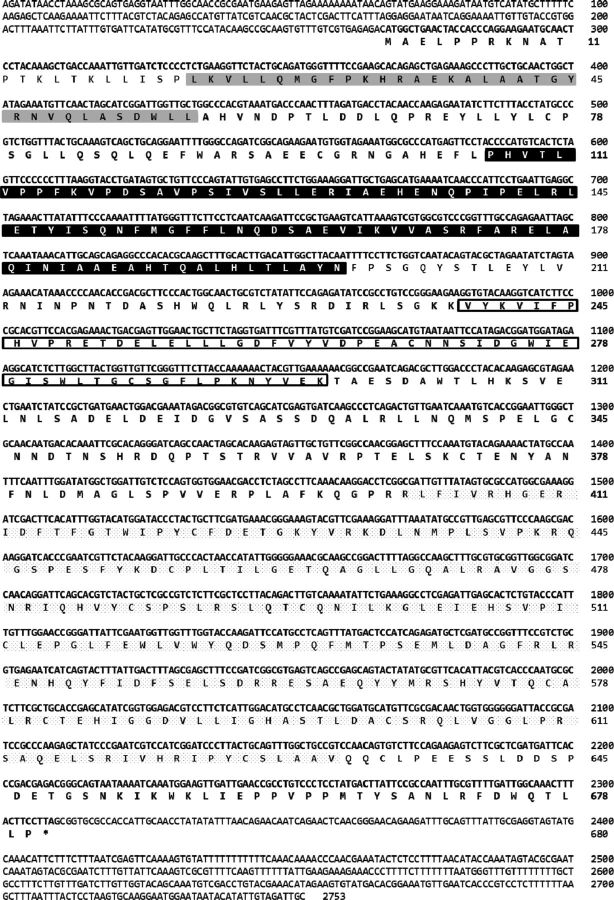
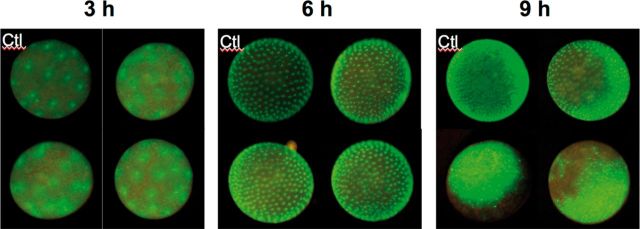
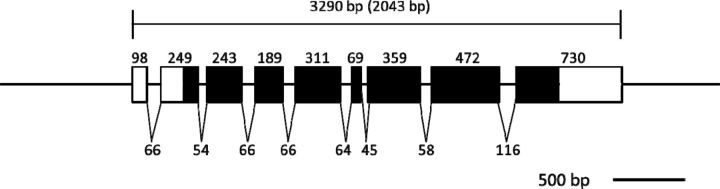
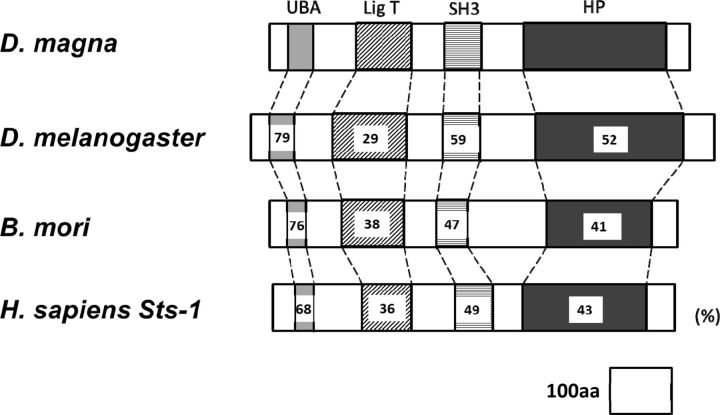
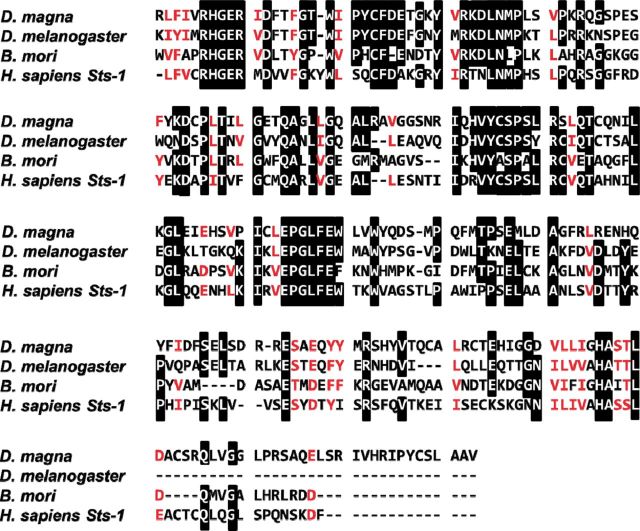
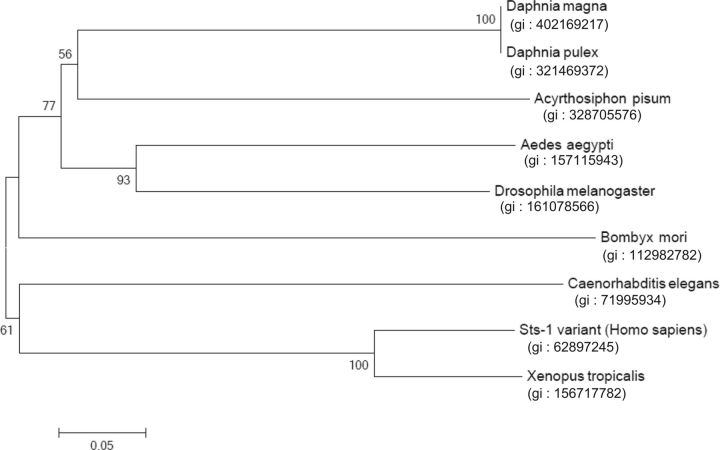
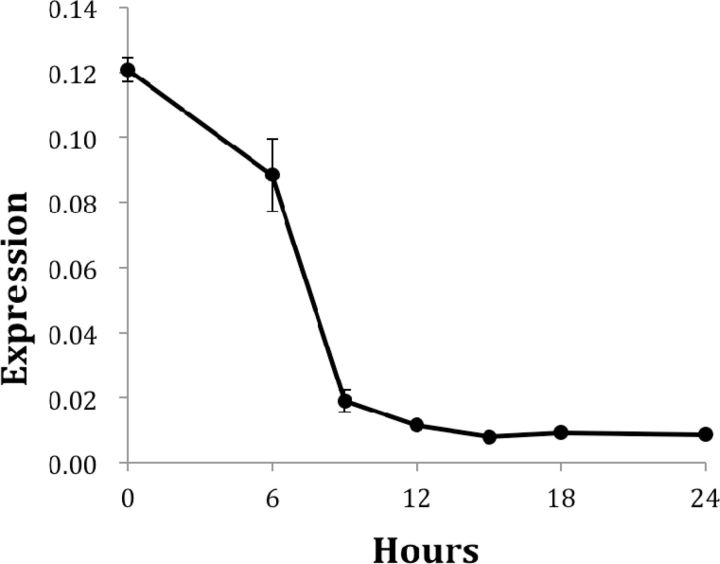
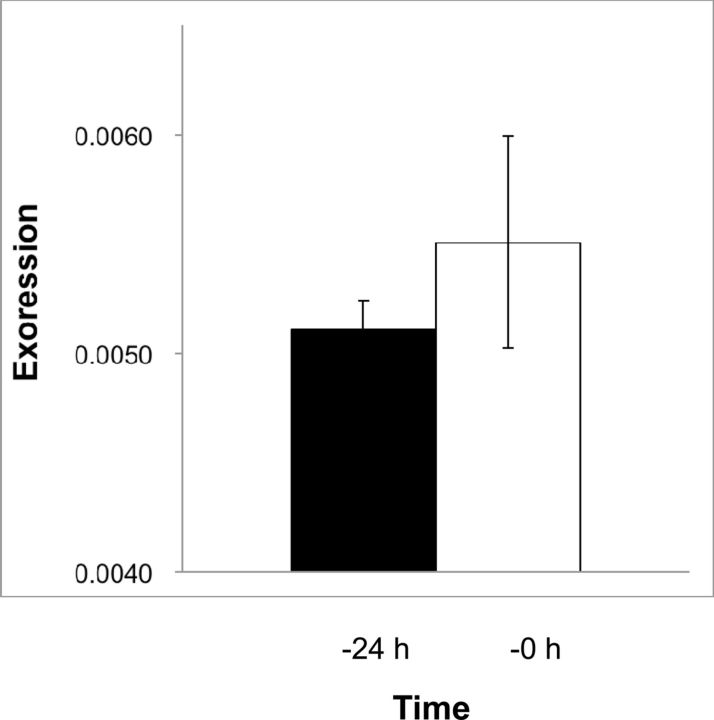
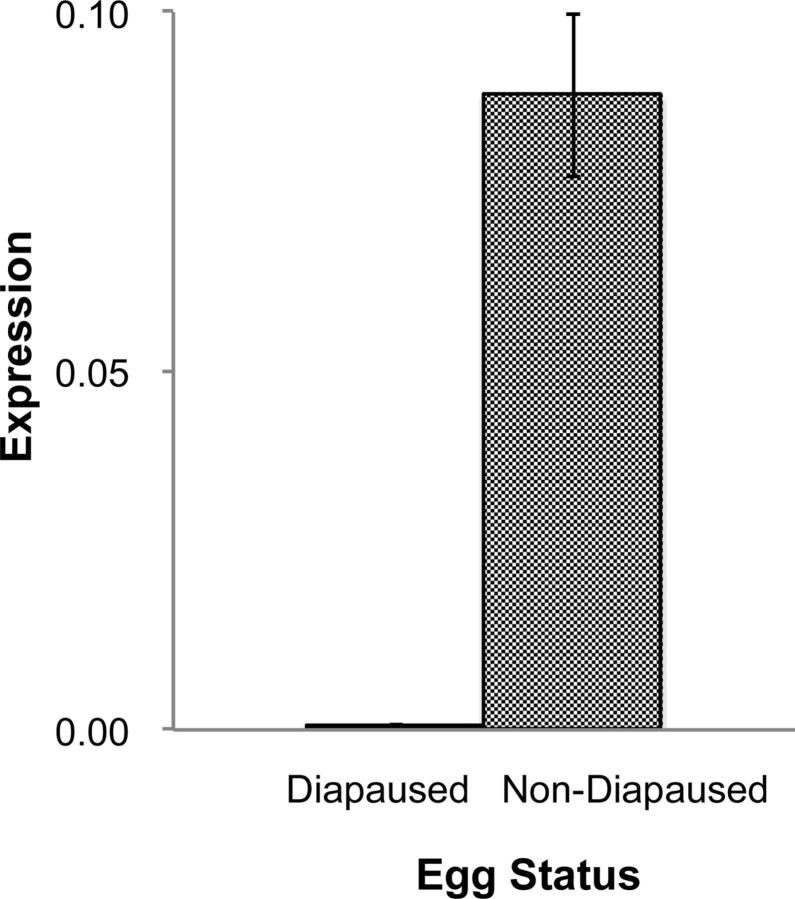
Ecdysteroids, known as molting hormones, play central roles in the onset of molting, metamorphosis, and reproduction in arthropods. The ecdysteroids stored in eggs also play an important role in embryogenesis. In insects, ecdysteroids are stored as phosphate esters, which are converted to an active form by ecdysteroid-phosphate phosphatase (EPPase). Although EPPase is believed to be widely conserved in the Ecdysozoa, little is known about its expression in clades other than Insecta. In this study, we cloned a putative EPPase gene from a small fresh water crustacean known as a water flea, Daphnia magna Straus (Cladocera: Daphniidae), and examined its expression during embryogenesis. The amino acid sequence of the putative crustacean EPPase cDNA showed high similarity to insect EPPase and human suppressor of T-cell receptor signaling-1. We also found that the D. magna EPPase was highly expressed during early embryogenesis; its expression rapidly decreased 6 h after oviposition. This timing corresponds to the onset of organogenesis in D. magna. The expression of EPPase could not be detected in diapaused eggs. This is the first report of an EPPase from crustaceans, and the results suggest that the function of EPPase is conserved between insects and crustaceans.
蜕皮甾类,即众所周知的蜕皮激素,在节肢动物的蜕皮、变态和繁殖过程中起着核心作用。储存在卵中的蜕皮甾类在胚胎发育中也发挥着重要作用。在昆虫中,蜕皮甾类以磷酸酯的形式储存,通过蜕皮甾类磷酸磷酸酶(EPPase)转化为活性形式。尽管人们认为EPPase在蜕皮动物中广泛保守,但对于其在昆虫纲以外的类群中的表达情况知之甚少。在本研究中,我们从一种小型淡水甲壳动物水蚤(大型溞,枝角目:溞科)中克隆了一个假定的EPPase基因,并研究了其在胚胎发育过程中的表达。假定的甲壳动物EPPase cDNA的氨基酸序列与昆虫EPPase和人类T细胞受体信号抑制因子-1高度相似。我们还发现大型溞EPPase在胚胎发育早期高度表达;产卵后6小时其表达迅速下降。这个时间点与大型溞器官发生的开始相对应。在滞育卵中未检测到EPPase的表达。这是关于甲壳动物EPPase的首次报道,结果表明EPPase的功能在昆虫和甲壳动物之间是保守的。