
内源性肺表面活性剂激发的pH响应性纳米囊泡气雾剂:肺转移中的肺相容性和位点特异性药物递送
Endogenous lung surfactant inspired pH responsive nanovesicle aerosols: pulmonary compatible and site-specific drug delivery in lung metastases.
作者信息
Joshi Nitin, Shirsath Nitesh, Singh Ankur, Joshi Kalpana S, Banerjee Rinti
机构信息
Department of Biosciences and Bioengineering, Indian Institute of Technology Bombay, Powai, Mumbai 400076, India.
Department of Cancer Pharmacology, Piramal Life Sciences Limited, 1-Nirlon Complex, Goregaon, Mumbai 400063, India.
出版信息
Sci Rep. 2014 Nov 18;4:7085. doi: 10.1038/srep07085.
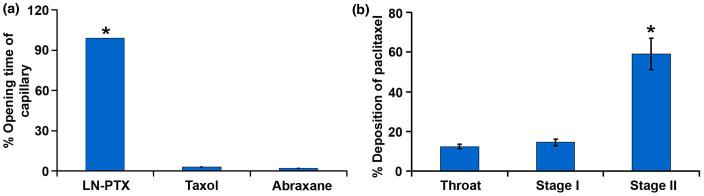
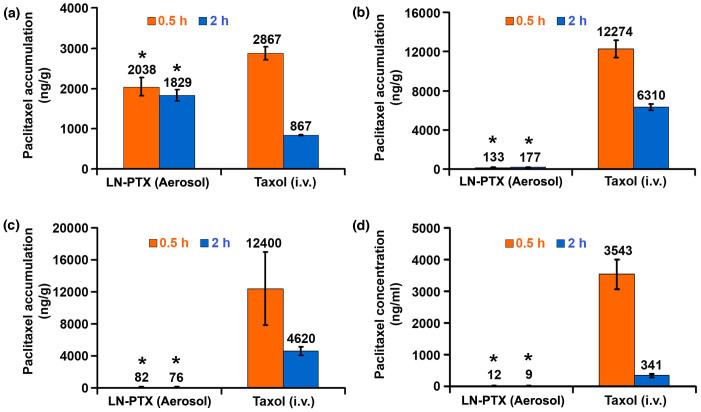
Concerns related to pulmonary toxicity and non-specificity of nanoparticles have limited their clinical applications for aerosol delivery of chemotherapeutics in lung cancer. We hypothesized that pulmonary surfactant mimetic nanoparticles that offer pH responsive release specifically in tumor may be a possible solution to overcome these issues. We therefore developed lung surfactant mimetic and pH responsive lipid nanovesicles for aerosol delivery of paclitaxel in metastatic lung cancer. 100-200 nm sized nanovesicles showed improved fusogenicity and cytosolic drug release, specifically with cancer cells, thereby resulting in improved cytotoxicity of paclitaxel in B16F10 murine melanoma cells and cytocompatibility with normal lung fibroblasts (MRC 5). The nanovesicles showed airway patency similar to that of endogenous pulmonary surfactant and did not elicit inflammatory response in alveolar macrophages. Their aerosol administration while significantly improving the biodistribution of paclitaxel in comparison to Taxol (i.v.), also showed significantly higher metastastes inhibition (~75%) in comparison to that of i.v. Taxol and i.v. Abraxane. No signs of interstitial pulmonary fiborisis, chronic inflammation and any other pulmonary toxicity were observed with nanovesicle formulation. Overall, these nanovesicles may be a potential platform to efficiently deliver hydrophobic drugs as aerosol in metastatic lung cancer and other lung diseases, without causing pulmonary toxicity.
与纳米颗粒的肺毒性和非特异性相关的问题限制了它们在肺癌化疗药物气溶胶递送中的临床应用。我们假设,能够在肿瘤中特异性实现pH响应释放的肺表面活性剂模拟纳米颗粒可能是克服这些问题的一种解决方案。因此,我们开发了用于转移性肺癌中紫杉醇气溶胶递送的肺表面活性剂模拟且具有pH响应性的脂质纳米囊泡。100 - 200纳米大小的纳米囊泡表现出更好的融合性和胞质药物释放,特别是与癌细胞,从而提高了紫杉醇对B16F10小鼠黑色素瘤细胞的细胞毒性以及与正常肺成纤维细胞(MRC 5)的细胞相容性。这些纳米囊泡显示出与内源性肺表面活性剂相似的气道通畅性,并且在肺泡巨噬细胞中未引发炎症反应。与紫杉醇(静脉注射)相比,它们的气溶胶给药在显著改善紫杉醇生物分布的同时,与静脉注射紫杉醇和静脉注射白蛋白结合型紫杉醇相比,还显示出显著更高的转移抑制率(约75%)。纳米囊泡制剂未观察到间质性肺纤维化、慢性炎症和任何其他肺毒性迹象。总体而言,这些纳米囊泡可能是在转移性肺癌和其他肺部疾病中作为气溶胶有效递送疏水药物而不引起肺毒性的潜在平台。




 Zotero 插件