Kuehl Carole J, Dragoi Ana-Maria, Agaisse Hervé
Department of Microbial Pathogenesis, Yale School of Medicine, Boyer Center for Molecular Medicine, New Haven, Connecticut, United States of America.
PLoS One. 2014 Nov 18;9(11):e112738. doi: 10.1371/journal.pone.0112738. eCollection 2014.
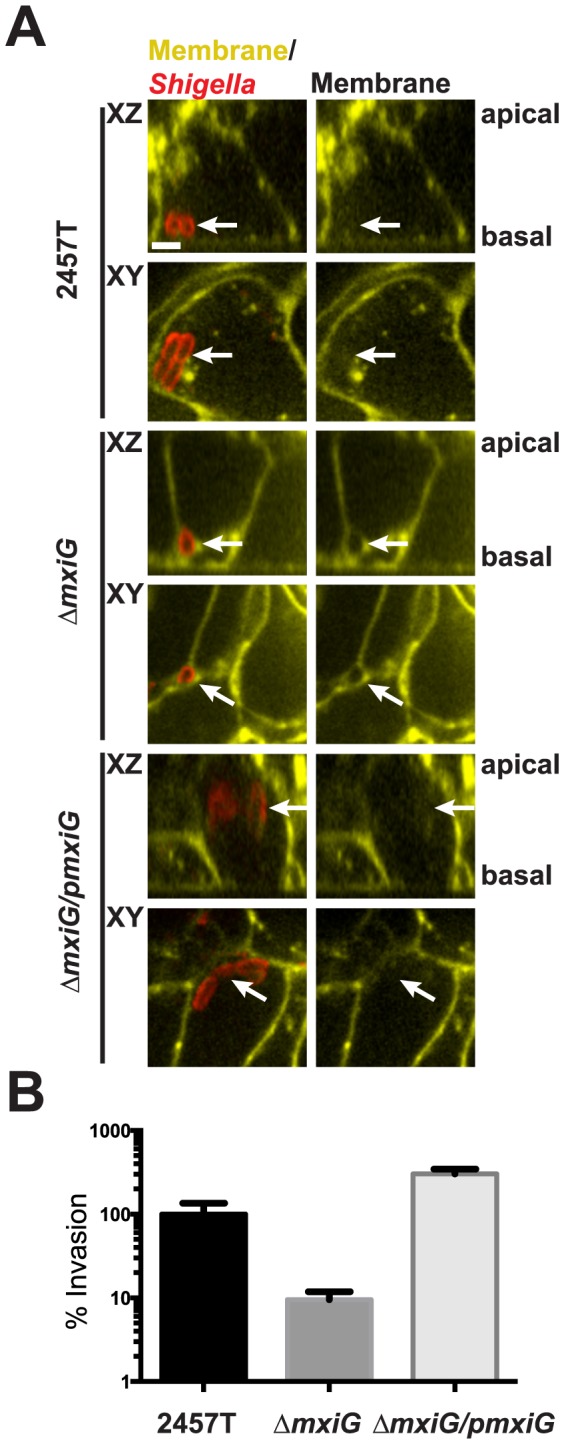
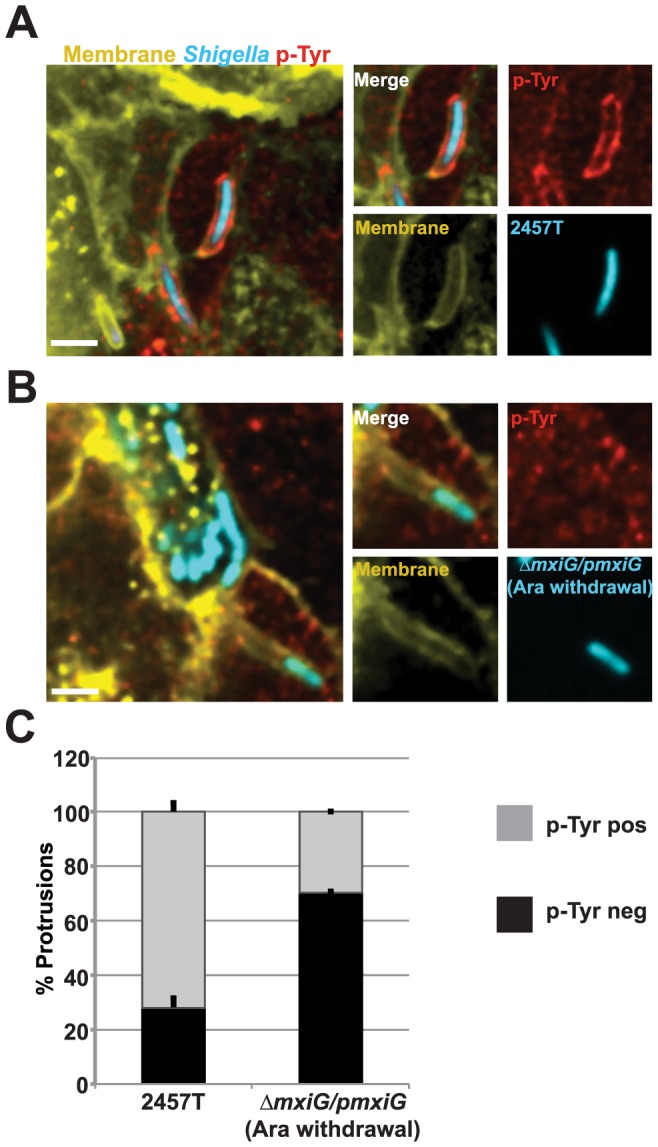
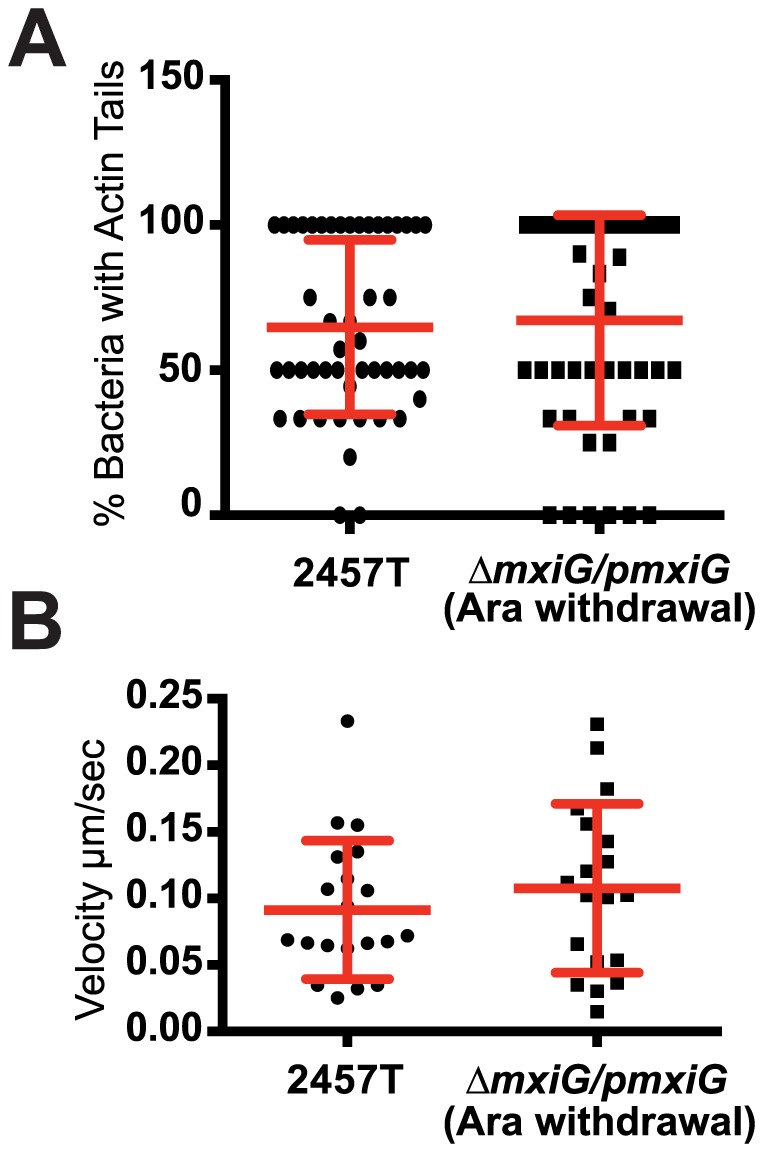
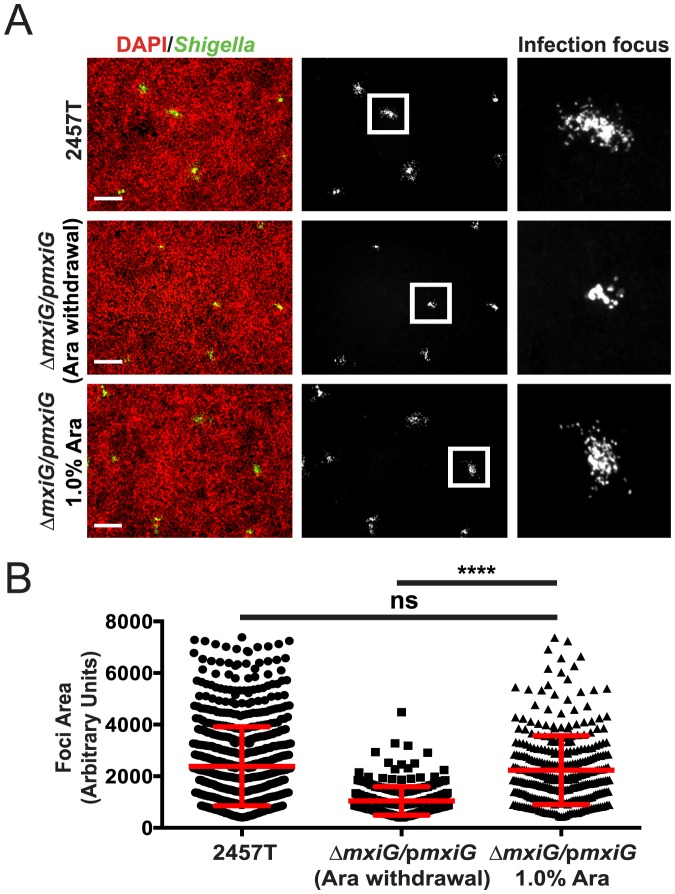
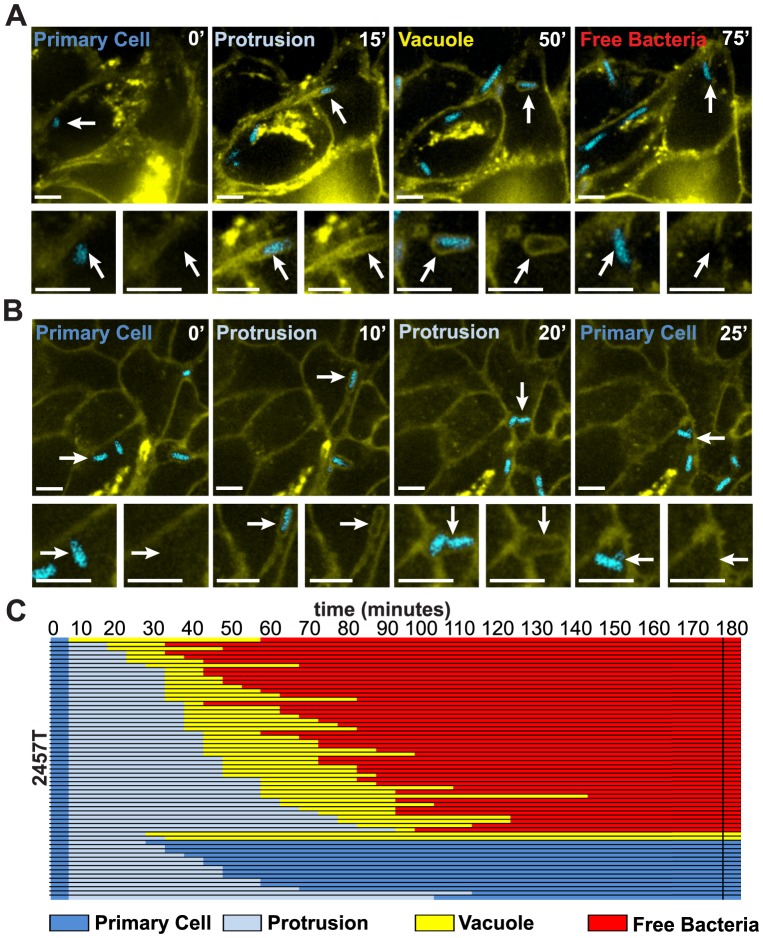
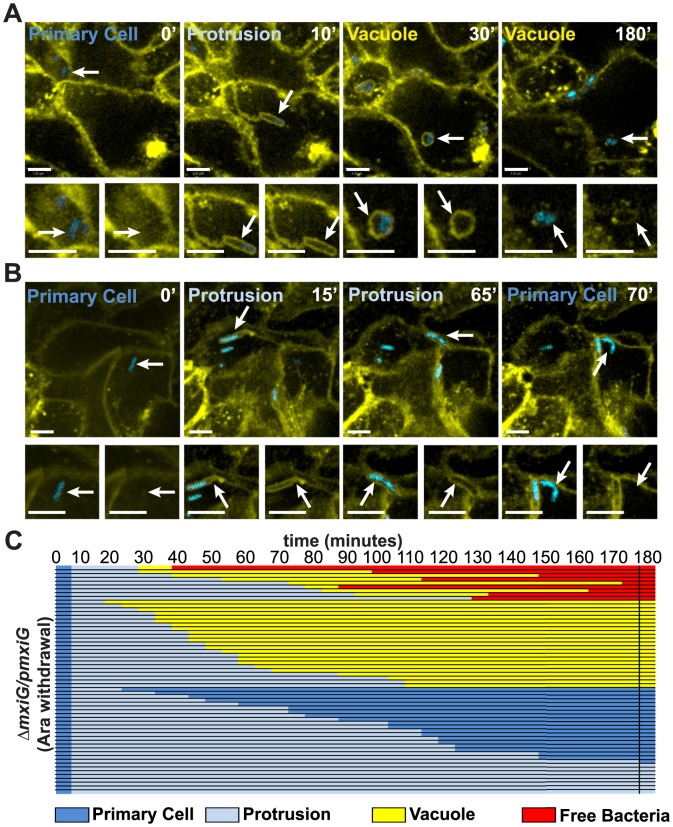
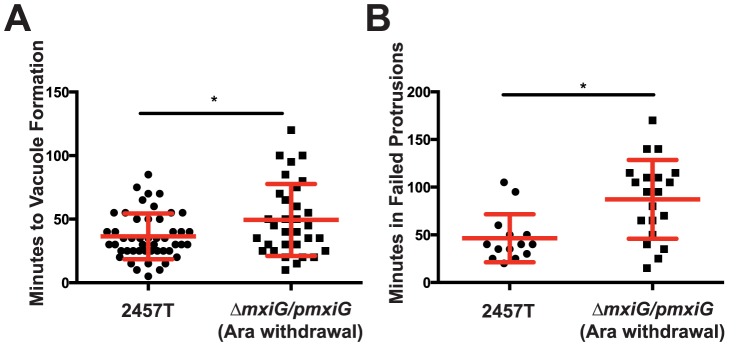
Shigella flexneri is a human pathogen that triggers its own entry into intestinal cells and escapes primary vacuoles to gain access to the cytosolic compartment. As cytosolic and motile bacteria encounter the cell cortex, they spread from cell to cell through formation of membrane protrusions that resolve into secondary vacuoles in adjacent cells. Here, we examined the roles of the Type 3 Secretion System (T3SS) in S. flexneri dissemination in HT-29 intestinal cells infected with the serotype 2a strain 2457T. We generated a 2457T strain defective in the expression of MxiG, a central component of the T3SS needle apparatus. As expected, the ΔmxiG strain was severely affected in its ability to invade HT-29 cells, and expression of mxiG under the control of an arabinose inducible expression system (ΔmxiG/pmxiG) restored full infectivity. In this experimental system, removal of the inducer after the invasion steps (ΔmxiG/pmxiG (Ara withdrawal)) led to normal actin-based motility in the cytosol of HT-29 cells. However, the time spent in protrusions until vacuole formation was significantly increased. Moreover, the number of formed protrusions that failed to resolve into vacuoles was also increased. Accordingly, the ΔmxiG/pmxiG (Ara withdrawal) strain failed to trigger tyrosine phosphorylation in membrane protrusions, a signaling event that is required for the resolution of protrusions into vacuoles. Finally, the ΔmxiG/pmxiG (Ara withdrawal) strain failed to escape from the formed secondary vacuoles, as previously reported in non-intestinal cells. Thus, the T3SS system displays multiple roles in S. flexneri dissemination in intestinal cells, including the tyrosine kinase signaling-dependent resolution of membrane protrusions into secondary vacuoles, and the escape from the formed secondary vacuoles.
福氏志贺菌是一种人类病原体,它能促使自身进入肠道细胞,并逃离初级液泡以进入胞质区室。当胞质内的运动性细菌遇到细胞皮层时,它们通过形成膜突起在细胞间传播,这些膜突起在相邻细胞中会演变成次级液泡。在此,我们研究了Ⅲ型分泌系统(T3SS)在感染血清型2a菌株2457T的HT - 29肠道细胞中福氏志贺菌传播过程中的作用。我们构建了一株在T3SS针状装置的核心组分MxiG表达上存在缺陷的2457T菌株。正如预期的那样,ΔmxiG菌株侵袭HT - 29细胞的能力受到严重影响,并且在阿拉伯糖诱导表达系统(ΔmxiG/pmxiG)控制下的mxiG表达恢复了完全感染力。在这个实验系统中,侵袭步骤后去除诱导剂(ΔmxiG/pmxiG(阿拉伯糖去除))导致HT - 29细胞胞质中基于肌动蛋白的运动正常。然而,直到液泡形成在突起中所花费的时间显著增加。此外,未能演变成液泡的形成突起的数量也增加了。相应地,ΔmxiG/pmxiG(阿拉伯糖去除)菌株未能在膜突起中触发酪氨酸磷酸化,而这是突起演变成液泡所必需的信号事件。最后,如先前在非肠道细胞中所报道的那样,ΔmxiG/pmxiG(阿拉伯糖去除)菌株未能从形成的次级液泡中逃逸。因此,T3SS系统在福氏志贺菌在肠道细胞中的传播中发挥多种作用,包括酪氨酸激酶信号依赖的膜突起演变成次级液泡,以及从形成的次级液泡中逃逸。