Wu Xiaoqian, He Lishan, Chen Fajiang, He Xiaoen, Cai Yi, Zhang Guiping, Yi Quan, He Meixiang, Luo Jiandong
Department of Pharmacology, Guangzhou Medical University, Guangzhou, PR China.
Department of Pharmacology, Guangzhou Medical University, Guangzhou, PR China; Guangzhou Institute of Cardiovascular Disease, Guangzhou Key Laboratory of Cardiovascular Disease, and the Second Affiliated Hospital, Guangzhou Medical University, Guangzhou, PR China.
PLoS One. 2014 Nov 19;9(11):e112891. doi: 10.1371/journal.pone.0112891. eCollection 2014.
Autophagy is activated in ischemic heart diseases, but its dynamics and functional roles remain unclear and controversial. In this study, we investigated the dynamics and role of autophagy and the mechanism(s), if any, during postinfarction cardiac remodeling.
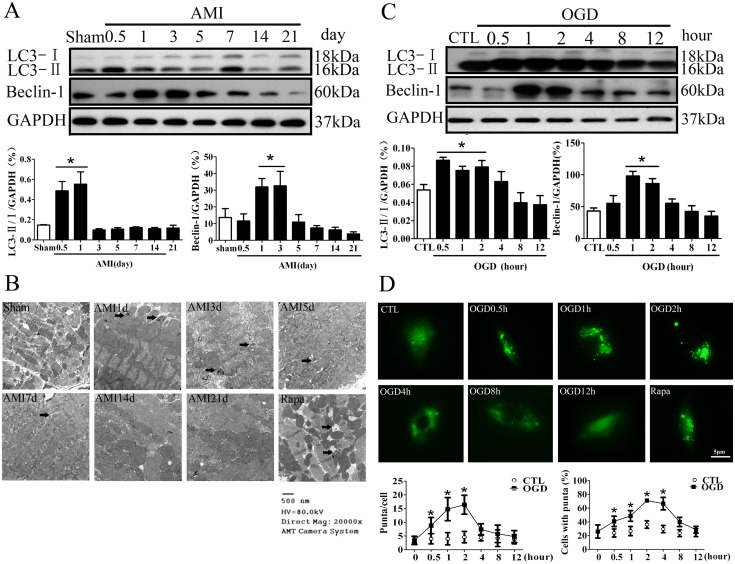
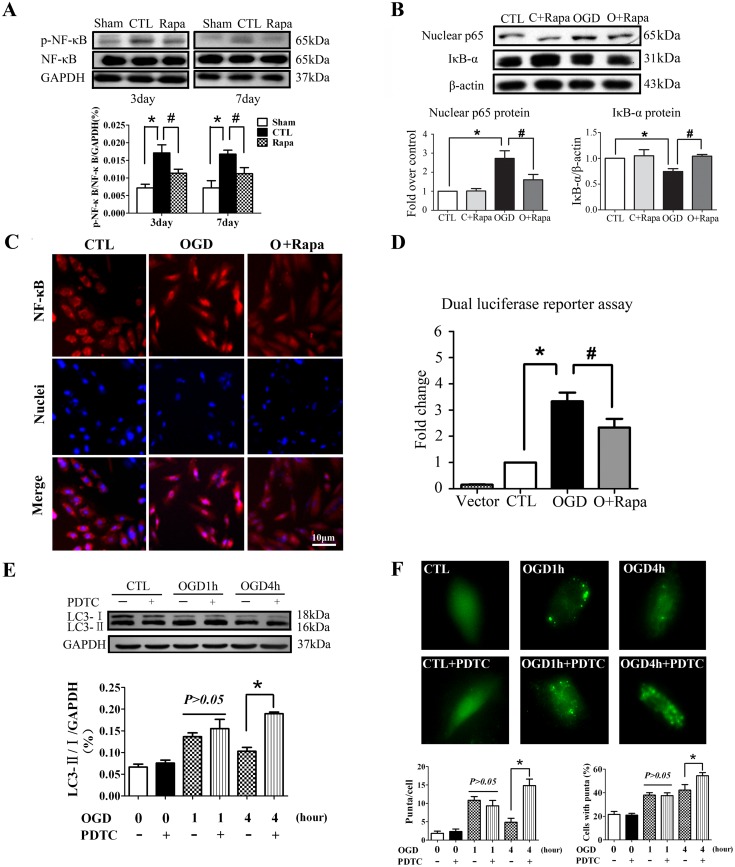
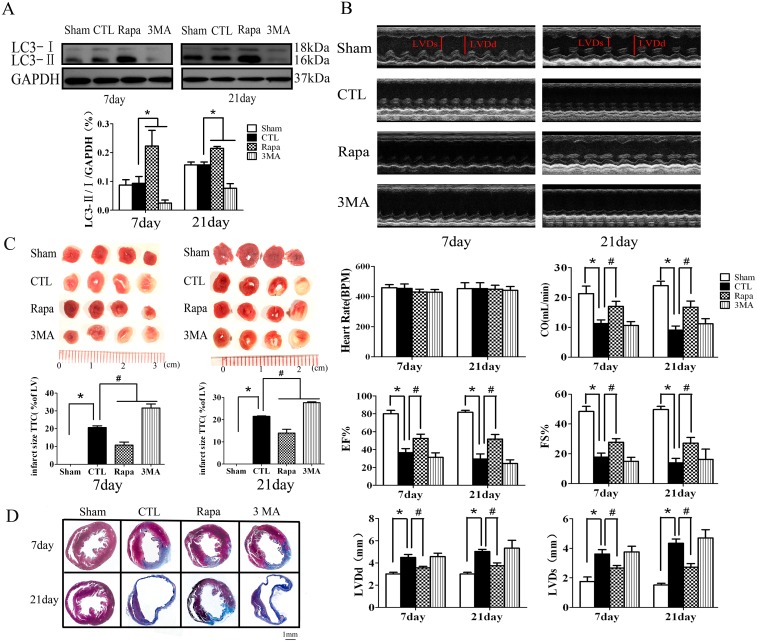
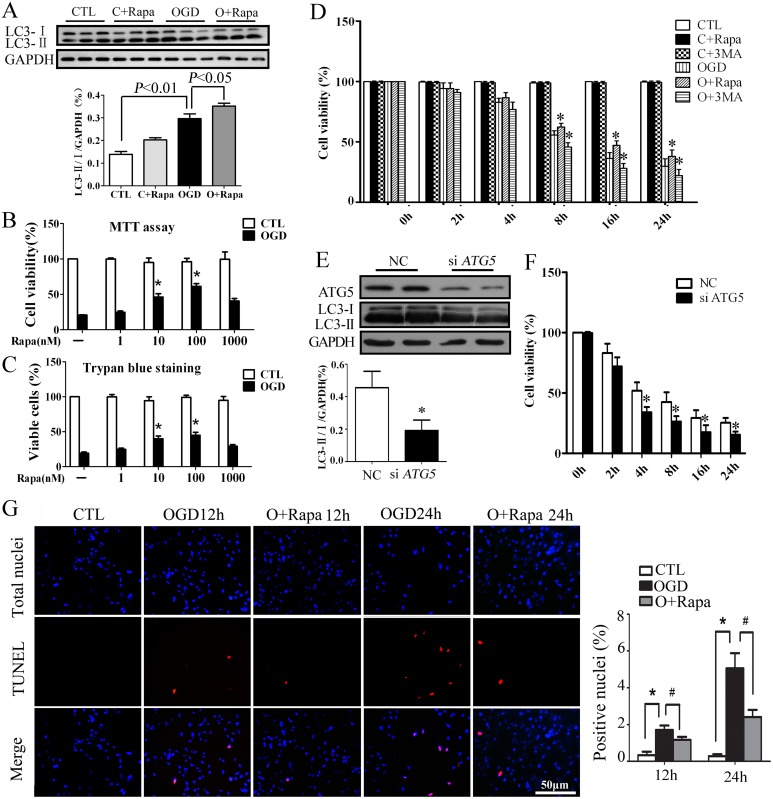
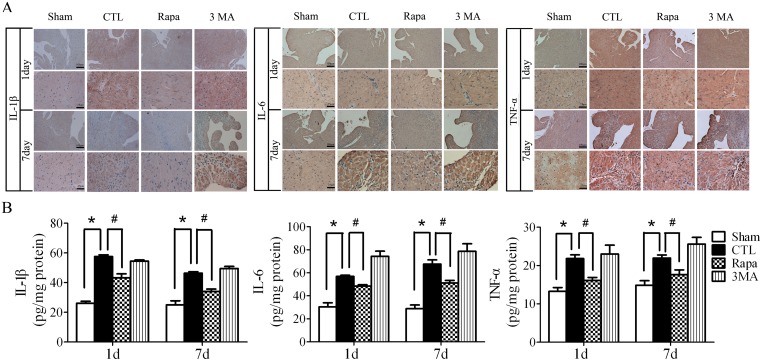
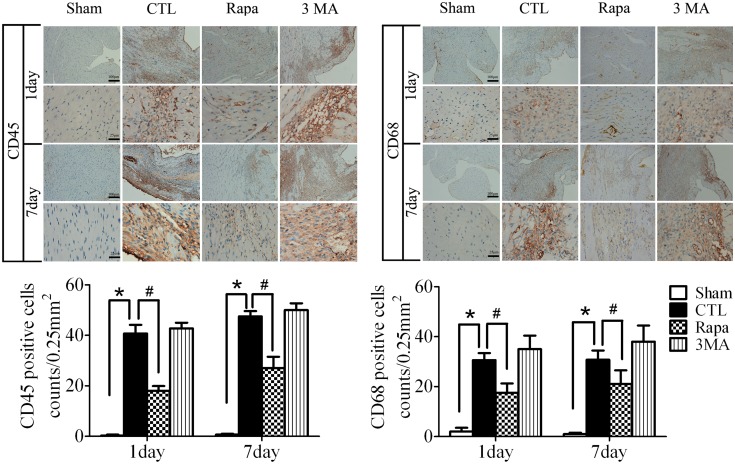
Acute myocardial infarction (AMI) was induced by ligating left anterior descending (LAD) coronary artery. Autophagy was found to be induced sharply 12-24 hours after surgery by testing LC3 modification and Electron microscopy. P62 degradation in the infarct border zone was increased from day 0.5 to day 3, and however, decreased from day 5 until day 21 after LAD ligation. These results indicated that autophagy was induced in the acute phase of AMI, and however, impaired in the latter phase of AMI. To investigate the significance of the impaired autophagy in the latter phase of AMI, we treated the mice with Rapamycin (an autophagy enhancer, 2.0 mg/kg/day) or 3-methyladenine (3MA, an autophagy inhibitor, 15 mg/kg/day) one day after LAD ligation until the end of experiment. The results showed that Rapamycin attenuated, while 3MA exacerbated, postinfarction cardiac remodeling and dysfunction respectively. In addition, Rapamycin protected the H9C2 cells against oxygen glucose deprivation in vitro. Specifically, we found that Rapamycin attenuated NFκB activation after LAD ligation. And the inflammatory response in the acute stage of AMI was significantly restrained with Rapamycin treatment. In vitro, inhibition of NFκB restored autophagy in a negative reflex.
Sustained myocardial ischemia impairs cardiomyocyte autophagy, which is an essential mechanism that protects against adverse cardiac remodeling. Augmenting autophagy could be a therapeutic strategy for acute myocardial infarction.
自噬在缺血性心脏病中被激活,但其动态变化和功能作用仍不清楚且存在争议。在本研究中,我们调查了自噬在心肌梗死后心脏重塑过程中的动态变化、作用及其机制(如有)。
通过结扎左冠状动脉前降支(LAD)诱导急性心肌梗死(AMI)。通过检测LC3修饰和电子显微镜观察发现,术后12 - 24小时自噬被急剧诱导。梗死边缘区的P62降解在LAD结扎后0.5天至3天增加,但在第5天至第21天减少。这些结果表明自噬在AMI急性期被诱导,但在AMI后期受损。为了研究AMI后期自噬受损的意义,我们在LAD结扎后一天用雷帕霉素(一种自噬增强剂,2.0 mg/kg/天)或3 - 甲基腺嘌呤(3MA,一种自噬抑制剂,15 mg/kg/天)处理小鼠直至实验结束。结果表明,雷帕霉素减轻了,而3MA加重了心肌梗死后的心脏重塑和功能障碍。此外,雷帕霉素在体外保护H9C2细胞免受氧葡萄糖剥夺。具体而言,我们发现雷帕霉素减弱了LAD结扎后NFκB的激活。雷帕霉素治疗显著抑制了AMI急性期的炎症反应。在体外,抑制NFκB以负反馈方式恢复自噬。
持续性心肌缺血损害心肌细胞自噬,这是防止不良心脏重塑的重要机制。增强自噬可能是急性心肌梗死的一种治疗策略。