Thibodeaux Christopher J, Ha Taekjip, van der Donk Wilfred A
Institute for Genomic Biology, ‡Department of Physics, §Department of Chemistry University of Illinois , Urbana-Champaign, 600 South Mathews Avenue, Urbana, Illinois 61801, United States.
J Am Chem Soc. 2014 Dec 17;136(50):17513-29. doi: 10.1021/ja5089452. Epub 2014 Dec 4.
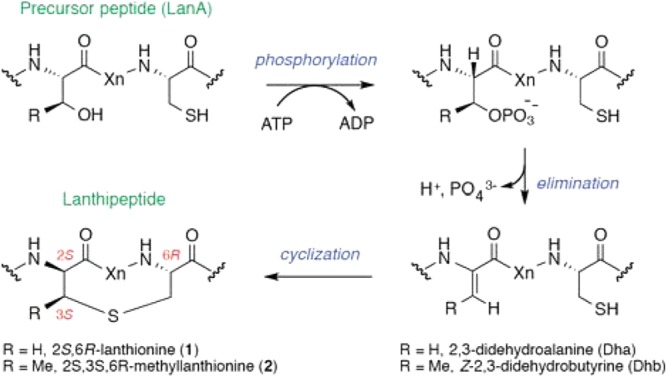
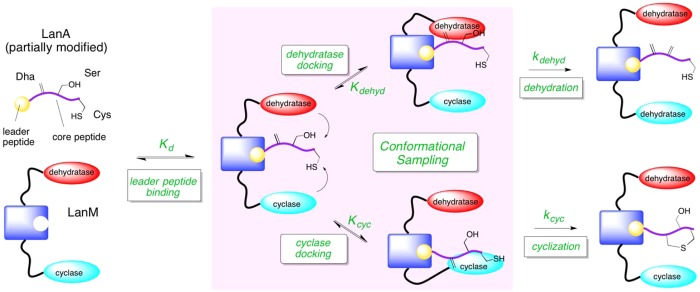
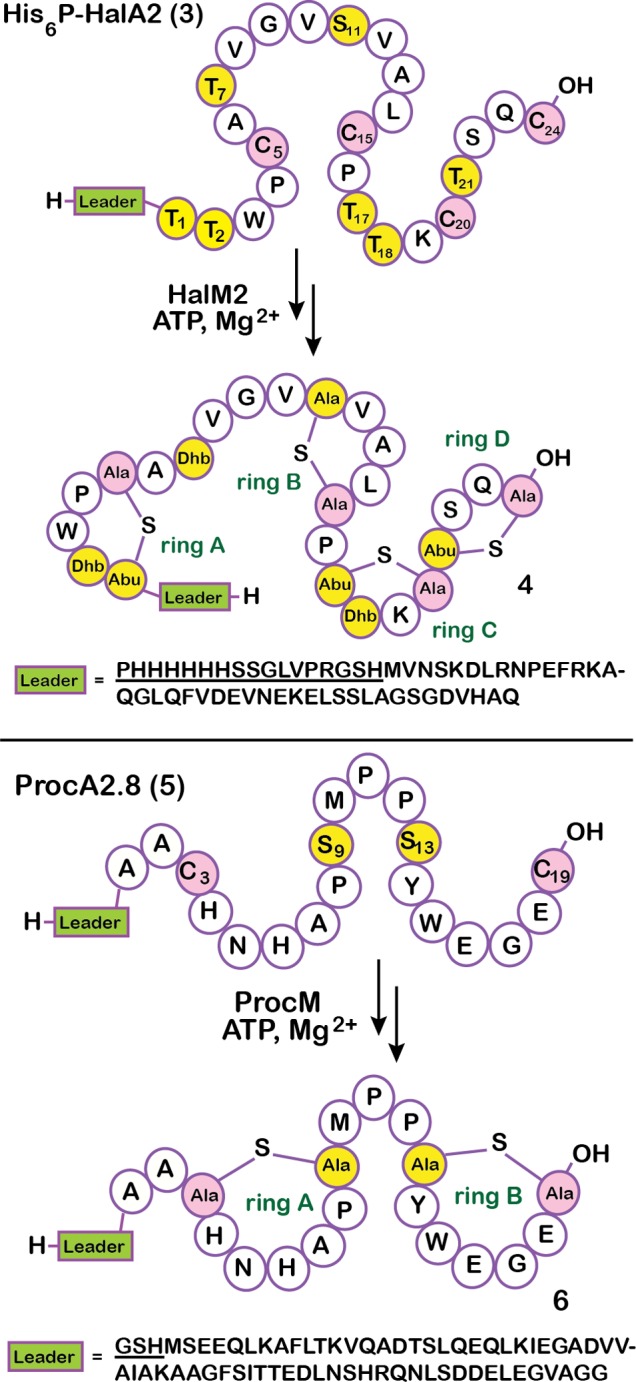
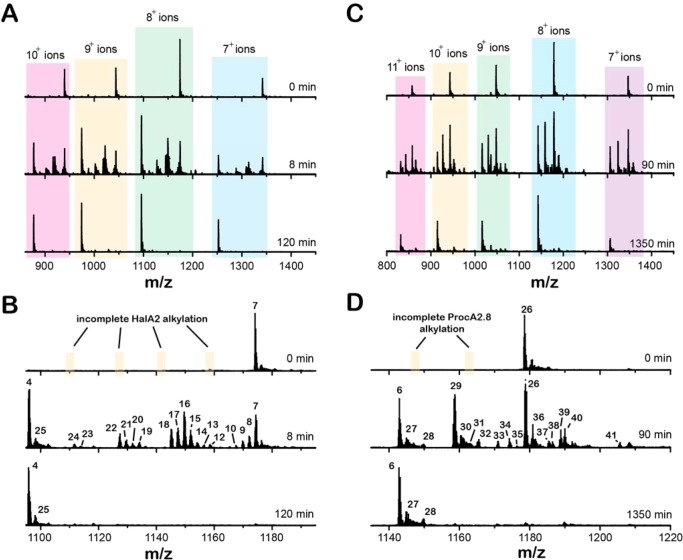
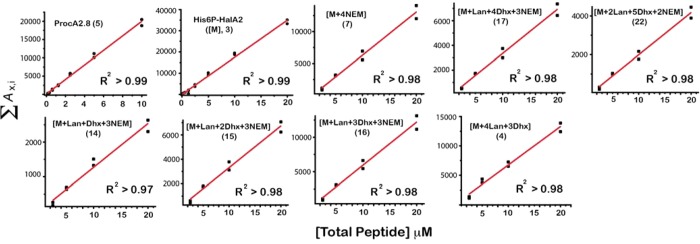
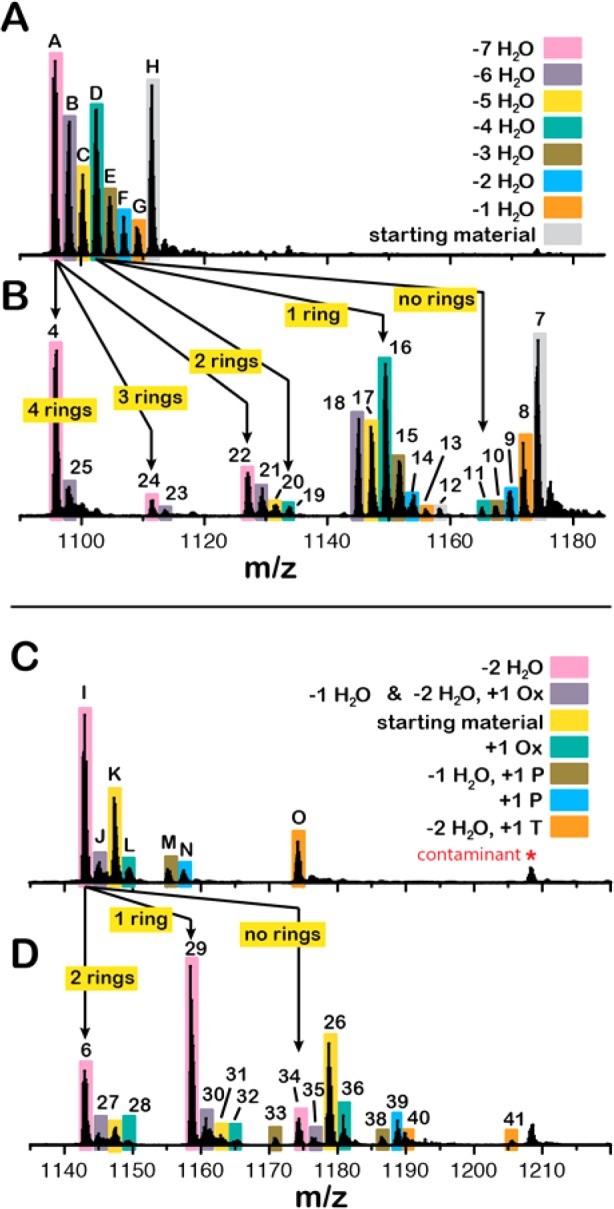
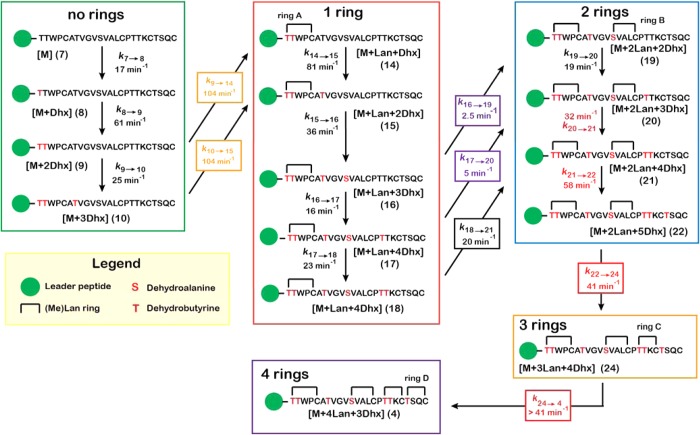
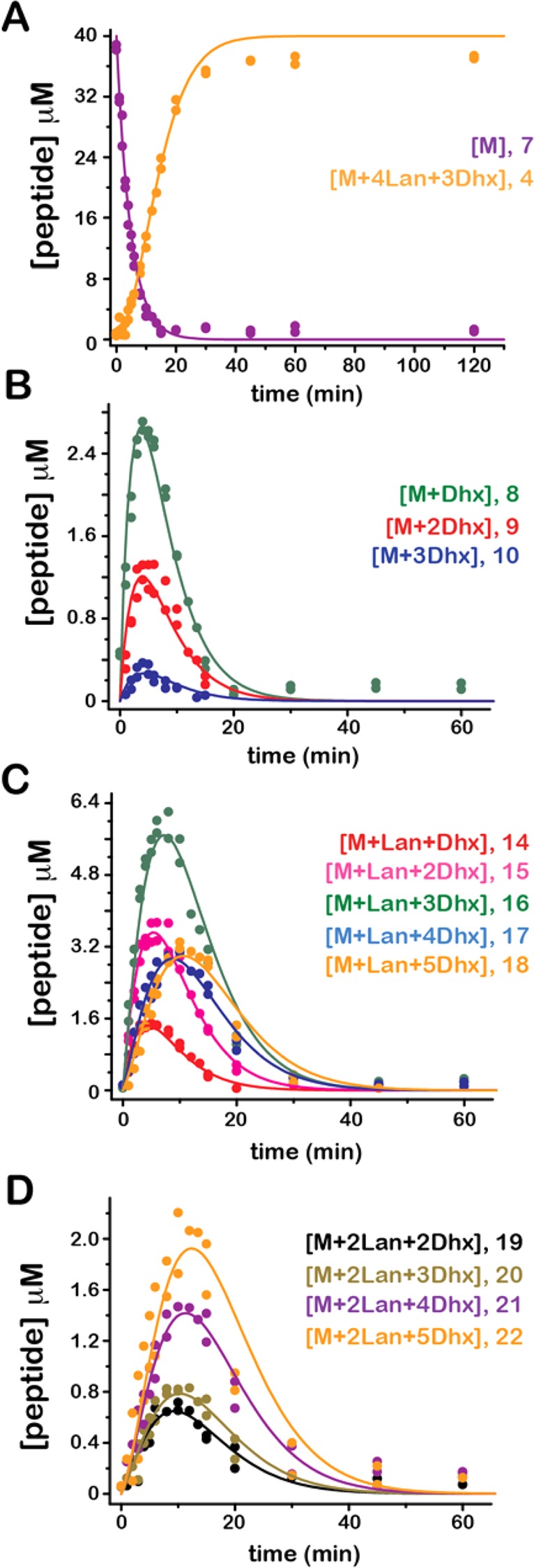
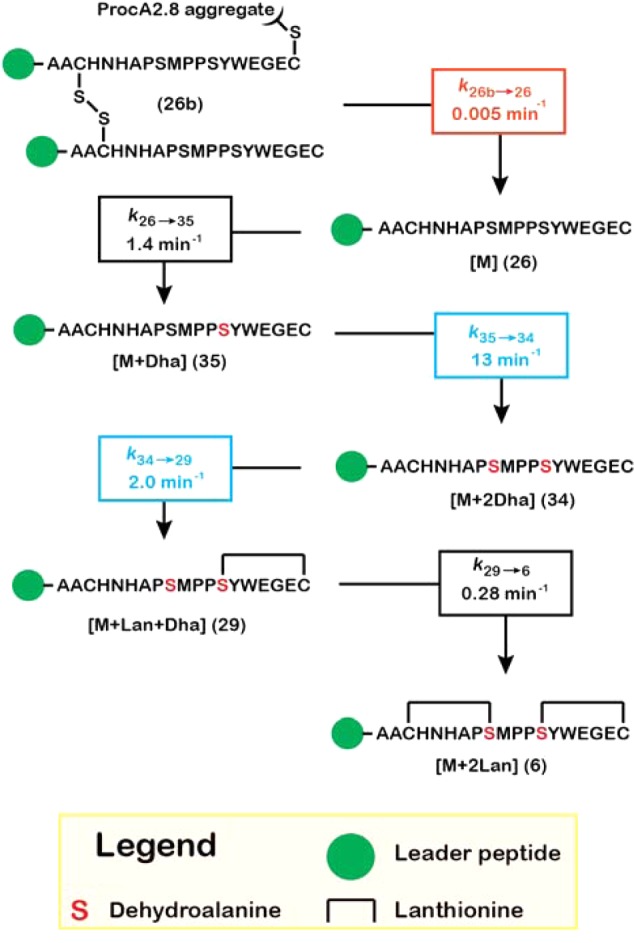
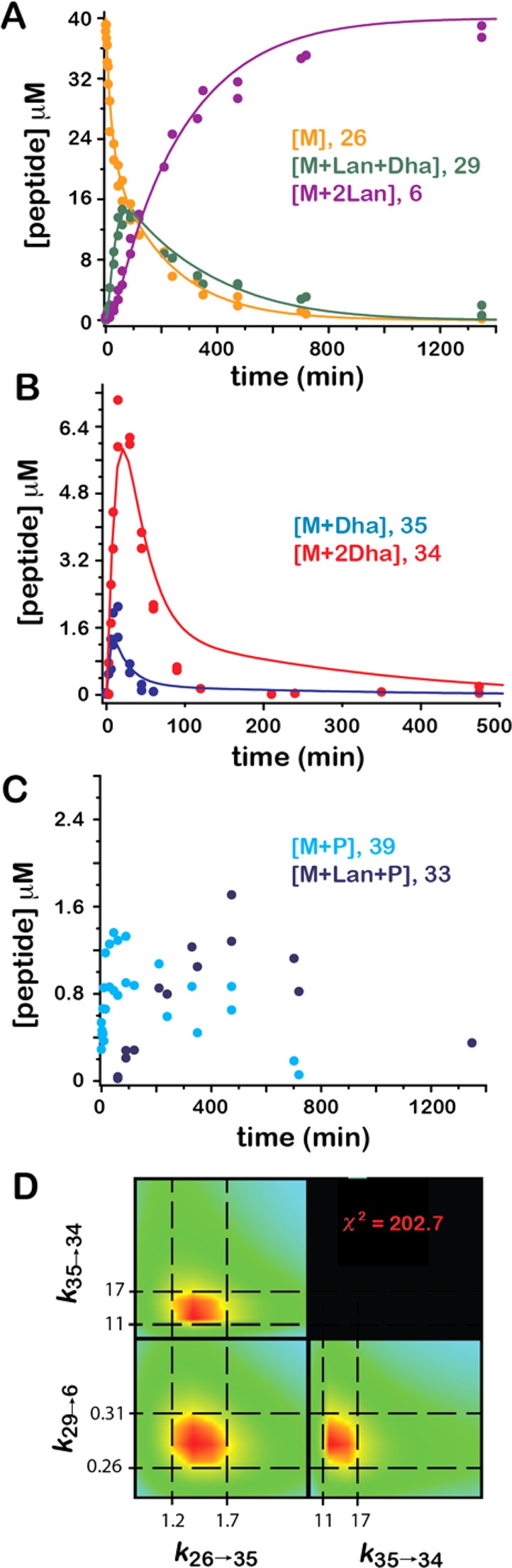
Lanthipeptides are a class of ribosomally synthesized and posttranslationally modified peptide natural products (RiPPs) that typically harbor multiple intramolecular thioether linkages. For class II lanthipeptides, these cross-links are installed in a multistep reaction pathway by a single enzyme (LanM). The multifunctional nature of LanMs and the manipulability of their genetically encoded peptide substrates (LanAs) make LanM/LanA systems promising targets for the engineering of new antibacterial compounds. Here, we report the development of a semiquantitative mass spectrometry-based assay for kinetic characterization of LanM-catalyzed reactions. The assay was used to conduct a comparative kinetic analysis of two LanM enzymes (HalM2 and ProcM) that exhibit drastically different substrate selectivity. Numerical simulation of the kinetic data was used to develop models for the multistep HalM2- and ProcM-catalyzed reactions. These models illustrate that HalM2 and ProcM have markedly different catalytic efficiencies for the various reactions they catalyze. HalM2, which is responsible for the biosynthesis of a single compound (the Halβ subunit of the lantibiotic haloduracin), catalyzes reactions with higher catalytic efficiency than ProcM, which modifies 29 different ProcA precursor peptides during prochlorosin biosynthesis. In particular, the rates of thioether ring formation are drastically reduced in ProcM, likely because this enzyme is charged with installing a variety of lanthipeptide ring architectures in its prochlorosin products. Thus, ProcM appears to pay a kinetic price for its relaxed substrate specificity. In addition, our kinetic models suggest that conformational sampling of the LanM/LanA Michaelis complex could play an important role in the kinetics of LanA maturation.
羊毛硫肽是一类核糖体合成并经翻译后修饰的肽类天然产物(核糖体合成和翻译后修饰肽,RiPPs),通常含有多个分子内硫醚键。对于II类羊毛硫肽,这些交联是通过单一酶(LanM)在多步反应途径中形成的。LanM的多功能性质及其基因编码的肽底物(LanA)的可操作性,使得LanM/LanA系统成为工程化新型抗菌化合物的有前景的靶点。在此,我们报道了一种基于半定量质谱的分析方法的开发,用于对LanM催化反应进行动力学表征。该分析方法用于对两种表现出截然不同底物选择性的LanM酶(HalM2和ProcM)进行比较动力学分析。动力学数据的数值模拟用于建立HalM2和ProcM催化的多步反应模型。这些模型表明,HalM2和ProcM对它们催化的各种反应具有明显不同的催化效率。负责单一化合物(羊毛硫抗生素嗜盐菌素的Halβ亚基)生物合成的HalM2,其催化反应的效率高于ProcM;ProcM在原绿菌素生物合成过程中修饰29种不同的ProcA前体肽。特别是,ProcM中硫醚环形成的速率大幅降低,可能是因为该酶负责在其原绿菌素产物中安装多种羊毛硫肽环结构。因此,ProcM似乎因其宽松的底物特异性而付出了动力学代价。此外,我们的动力学模型表明,LanM/LanA米氏复合物的构象采样可能在LanA成熟的动力学中起重要作用。