da Silva Antônio Augusto Moura, Simões Vanda Maria Ferreira, Barbieri Marco Antonio, Cardoso Viviane Cunha, Alves Claudia Maria Coelho, Thomaz Erika Bárbara Abreu Fonseca, de Sousa Queiroz Rejane Christine, Cavalli Ricardo Carvalho, Batista Rosângela Fernandes Lucena, Bettiol Heloísa
Departamento de Saúde Pública, Universidade Federal do Maranhão (UFMA), Rua Barão de Itapary, 155 Centro, 65020-070 São Luís, Maranhão, Brasil.
Reprod Health. 2014 Nov 19;11(1):79. doi: 10.1186/1742-4755-11-79.
Preterm birth is the main cause of morbidity and mortality during the perinatal period. Classical risk factors are held responsible for only 1/3 of preterm births and no current intervention has produced an appreciable reduction of this event. It is necessary to explore new hypotheses and mechanisms of causality by using an integrated approach, collaboration among research groups and less fragmented theoretical-methodological approaches in order to detect new risk factors and to formulate more effective intervention strategies.
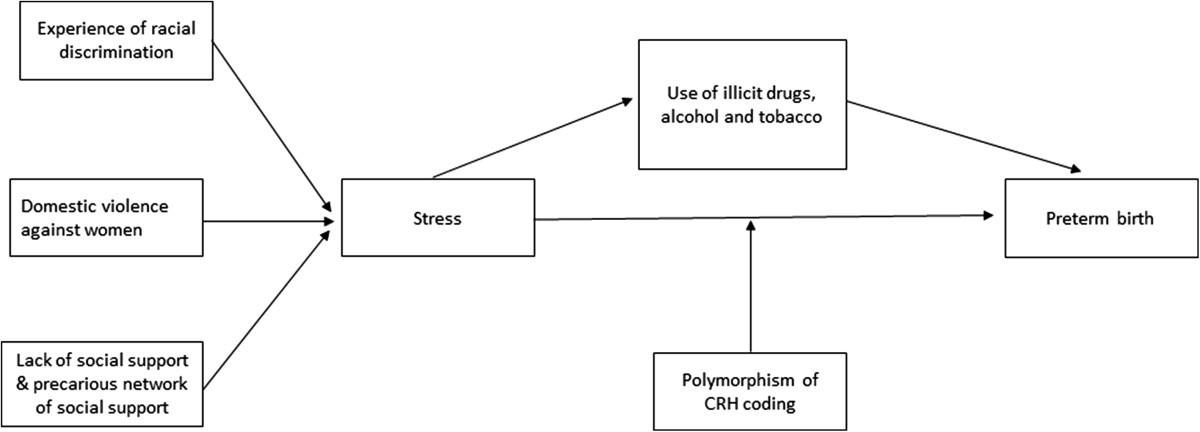
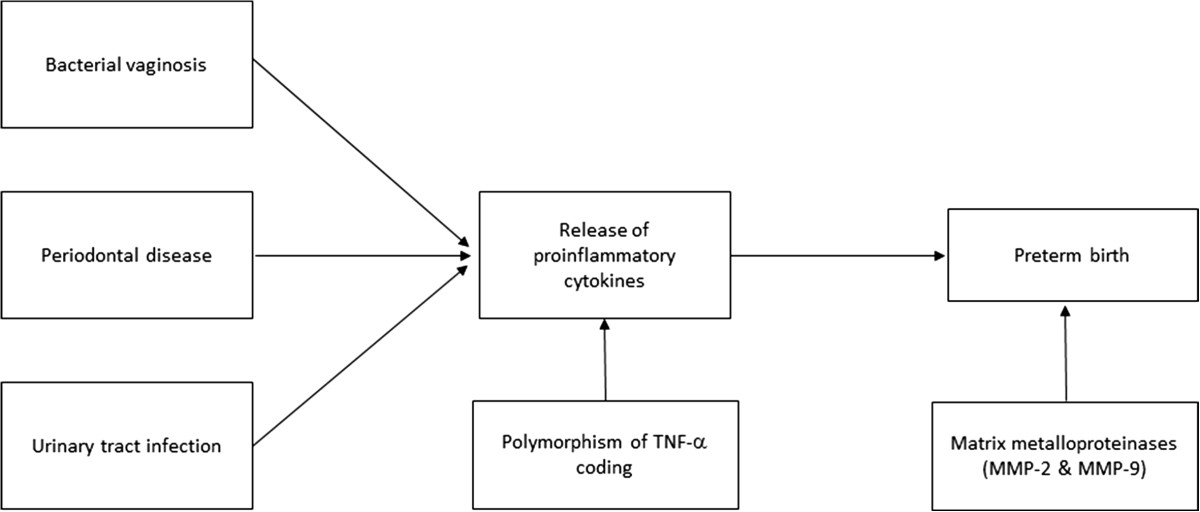
The study will be conducted on a convenience cohort of Brazilian pregnant women recruited at public and private prenatal health services. A total of 1500 pregnant women in São Luís, and 1500 in Ribeirão Preto, will be invited for an interview and for the collection of biological specimens from the 22nd to the 25th week of gestational age (GA). At the time of delivery they will be reinterviewed. GA will be determined using an algorithm based on two criteria: date of last menstruation (DLM) and obstetric ultrasound (OUS) performed at less than 20 weeks of GA. Illicit drug consumption during pregnancy will be determined using a self-applied questionnaire and the following instruments will be used: perceived stress scale, Beck anxiety scale, screening for depression of the Center of Epidemiological Studies (CES-D), experiences of racial discrimination, social network and social support scale of the Medical Outcomes Study and violence (Abuse Assessment Screening and violence questionnaire of the WHO). Bacterial vaginosis, urinary tract infection and periodontal disease will also be identified. Neuroendocrine, immunoinflammatory and medical intervention hypotheses will be tested. The occurrence of elective cesarean section in the absence of labor will be used as a marker of medical intervention.
Psychosocial, genetic and infectious mechanisms will be selected, since there are indications that they influence preterm birth (PTB). The studies will be conducted in two Brazilian cities with discrepant socioeconomic conditions. The expectation is to identify risk factors for PTB having a greater predictive power than classically studied factors. The final objective is to propose more effective interventions for the reduction of PTB, which, after being tested, might subsidize health policies.
早产是围产期发病和死亡的主要原因。传统风险因素仅导致三分之一的早产,目前尚无干预措施能显著减少这一情况。有必要采用综合方法、研究团队间的合作以及不那么零散的理论 - 方法学途径来探索新的因果假设和机制,以便发现新的风险因素并制定更有效的干预策略。
本研究将在巴西公共和私人产前保健服务机构招募的孕妇便利队列中进行。圣路易斯的1500名孕妇和里贝朗普雷图的1500名孕妇将被邀请在孕22至25周接受访谈并采集生物样本。分娩时将再次对她们进行访谈。孕周将根据基于两个标准的算法确定:末次月经日期(DLM)和孕20周前进行的产科超声检查(OUS)。孕期非法药物使用情况将通过自我填写问卷确定,并使用以下工具:感知压力量表、贝克焦虑量表、流行病学研究中心抑郁筛查量表(CES - D)、种族歧视经历、医学结局研究的社会网络和社会支持量表以及暴力情况(世界卫生组织的虐待评估筛查和暴力问卷)。还将识别细菌性阴道病、尿路感染和牙周疾病。将检验神经内分泌、免疫炎症和医学干预假设。无宫缩时择期剖宫产的发生情况将用作医学干预的指标。
将选择心理社会、遗传和感染机制,因为有迹象表明它们会影响早产(PTB)。研究将在巴西两个社会经济状况不同的城市进行。期望识别出比传统研究因素具有更强预测能力的PTB风险因素。最终目标是提出更有效的减少PTB的干预措施,经过测试后可为卫生政策提供支持。