Kong Byung Soo, Cho Yoon Hee, Lee Eun Jig
Institute of Endocrine Research and Brain Korea 21 Project for Medical Science, Endocrinology, Yonsei University, College of Medicine, Seoul, Korea.
PLoS One. 2014 Nov 20;9(11):e113242. doi: 10.1371/journal.pone.0113242. eCollection 2014.
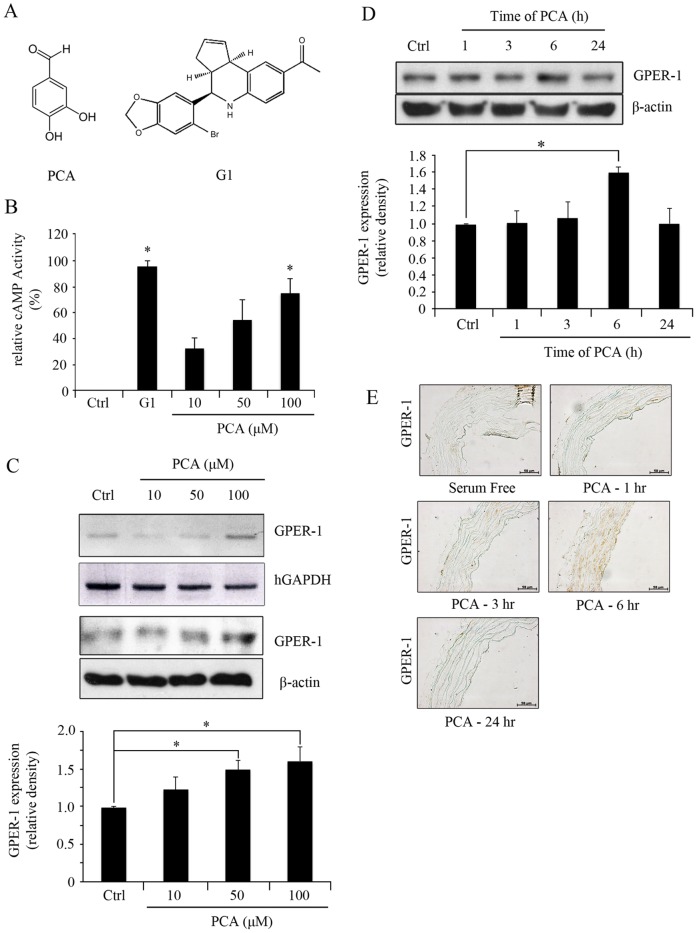
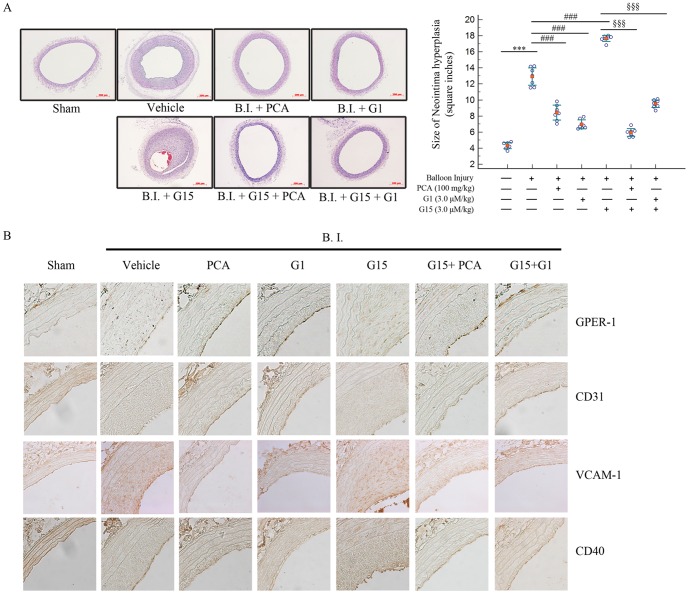
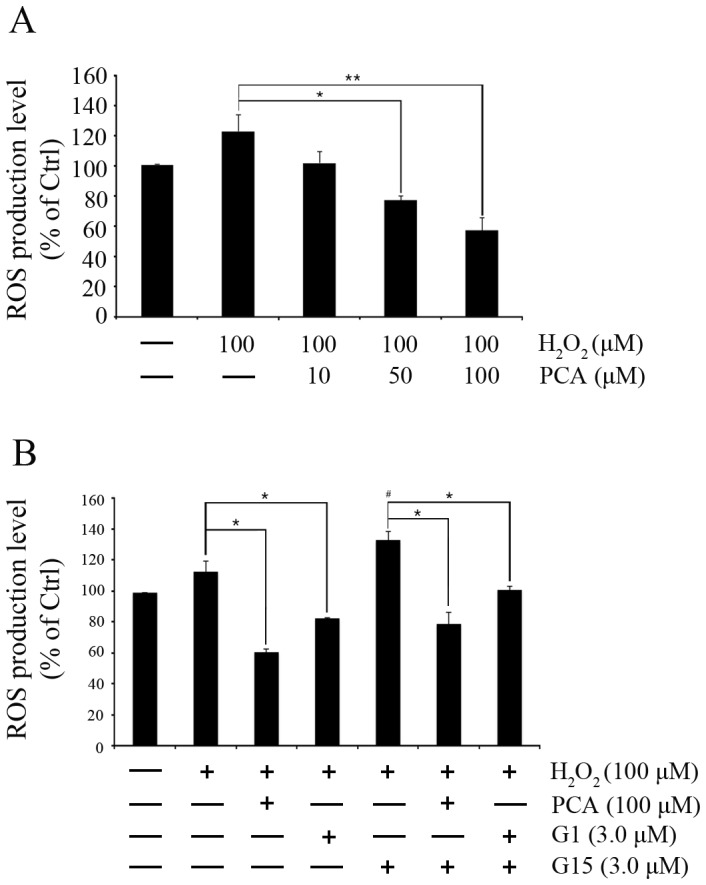
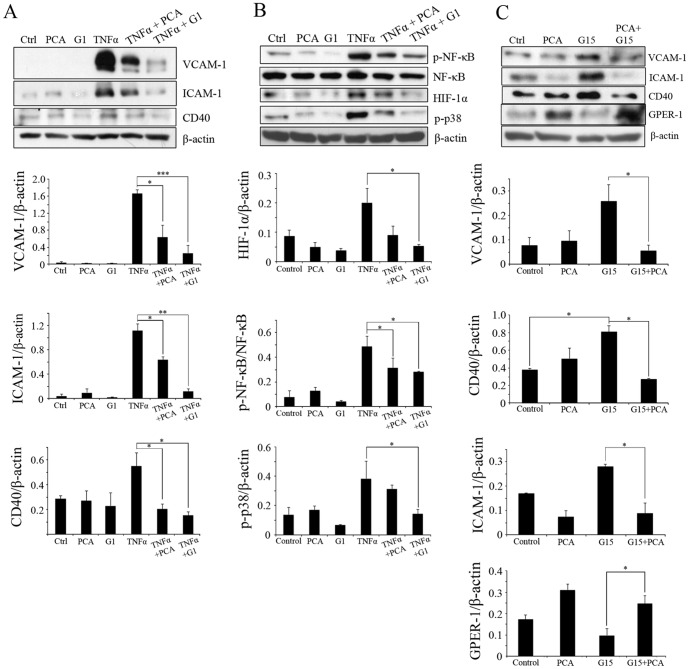
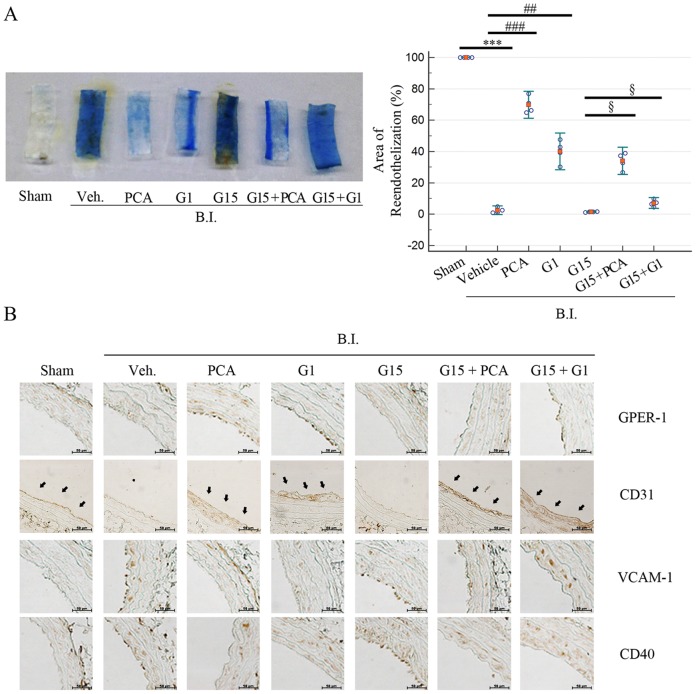
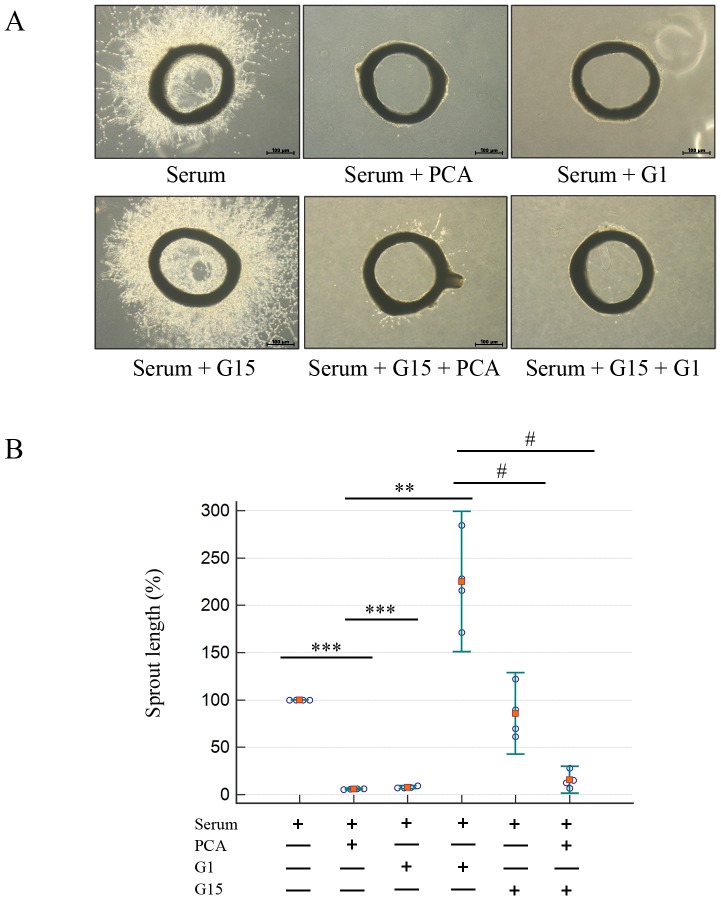
Protocatechuic aldehyde (PCA), a phenolic aldehyde, has therapeutic potency against atherosclerosis. Although PCA is known to inhibit the migration and proliferation of vascular smooth muscle cells and intravascular thrombosis, the underlying mechanism remains unclear. In this study, we investigated the protective effect of PCA on endothelial cells and injured vessels in vivo in association with G protein-coupled estrogen receptor-1 (GPER-1). With PCA treatment, cAMP production was increased in HUVECs, while GPER-1 expression was increased in both HUVECs and a rat aortic explant. PCA and G1, a GPER-1 agonist, reduced H2O2 stimulated ROS production in HUVECs, whereas, G15, a GPER-1 antagonist, increased ROS production further. These elevations were inhibited by co-treatment with PCA or G1. TNFα stimulated the expression of inflammatory markers (VCAM-1, ICAM-1 and CD40), phospho-NF-κB, phospho-p38 and HIF-1α; however, co-treatment with PCA or G1 down-regulated this expression significantly. Likewise, increased expression of inflammatory markers by treatment with G15 was inhibited by co-treatment with PCA. In re-endothelization, aortic ring sprouting and neointima formation assay, rat aortas treated with PCA or G1 showed accelerated re-endothelization of the endothelium and reduced sprouting and neointima formation. However, aortas from G15-treated rats showed decelerated re-endothelization and increased sprouting and neointima formation. The effects of G15 were restored by co-treatment with PCA or G1. Also, in the endothelia of these aortas, PCA and G1 increased CD31 and GPER-1 and decreased VCAM-1 and CD40 expression. In contrast, the opposite effect was observed in G15-treated endothelium. These results suggest that GPER-1 might mediate the protective effect of PCA on the endothelium.
原儿茶醛(PCA)是一种酚醛,对动脉粥样硬化具有治疗作用。尽管已知PCA可抑制血管平滑肌细胞的迁移和增殖以及血管内血栓形成,但其潜在机制仍不清楚。在本研究中,我们研究了PCA与G蛋白偶联雌激素受体-1(GPER-1)相关的对体内内皮细胞和受损血管的保护作用。经PCA处理后,人脐静脉内皮细胞(HUVECs)中的环磷酸腺苷(cAMP)生成增加,而HUVECs和大鼠主动脉外植体中的GPER-1表达均增加。PCA和GPER-1激动剂G1可减少H2O2刺激的HUVECs中的活性氧(ROS)生成,而GPER-1拮抗剂G15则进一步增加ROS生成。这些升高可通过与PCA或G1共同处理来抑制。肿瘤坏死因子α(TNFα)刺激炎症标志物(血管细胞黏附分子-1、细胞间黏附分子-1和CD40)、磷酸化核因子κB、磷酸化p38和缺氧诱导因子-1α的表达;然而,与PCA或G1共同处理可显著下调该表达。同样,G15处理导致的炎症标志物表达增加可被与PCA共同处理所抑制。在再内皮化、主动脉环发芽和新生内膜形成试验中,用PCA或G1处理的大鼠主动脉显示内皮的再内皮化加速,发芽和新生内膜形成减少。然而,G15处理的大鼠主动脉显示再内皮化减慢,发芽和新生内膜形成增加。G15的作用可通过与PCA或G1共同处理来恢复。此外,在这些主动脉的内皮中,PCA和G1增加了CD31和GPER-1的表达,并降低了血管细胞黏附分子-1和CD40的表达。相反,在G15处理的内皮中观察到相反的效果。这些结果表明,GPER-1可能介导了PCA对内皮的保护作用。