Xiong Wei, Zhao Jing, Yu Hongliang, Li Xiaoying, Sun Shaoqian, Li Yi, Xia Qing, Zhang Chuanling, He Qiuchen, Gao Xianshu, Zhang Lihe, Zhou Demin
The State Key Laboratory of Natural and Biomimetic Drugs, Beijing, China; The 1st Affiliated Hospital, Peking University, Beijing, China; School of Pharmaceutical Sciences, Peking University, Beijing, China; Tangshan People's Hospital, Hebei, China.
The State Key Laboratory of Natural and Biomimetic Drugs, Beijing, China; The 1st Affiliated Hospital, Peking University, Beijing, China; School of Pharmaceutical Sciences, Peking University, Beijing, China; Peking Union Medical College Hospital, Beijing, China.
PLoS One. 2014 Nov 24;9(11):e111911. doi: 10.1371/journal.pone.0111911. eCollection 2014.
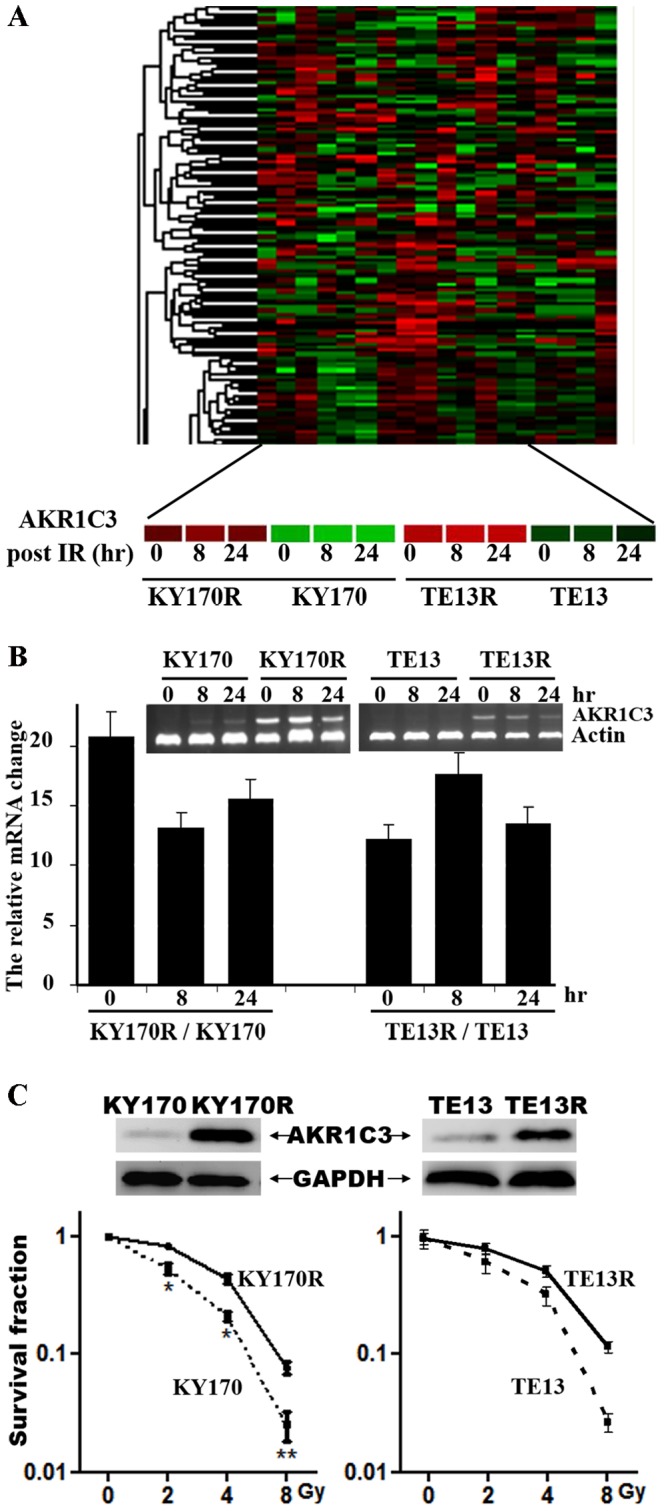
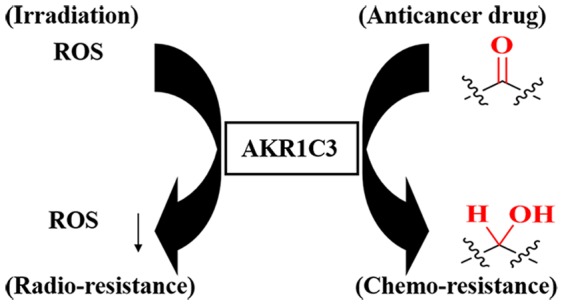
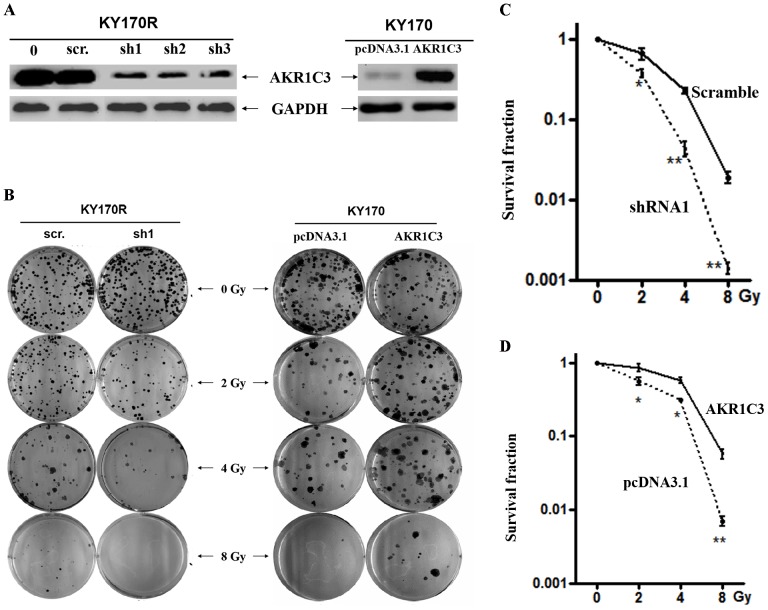
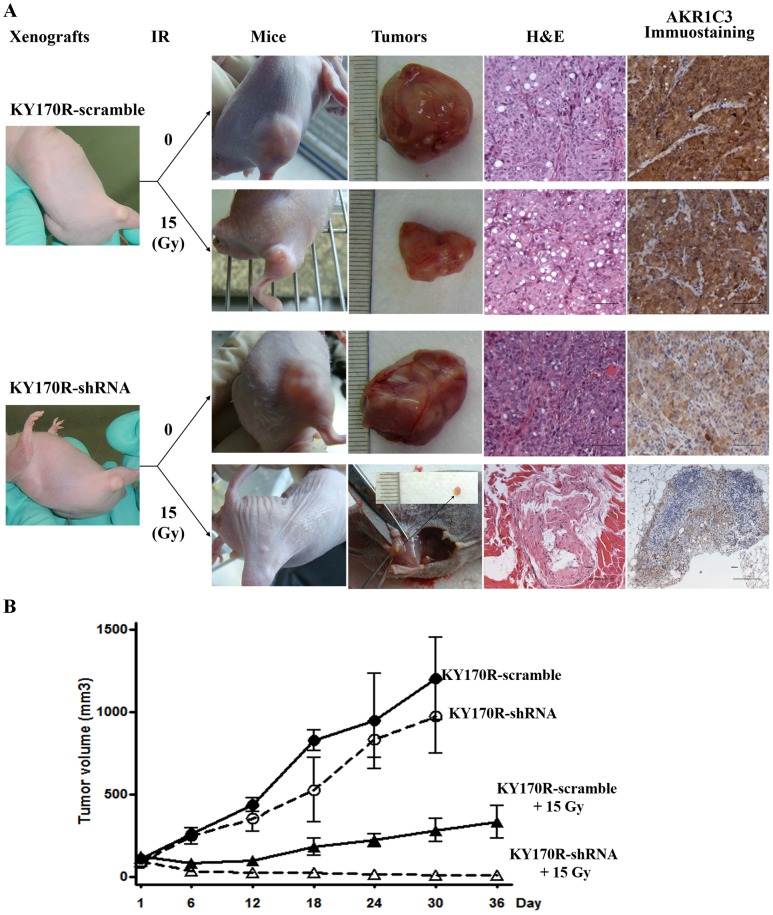
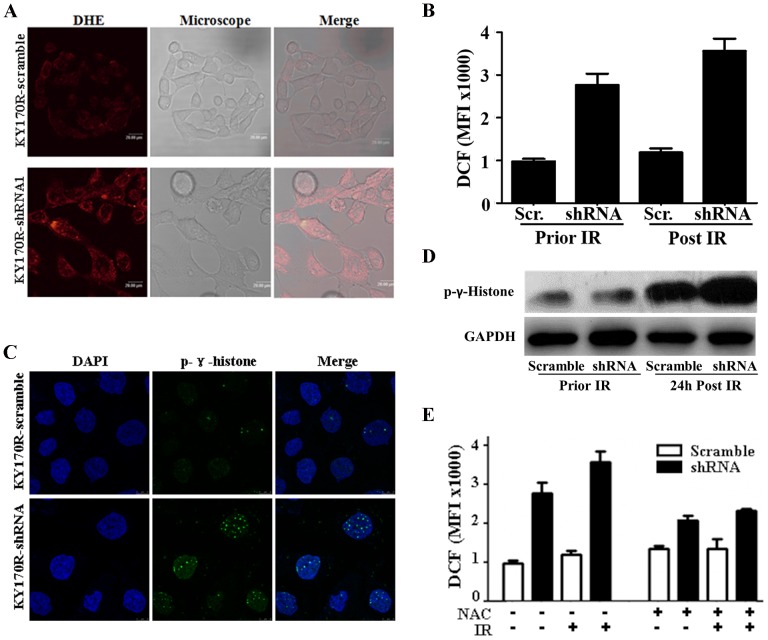
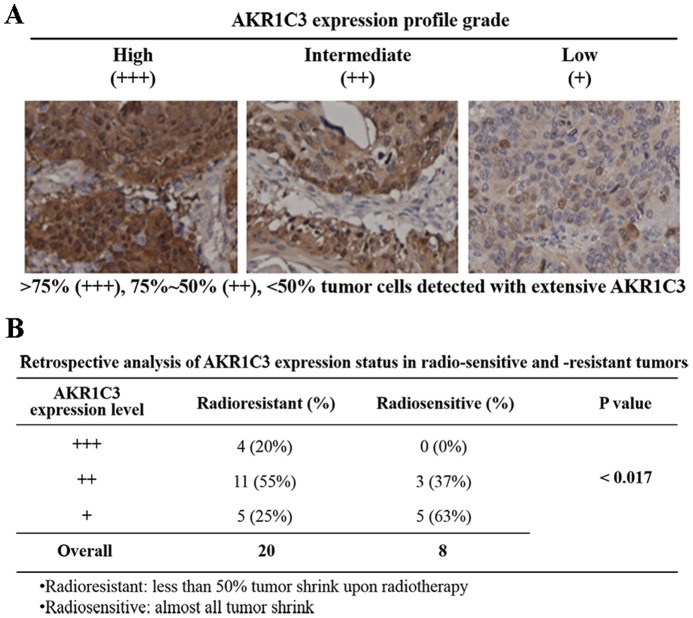
With the aim to elucidate the etiology of radioresistance, we explored the genetic alterations in non-radioresistant vs. resistant esophageal cancer cells acquired by long-term fractionated radiation. We found AKR1C3, an aldo-keto reductase expressed seldom in most human tissues, expressed higher in radioresistance-acquired cells. Suppression of AKR1C3 via RNAi or its chemical inhibitors restored the sensitivity of the acquired tumor cells and xenograft BALB/c nude mice to ionizing radiation (IR). Cellular monitoring of the oxidative stress in the AKR1C3-elevated cells indicated that IR-induced ROS accumulation and the concomitant DNA damage was significantly alleviated, and such protective consequence disappeared upon AKR1C3 knockdown. These findings uncover the potential involvement of AKR1C3 in removal of cellular ROS and explain, at least partially, the acquired radioresistance by AKR1C3 overexpression. A retrospective analysis of esophageal carcinomas also indicated a significant expression of AKR1C3 in radio-resistant but not radio-sensitive surgical samples. Our study may provide a potential biomarker for predicting prognosis of radiotherapy and even direct a targeted therapy for esophageal cancer and other tumors.
为了阐明放射抗性的病因,我们研究了长期分次放疗后非放射抗性与抗性食管癌细胞中的基因改变。我们发现AKR1C3,一种在大多数人类组织中很少表达的醛糖还原酶,在获得放射抗性的细胞中表达较高。通过RNA干扰或其化学抑制剂抑制AKR1C3可恢复获得性肿瘤细胞和异种移植BALB/c裸鼠对电离辐射(IR)的敏感性。对AKR1C3升高的细胞中的氧化应激进行细胞监测表明,IR诱导的活性氧(ROS)积累和随之而来的DNA损伤得到显著缓解,而这种保护作用在AKR1C3敲低后消失。这些发现揭示了AKR1C3在清除细胞ROS中的潜在作用,并至少部分解释了AKR1C3过表达导致的获得性放射抗性。对食管癌的回顾性分析也表明,AKR1C3在放射抗性手术样本中显著表达,而在放射敏感手术样本中不表达。我们的研究可能为预测放疗预后提供一个潜在的生物标志物,甚至为食管癌和其他肿瘤的靶向治疗提供指导。