Ferrarotti Ilaria, Carroll Tomás P, Ottaviani Stefania, Fra Anna M, O'Brien Geraldine, Molloy Kevin, Corda Luciano, Medicina Daniela, Curran David R, McElvaney Noel G, Luisetti Maurizio
Centre for Diagnosis of Inherited Alpha-1 Antitrypsin Deficiency, Laboratory of Biochemistry and Genetics, Institute for Respiratory Disease, Fondazione IRCCS Policlinico San Matteo, Pavia, Italy.
Department of Molecular Medicine, University of Pavia, Pavia, Italy.
Orphanet J Rare Dis. 2014 Nov 26;9:172. doi: 10.1186/s13023-014-0172-y.
Alpha-1 antitrypsin (AAT) is the most abundant circulating antiprotease and is a member of the serine protease inhibitor (SERPIN) superfamily. The gene encoding AAT is the highly polymorphic SERPINA1 gene, found at 14q32.1. Mutations in the SERPINA1 gene can lead to AAT deficiency (AATD) which is associated with a substantially increased risk of lung and liver disease. The most common pathogenic AAT variant is Z (Glu342Lys) which causes AAT to misfold and polymerise within hepatocytes and other AAT-producing cells. A group of rare mutations causing AATD, termed Null or Q0, are characterised by a complete absence of AAT in the plasma. While ultra rare, these mutations confer a particularly high risk of emphysema.
We performed the determination of AAT serum levels by a rate immune nephelometric method or by immune turbidimetry. The phenotype was determined by isoelectric focusing analysis on agarose gel with specific immunological detection. DNA was isolated from whole peripheral blood or dried blood spot (DBS) samples using a commercial extraction kit. The new mutations were identified by sequencing all coding exons (II-V) of the SERPINA1 gene.
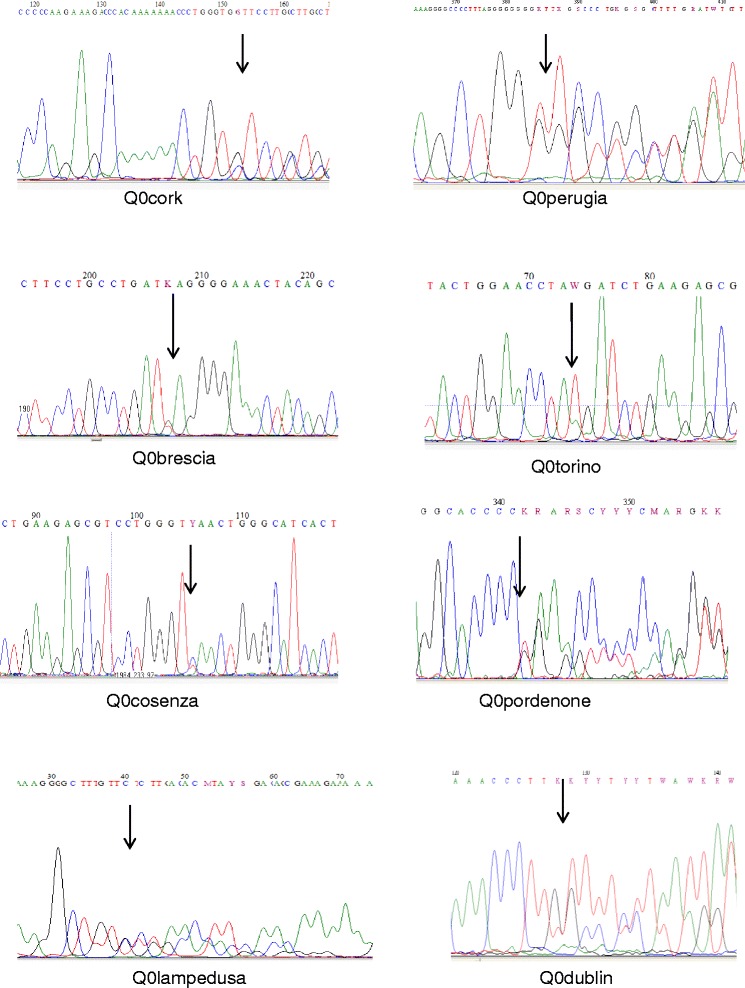
We have found eight previously unidentified SERPINA1 Null mutations, named: Q0cork, Q0perugia, Q0brescia, Q0torino, Q0cosenza, Q0pordenone, Q0lampedusa, and Q0dublin . Analysis of clinical characteristics revealed evidence of the recurrence of lung symptoms (dyspnoea, cough) and lung diseases (emphysema, asthma, chronic bronchitis) in M/Null subjects, over 45 years-old, irrespective of smoking.
We have added eight more mutations to the list of SERPINA1 Null alleles. This study underlines that the laboratory diagnosis of AATD is not just a matter of degree, because the precise determination of the deficiency and Null alleles carried by an AATD individual may help to evaluate the risk for the lung disease.
α-1抗胰蛋白酶(AAT)是循环中含量最丰富的抗蛋白酶,是丝氨酸蛋白酶抑制剂(SERPIN)超家族的成员。编码AAT的基因是高度多态性的SERPINA1基因,位于14q32.1。SERPINA1基因突变可导致AAT缺乏症(AATD),这与肺部和肝脏疾病风险大幅增加相关。最常见的致病性AAT变体是Z(Glu342Lys),它会导致AAT在肝细胞和其他产生AAT的细胞内错误折叠并聚合。一组导致AATD的罕见突变,称为无效或Q0,其特征是血浆中完全没有AAT。虽然极为罕见,但这些突变会使患肺气肿的风险特别高。
我们通过速率免疫比浊法或免疫比浊法测定AAT血清水平。通过在琼脂糖凝胶上进行等电聚焦分析并进行特异性免疫检测来确定表型。使用商业提取试剂盒从全外周血或干血斑(DBS)样本中分离DNA。通过对SERPINA1基因的所有编码外显子(II-V)进行测序来鉴定新突变。
我们发现了八个先前未鉴定的SERPINA1无效突变,分别命名为:Q0科克、Q0佩鲁贾、Q0布雷西亚、Q0都灵、Q0科森扎、Q0波代诺内、Q0兰佩杜萨和Q0都柏林。对临床特征的分析显示,45岁以上的M/无效受试者出现肺部症状(呼吸困难、咳嗽)和肺部疾病(肺气肿、哮喘、慢性支气管炎)复发的证据,与吸烟无关。
我们在SERPINA1无效等位基因列表中又增加了八个突变。这项研究强调,AATD的实验室诊断不仅仅是程度问题,因为精确确定AATD个体携带的缺乏症和无效等位基因可能有助于评估患肺病的风险。