Sethi Isha, Sinha Satrajit, Buck Michael J
Department of Biochemistry and Center of Excellence in Bioinformatics and Life Sciences, State University of New York at Buffalo, Buffalo, USA.
BMC Genomics. 2014 Nov 29;15(1):1042. doi: 10.1186/1471-2164-15-1042.
The Transcription Factor (TF) p63 is a master regulator of epidermal development and differentiation as evident from the remarkable skin phenotype of p63 mouse knockouts. Furthermore, ectopic expression of p63 alone is sufficient to convert simple epithelium into stratified epithelial tissues in vivo and p63 is required for efficient transdifferentiation of fibroblasts into keratinocytes. However, little is known about the molecular mechanisms of p63 function, in particular how it selects its target sites in the genome. p63, which acts both as an activator and repressor of transcription, recognizes a canonical binding motif that occurs over 1 million times in the human genome. But, in human keratinocytes less than 12,000 of these sites are bound in vivo suggesting that underlying chromatin architecture and cooperating TFs mediate p63-genome interactions.
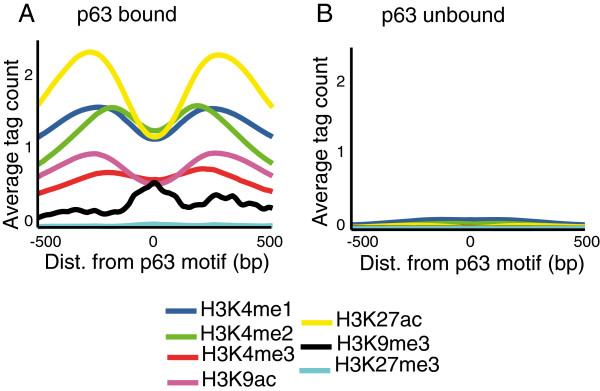
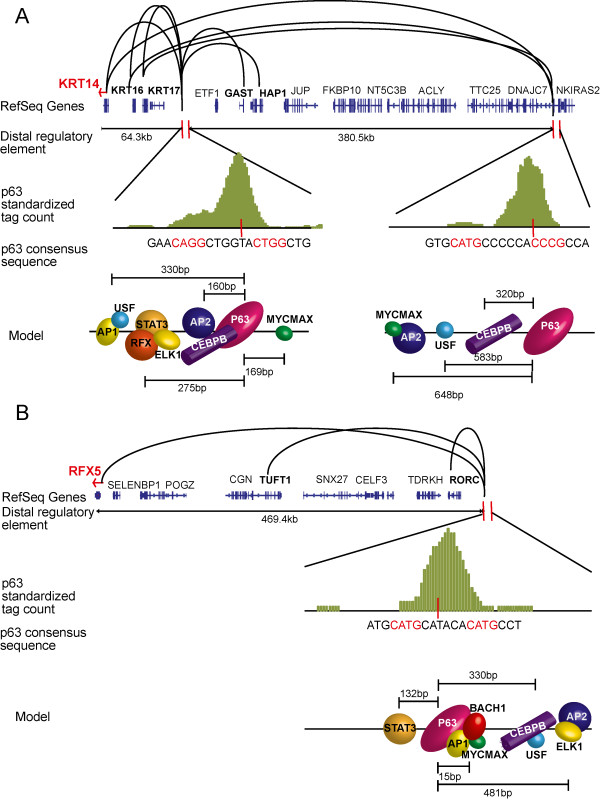
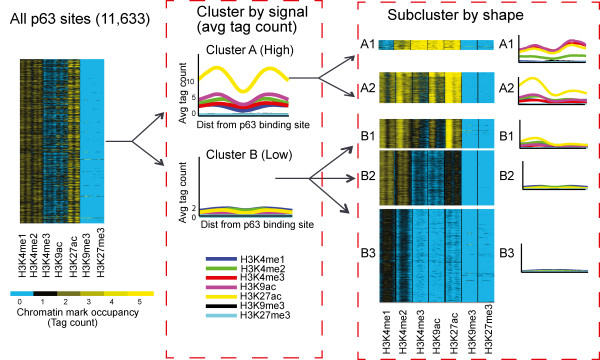
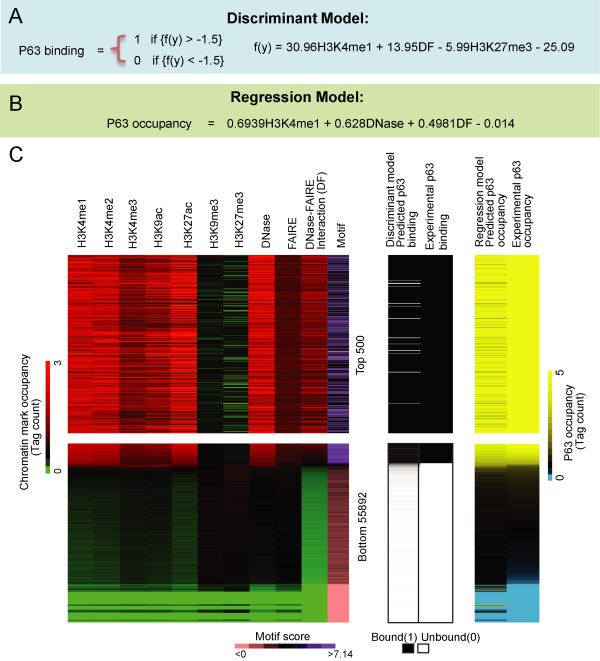
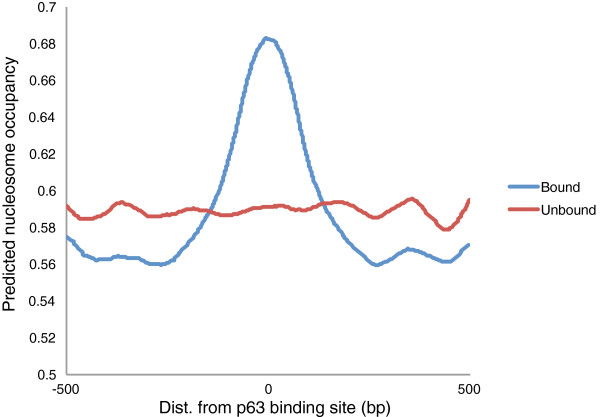
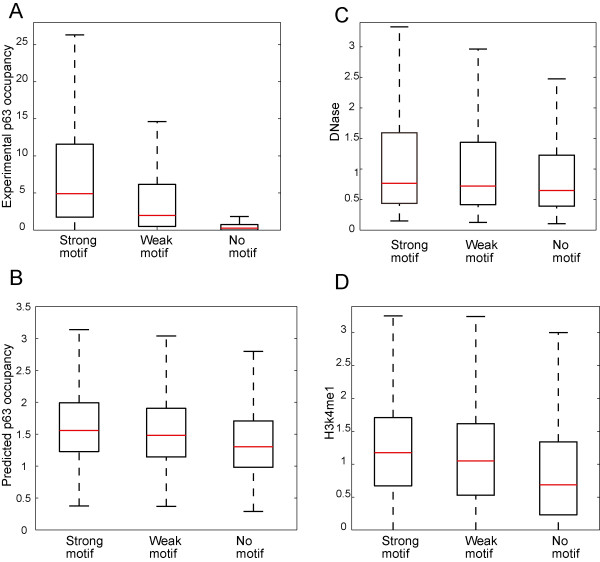
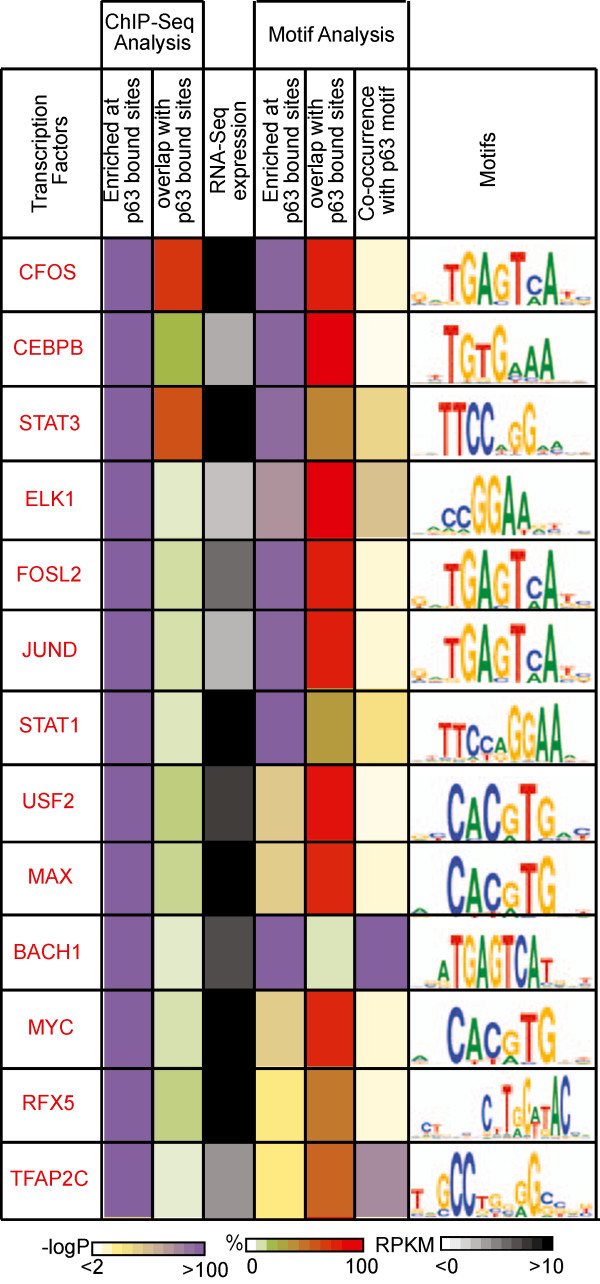
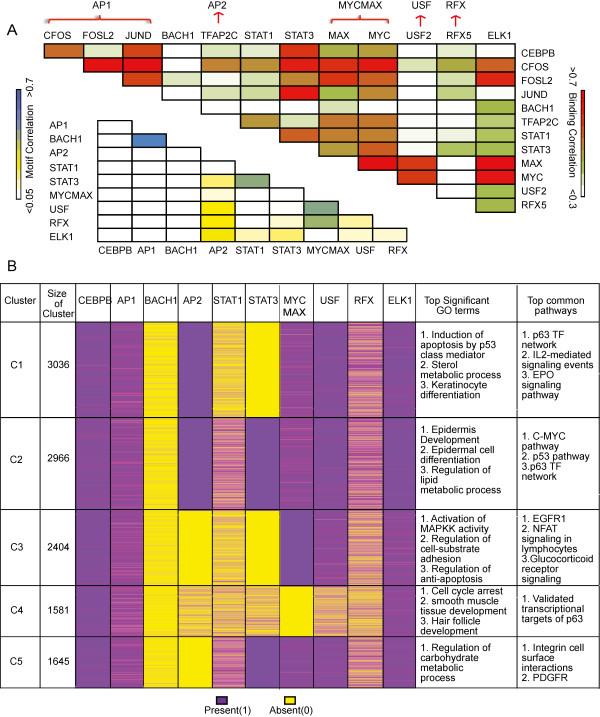
We find that the chromatin architecture at p63-bound targets possess distinctive features and can be used to categorize p63 targets into proximal promoters (1%), enhancers (59%) and repressed or inactive (40%) regulatory elements. Our analysis shows that the chromatin modifications H3K4me1, H3K27me3, along with overall chromatin accessibility status can accurately predict bonafide p63-bound sites without a priori DNA sequence information. Interestingly, however there exists a qualitative correlation between the p63 binding motif and accessibility and H3K4me1 levels. Furthermore, we use a comprehensive in silico approach that leverages ENCODE data to identify several known TFs such as AP1, AP2 and novel TFs (RFX5 for e.g.) that can potentially cooperate with p63 to modulate its myriad biological functions in keratinocytes.
Our analysis shows that p63 bound genomic locations in keratinocytes are accessible, marked by active histone modifications, and co-targeted by other developmentally important transcriptional regulators. Collectively, our results suggest that p63 might actively remodel and/or influence chromatin dynamics at its target sites and in the process dictate its own DNA binding and possibly that of adjacent TFs.
转录因子(TF)p63是表皮发育和分化的主要调节因子,p63基因敲除小鼠显著的皮肤表型就证明了这一点。此外,单独异位表达p63足以在体内将简单上皮细胞转化为复层上皮组织,并且p63是成纤维细胞高效转分化为角质形成细胞所必需的。然而,对于p63功能的分子机制,尤其是它如何在基因组中选择其靶位点,我们了解甚少。p63既作为转录激活因子又作为转录抑制因子,识别一种在人类基因组中出现超过100万次的典型结合基序。但是,在人类角质形成细胞中,体内只有不到12000个这样的位点被结合,这表明潜在的染色质结构和协同作用的转录因子介导了p63与基因组的相互作用。
我们发现p63结合靶点处的染色质结构具有独特特征,可用于将p63靶点分类为近端启动子(1%)、增强子(59%)以及抑制或无活性(40%)的调控元件。我们的分析表明,染色质修饰H3K4me1、H3K27me3以及整体染色质可及性状态能够在没有先验DNA序列信息的情况下准确预测真正的p63结合位点。然而,有趣的是,p63结合基序与可及性和H3K4me1水平之间存在定性相关性。此外,我们使用一种综合的计算机方法,利用ENCODE数据来识别几种已知的转录因子,如AP1、AP2以及新的转录因子(例如RFX5),它们可能与p63协同作用,以调节其在角质形成细胞中的多种生物学功能。
我们的分析表明,角质形成细胞中p63结合的基因组位置是可及的,以活性组蛋白修饰为标记,并且被其他对发育重要的转录调节因子共同靶向。总的来说,我们的结果表明,p63可能在其靶位点积极重塑和/或影响染色质动力学,并在此过程中决定其自身的DNA结合以及可能相邻转录因子的DNA结合。