Hoeper Marius M, Simon R Gibbs J
Dept of Respiratory Medicine, Hannover Medical School and German Centre of Lung Research (DZL), Hannover, Germany. National Heart and Lung Institute, Imperial College London, London, UK.
Eur Respir Rev. 2014 Dec;23(134):450-7. doi: 10.1183/09059180.00007814. Epub 2014 Dec 1.
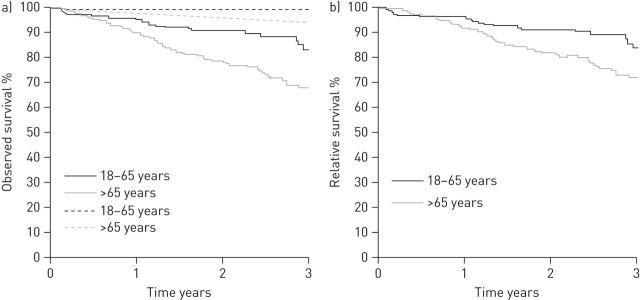
Registries have provided a wealth of information on the clinical and disease characteristics of patients living with pulmonary arterial hypertension (PAH) since the 1980s. Certain PAH demographics, such as the prevalence of various PAH subgroups and preponderance of female patients, appear to have remained stable over time. Contemporary registry data indicate that the average age of patients diagnosed with PAH has increased, at least in the Western world. Older patients with PAH are more likely to be diagnosed with a more advanced stage of the disease, have lower exercise capacity and present with multiple comorbidities. They also have worse survival compared with younger patients. Within the PAH population, there is also a subset of patients with a lower diffusing capacity of the lung for carbon monoxide who are generally older and display more severe disease characteristics. This review discusses the implications that the increased age of the PAH population at diagnosis has on the treatment and management of the disease, as well as the need for earlier and improved diagnosis in these patients.
自20世纪80年代以来,登记处提供了大量关于肺动脉高压(PAH)患者临床和疾病特征的信息。某些PAH人口统计学特征,如各种PAH亚组的患病率和女性患者占多数,似乎随时间保持稳定。当代登记数据表明,被诊断为PAH的患者的平均年龄有所增加,至少在西方世界是这样。老年PAH患者更有可能被诊断为疾病的更晚期阶段,运动能力较低,且伴有多种合并症。与年轻患者相比,他们的生存率也更低。在PAH人群中,还有一部分患者的肺一氧化碳弥散能力较低,这些患者通常年龄较大,表现出更严重的疾病特征。本综述讨论了PAH人群诊断时年龄增加对该疾病治疗和管理的影响,以及对这些患者进行更早和更好诊断的必要性。