Datta Kamal, Suman Shubhankar, Fornace Albert J
Department of Biochemistry and Molecular & Cellular Biology, Georgetown University, Washington, DC 20057, USA; Lombardi Comprehensive Cancer Center, Georgetown University, Washington, DC 20057, USA.
Department of Biochemistry and Molecular & Cellular Biology, Georgetown University, Washington, DC 20057, USA; Lombardi Comprehensive Cancer Center, Georgetown University, Washington, DC 20057, USA.
Int J Biochem Cell Biol. 2014 Dec;57:167-76. doi: 10.1016/j.biocel.2014.10.022. Epub 2014 Oct 23.
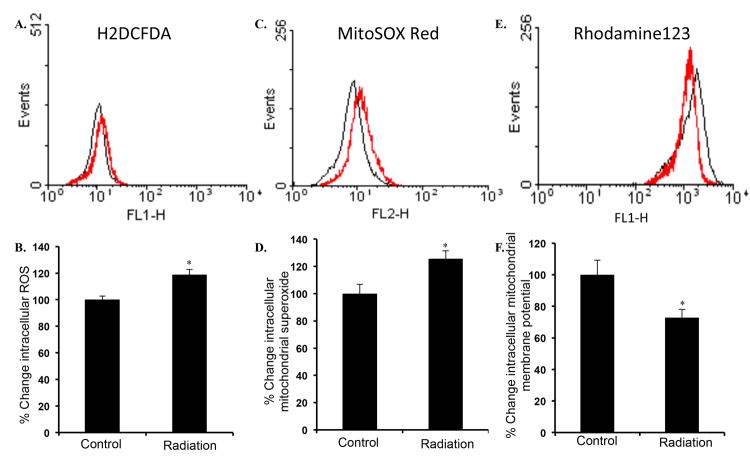
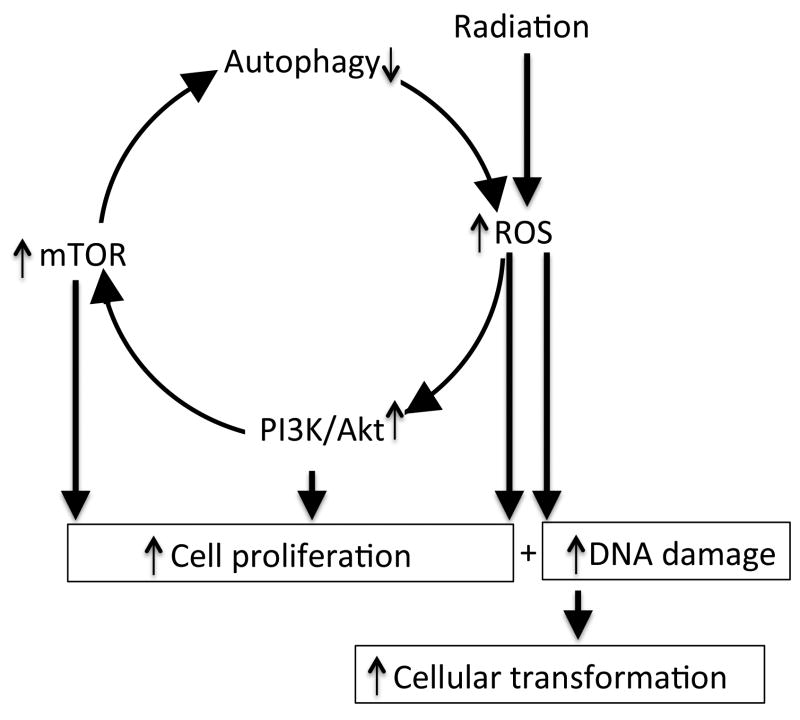
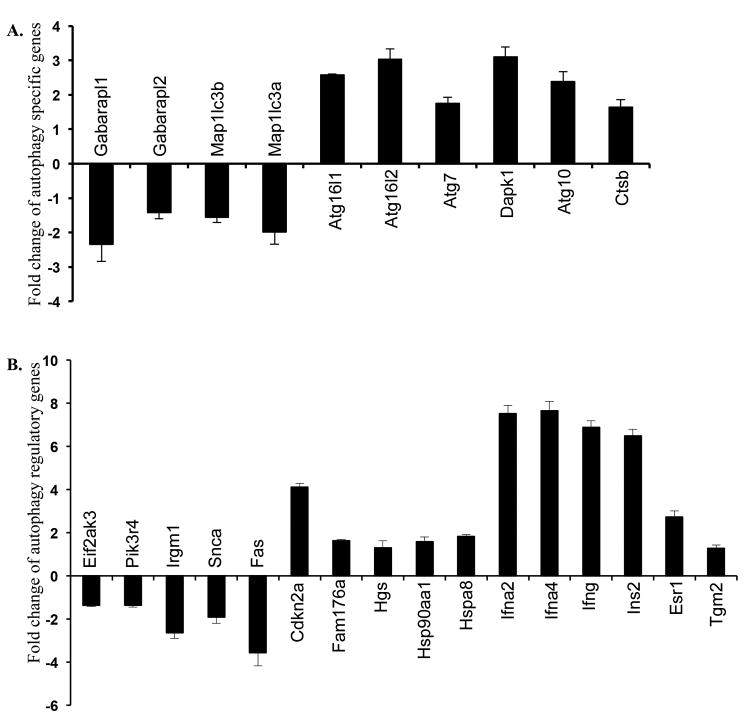
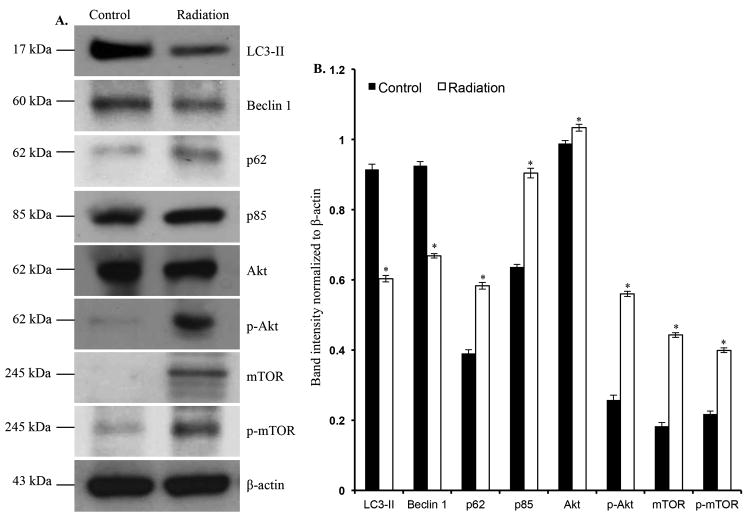
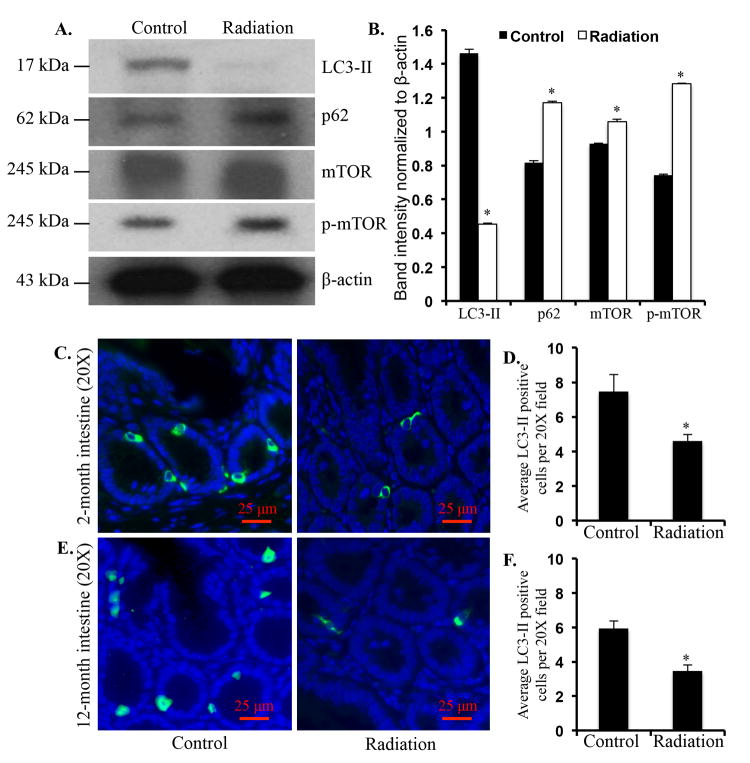
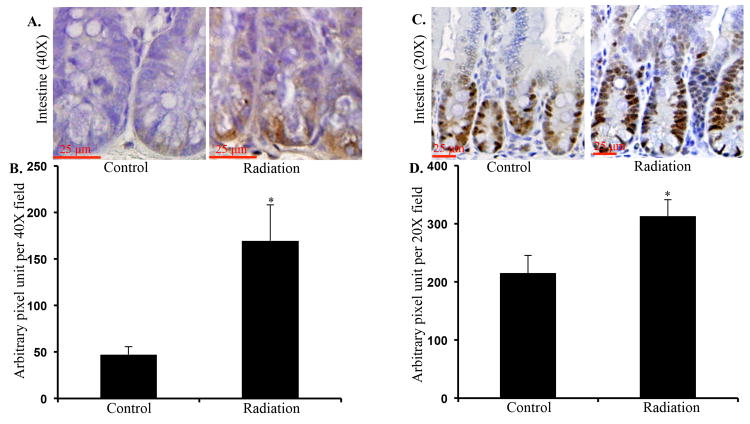
While acute effects of toxic radiation doses on intestine are well established, we are yet to acquire a complete spectrum of sub-lethal radiation-induced chronic intestinal perturbations at the molecular level. We investigated persistent effects of a radiation dose (2 Gy) commonly used as a daily fraction in radiotherapy on oxidants and anti-oxidants, and autophagy pathways, which are interlinked processes affecting intestinal homeostasis. Six to eight weeks old C57BL/6J mice (n=10) were exposed to 2 Gy γ-ray. Mice were euthanized two or twelve months after radiation, intestine surgically removed, and flushed using sterile PBS. Parts of the intestine from jejunal-ilial region were fixed, frozen, or used for intestinal epithelial cell (IEC) isolation. While oxidant levels and mitochondrial status were assessed in isolated IEC, autophagy and oxidative stress related signaling pathways were probed in frozen and fixed samples using PCR-based expression arrays and immunoprobing. Radiation exposure caused significant alterations in the expression level of 26 autophagy and 17 oxidative stress related genes. Immunoblot results showed decreased Beclin1 and LC3-II and increased p62, PI3K/Akt, and mTOR. Flow cytometry data showed increased oxidant production and compromised mitochondrial integrity in irradiated samples. Immunoprobing of intestinal sections showed increased 8-oxo-dG and nuclear PCNA, and decreased autophagosome marker LC3-II in IEC after irradiation. We show that sub-lethal radiation could persistently downregulate anti-oxidants and autophagy signaling, and upregulate oxidant production and proliferative signaling. Radiation-induced promotion of oxidative stress and downregulation of autophagy could work in tandem to alter intestinal functions and have implications for post-radiation chronic gastrointestinal diseases.
虽然毒性辐射剂量对肠道的急性影响已得到充分证实,但我们尚未在分子水平上全面了解亚致死剂量辐射诱导的慢性肠道紊乱情况。我们研究了放疗中常用的每日分次辐射剂量(2 Gy)对氧化剂和抗氧化剂以及自噬途径的持续影响,这些相互关联的过程会影响肠道内环境稳定。将6至8周龄的C57BL/6J小鼠(n = 10)暴露于2 Gy的γ射线。在辐射后2个月或12个月对小鼠实施安乐死,手术切除肠道,并用无菌磷酸盐缓冲盐水冲洗。取空肠 - 回肠区域的部分肠道进行固定、冷冻或用于分离肠上皮细胞(IEC)。在分离的IEC中评估氧化剂水平和线粒体状态,同时使用基于PCR的表达阵列和免疫检测法在冷冻和固定样本中探究自噬和氧化应激相关信号通路。辐射暴露导致26个自噬相关基因和17个氧化应激相关基因的表达水平发生显著变化。免疫印迹结果显示Beclin1和LC3-II减少,而p62、PI3K/Akt和mTOR增加。流式细胞术数据显示受辐照样本中氧化剂生成增加且线粒体完整性受损。肠道切片的免疫检测显示,辐照后IEC中8-氧代 - dG和核增殖细胞核抗原增加,自噬体标志物LC3-II减少。我们发现,亚致死剂量辐射可持续下调抗氧化剂和自噬信号,并上调氧化剂生成和增殖信号。辐射诱导的氧化应激增强和自噬下调可能共同作用改变肠道功能,并对辐射后慢性胃肠道疾病产生影响。