Baer Romain, Cintas Célia, Dufresne Marlène, Cassant-Sourdy Stéphanie, Schönhuber Nina, Planque Laetitia, Lulka Hubert, Couderc Bettina, Bousquet Corinne, Garmy-Susini Barbara, Vanhaesebroeck Bart, Pyronnet Stéphane, Saur Dieter, Guillermet-Guibert Julie
UMR1037, Le Centre de Recherches en Cancérologie de Toulouse (CRCT), Inserm, F-31000 Toulouse, France; UMR1037, CRCT, Université Toulouse III-Paul Sabatier, F-31000 Toulouse, France; Equipe Labellisée Ligue Contre le Cancer, F-31000 Toulouse, France;
UMR1037, Le Centre de Recherches en Cancérologie de Toulouse (CRCT), Inserm, F-31000 Toulouse, France; UMR1037, CRCT, Université Toulouse III-Paul Sabatier, F-31000 Toulouse, France;
Genes Dev. 2014 Dec 1;28(23):2621-35. doi: 10.1101/gad.249409.114.
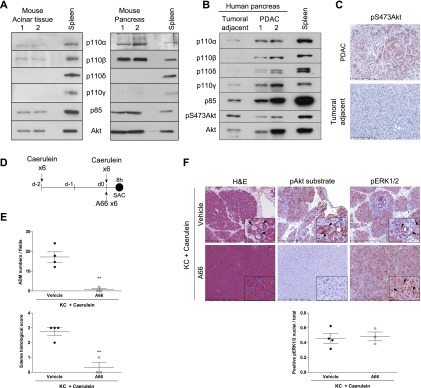
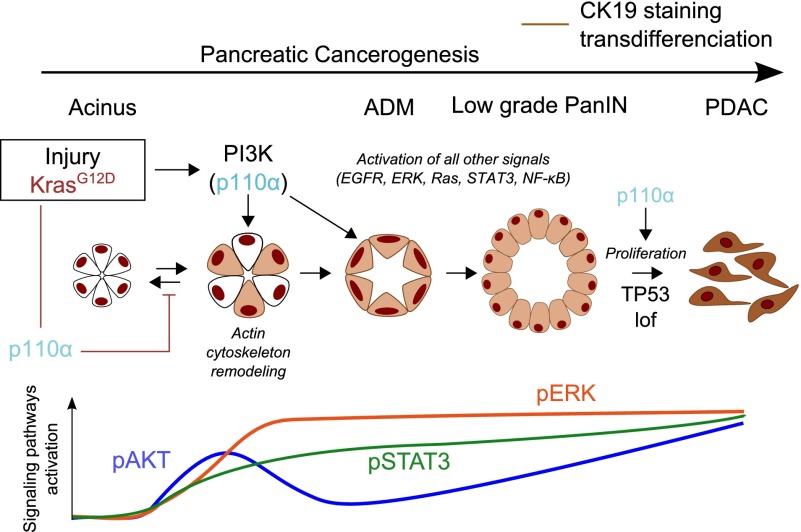
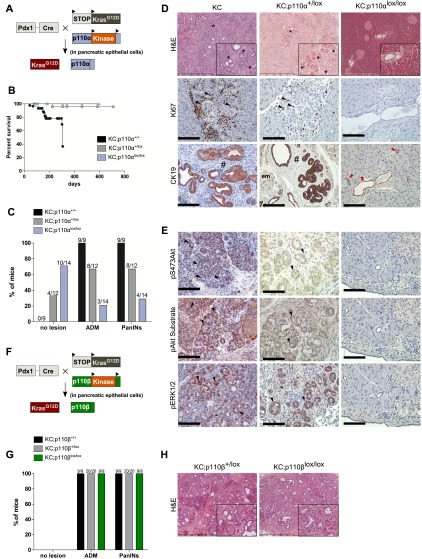
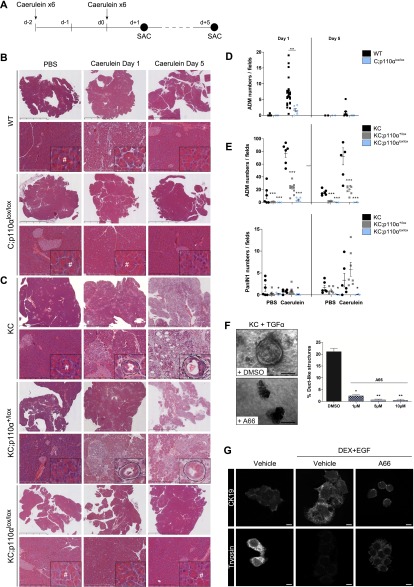
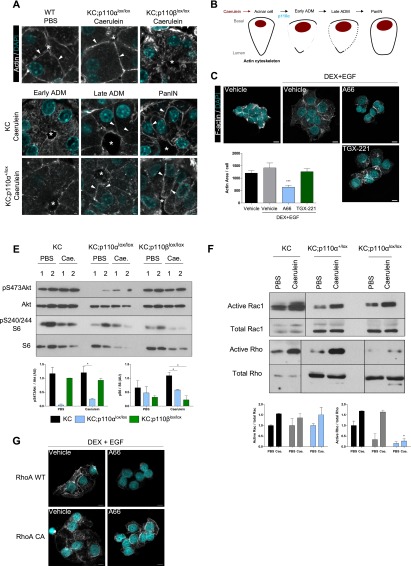
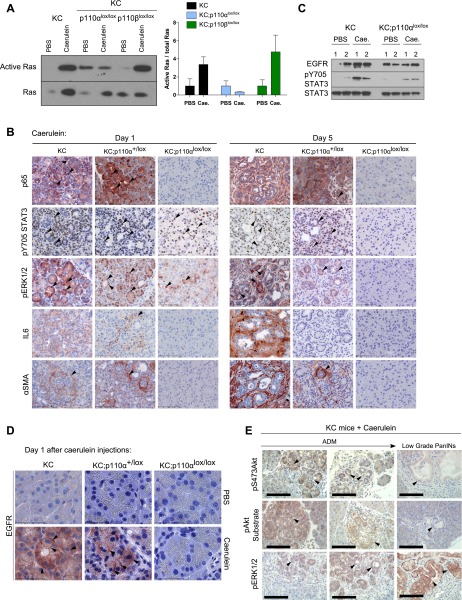
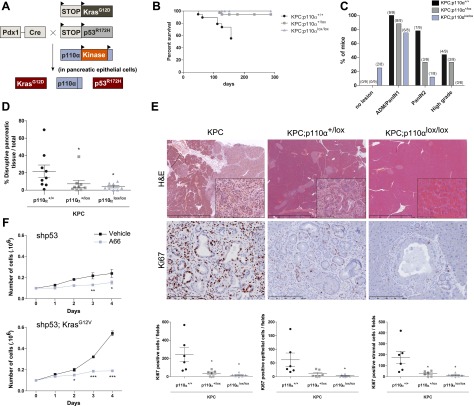
Increased PI 3-kinase (PI3K) signaling in pancreatic ductal adenocarcinoma (PDAC) correlates with poor prognosis, but the role of class I PI3K isoforms during its induction remains unclear. Using genetically engineered mice and pharmacological isoform-selective inhibitors, we found that the p110α PI3K isoform is a major signaling enzyme for PDAC development induced by a combination of genetic and nongenetic factors. Inactivation of this single isoform blocked the irreversible transition of exocrine acinar cells into pancreatic preneoplastic ductal lesions by oncogenic Kras and/or pancreatic injury. Hitting the other ubiquitous isoform, p110β, did not prevent preneoplastic lesion initiation. p110α signaling through small GTPase Rho and actin cytoskeleton controls the reprogramming of acinar cells and regulates cell morphology in vivo and in vitro. Finally, p110α was necessary for pancreatic ductal cancers to arise from Kras-induced preneoplastic lesions by increasing epithelial cell proliferation in the context of mutated p53. Here we identify an in vivo context in which p110α cellular output differs depending on the epithelial transformation stage and demonstrate that the PI3K p110α is required for PDAC induced by oncogenic Kras, the key driver mutation of PDAC. These data are critical for a better understanding of the development of this lethal disease that is currently without efficient treatment.
胰腺导管腺癌(PDAC)中PI 3-激酶(PI3K)信号增强与预后不良相关,但I类PI3K亚型在其诱导过程中的作用仍不清楚。利用基因工程小鼠和药理学亚型选择性抑制剂,我们发现p110α PI3K亚型是由遗传和非遗传因素联合诱导的PDAC发展的主要信号酶。这种单一亚型的失活通过致癌性Kras和/或胰腺损伤阻止了外分泌腺泡细胞向胰腺肿瘤前导管病变的不可逆转变。作用于另一种普遍存在的亚型p110β,并没有阻止肿瘤前病变的起始。通过小GTPase Rho和肌动蛋白细胞骨架的p110α信号控制腺泡细胞的重编程,并在体内和体外调节细胞形态。最后,p110α对于Kras诱导的肿瘤前病变产生胰腺导管癌是必要的,它通过在p53突变的情况下增加上皮细胞增殖来实现。在这里,我们确定了一种体内情况,其中p110α的细胞输出根据上皮转化阶段而有所不同,并证明PI3K p110α是致癌性Kras诱导的PDAC所必需的,Kras是PDAC的关键驱动突变。这些数据对于更好地理解这种目前尚无有效治疗方法的致命疾病的发展至关重要。