Department of Biology, Faculty of Sciences, University of Ottawa Ottawa, ON, Canada.
Institute of Biochemistry, Carleton University Ottawa, ON, Canada.
Front Cell Dev Biol. 2014 Nov 17;2:68. doi: 10.3389/fcell.2014.00068. eCollection 2014.
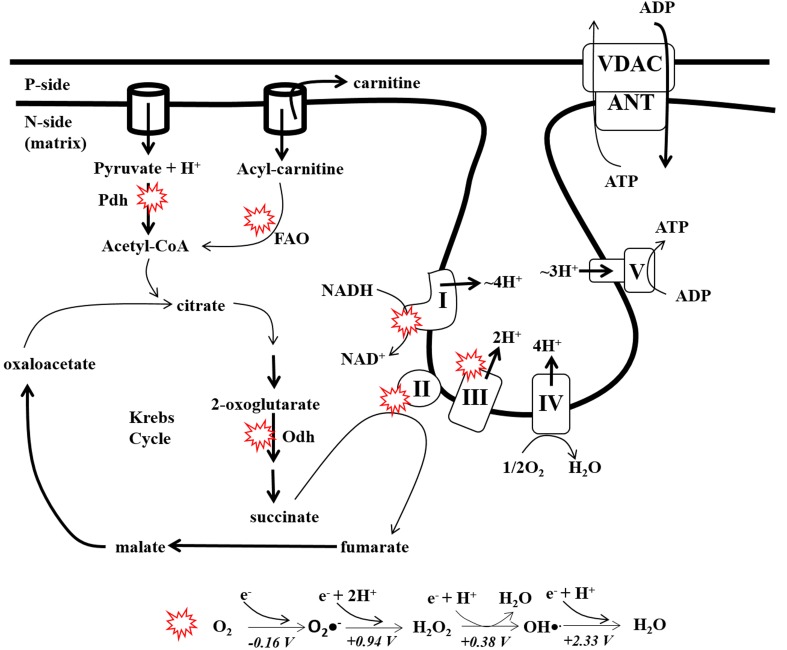
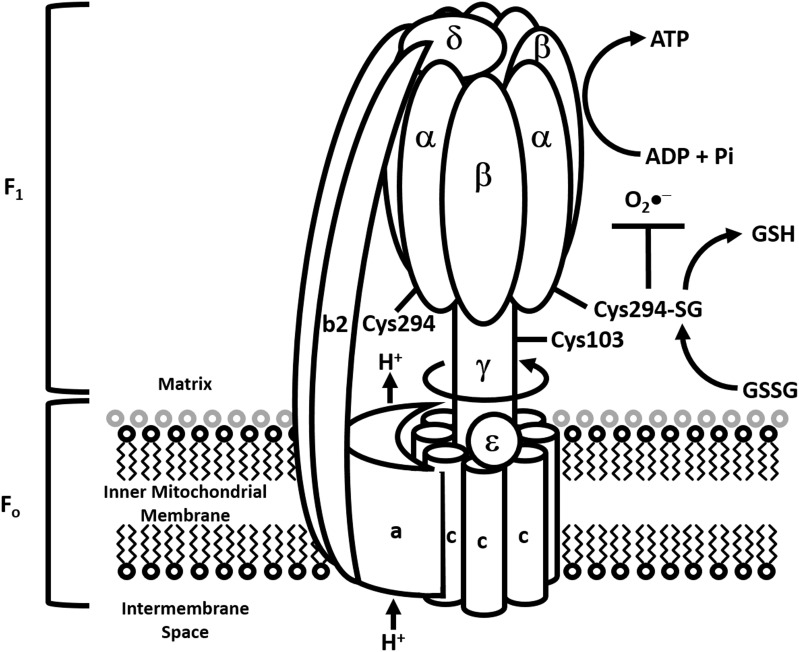
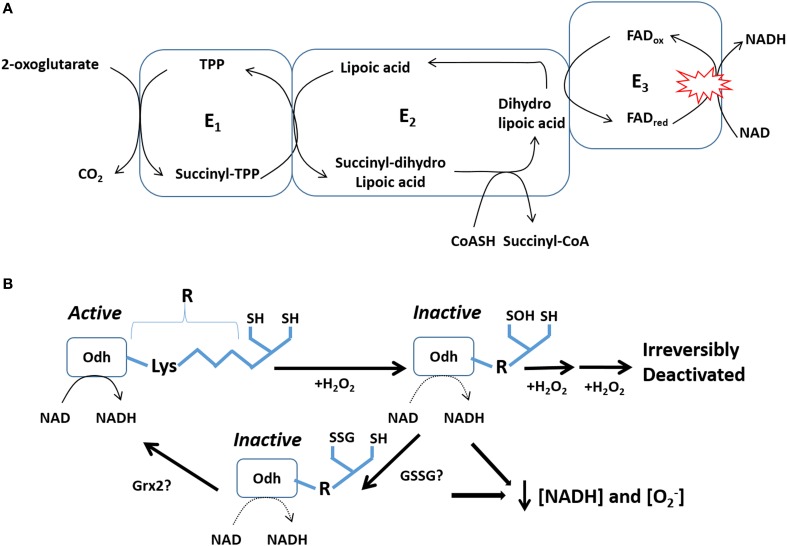
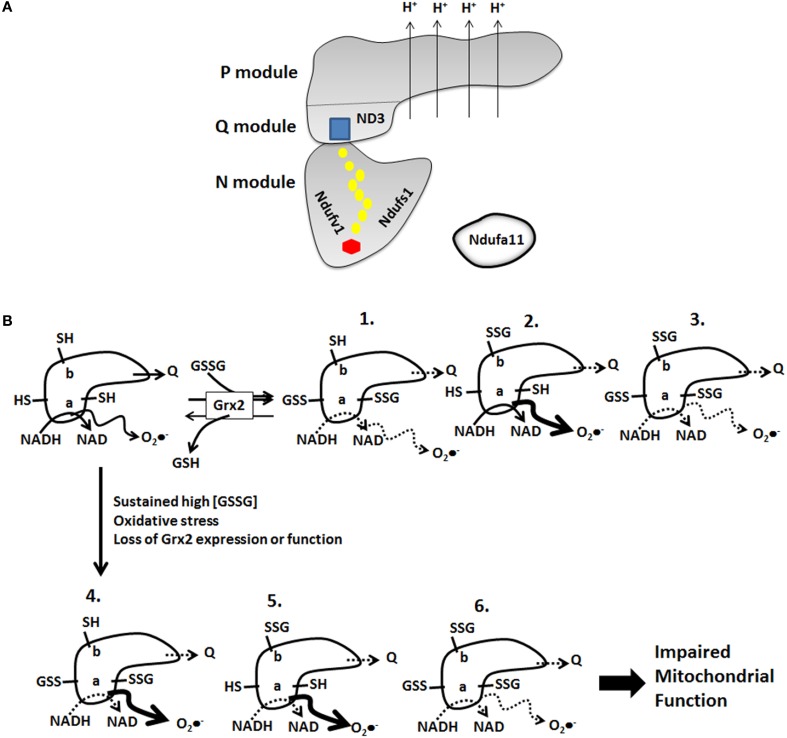
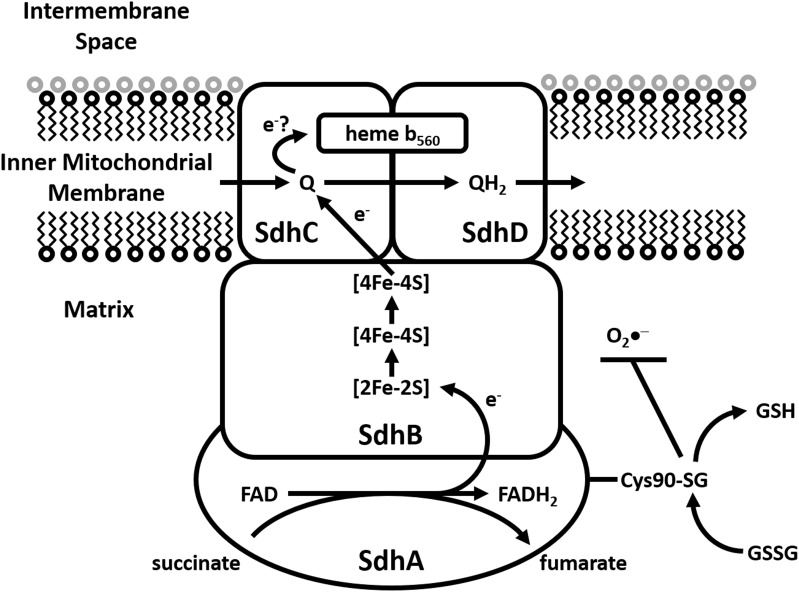
Mitochondria are highly efficient energy-transforming organelles that convert energy stored in nutrients into ATP. The production of ATP by mitochondria is dependent on oxidation of nutrients and coupling of exergonic electron transfer reactions to the genesis of transmembrane electrochemical potential of protons. Electrons can also prematurely "spin-off" from prosthetic groups in Krebs cycle enzymes and respiratory complexes and univalently reduce di-oxygen to generate reactive oxygen species (ROS) superoxide (O2•(-)) and hydrogen peroxide (H2O2), important signaling molecules that can be toxic at high concentrations. Production of ATP and ROS are intimately linked by the respiratory chain and the genesis of one or the other inherently depends on the metabolic state of mitochondria. Various control mechanisms converge on mitochondria to adjust ATP and ROS output in response to changing cellular demands. One control mechanism that has gained a high amount of attention recently is S-glutathionylation, a redox sensitive covalent modification that involves formation of a disulfide bridge between glutathione and an available protein cysteine thiol. A number of S-glutathionylation targets have been identified in mitochondria. It has also been established that S-glutathionylation reactions in mitochondria are mediated by the thiol oxidoreductase glutaredoxin-2 (Grx2). In the following review, emerging knowledge on S-glutathionylation reactions and its importance in modulating mitochondrial ATP and ROS production will be discussed. Major focus will be placed on Complex I of the respiratory chain since (1) it is a target for reversible S-glutathionylation by Grx2 and (2) deregulation of Complex I S-glutathionylation is associated with development of various disease states particularly heart disease. Other mitochondrial enzymes and how their S-glutathionylation profile is affected in different disease states will also be discussed.
线粒体是高效的能量转化细胞器,可将营养物质中储存的能量转化为 ATP。线粒体产生 ATP 的过程依赖于营养物质的氧化和释能电子传递反应与质子跨膜电化学势产生的偶联。电子也可以从克雷布斯循环酶和呼吸复合物中的辅基中过早“脱离”,并将二氧一价还原为活性氧(ROS)超氧化物(O2•(-))和过氧化氢(H2O2),这些都是重要的信号分子,在高浓度时可能有毒。ATP 和 ROS 的产生与呼吸链密切相关,其中一种物质的产生本质上取决于线粒体的代谢状态。各种控制机制汇聚在线粒体上,以根据细胞需求的变化调整 ATP 和 ROS 的输出。最近引起广泛关注的一种控制机制是 S-谷胱甘肽化,这是一种涉及谷胱甘肽和可用蛋白质半胱氨酸巯基之间形成二硫键的氧化还原敏感的共价修饰。在线粒体中已经鉴定出许多 S-谷胱甘肽化靶标。还已经确立,线粒体中的 S-谷胱甘肽化反应是由硫氧还蛋白还原酶谷胱甘肽-2 (Grx2)介导的。在下面的综述中,将讨论 S-谷胱甘肽化反应及其在调节线粒体 ATP 和 ROS 产生中的重要性方面的新进展。重点将放在呼吸链的复合物 I 上,因为 (1) 它是 Grx2 可逆 S-谷胱甘肽化的靶标,并且 (2) 复合物 I S-谷胱甘肽化的失调与各种疾病状态的发展有关,特别是心脏病。还将讨论其他线粒体酶及其在不同疾病状态下的 S-谷胱甘肽化谱如何受到影响。