Yang Yaran, Xie Bingbing, Yan Jiangwei
CAS Key Laboratory of Genome Sciences and Information, Beijing Institute of Genomics, Chinese Academy of Sciences, Beijing 100101, China.
CAS Key Laboratory of Genome Sciences and Information, Beijing Institute of Genomics, Chinese Academy of Sciences, Beijing 100101, China; University of Chinese Academy of Sciences, Beijing 100049, China.
Genomics Proteomics Bioinformatics. 2014 Oct;12(5):190-7. doi: 10.1016/j.gpb.2014.09.001. Epub 2014 Oct 14.
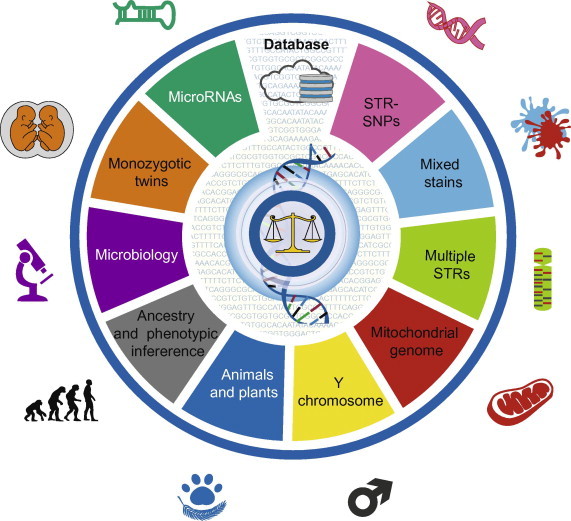
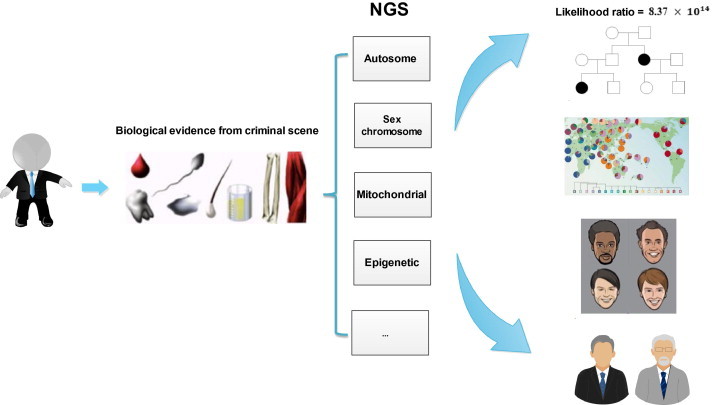
Next-generation sequencing (NGS) technology, with its high-throughput capacity and low cost, has developed rapidly in recent years and become an important analytical tool for many genomics researchers. New opportunities in the research domain of the forensic studies emerge by harnessing the power of NGS technology, which can be applied to simultaneously analyzing multiple loci of forensic interest in different genetic contexts, such as autosomes, mitochondrial and sex chromosomes. Furthermore, NGS technology can also have potential applications in many other aspects of research. These include DNA database construction, ancestry and phenotypic inference, monozygotic twin studies, body fluid and species identification, and forensic animal, plant and microbiological analyses. Here we review the application of NGS technology in the field of forensic science with the aim of providing a reference for future forensics studies and practice.
下一代测序(NGS)技术凭借其高通量能力和低成本,近年来发展迅速,已成为许多基因组学研究人员的重要分析工具。利用NGS技术的强大功能,法医研究领域出现了新的机遇,该技术可用于在不同遗传背景下同时分析多个法医相关位点,如常染色体、线粒体和性染色体。此外,NGS技术在许多其他研究方面也可能有潜在应用。这些应用包括DNA数据库建设、血统和表型推断、同卵双胞胎研究、体液和物种鉴定以及法医动物、植物和微生物分析。在此,我们综述NGS技术在法医学领域的应用,旨在为未来的法医研究和实践提供参考。