Billington Charles J, Schmidt Brian, Marcucio Ralph S, Hallgrimsson Benedikt, Gopalakrishnan Rajaram, Petryk Anna
Department of Pediatrics, University of Minnesota, Minneapolis, MN 55454, USA. Department of Genetics, Cell Biology and Development, University of Minnesota, Minneapolis, MN 55454, USA.
Department of Pediatrics, University of Minnesota, Minneapolis, MN 55454, USA.
Dis Model Mech. 2015 Feb;8(2):139-46. doi: 10.1242/dmm.018275. Epub 2014 Dec 2.
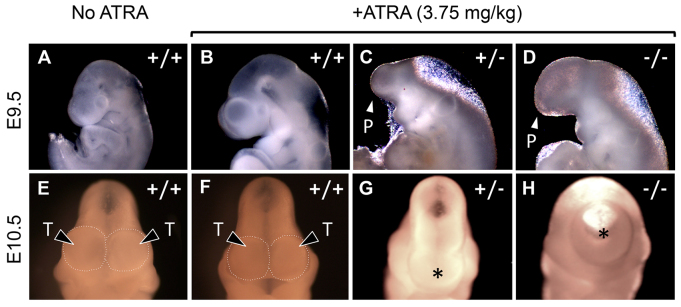
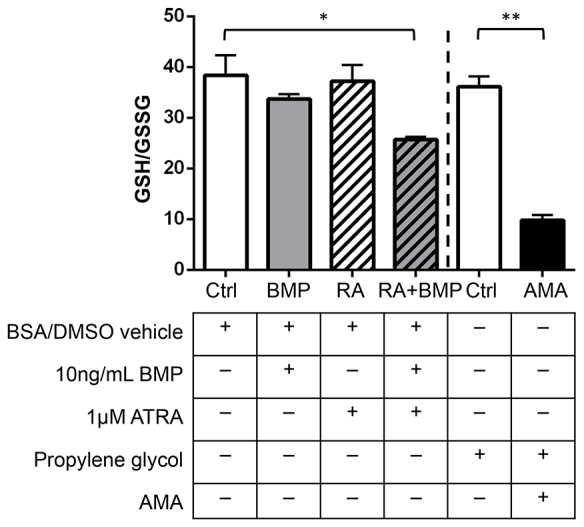
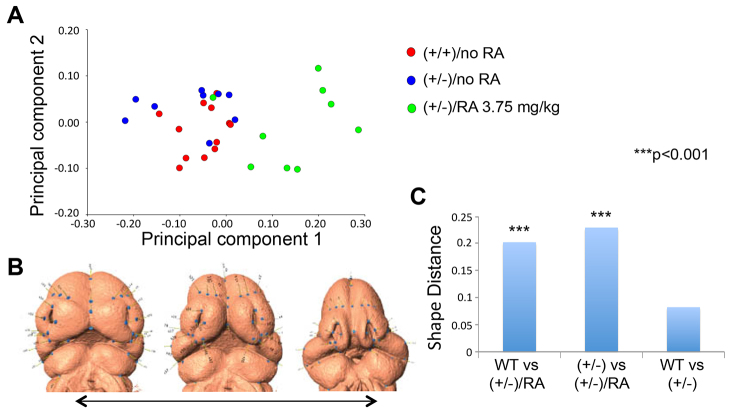
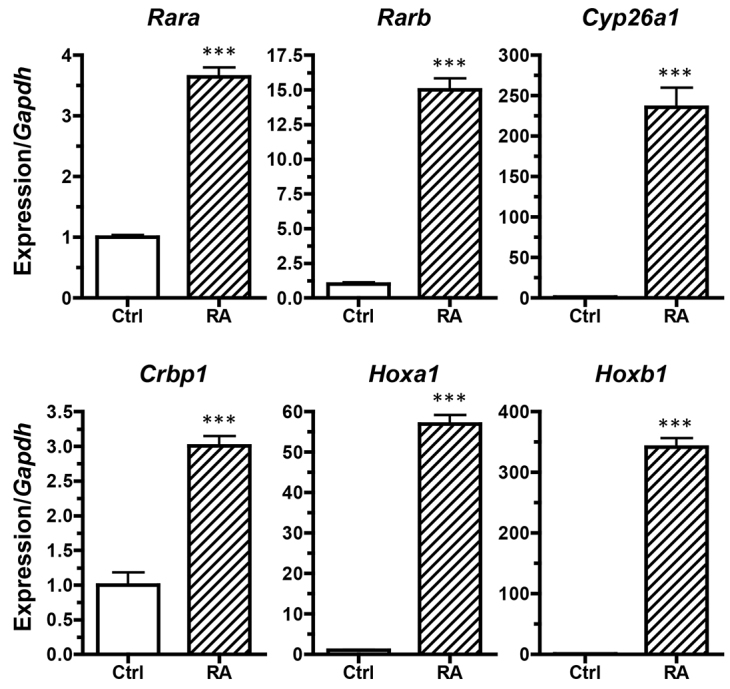
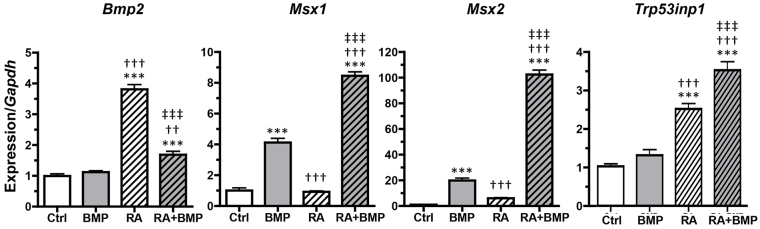
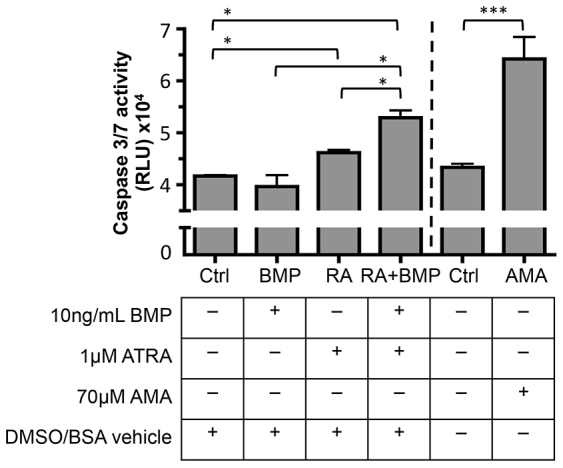
Holoprosencephaly (HPE) is a developmental anomaly characterized by inadequate or absent midline division of the embryonic forebrain and midline facial defects. It is believed that interactions between genes and the environment play a role in the widely variable penetrance and expressivity of HPE, although direct investigation of such effects has been limited. The goal of this study was to examine whether mice carrying a mutation in a gene encoding the bone morphogenetic protein (BMP) antagonist twisted gastrulation (Twsg1), which is associated with a low penetrance of HPE, are sensitized to retinoic acid (RA) teratogenesis. Pregnant Twsg1(+/-) dams were treated by gavage with a low dose of all-trans RA (3.75 mg/kg of body weight). Embryos were analyzed between embryonic day (E)9.5 and E11.5 by microscopy and geometric morphometric analysis by micro-computed tomography. P19 embryonal carcinoma cells were used to examine potential mechanisms mediating the combined effects of increased BMP and retinoid signaling. Although only 7% of wild-type embryos exposed to RA showed overt HPE or neural tube defects (NTDs), 100% of Twsg1(-/-) mutants exposed to RA manifested severe HPE compared to 17% without RA. Remarkably, up to 30% of Twsg1(+/-) mutants also showed HPE (23%) or NTDs (7%). The majority of shape variation among Twsg1(+/-) mutants was associated with narrowing of the midface. In P19 cells, RA induced the expression of Bmp2, acted in concert with BMP2 to increase p53 expression, caspase activation and oxidative stress. This study provides direct evidence for modifying effects of the environment in a genetic mouse model carrying a predisposing mutation for HPE in the Twsg1 gene. Further study of the mechanisms underlying these gene-environment interactions in vivo will contribute to better understanding of the pathogenesis of birth defects and present an opportunity to explore potential preventive interventions.
前脑无裂畸形(HPE)是一种发育异常,其特征为胚胎前脑中线分裂不足或缺失以及中线面部缺陷。尽管对此类影响的直接研究有限,但人们认为基因与环境之间的相互作用在HPE广泛可变的外显率和表现度中发挥作用。本研究的目的是检查携带编码骨形态发生蛋白(BMP)拮抗剂扭曲原肠胚形成蛋白(Twsg1)的基因突变(该突变与低外显率的HPE相关)的小鼠是否对视黄酸(RA)致畸作用敏感。给怀孕的Twsg1(+/-)母鼠经口灌胃低剂量的全反式RA(3.75毫克/千克体重)。在胚胎第(E)9.5天至E11.5天之间,通过显微镜检查和微计算机断层扫描的几何形态计量分析对胚胎进行分析。使用P19胚胎癌细胞来研究介导BMP增加和类维生素A信号传导联合作用的潜在机制。尽管暴露于RA的野生型胚胎中只有7%表现出明显的HPE或神经管缺陷(NTD),但与未暴露于RA的17%相比,暴露于RA的Twsg1(-/-)突变体中有100%表现出严重的HPE。值得注意的是,高达30%的Twsg1(+/-)突变体也表现出HPE(23%)或NTD(7%)。Twsg1(+/-)突变体中大多数形状变异与中面部变窄有关。在P19细胞中,RA诱导Bmp2的表达,与BMP2协同作用增加p53表达、半胱天冬酶激活和氧化应激。本研究为携带Twsg1基因中HPE易感突变的遗传小鼠模型中环境的修饰作用提供了直接证据。对这些体内基因-环境相互作用潜在机制的进一步研究将有助于更好地理解出生缺陷的发病机制,并提供探索潜在预防干预措施的机会。