Poo Yee Suan, Rudd Penny A, Gardner Joy, Wilson Jane A C, Larcher Thibaut, Colle Marie-Anne, Le Thuy T, Nakaya Helder I, Warrilow David, Allcock Richard, Bielefeldt-Ohmann Helle, Schroder Wayne A, Khromykh Alexander A, Lopez José A, Suhrbier Andreas
QIMR Berghofer Medical Research Institute, and the Australian Infectious Diseases Research Centre, Brisbane, Queensland, Australia; School of Medicine/School of Molecular and Microbial Sciences, University of Queensland, Brisbane, Queensland, Australia.
QIMR Berghofer Medical Research Institute, and the Australian Infectious Diseases Research Centre, Brisbane, Queensland, Australia.
PLoS Negl Trop Dis. 2014 Dec 4;8(12):e3354. doi: 10.1371/journal.pntd.0003354. eCollection 2014 Dec.
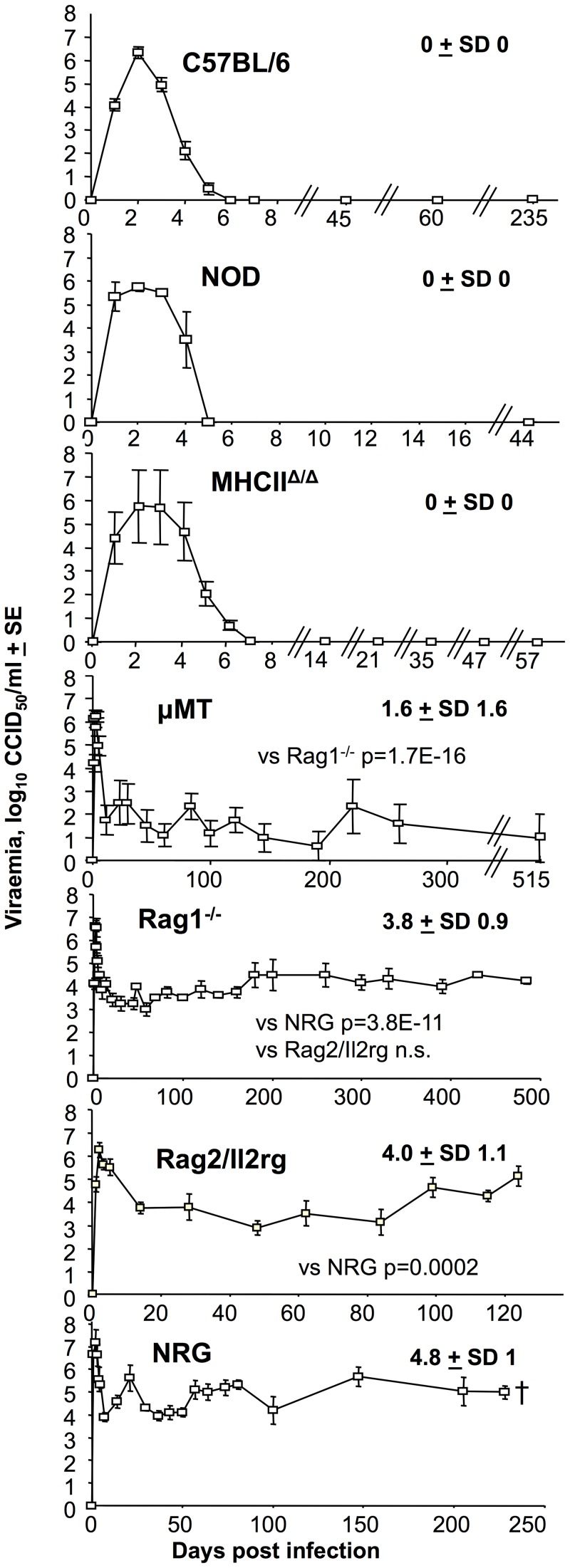
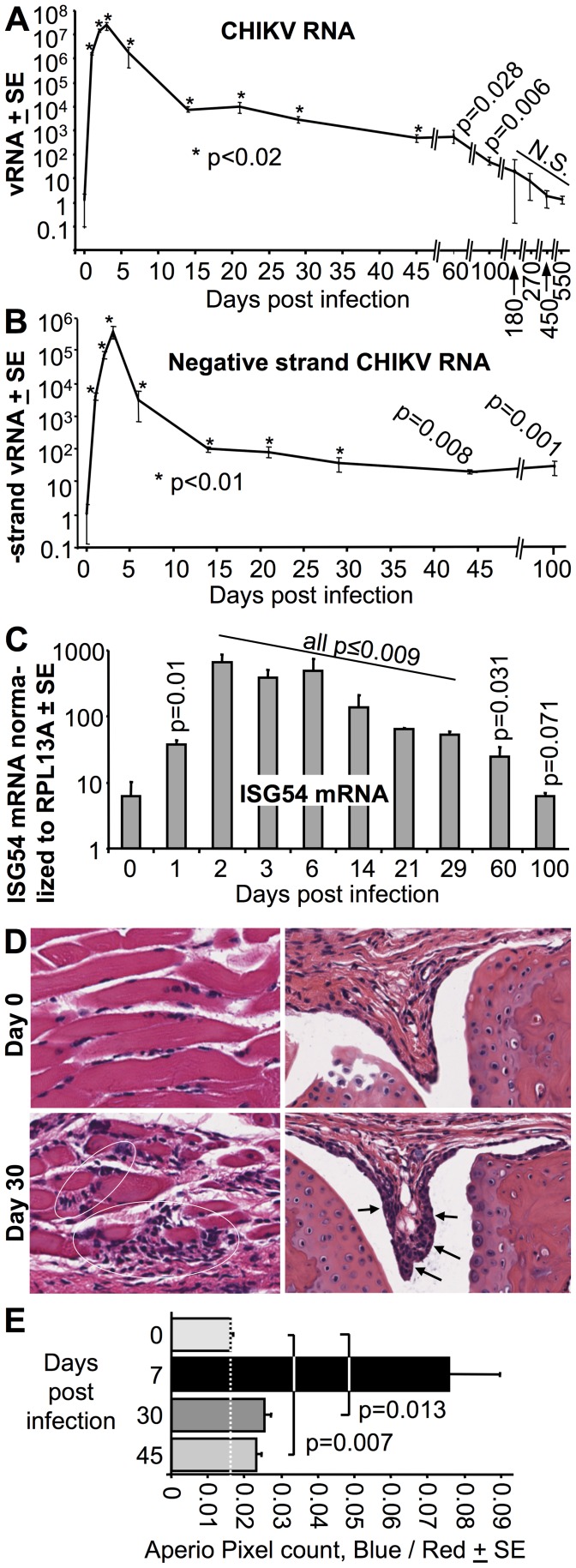
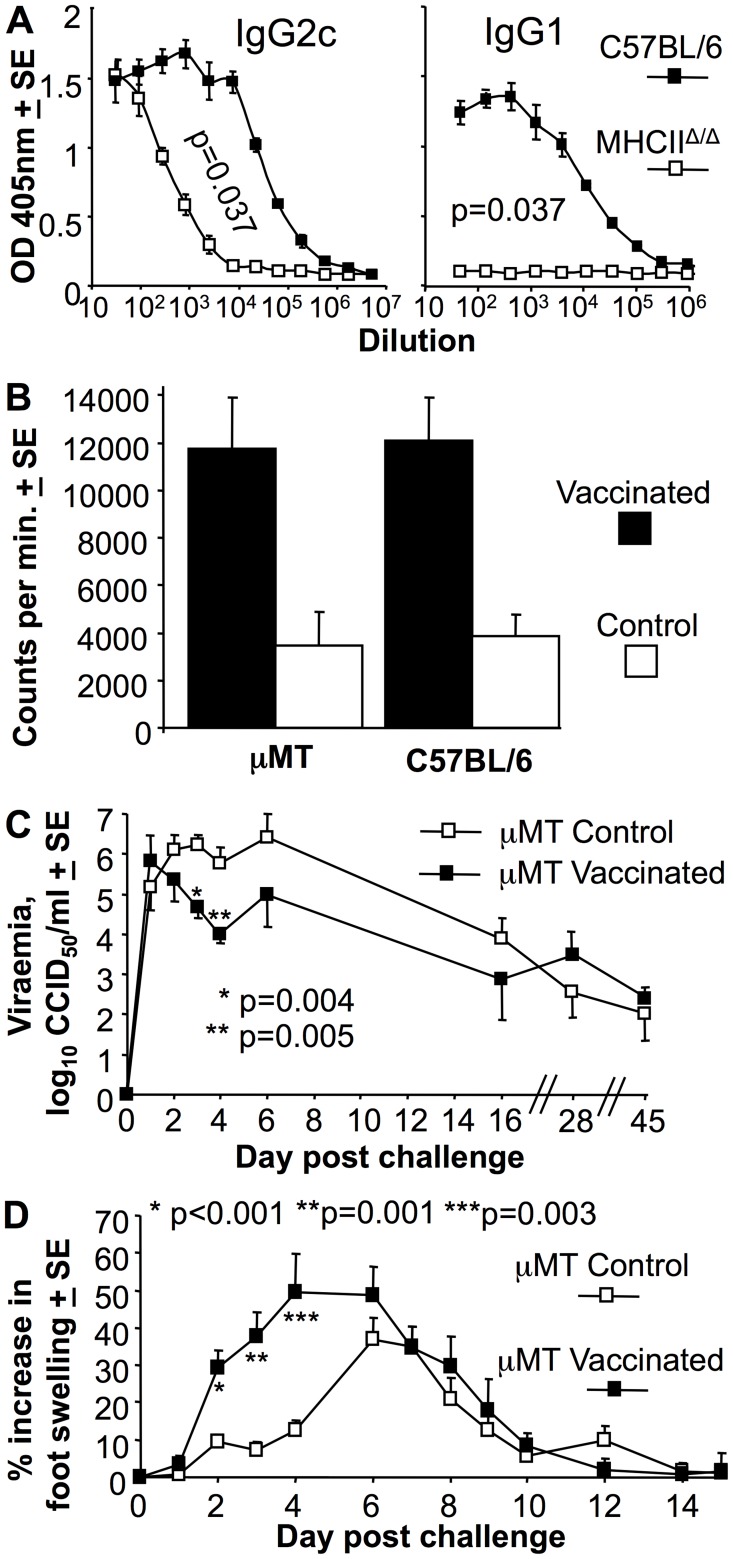
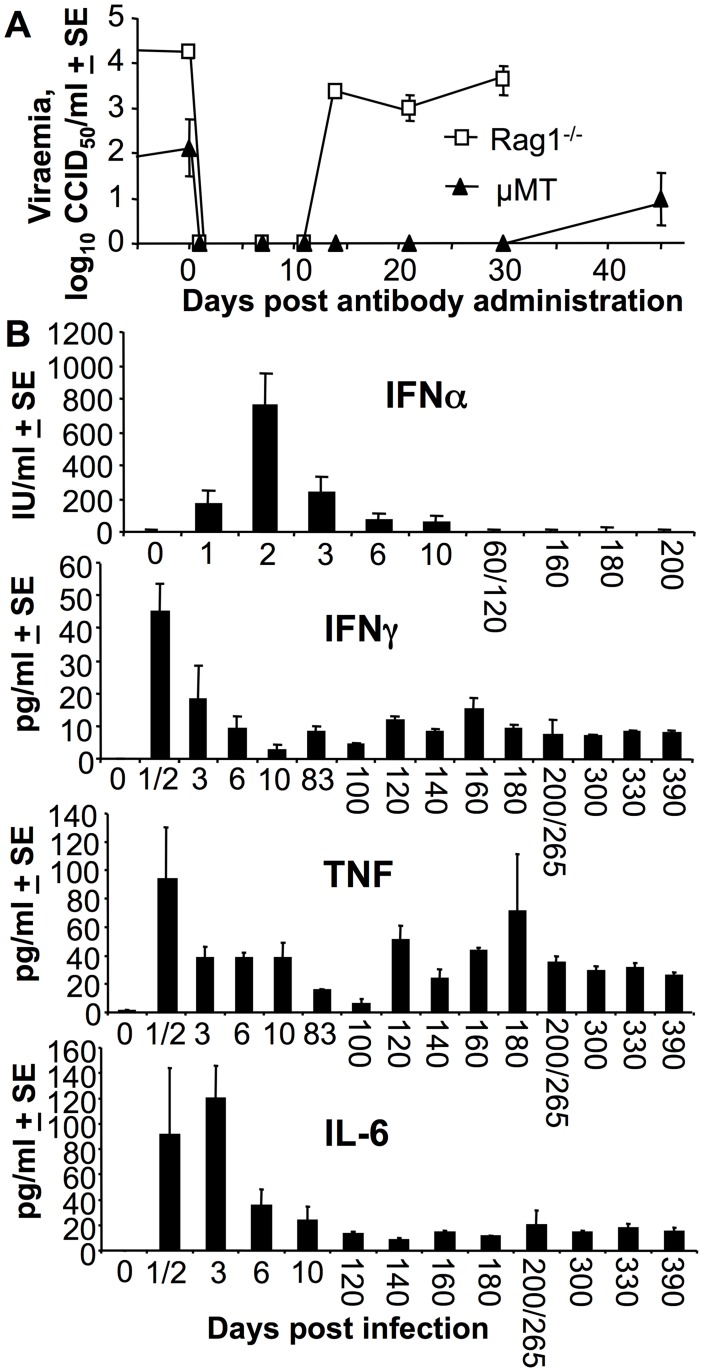
The recent epidemic of the arthritogenic alphavirus, chikungunya virus (CHIKV) has prompted a quest to understand the correlates of protection against virus and disease in order to inform development of new interventions. Herein we highlight the propensity of CHIKV infections to persist long term, both as persistent, steady-state, viraemias in multiple B cell deficient mouse strains, and as persistent RNA (including negative-strand RNA) in wild-type mice. The knockout mouse studies provided evidence for a role for T cells (but not NK cells) in viraemia suppression, and confirmed the role of T cells in arthritis promotion, with vaccine-induced T cells also shown to be arthritogenic in the absence of antibody responses. However, MHC class II-restricted T cells were not required for production of anti-viral IgG2c responses post CHIKV infection. The anti-viral cytokines, TNF and IFNγ, were persistently elevated in persistently infected B and T cell deficient mice, with adoptive transfer of anti-CHIKV antibodies unable to clear permanently the viraemia from these, or B cell deficient, mice. The NOD background increased viraemia and promoted arthritis, with B, T and NK deficient NOD mice showing high-levels of persistent viraemia and ultimately succumbing to encephalitic disease. In wild-type mice persistent CHIKV RNA and negative strand RNA (detected for up to 100 days post infection) was associated with persistence of cellular infiltrates, CHIKV antigen and stimulation of IFNα/β and T cell responses. These studies highlight that, secondary to antibodies, several factors are involved in virus control, and suggest that chronic arthritic disease is a consequence of persistent, replicating and transcriptionally active CHIKV RNA.
致关节炎甲病毒——基孔肯雅病毒(CHIKV)近期的流行促使人们探索预防病毒和疾病的相关因素,以便为新干预措施的研发提供依据。在此,我们强调CHIKV感染具有长期持续存在的倾向,在多种B细胞缺陷小鼠品系中表现为持续性、稳态病毒血症,在野生型小鼠中则表现为持续性RNA(包括负链RNA)。基因敲除小鼠研究为T细胞(而非NK细胞)在抑制病毒血症中的作用提供了证据,并证实了T细胞在促进关节炎方面的作用,同时还表明疫苗诱导的T细胞在缺乏抗体反应时也具有致关节炎性。然而,CHIKV感染后产生抗病毒IgG2c反应并不需要MHC II类限制性T细胞。在持续感染的B细胞和T细胞缺陷小鼠中,抗病毒细胞因子TNF和IFNγ持续升高,输入抗CHIKV抗体无法使这些小鼠或B细胞缺陷小鼠的病毒血症得到永久性清除。NOD背景会增加病毒血症并促进关节炎,B、T和NK细胞缺陷的NOD小鼠表现出高水平的持续性病毒血症,最终死于脑病。在野生型小鼠中持续存在的CHIKV RNA和负链RNA(感染后长达100天可检测到)与细胞浸润、CHIKV抗原的持续存在以及IFNα/β和T细胞反应的刺激有关。这些研究强调,除抗体外,还有几个因素参与病毒控制,并表明慢性关节炎疾病是持续性、复制性和转录活性CHIKV RNA的结果。