Galabova Gergana, Brunner Sylvia, Winsauer Gabriele, Juno Claudia, Wanko Bettina, Mairhofer Andreas, Lührs Petra, Schneeberger Achim, von Bonin Arne, Mattner Frank, Schmidt Walter, Staffler Guenther
AFFiRiS AG, Karl-Farkas-Gasse 22, Vienna, 1030, Austria.
PLoS One. 2014 Dec 4;9(12):e114469. doi: 10.1371/journal.pone.0114469. eCollection 2014.
Low Density Lipoprotein (LDL) hypercholesterolemia, and its associated cardiovascular diseases, are some of the leading causes of death worldwide. The ability of proprotein convertase subtilisin/kexin 9 (PCSK9) to modulate circulating LDL cholesterol (LDLc) concentrations made it a very attractive target for LDLc management. To date, the most advanced approaches for PCSK9 inhibition are monoclonal antibody (mAb) therapies. Although shown to lower LDLc significantly, mAbs face functional limitations because of their relatively short in vivo half-lives necessitating frequent administration. Here, we evaluated the long-term efficacy and safety of PCSK9-specific active vaccines in different preclinical models.
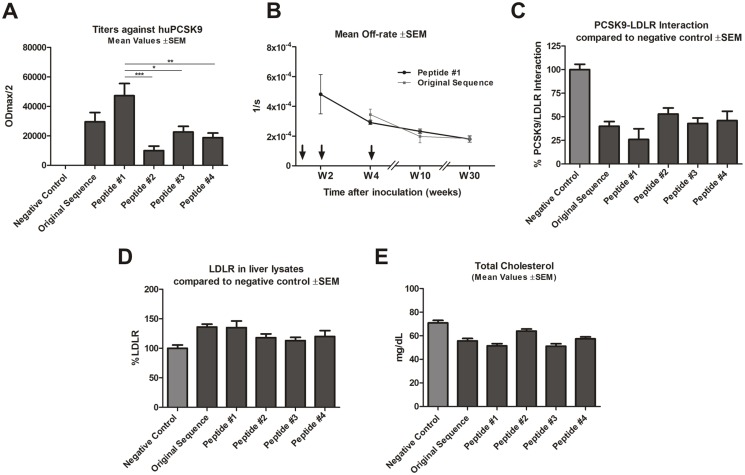
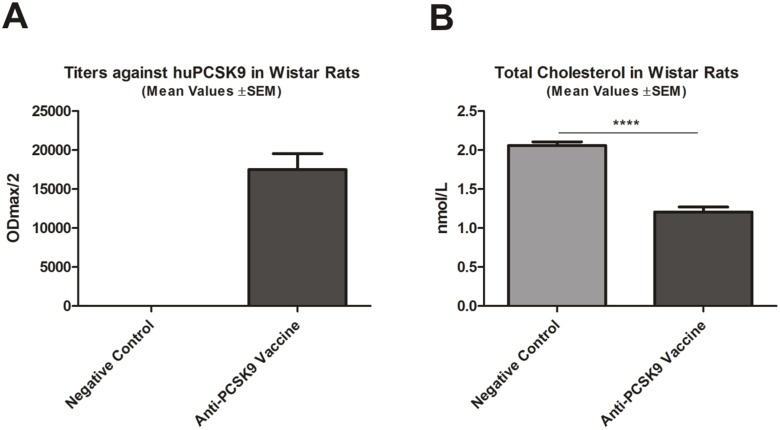
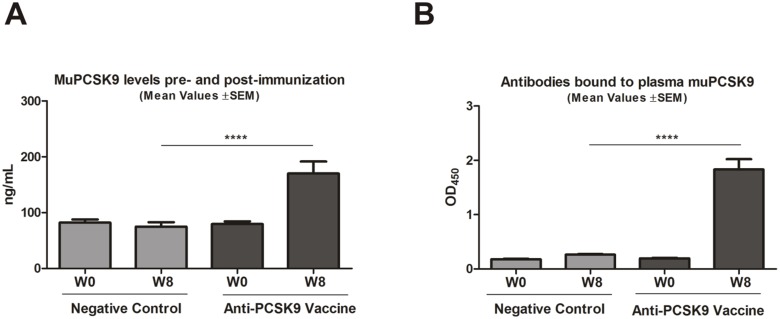
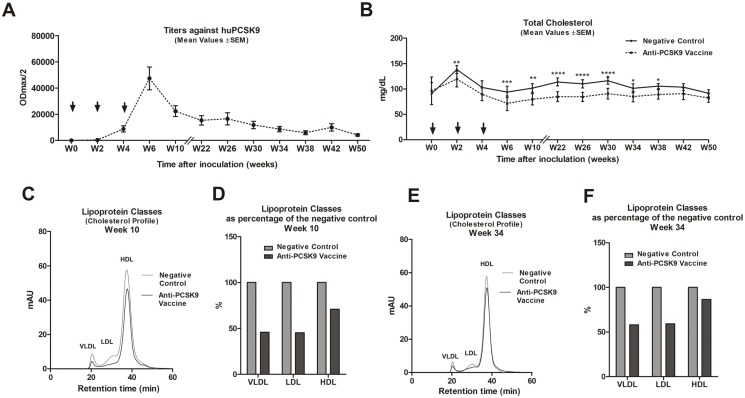
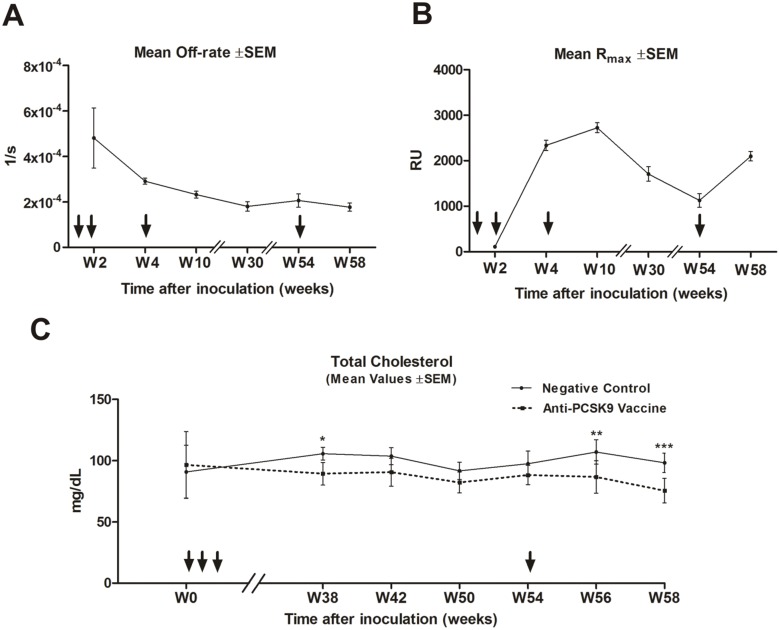
PCSK9 peptide-based vaccines were successfully selected by our proprietary technology. To test their efficacy, wild-type (wt) mice, Ldlr+/- mice, and rats were immunized with highly immunogenic vaccine candidates. Vaccines induced generation of high-affine PCSK9-specific antibodies in all species. Group mean total cholesterol (TC) concentration was reduced by up to 30%, and LDLc up to 50% in treated animals. Moreover, the PCSK9 vaccine-induced humoral immune response persisted for up to one year in mice, and reduced cholesterol levels significantly throughout the study. Finally, the vaccines were well tolerated in all species tested.
Peptide-based anti-PCSK9 vaccines induce the generation of antibodies that are persistent, high-affine, and functional for up to one year. They are powerful and safe tools for long-term LDLc management, and thus may represent a novel therapeutic approach for the prevention and/or treatment of LDL hypercholesterolemia-related cardiovascular diseases in humans.
低密度脂蛋白(LDL)高胆固醇血症及其相关的心血管疾病是全球主要的死亡原因之一。前蛋白转化酶枯草溶菌素/kexin 9(PCSK9)调节循环低密度脂蛋白胆固醇(LDLc)浓度的能力使其成为LDLc管理中极具吸引力的靶点。迄今为止,PCSK9抑制的最先进方法是单克隆抗体(mAb)疗法。尽管mAb显示出能显著降低LDLc,但由于其体内半衰期相对较短,需要频繁给药,因此面临功能限制。在此,我们评估了PCSK9特异性活性疫苗在不同临床前模型中的长期疗效和安全性。
通过我们的专有技术成功筛选出基于PCSK9肽的疫苗。为测试其疗效,用高免疫原性的候选疫苗对野生型(wt)小鼠、Ldlr+/-小鼠和大鼠进行免疫接种。疫苗在所有物种中均诱导产生了高亲和力的PCSK9特异性抗体。在治疗动物中,组平均总胆固醇(TC)浓度降低了30%,LDLc降低了50%。此外,PCSK9疫苗诱导的体液免疫反应在小鼠中持续长达一年,并在整个研究过程中显著降低了胆固醇水平。最后,在所有测试物种中,疫苗的耐受性良好。
基于肽的抗PCSK9疫苗可诱导产生持续、高亲和力且功能长达一年的抗体。它们是长期管理LDLc的强大且安全的工具,因此可能代表一种预防和/或治疗人类LDL高胆固醇血症相关心血管疾病的新治疗方法。