Gawish Riem, Martins Rui, Böhm Benedikta, Wimberger Terje, Sharif Omar, Lakovits Karin, Schmidt Mariane, Knapp Sylvia
*Ce-M-M-, Center for Molecular Medicine of the Austrian Academy of Sciences, Vienna, Austria; Department of Medicine I, Laboratory of Infection Biology, Medical University of Vienna, Vienna, Austria; and National Food Institute, Division for Epidemiology and Microbial Genomics, Technical University of Denmark, Lyngby, Denmark.
*Ce-M-M-, Center for Molecular Medicine of the Austrian Academy of Sciences, Vienna, Austria; Department of Medicine I, Laboratory of Infection Biology, Medical University of Vienna, Vienna, Austria; and National Food Institute, Division for Epidemiology and Microbial Genomics, Technical University of Denmark, Lyngby, Denmark
FASEB J. 2015 Apr;29(4):1247-57. doi: 10.1096/fj.14-260067. Epub 2014 Dec 4.
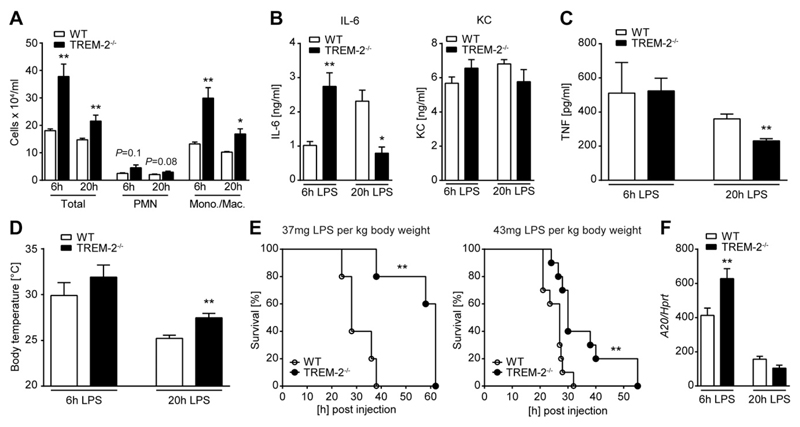
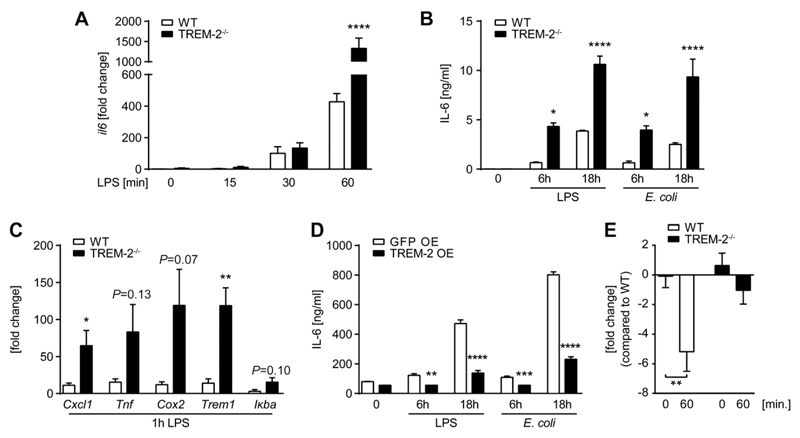
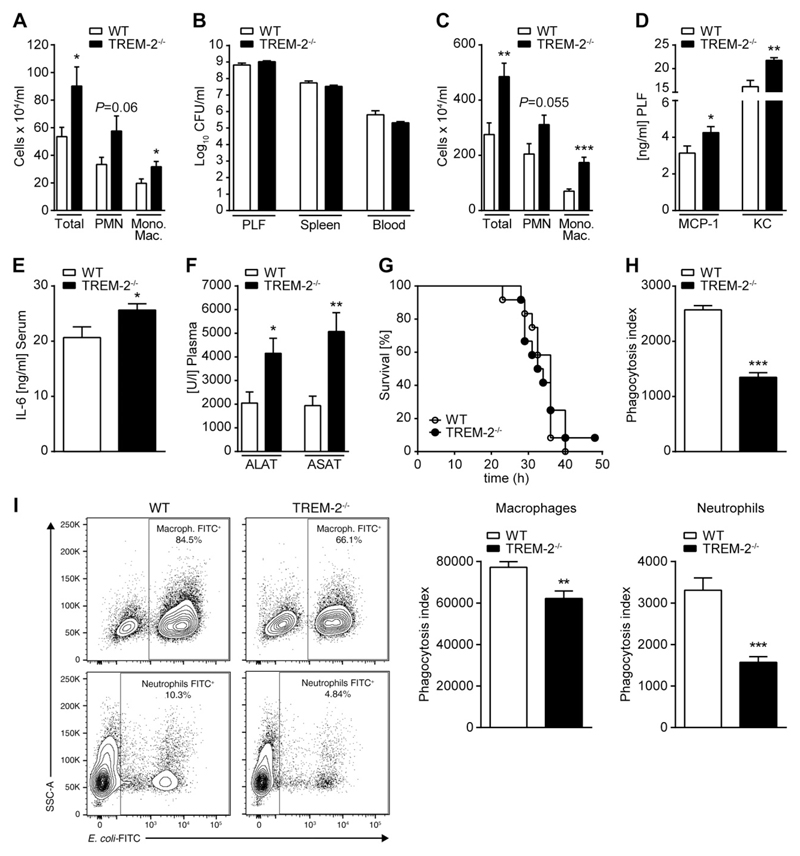
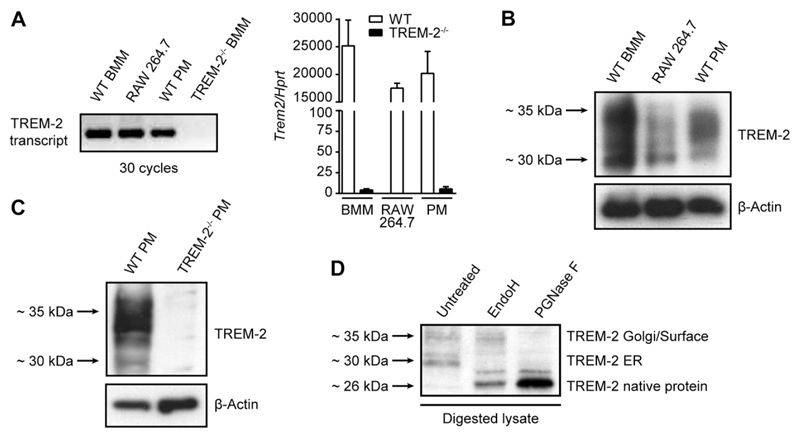
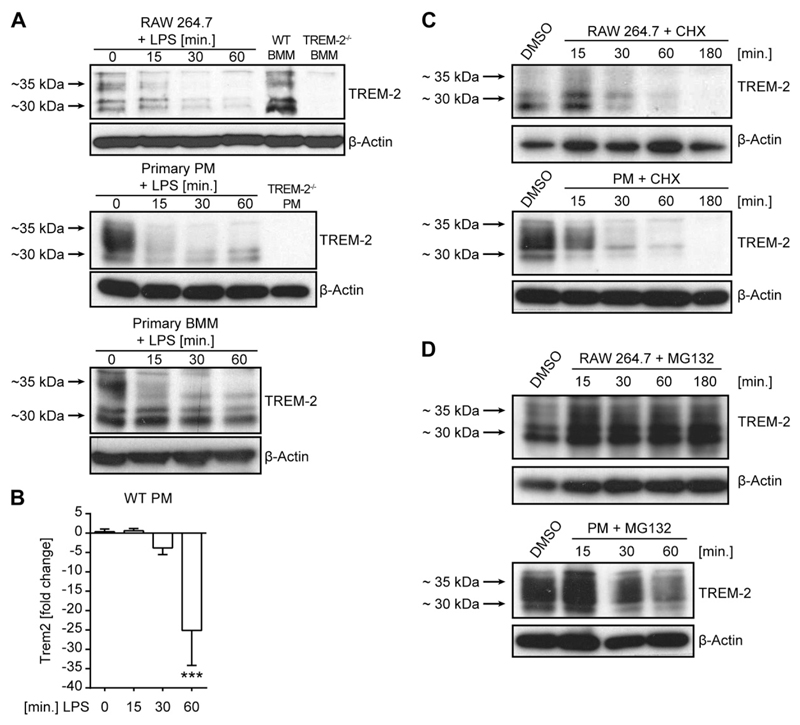
During infections, TLR-mediated responses require tight regulation to allow for pathogen removal, while preventing overwhelming inflammation and immunopathology. The triggering receptor expressed on myeloid cells (TREM)-2 negatively regulates inflammation by macrophages and impacts on phagocytosis, but the function of endogenous TREM-2 during infections is poorly understood. We investigated TREM-2's role in regulating TLR4-mediated inflammation by studying wild-type and TREM-2(-/-) mice challenged with LPS and found TREM-2 to dampen early inflammation. Augmented early inflammation in TREM-2(-/-) animals was followed by an accelerated resolution and ultimately improved survival, associated with the induction of the negative regulator A20. Upon infection with Escherichia coli, the otherwise beneficial effect of an exaggerated early immune response in TREM-2(-/-) animals was counteracted by a 50% reduction in bacterial phagocytosis. In line with this, TREM-2(-/-) peritoneal macrophages (PMs) exhibited augmented inflammation following TLR4 stimulation, demonstrating the presence and negative regulatory functionality of TREM-2 on primary PMs. Significantly, we identified a high turnover rate because TREM-2 RNA is 25-fold down-regulated and the protein proteasomally degraded upon LPS encounter, thus ensuring a tightly regulated and versatile system that modulates inflammation. Our results illustrate TREM-2's effects on infection-triggered inflammation and identify TREM-2 as a potential target to prevent overwhelming inflammation while preserving antibacterial-effector functions.
在感染过程中,Toll样受体(TLR)介导的反应需要严格调控,以实现病原体清除,同时防止过度炎症和免疫病理反应。髓系细胞触发受体(TREM)-2可通过巨噬细胞对炎症进行负向调节,并影响吞噬作用,但对感染期间内源性TREM-2的功能了解甚少。我们通过研究用脂多糖(LPS)攻击的野生型和TREM-2基因敲除(-/-)小鼠,来探究TREM-2在调节TLR4介导的炎症中的作用,发现TREM-2可减轻早期炎症。TREM-2基因敲除动物早期炎症增强后,炎症消退加速,最终生存率提高,这与负调节因子A20的诱导有关。在用大肠杆菌感染时,TREM-2基因敲除动物早期免疫反应过度带来的有益效应被细菌吞噬作用降低50%所抵消。与此一致的是,TREM-2基因敲除的腹膜巨噬细胞(PMs)在TLR4刺激后炎症增强,这表明TREM-2在原代PMs上的存在及其负调节功能。重要的是,我们发现TREM-2的更新率很高,因为TREM-2 RNA在遇到LPS后下调25倍,且蛋白质被蛋白酶体降解,从而确保了一个严格调控且多功能的炎症调节系统。我们的结果阐明了TREM-2对感染引发炎症的影响,并确定TREM-2是一个潜在靶点,可在保留抗菌效应功能的同时预防过度炎症。