Fisher Simon D, Gray Jason P, Black Melony J, Davies Jennifer R, Bednark Jeffery G, Redgrave Peter, Franz Elizabeth A, Abraham Wickliffe C, Reynolds John N J
Department of Anatomy, Brain Health Research Centre, University of Otago Dunedin, New Zealand.
Department of Anatomy, Brain Health Research Centre, University of Otago Dunedin, New Zealand ; Department of Psychology, Brain Health Research Centre, University of Otago Dunedin, New Zealand.
Front Behav Neurosci. 2014 Nov 18;8:398. doi: 10.3389/fnbeh.2014.00398. eCollection 2014.
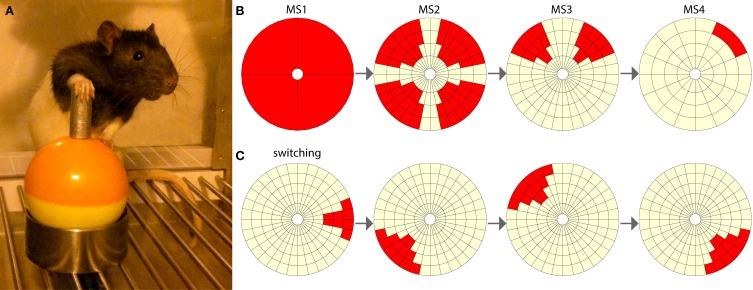
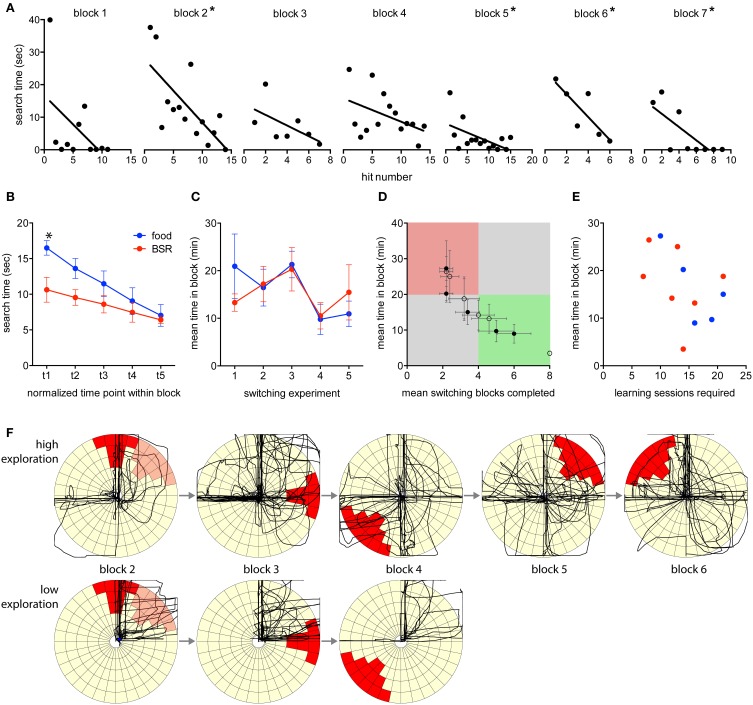
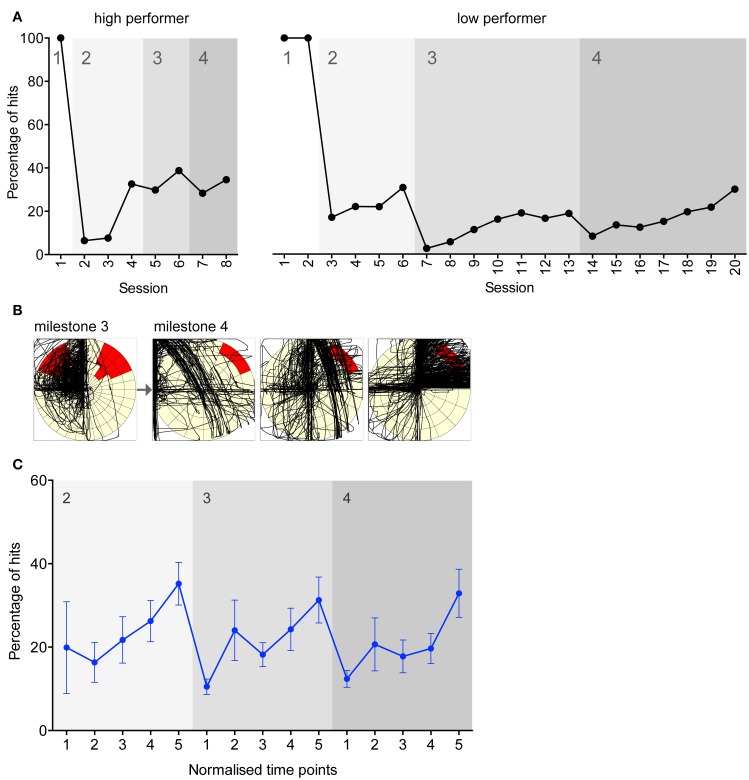
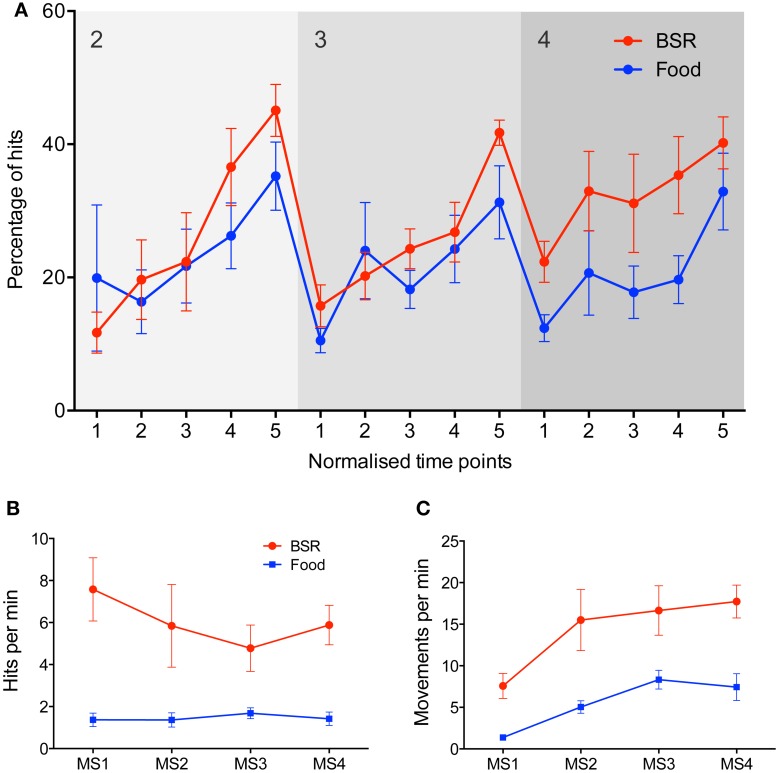
Action discovery and selection are critical cognitive processes that are understudied at the cellular and systems neuroscience levels. Presented here is a new rodent joystick task suitable to test these processes due to the range of action possibilities that can be learnt while performing the task. Rats learned to manipulate a joystick while progressing through task milestones that required increasing degrees of movement accuracy. In a switching phase designed to measure action discovery, rats were repeatedly required to discover new target positions to meet changing task demands. Behavior was compared using both food and electrical brain stimulation reward (BSR) of the substantia nigra as reinforcement. Rats reinforced with food and those with BSR performed similarly overall, although BSR-treated rats exhibited greater vigor in responding. In the switching phase, rats learnt new actions to adapt to changing task demands, reflecting action discovery processes. Because subjects are required to learn different goal-directed actions, this task could be employed in further investigations of the cellular mechanisms of action discovery and selection. Additionally, this task could be used to assess the behavioral flexibility impairments seen in conditions such as Parkinson's disease and obsessive-compulsive disorder. The versatility of the task will enable cross-species investigations of these impairments.
动作发现和选择是细胞和系统神经科学层面研究较少的关键认知过程。本文介绍了一种新的啮齿动物操纵杆任务,由于在执行任务时可以学习到各种动作可能性,因此适合测试这些过程。大鼠在完成需要越来越高运动精度的任务里程碑时学会操纵操纵杆。在旨在测量动作发现的转换阶段,大鼠被反复要求发现新的目标位置以满足不断变化的任务需求。使用食物奖励和对黑质进行脑电刺激奖励(BSR)作为强化手段对行为进行比较。用食物强化的大鼠和用BSR强化的大鼠总体表现相似,尽管接受BSR治疗的大鼠反应更积极。在转换阶段,大鼠学习新动作以适应不断变化的任务需求,这反映了动作发现过程。由于要求受试者学习不同的目标导向动作,该任务可用于进一步研究动作发现和选择的细胞机制。此外,该任务可用于评估帕金森病和强迫症等疾病中出现的行为灵活性损伤。该任务的多功能性将使跨物种研究这些损伤成为可能。