Ibrahim Abeer, Ali Amany, Mohammed Mahmoud M
Department of Medical Oncology and Hematological Malignancy, South Egypt Cancer Institute, Assiut University, El Methaq Street, Assiut, Egypt.
Department of Pediatrics Oncology and Hematological Malignancy, South Egypt Cancer Institute, Assiut University, Egypt.
Adv Hematol. 2014;2014:697675. doi: 10.1155/2014/697675. Epub 2014 Nov 17.
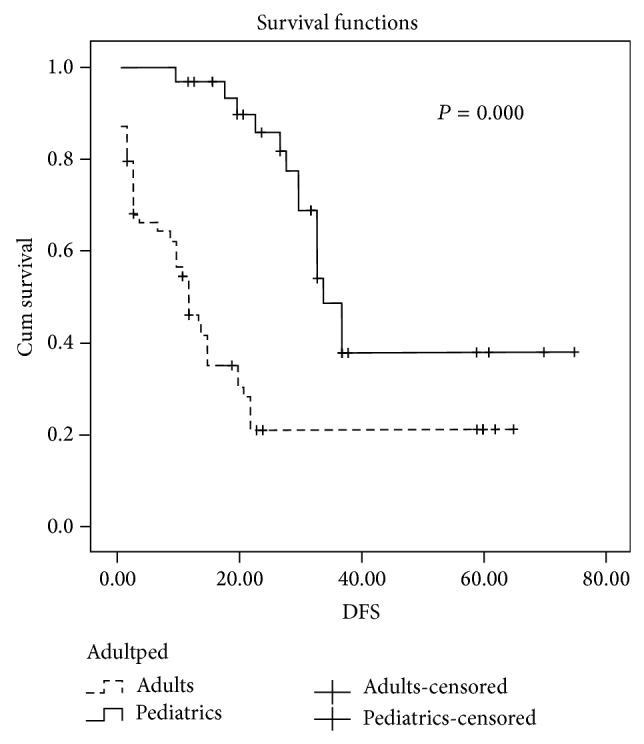
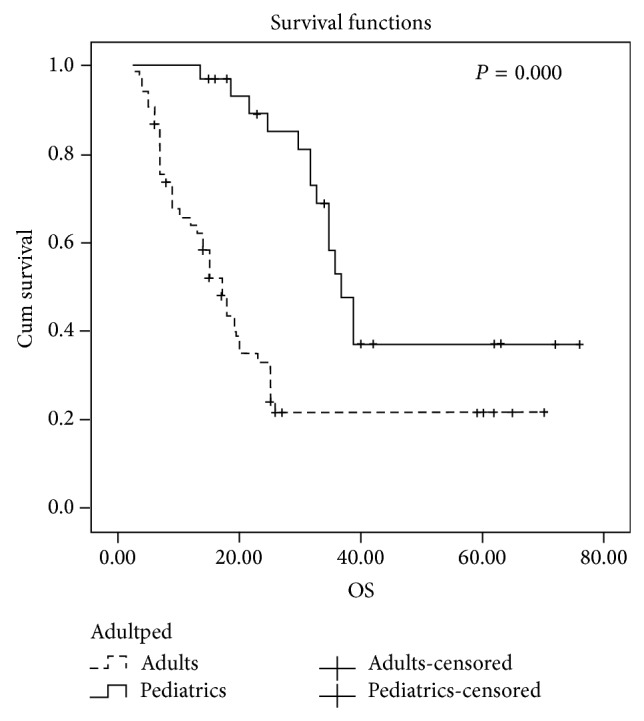
Objective. Several studies showed better outcome in adolescents and young adults with acute lymphoblastic leukemia (ALL) treated with pediatrics protocols than similarly aged patients treated with adults protocols, while other studies showed similar outcome of both protocols. We conducted this study to compare the outcome of our pediatrics and adults therapeutic protocols in treatment of adolescents ALL. Patients and Methods. We retrospectively reviewed files of 86 consecutive adolescent ALL patients aged 15-18 years who attended to outpatients clinic from January 2003 to January 2010. 32 out of 86 were treated with pediatrics adopted BFM 90 high risk protocol while 54 were treated with adults adopted BFM protocol. We analyzed the effect of different treatment protocols on achieving complete remission (CR), disease-free survival (DFS), and overall survival (OS). Results. The 2 patients groups have almost similar characteristics. The CR was significantly higher in pediatrics protocol 96% versus 89% (P = 0.001). Despite the fact that the toxicity profiles were higher in pediatrics protocol, they were tolerable. Moreover, the pediatrics protocol resulted in superior outcome in EFS 67% versus 39% (P = 0.001), DFS 65% versus 41% (P = 0.000), and OS 67% versus 45% (P = 0.000). Conclusion. Our study's findings recommend using intensified pediatrics inspired protocol to treat adolescents with acute lymphoblastic leukemia.
目的。多项研究表明,采用儿科方案治疗的青少年和青年急性淋巴细胞白血病(ALL)患者,其治疗效果优于采用成人方案治疗的同龄患者,而其他研究则显示两种方案的治疗效果相似。我们开展本研究以比较儿科和成人治疗方案在青少年ALL治疗中的效果。患者与方法。我们回顾性分析了2003年1月至2010年1月期间在门诊就诊的86例年龄在15 - 18岁的连续性青少年ALL患者的病历。86例患者中,32例采用儿科采用的BFM 90高危方案治疗,54例采用成人采用的BFM方案治疗。我们分析了不同治疗方案对实现完全缓解(CR)、无病生存(DFS)和总生存(OS)的影响。结果。两组患者的特征几乎相似。儿科方案的CR显著更高,为96%,而成人方案为89%(P = 0.001)。尽管儿科方案的毒性反应更高,但仍可耐受。此外,儿科方案在无事件生存(EFS)方面的效果更优,分别为67%和39%(P = 0.001),DFS分别为65%和41%(P = 0.000),OS分别为67%和45%(P = 0.000)。结论。我们研究的结果建议采用强化儿科启发的方案治疗青少年急性淋巴细胞白血病。