Sales K U, Friis S, Abusleme L, Moutsopoulos N M, Bugge T H
Oral and Pharyngeal Cancer Branch, National Institute of Dental and Craniofacial Research, National Institutes of Health, Bethesda, MD, USA.
Clinical Research Core, National Institute of Dental and Craniofacial Research, National Institutes of Health, Bethesda, MD, USA.
Oncogene. 2015 Aug 27;34(35):4664-72. doi: 10.1038/onc.2014.391. Epub 2014 Dec 8.
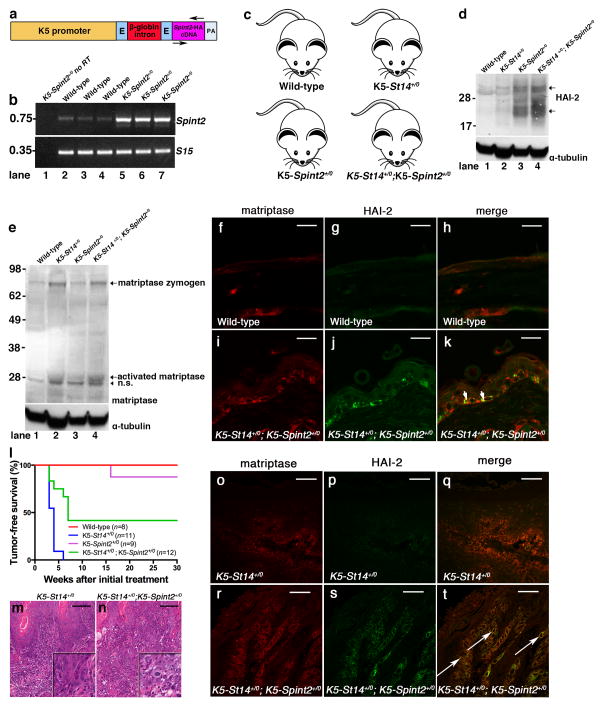
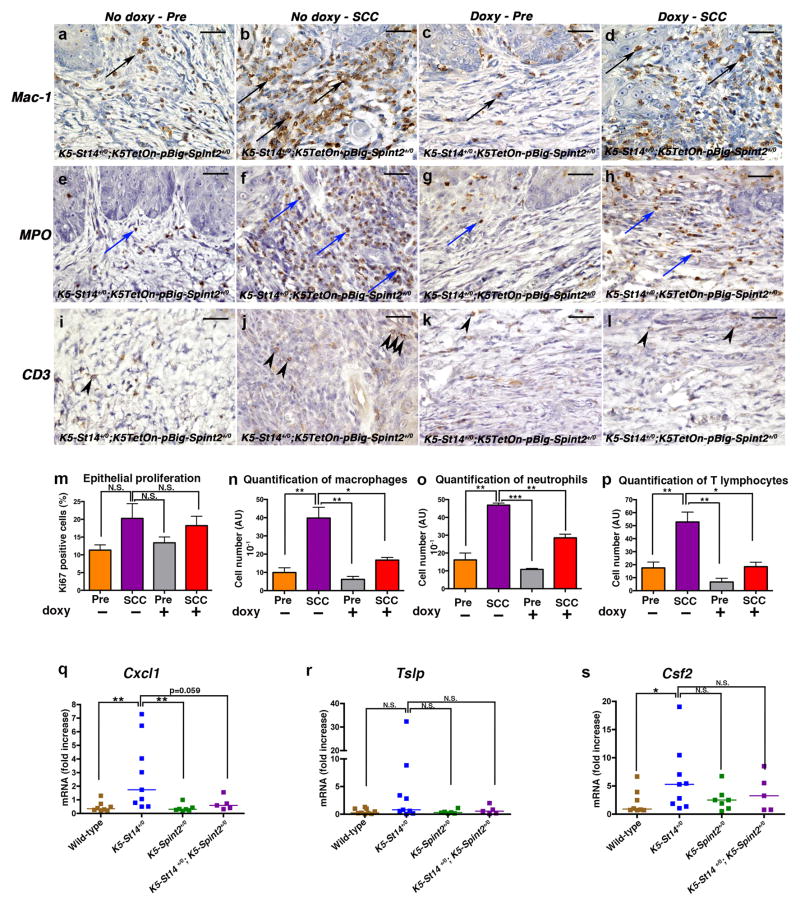
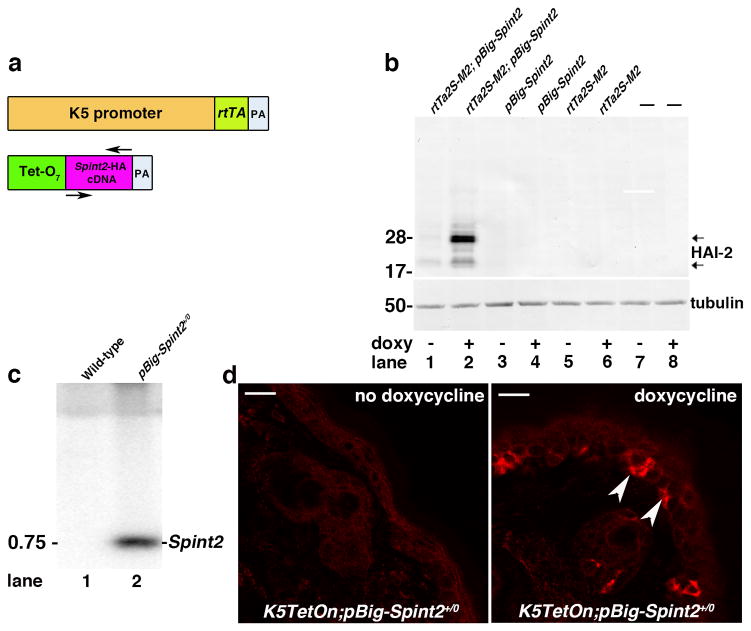
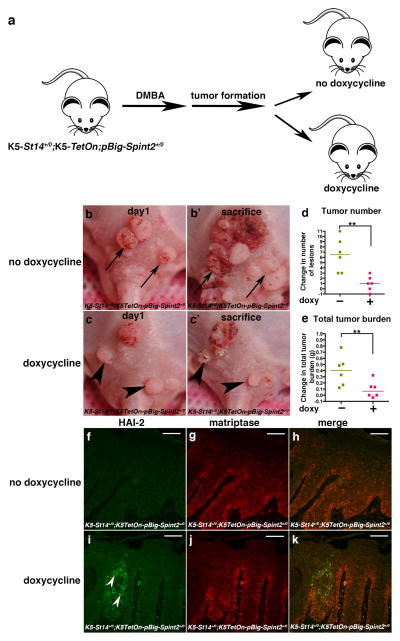
Deregulation of matriptase is a consistent feature of human epithelial cancers and correlates with poor disease outcome. We have previously shown that matriptase promotes multi-stage squamous cell carcinogenesis in transgenic mice through dual activation of pro-hepatocyte growth factor-cMet-Akt-mTor proliferation/survival signaling and PAR-2-Gαi-NFκB inflammatory signaling. Matriptase was congenitally and constitutively deregulated in our prior studies, and therefore it was unclear if aberrant matriptase signaling supports only initiation of tumor formation or if it is also critical for the progression of established tumors. To determine this, we here have generated triple-transgenic mice with constitutive deregulation of matriptase and simultaneous inducible expression of the cognate matriptase inhibitor, hepatocyte growth factor inhibitor (HAI)-2. As expected, constitutive expression of HAI-2 suppressed the formation of matriptase-dependent tumors in 7,12-Dimethylbenz(a)anthracene-treated mouse skin. Interestingly, however, the induction of HAI-2 expression in already established tumors markedly impaired malignant progression and caused regression of individual tumors. Tumor regression correlated with reduced accumulation of tumor-associated inflammatory cells, likely caused by diminished expression of pro-tumorigenic inflammatory cytokines. The data suggest that matriptase-dependent signaling may be a therapeutic target for both squamous cell carcinoma chemoprevention and for the treatment of established tumors.
胃蛋白酶的失调是人类上皮癌的一个一致特征,并且与不良的疾病预后相关。我们之前已经表明,胃蛋白酶通过双重激活促肝细胞生长因子-cMet-Akt-mTor增殖/存活信号和PAR-2-Gαi-NFκB炎症信号,促进转基因小鼠的多阶段鳞状细胞癌发生。在我们之前的研究中,胃蛋白酶是先天性和组成性失调的,因此尚不清楚异常的胃蛋白酶信号传导是否仅支持肿瘤形成的起始,或者它对于已建立肿瘤的进展是否也至关重要。为了确定这一点,我们在此生成了胃蛋白酶组成性失调且同时可诱导表达同源胃蛋白酶抑制剂肝细胞生长因子抑制剂(HAI)-2的三转基因小鼠。正如预期的那样,HAI-2的组成性表达抑制了7,12-二甲基苯并(a)蒽处理的小鼠皮肤中胃蛋白酶依赖性肿瘤的形成。然而,有趣的是,在已经建立的肿瘤中诱导HAI-2表达显著损害了恶性进展并导致个别肿瘤消退。肿瘤消退与肿瘤相关炎症细胞积累的减少相关,这可能是由促肿瘤炎症细胞因子表达减少引起的。这些数据表明,胃蛋白酶依赖性信号传导可能是鳞状细胞癌化学预防和已建立肿瘤治疗的治疗靶点。