Gupta Simone, Ellis Shannon E, Ashar Foram N, Moes Anna, Bader Joel S, Zhan Jianan, West Andrew B, Arking Dan E
Department of Medicine, McKusick-Nathans Institute of Genetic Medicine, Johns Hopkins University School of Medicine, Baltimore, Maryland 21205, USA.
1] Department of Medicine, McKusick-Nathans Institute of Genetic Medicine, Johns Hopkins University School of Medicine, Baltimore, Maryland 21205, USA [2] Department of Biomedical Engineering, Johns Hopkins University School of Medicine, Baltimore, Maryland 21205, USA.
Nat Commun. 2014 Dec 10;5:5748. doi: 10.1038/ncomms6748.
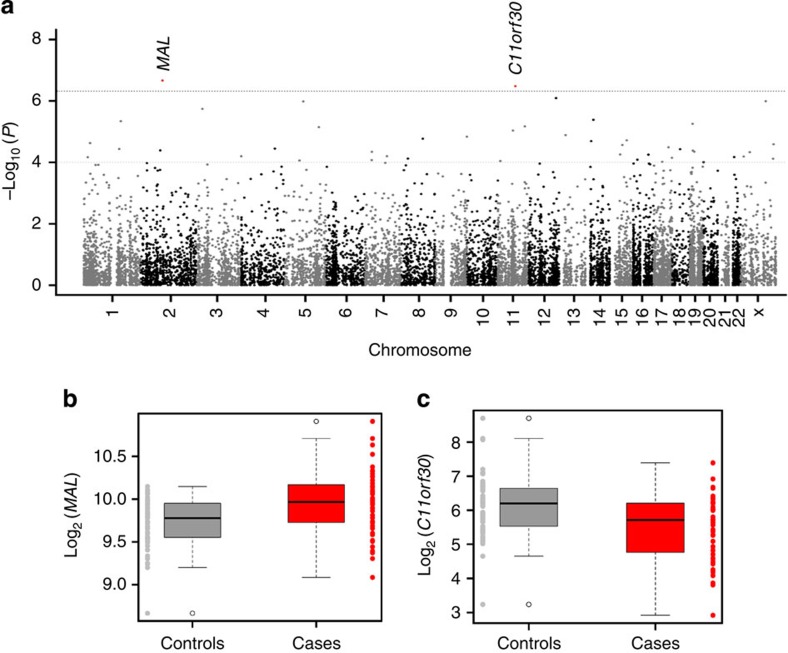
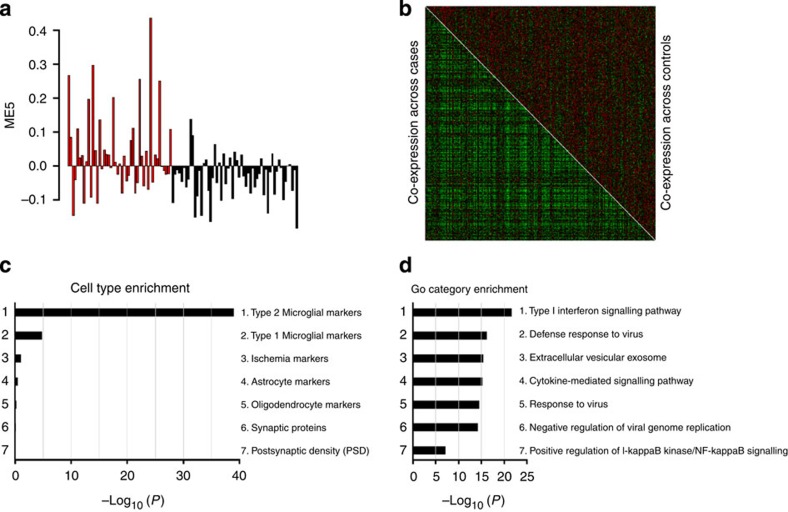
Recent studies of genomic variation associated with autism have suggested the existence of extreme heterogeneity. Large-scale transcriptomics should complement these results to identify core molecular pathways underlying autism. Here we report results from a large-scale RNA sequencing effort, utilizing region-matched autism and control brains to identify neuronal and microglial genes robustly dysregulated in autism cortical brain. Remarkably, we note that a gene expression module corresponding to M2-activation states in microglia is negatively correlated with a differentially expressed neuronal module, implicating dysregulated microglial responses in concert with altered neuronal activity-dependent genes in autism brains. These observations provide pathways and candidate genes that highlight the interplay between innate immunity and neuronal activity in the aetiology of autism.
近期关于与自闭症相关的基因组变异的研究表明存在极端的异质性。大规模转录组学应补充这些结果,以识别自闭症潜在的核心分子通路。在此,我们报告一项大规模RNA测序工作的结果,利用区域匹配的自闭症患者和对照者的大脑来识别在自闭症皮质大脑中显著失调的神经元和小胶质细胞基因。值得注意的是,我们发现一个与小胶质细胞中M2激活状态相对应的基因表达模块与一个差异表达的神经元模块呈负相关,这表明在自闭症大脑中,失调的小胶质细胞反应与改变的神经元活性依赖基因共同起作用。这些观察结果提供了一些通路和候选基因,突出了先天性免疫与神经元活性在自闭症病因学中的相互作用。