Sasaki Hideharu, Klein Patrice, Qiu Bo, Sasai Yoshikazu
Application Laboratory, JAMSTEC, 3173-25 Showa-machi, Kanazawa-ku, Yokohama, Kanagawa 236-0001, Japan.
Laboratoire de Physique des Oceans, IFREMER-CNRS-UBO-IRD, Plouzane 29280, France.
Nat Commun. 2014 Dec 15;5:5636. doi: 10.1038/ncomms6636.
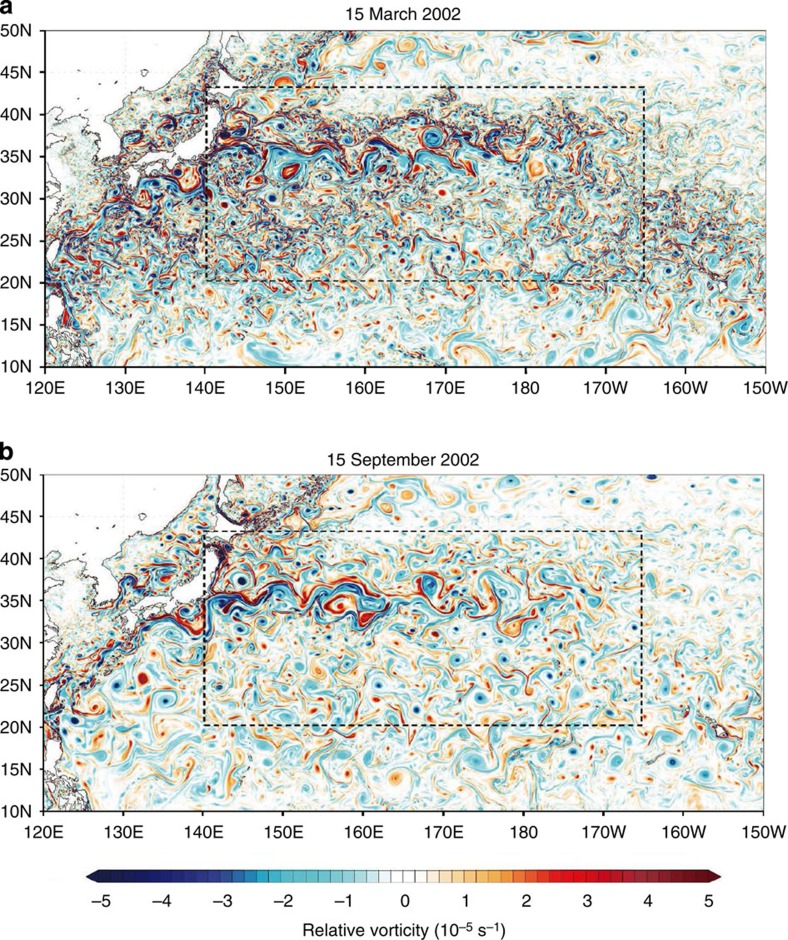
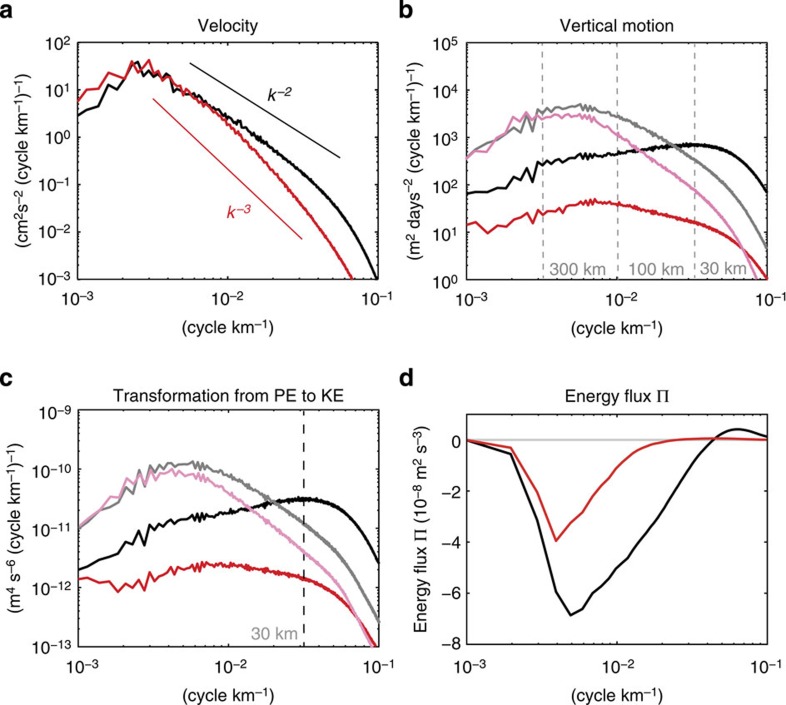
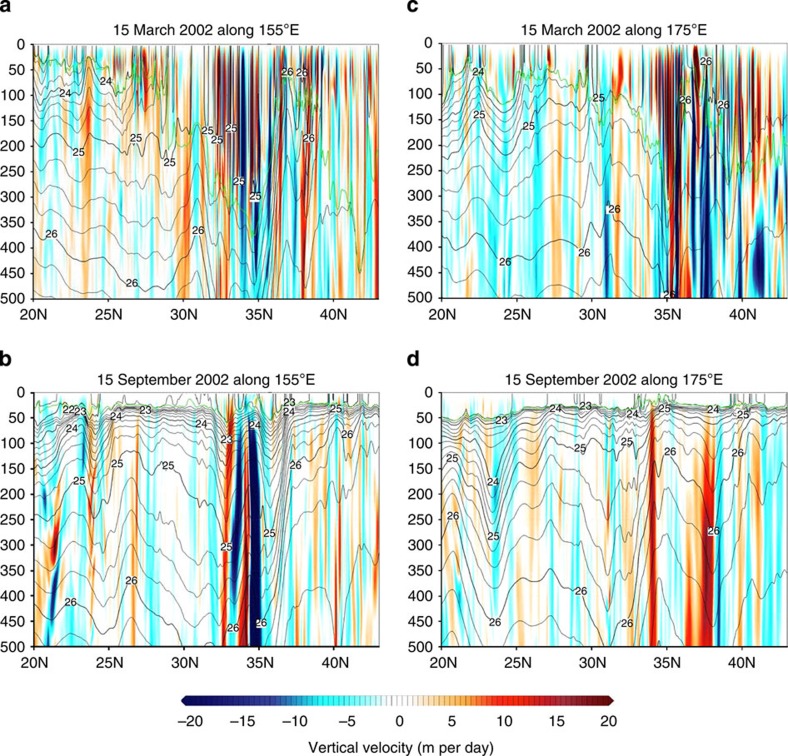
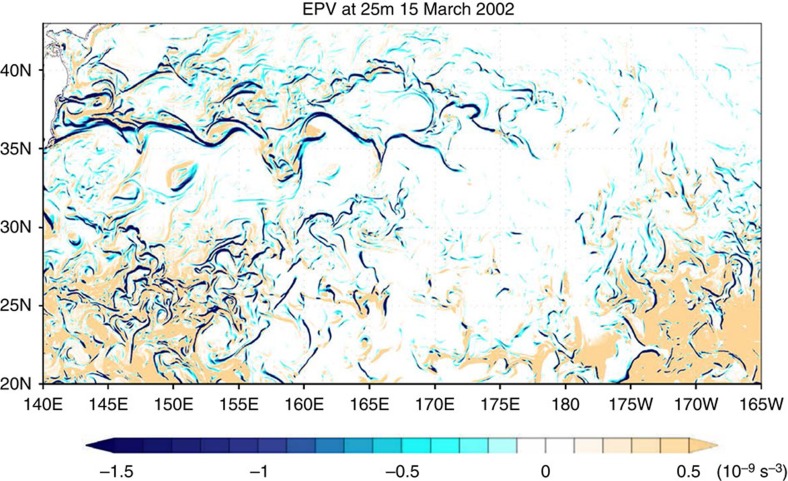
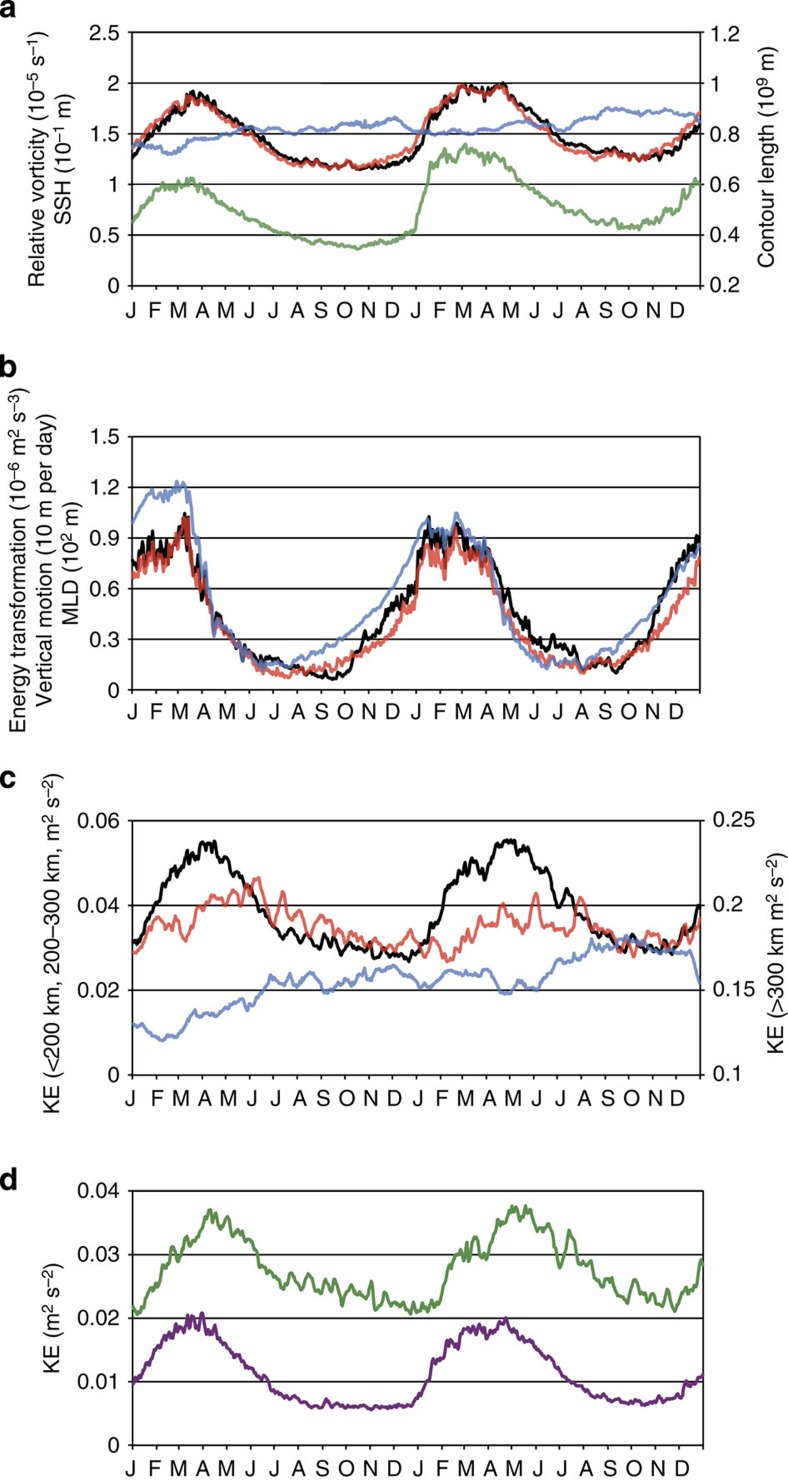
Ocean eddies (with a size of 100-300 km), ubiquitous in satellite observations, are known to represent about 80% of the total ocean kinetic energy. Recent studies have pointed out the unexpected role of smaller oceanic structures (with 1-50 km scales) in generating and sustaining these eddies. The interpretation proposed so far invokes the internal instability resulting from the large-scale interaction between upper and interior oceanic layers. Here we show, using a new high-resolution simulation of the realistic North Pacific Ocean, that ocean eddies are instead sustained by a different process that involves small-scale mixed-layer instabilities set up by large-scale atmospheric forcing in winter. This leads to a seasonal evolution of the eddy kinetic energy in a very large part of this ocean, with an amplitude varying by a factor almost equal to 2. Perspectives in terms of the impacts on climate dynamics and future satellite observational systems are briefly discussed.
海洋涡旋(大小为100 - 300千米)在卫星观测中普遍存在,已知其占海洋总动能的约80%。最近的研究指出了较小海洋结构(尺度为1 - 50千米)在产生和维持这些涡旋方面出人意料的作用。迄今为止提出的解释援引了上层和内部海洋层之间大规模相互作用导致的内部不稳定性。在此,我们利用对真实北太平洋的新的高分辨率模拟表明,海洋涡旋实际上是由一个不同的过程维持的,该过程涉及冬季大规模大气强迫引发的小尺度混合层不稳定性。这导致该海洋很大一部分区域的涡旋动能出现季节性演变,其振幅变化几乎达到2倍。文中简要讨论了这一发现对气候动力学和未来卫星观测系统的影响。