Kaushik Poorvi, Molinelli Evan J, Miller Martin L, Wang Weiqing, Korkut Anil, Liu Wenbin, Ju Zhenlin, Lu Yiling, Mills Gordon, Sander Chris
Computational Biology Center, Memorial Sloan-Kettering Cancer Center, New York, New York, United States of America.
Division of Quantitative Sciences, The University of Texas M. D. Anderson Cancer Center, Houston, Texas, United States of America.
PLoS One. 2014 Dec 12;9(12):e97213. doi: 10.1371/journal.pone.0097213. eCollection 2014.
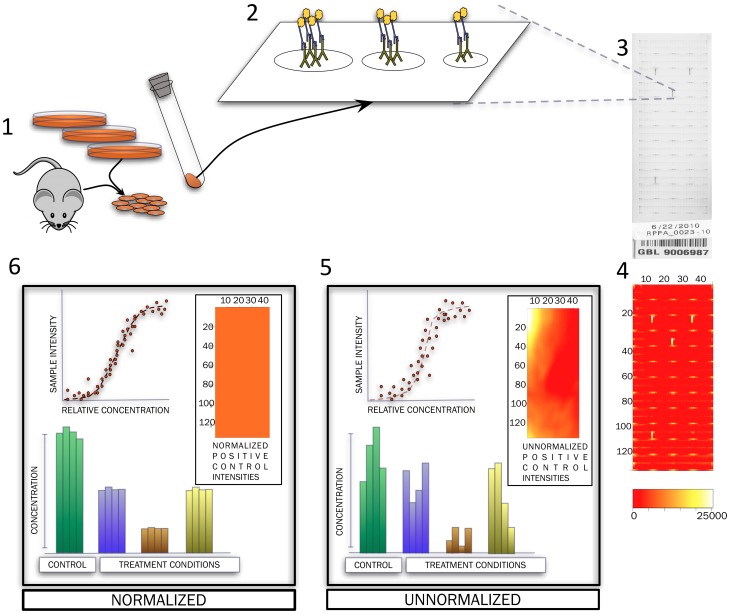
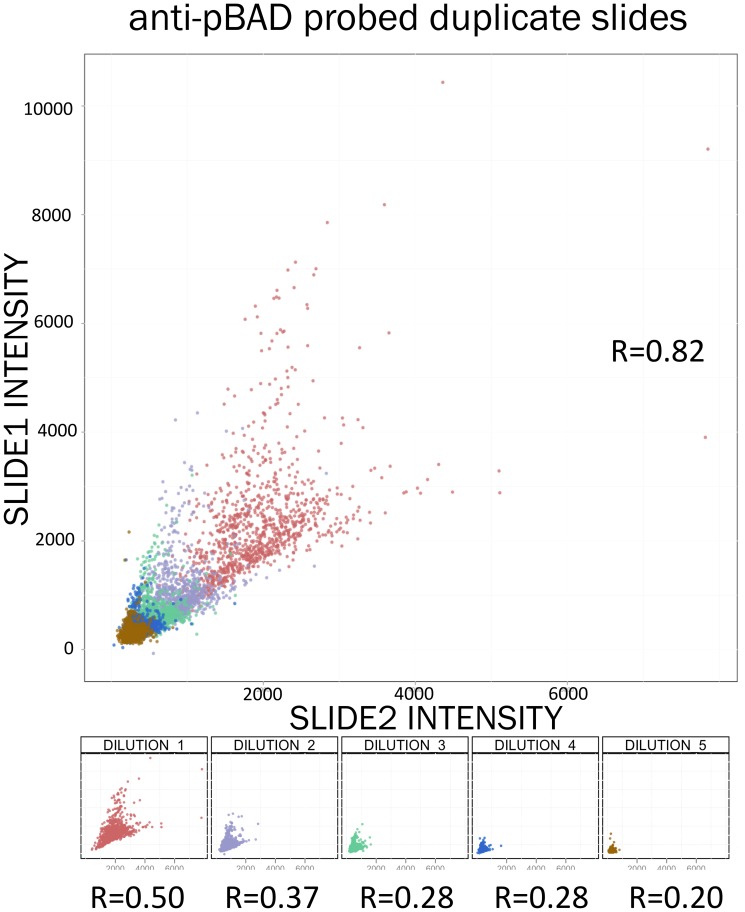
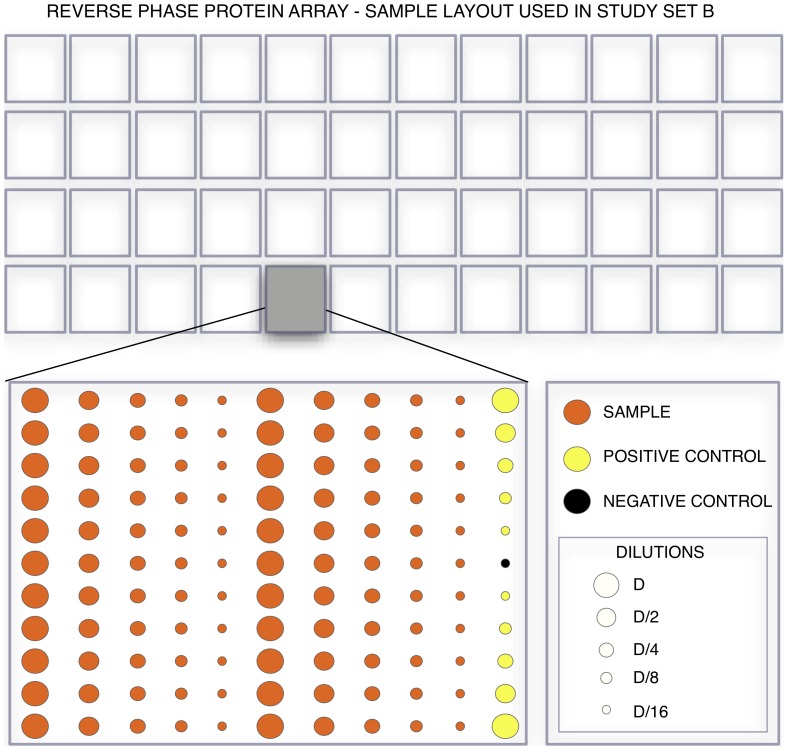
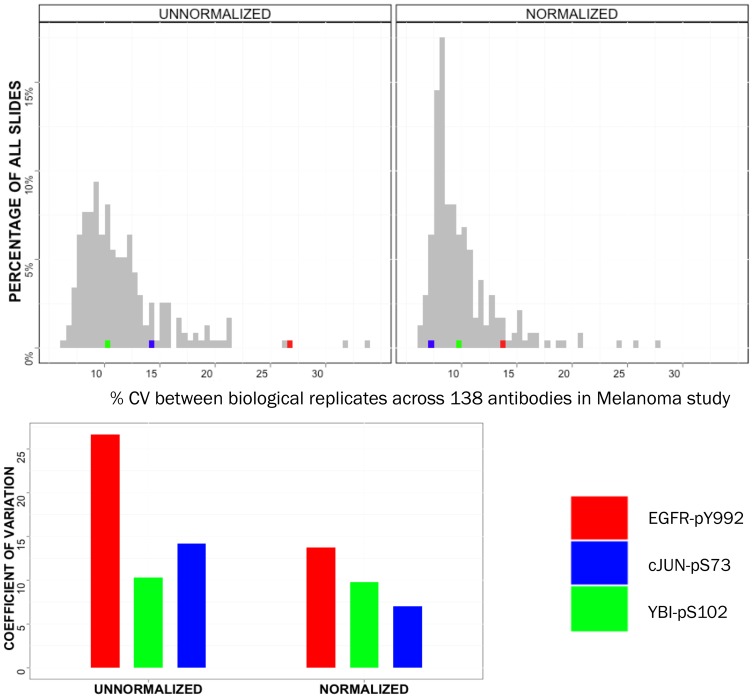
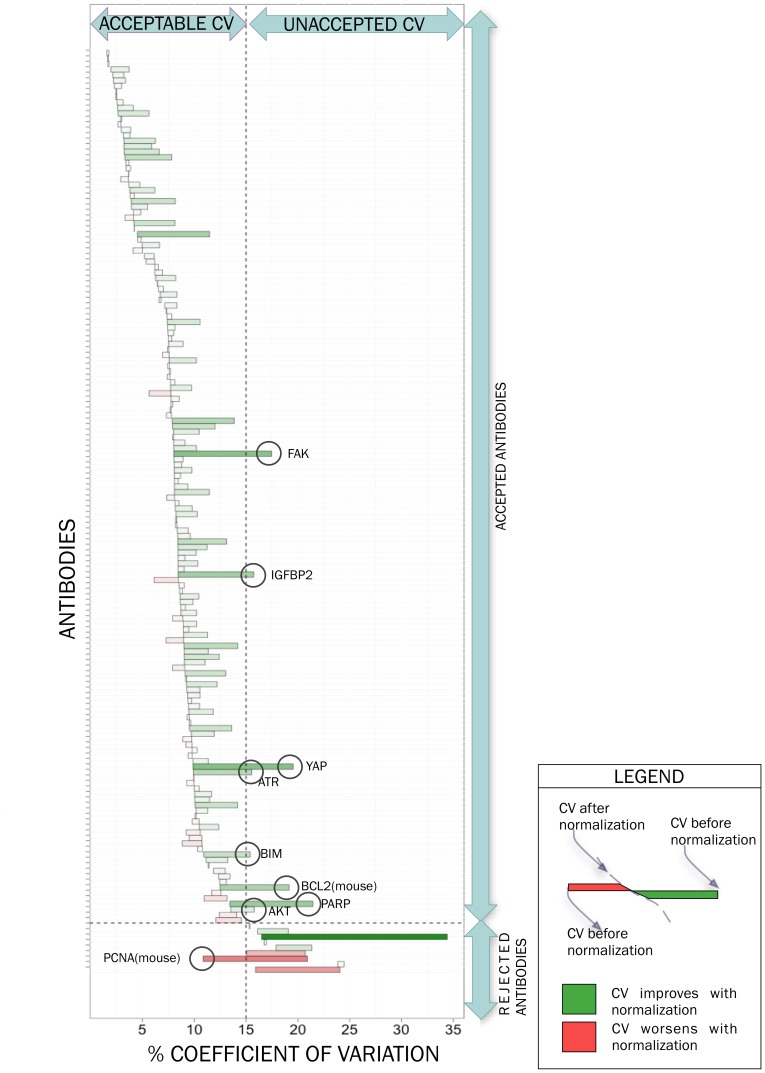
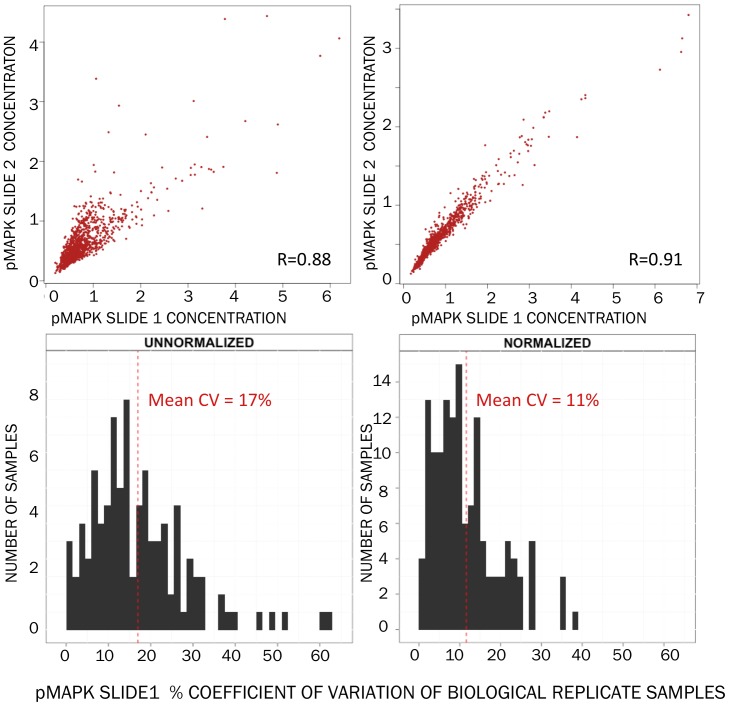
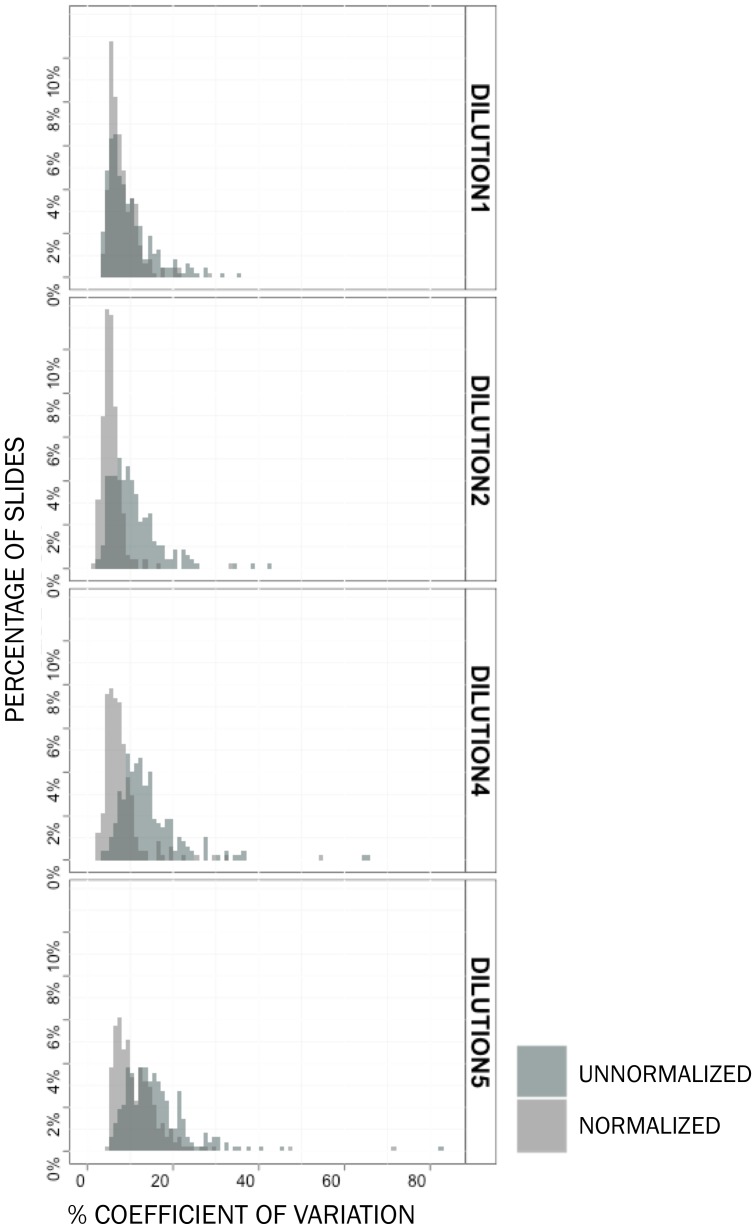
Reverse phase protein arrays (RPPA) are an efficient, high-throughput, cost-effective method for the quantification of specific proteins in complex biological samples. The quality of RPPA data may be affected by various sources of error. One of these, spatial variation, is caused by uneven exposure of different parts of an RPPA slide to the reagents used in protein detection. We present a method for the determination and correction of systematic spatial variation in RPPA slides using positive control spots printed on each slide. The method uses a simple bi-linear interpolation technique to obtain a surface representing the spatial variation occurring across the dimensions of a slide. This surface is used to calculate correction factors that can normalize the relative protein concentrations of the samples on each slide. The adoption of the method results in increased agreement between technical and biological replicates of various tumor and cell-line derived samples. Further, in data from a study of the melanoma cell-line SKMEL-133, several slides that had previously been rejected because they had a coefficient of variation (CV) greater than 15%, are rescued by reduction of CV below this threshold in each case. The method is implemented in the R statistical programing language. It is compatible with MicroVigene and SuperCurve, packages commonly used in RPPA data analysis. The method is made available, along with suggestions for implementation, at http://bitbucket.org/rppa_preprocess/rppa_preprocess/src.
反相蛋白质阵列(RPPA)是一种用于定量复杂生物样品中特定蛋白质的高效、高通量且具有成本效益的方法。RPPA数据的质量可能会受到各种误差来源的影响。其中之一,空间变异,是由RPPA载玻片的不同部分对蛋白质检测中使用的试剂曝光不均匀所导致的。我们提出了一种使用印在每张载玻片上的阳性对照点来确定和校正RPPA载玻片中系统空间变异的方法。该方法使用一种简单的双线性插值技术来获得一个表示在载玻片尺寸上发生的空间变异的表面。这个表面用于计算校正因子,这些因子可以使每张载玻片上样品的相对蛋白质浓度标准化。采用该方法可提高各种肿瘤和细胞系衍生样品的技术重复和生物学重复之间的一致性。此外,在一项对黑色素瘤细胞系SKMEL - 133的研究数据中,几张先前因变异系数(CV)大于15%而被拒收的载玻片,通过在每种情况下将CV降低到该阈值以下而得以挽救。该方法用R统计编程语言实现。它与RPPA数据分析中常用的MicroVigene和SuperCurve软件包兼容。该方法以及实施建议可在http://bitbucket.org/rppa_preprocess/rppa_preprocess/src获取。