Kim Hyun Gi, Chung Yong Eun, Lee Young Han, Choi Jin Young, Park Mi Suk, Kim Myeong Jin, Kim Ki Whang
Department of Radiology, Research Institute of Radiological Science, Severance Hospital, Yonsei University College of Medicine, Seoul, Korea.
Yonsei Med J. 2015 Jan;56(1):253-61. doi: 10.3349/ymj.2015.56.1.253.
To investigate the optimal blending percentage of adaptive statistical iterative reconstruction (ASIR) in a reduced radiation dose while preserving a degree of image quality and texture that is similar to that of standard-dose computed tomography (CT).
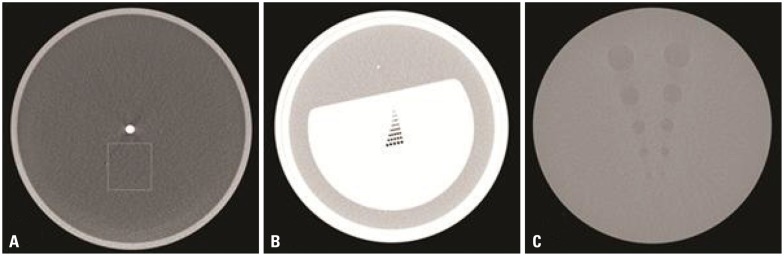
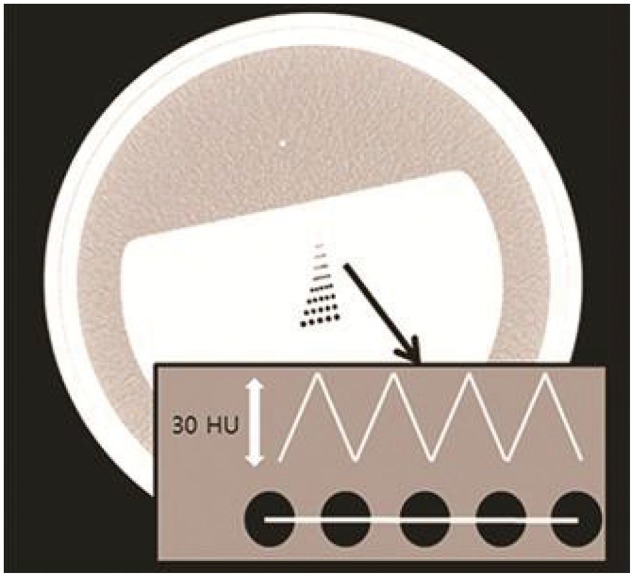
The CT performance phantom was scanned with standard and dose reduction protocols including reduced mAs or kVp. Image quality parameters including noise, spatial, and low-contrast resolution, as well as image texture, were quantitatively evaluated after applying various blending percentages of ASIR. The optimal blending percentage of ASIR that preserved image quality and texture compared to standard dose CT was investigated in each radiation dose reduction protocol.
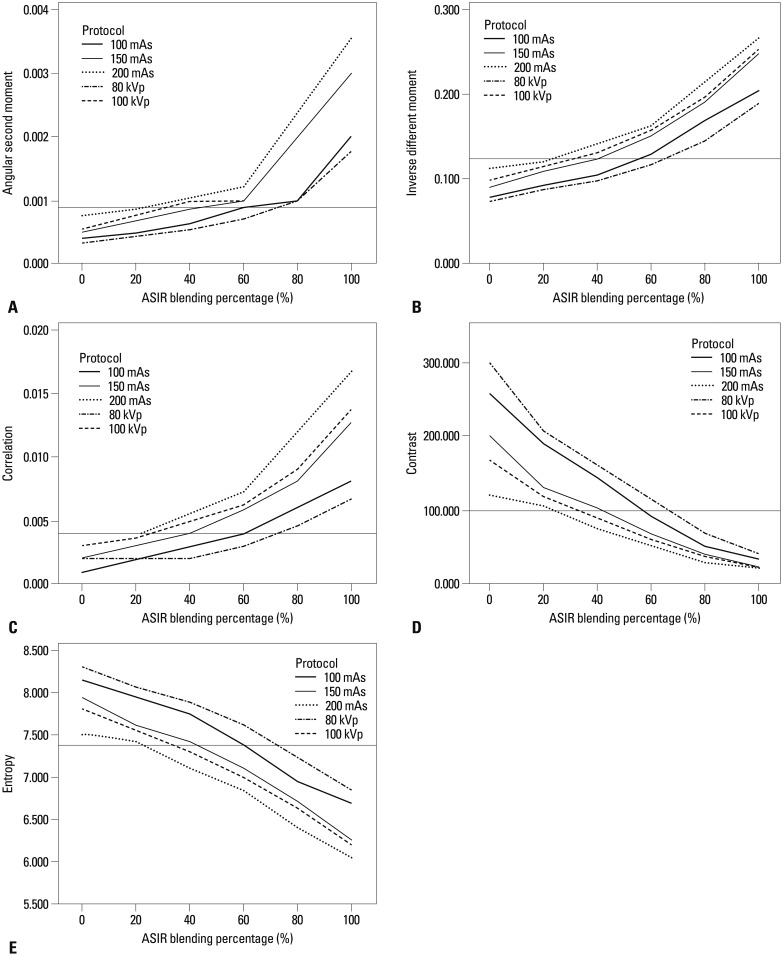
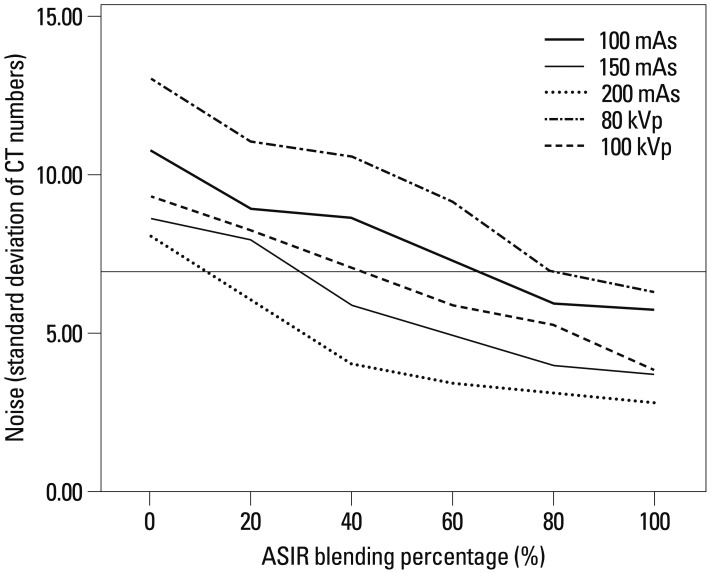
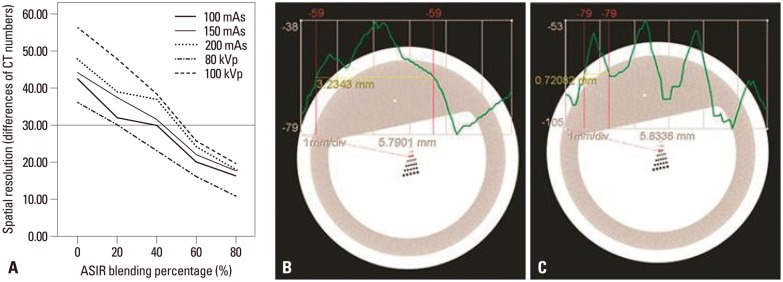
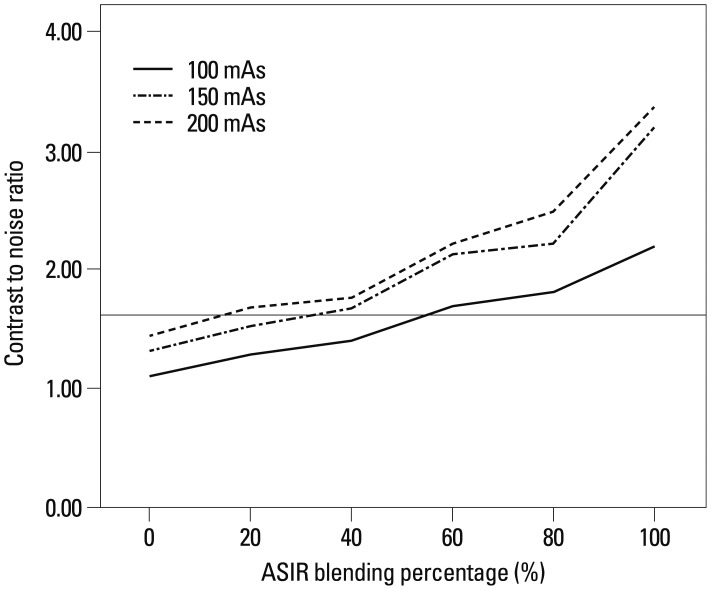
As the percentage of ASIR increased, noise and spatial-resolution decreased, whereas low-contrast resolution increased. In the texture analysis, an increasing percentage of ASIR resulted in an increase of angular second moment, inverse difference moment, and correlation and in a decrease of contrast and entropy. The 20% and 40% dose reduction protocols with 20% and 40% ASIR blending, respectively, resulted in an optimal quality of images with preservation of the image texture.
Blending the 40% ASIR to the 40% reduced tube-current product can maximize radiation dose reduction and preserve adequate image quality and texture.
研究自适应统计迭代重建(ASIR)在降低辐射剂量时的最佳混合百分比,同时保持与标准剂量计算机断层扫描(CT)相似的图像质量和纹理程度。
使用标准和降低剂量方案(包括降低管电流或管电压)对CT性能模体进行扫描。在应用不同混合百分比的ASIR后,对包括噪声、空间分辨率和低对比度分辨率以及图像纹理在内的图像质量参数进行定量评估。在每个辐射剂量降低方案中,研究与标准剂量CT相比能保持图像质量和纹理的ASIR最佳混合百分比。
随着ASIR百分比的增加,噪声和空间分辨率降低,而低对比度分辨率增加。在纹理分析中,ASIR百分比的增加导致角二阶矩、逆差矩和相关性增加,对比度和熵降低。分别采用20%和40% ASIR混合的20%和40%剂量降低方案,可获得具有图像纹理保留的最佳图像质量。
将40%的ASIR与降低40%的管电流乘积混合,可最大程度降低辐射剂量,并保持足够的图像质量和纹理。