Katiyar Amit, Duncan Randall L, Sarkar Kausik
Department of Mechanical Engineering, University of Delaware, Newark, DE 19716, USA.
Department of Mechanical Engineering, University of Delaware, Newark, DE 19716, USA ; Department of Biological Sciences, University of Delaware, Newark, DE 19716, USA.
J Ther Ultrasound. 2014 Jan 2;2:1. doi: 10.1186/2050-5736-2-1. eCollection 2014.
Mechanical stimulation of bone increases bone mass and fracture healing, at least in part, through increases in proliferation of osteoblasts and osteoprogenitor cells. Researchers have previously performed in vitro studies of ultrasound-induced osteoblast proliferation but mostly used fixed ultrasound settings and have reported widely varying and inconclusive results. Here we critically investigated the effects of the excitation parameters of low-intensity pulsed ultrasound (LIPUS) stimulation on proliferation of MC3T3-E1 preosteoblastic cells in monolayer cultures.
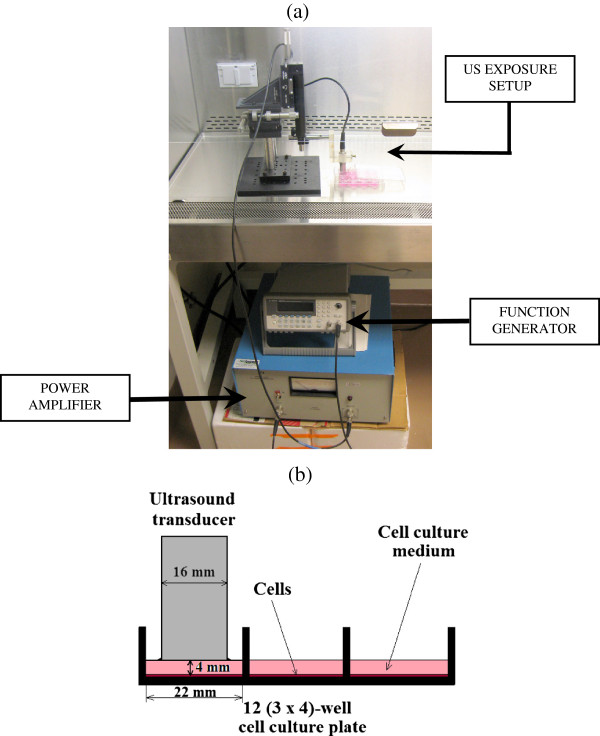
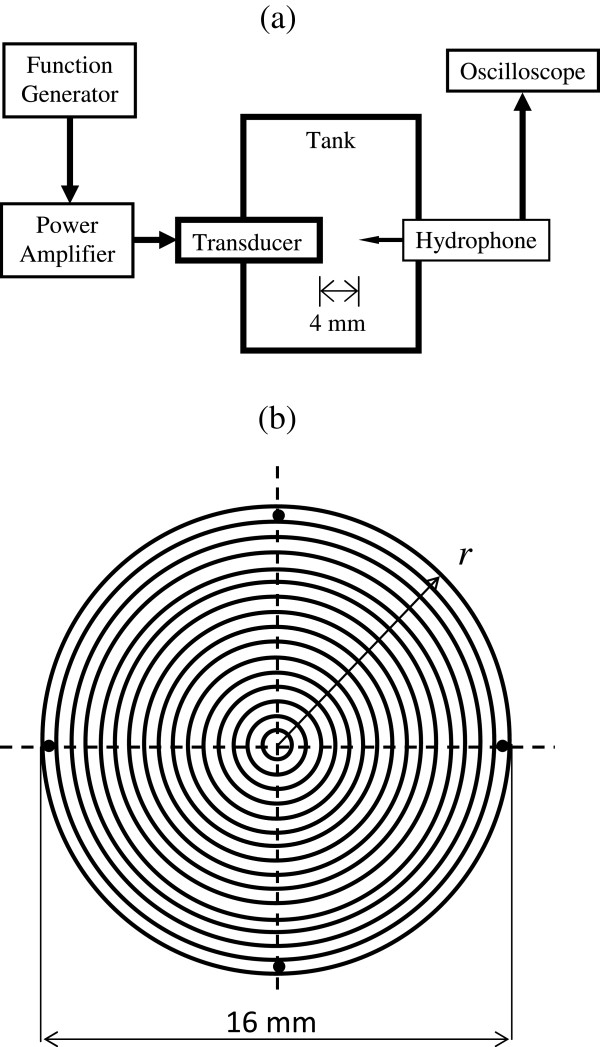
We used a custom-designed ultrasound exposure system to vary the key ultrasound parameters-intensity, frequency and excitation duration. MC3T3-E1 cells were seeded in 12-well cell culture plates. Unless otherwise specified, treated cells, in groups of three, were excited twice for 10 min with an interval of 24 h in between after cell seeding. Proliferation rates of these cells were determined using BrdU and MTS assays 24 h after the last LIPUS excitation. All data are presented as the mean ± standard error. The statistical significance was determined using Student's two-sample two-tailed t tests.
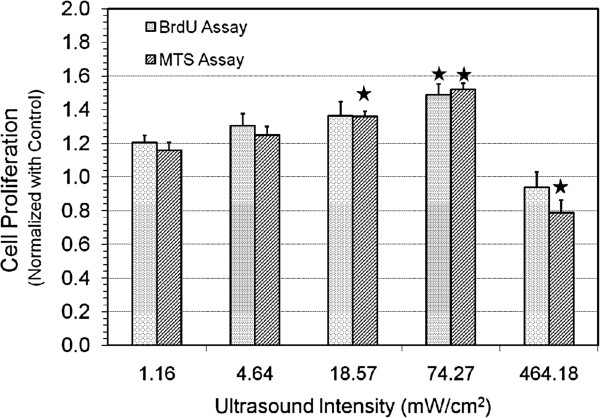
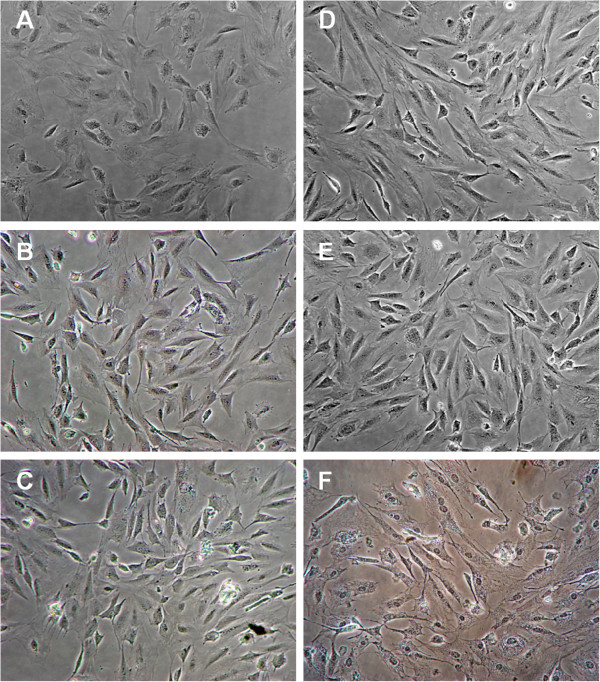
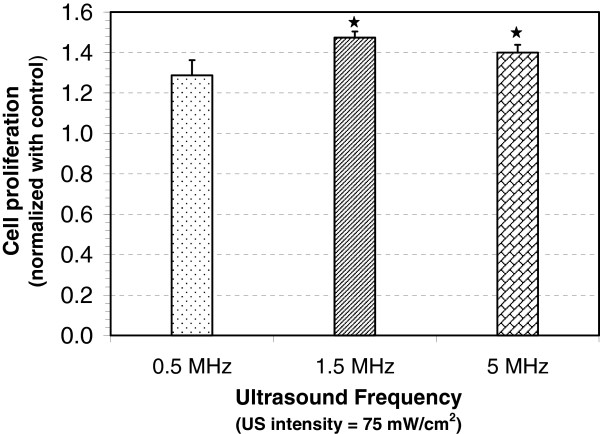
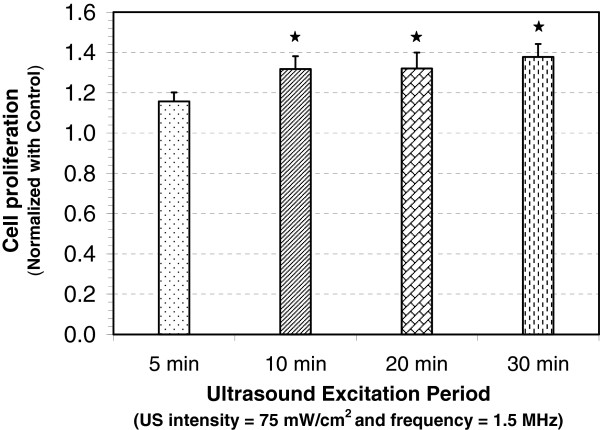
Using discrete LIPUS intensities ranging from 1 to 500 mW/cm(2) (SATA, spatial average-temporal average), we found that approximately 75 mW/cm(2) produced the greatest increase in osteoblast proliferation. Ultrasound exposures at higher intensity (approximately 465 mW/cm(2)) significantly reduced proliferation in MC3T3-E1 cells, suggesting that high-intensity pulsed ultrasound may increase apoptosis or loss of adhesion in these cells. Variation in LIPUS frequency from 0.5 MHz to 5 MHz indicated that osteoblast proliferation rate was not frequency dependent. We found no difference in the increase in proliferation rate if LIPUS was applied for 30 min/day or 10 min/day, indicating a habituation response.
This study concludes that a short-term stimulation with optimum intensity can enhance proliferation of preosteoblast-like bone cells that plays an important role in bone formation and accelerated fracture healing, also suggesting a possible therapeutic treatment for reduced bone mass.
对骨骼的机械刺激可增加骨量并促进骨折愈合,至少部分是通过增加成骨细胞和骨祖细胞的增殖来实现的。研究人员此前曾进行过超声诱导成骨细胞增殖的体外研究,但大多使用固定的超声设置,且报告的结果差异很大且尚无定论。在此,我们严格研究了低强度脉冲超声(LIPUS)刺激的激发参数对单层培养的MC3T3-E1前成骨细胞增殖的影响。
我们使用定制设计的超声暴露系统来改变关键的超声参数——强度、频率和激发持续时间。将MC3T3-E1细胞接种于12孔细胞培养板中。除非另有说明,每组三个处理细胞在接种后每隔24小时激发两次,每次10分钟。在最后一次LIPUS激发后24小时,使用BrdU和MTS测定法测定这些细胞的增殖率。所有数据均以平均值±标准误差表示。使用学生双样本双侧t检验确定统计学显著性。
使用1至500 mW/cm²(SATA,空间平均-时间平均)的离散LIPUS强度,我们发现约75 mW/cm²可使成骨细胞增殖增加最多。更高强度(约465 mW/cm²)的超声暴露显著降低了MC3T3-E1细胞的增殖,这表明高强度脉冲超声可能会增加这些细胞的凋亡或黏附丧失。LIPUS频率在0.5 MHz至5 MHz之间变化表明成骨细胞增殖率与频率无关。我们发现,每天应用LIPUS 30分钟或10分钟,增殖率的增加没有差异,这表明存在适应性反应。
本研究得出结论,以最佳强度进行短期刺激可增强前成骨样骨细胞的增殖,这在骨形成和加速骨折愈合中起重要作用,也提示了一种可能用于治疗骨量减少的方法。